Facing criminal charges in NSW can feel overwhelming, especially when you don’t understand what comes next. The NSW criminal court process involves multiple stages, different court levels, and specific procedures that significantly affect your case outcome.
At Jameson Law, we’ve guided countless clients through these proceedings. This guide breaks down each step so you know exactly what to expect.
How the NSW Criminal Court System is Structured
NSW operates a three-tier criminal court system, and understanding which court handles your case directly affects procedure, sentencing powers, and trial format. The Local Court handles the vast majority of criminal matters, processing summary offences and less serious indictable offences. The Local Court processes over 200,000 criminal matters annually, making it the frontline of the criminal justice system. A magistrate presides over Local Court proceedings, and trials occur without a jury. The District Court handles mid-level indictable offences, with a judge and jury conducting trials for matters too serious for the Local Court but not serious enough for the Supreme Court. The Supreme Court deals with the most serious indictable offences including murder, manslaughter, terrorism, and treason. This three-tier structure means your case will be heard in different venues depending on offence severity, and each venue carries different procedural requirements and sentencing powers. The Local Court magistrate can impose sentences up to two years imprisonment for a single offence, while District and Supreme Court judges hold significantly broader sentencing powers, sometimes unlimited for the most serious crimes.
Where Your Case Will Be Heard
The type of offence determines court jurisdiction, not the seriousness you perceive. Summary offences such as common assault, minor theft, and traffic violations are heard exclusively in the Local Court and cannot proceed to higher courts. Indictable offences can be heard in the District or Supreme Court, though many are heard in the Local Court with the accused’s consent or the prosecution’s agreement. NSW Courts statistics show approximately 85 percent of indictable matters are finalised in the District Court rather than the Supreme Court, meaning most serious cases never reach the highest court. This matters because the District Court maintains jury trial rights for the accused while handling mid-level indictable offences. When you face charges, your lawyer will advise whether your matter is summary or indictable and which court is most likely to hear it-information that affects both timeline and strategy.
Who You’ll Encounter in Court
The Crown prosecutor represents the state and bears the burden of proving guilt beyond reasonable doubt. The magistrate or judge presides impartially and ensures fair procedure, though they do not decide guilt in jury trials. The jury, if applicable, decides guilt or innocence based on evidence presented. Your defence lawyer advocates for your rights and challenges the Crown’s case. Court staff manage listings, evidence, and administrative functions. Understanding these roles helps you recognise that the judge is not your opponent but rather an umpire ensuring both sides follow the rules.
How Court Levels Affect Your Case
Each court tier operates under different rules and timelines. The Local Court moves matters quickly through its system, often resolving cases within weeks or months. The District Court (which handles most indictable matters) typically takes longer due to jury selection and more complex procedures. The Supreme Court handles cases that demand the most extensive preparation and often involve lengthy trials. Your choice of court-or the court’s determination of jurisdiction-significantly impacts how long your case takes and what resources you need to prepare. The sentencing powers also differ markedly: a Local Court magistrate cannot impose a sentence exceeding two years for a single offence, whereas District and Supreme Court judges can impose sentences of many years or life imprisonment depending on the offence.
What Happens Next in Your Case
Once you understand which court will hear your matter and who the key players are, the next stage involves what happens immediately after arrest. Bail decisions, preliminary examinations, and committal proceedings shape the path your case takes toward trial.
From Arrest to Trial
Arrest marks the beginning of your criminal case, but it is not the beginning of your trial. What happens in the hours and days following arrest directly shapes whether you face trial at all and under what conditions. When NSW Police arrest you, they must inform you of the reason for arrest and your rights, including the right to contact a lawyer and a support person. Police custody periods and rights during arrest in NSW allow police to detain you for a reasonable time to carry out investigations. During this custody period, police will interview you, take statements, and gather evidence. This is precisely when you need legal advice most.
LawAccess NSW on 1300 888 529 provides free initial guidance, and contacting a lawyer before any police interview protects your position significantly. Many defendants harm their case by speaking to police without legal representation, making statements that contradict their later trial evidence or admitting facts they should have contested. Once you appear in court after arrest, the magistrate will address bail, and this decision determines whether you remain in custody pending trial or are released into the community.
Bail Decisions Shape Your Case Preparation
Bail is not automatic, and the court considers three primary factors under the Bail Act 2013: your risk of not appearing at trial, risk to public safety, and likelihood of interfering with witnesses or evidence. If you have strong community ties, stable employment, and no history of bail breaches, your prospects improve substantially. The prosecution must prove why bail should be refused; the burden does not rest on you to prove you deserve release.
However, courts often impose conditions on bail such as reporting to police weekly, surrendering your passport, residing at a specific address, or avoiding contact with alleged victims or witnesses. These conditions are not minor inconveniences-breaching a single condition can result in arrest, forfeiture of bail money, and criminal charges for breach of bail. If bail is refused, you remain in custody until trial, which can take months for indictable matters.
This custody period affects your ability to prepare your defence, gather documents, and maintain employment or family responsibilities. Many defendants accept unfavourable bail conditions simply to avoid custody, then struggle to comply with those conditions under pressure. Your lawyer should negotiate bail conditions carefully, pushing back on restrictions that are genuinely unworkable while accepting reasonable safeguards the court requires.
Committal Proceedings Filter Cases Upward
If you face indictable charges in the Local Court, a committal proceeding occurs before your case moves to the District or Supreme Court. This is not a trial-it does not determine guilt or innocence. Instead, the magistrate examines whether sufficient evidence exists for a reasonable prospect of conviction in the higher court. The prosecution presents its case, often through police statements and witness evidence, and you have the right to cross-examine witnesses and present your own evidence.
Many defendants underestimate the committal’s importance, viewing it as a formality. In reality, committal is your opportunity to test the Crown’s evidence, identify weaknesses, and gather information about the prosecution’s case before trial. If the magistrate finds insufficient evidence, the matter is dismissed and you face no trial. This outcome is rare but possible when the Crown’s case is genuinely weak. More commonly, the magistrate commits the matter to the District or Supreme Court, and your case proceeds to trial.
Strategic Decisions at Committal
The committal transcript becomes part of the trial record, and any inconsistencies between a witness’s committal evidence and trial evidence can be highlighted to undermine credibility. Prosecutors sometimes rely on written statements at committal rather than calling witnesses in person, which limits your ability to cross-examine. Your lawyer must decide whether to call witnesses at committal or preserve their evidence for trial-a strategic choice that depends on the specific facts and prosecution approach. These decisions made at committal stage directly influence how your trial unfolds and what evidence the jury ultimately hears.
Protecting Your Rights When Facing Criminal Charges
Your right to legal representation is not optional in the NSW criminal justice system-it is foundational to a fair trial. The difference between defending yourself and having a lawyer is the difference between understanding the rules of chess and playing against a grandmaster. Countless defendants attempt to self-represent only to realise too late that procedural mistakes, missed opportunities to challenge evidence, and poor cross-examination strategy have severely damaged their case. The cost of legal representation is significant, but the cost of defending yourself without experience in criminal law is far higher.
Accessing Legal Representation and Early Advice
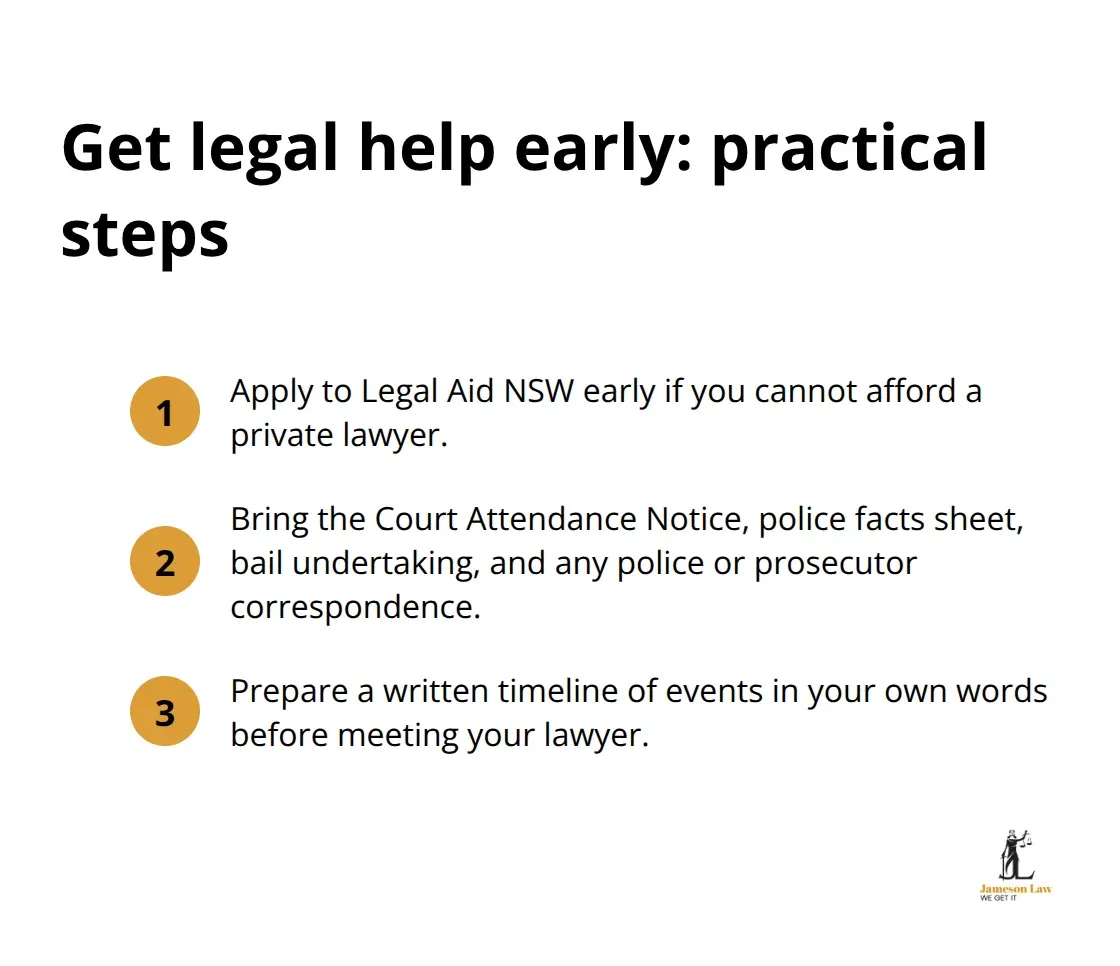
If you cannot afford a private lawyer, Legal Aid NSW assesses your financial eligibility and may fund representation. The eligibility threshold is not as restrictive as many assume, and applying early means you have legal advice before your first court appearance. When you meet with your lawyer, bring every document related to your arrest: the Court Attendance Notice, police facts sheet, bail undertaking, and any correspondence from police or prosecutors. Prepare a written timeline of events in your own words before that meeting-this helps your lawyer identify inconsistencies in the police narrative and spot potential defences immediately.
Evaluating Your Case and Plea Strategy
Your lawyer will advise whether your case is strong enough to contest at trial or whether negotiating a guilty plea to lesser charges offers a better outcome. This decision depends on the strength of the Crown’s evidence, witness credibility, and the likely sentence if convicted. Many defendants reject guilty plea offers believing they should fight every charge, but the reality is that securing a conviction on lesser charges often results in a significantly lower sentence than contesting everything and losing at trial. Research shows that early guilty pleas can result in sentencing discounts, meaning your decision to accept or reject a plea agreement directly affects how many years you might spend in prison.
Gathering Evidence and Identifying Weaknesses
Building a defence case requires evidence gathering, witness statements, and identifying weaknesses in the Crown’s allegations. Your lawyer will obtain the brief of evidence-the police documents supporting the charges-and identify what the prosecution must prove beyond reasonable doubt. If a witness statement contains inconsistencies, your lawyer explores whether that witness can be cross-examined effectively at trial. If CCTV footage exists, your lawyer obtains it and checks whether it supports or contradicts the police account. Character references and evidence of rehabilitation matter at sentencing, so start gathering letters from employers, community members, and counsellors early, even before trial.
Diversion Programs and Alternative Pathways
If mental health issues, cognitive impairment, or substance abuse contributed to your offending, your lawyer may pursue a section 14 order under the Mental Health and Cognitive Impairment Forensic Provisions Act 2020, which diverts you toward treatment rather than conviction. The NSW Department of Communities and Justice administers diversion programs including MERIT (Magistrate Early Referral into Treatment) and specialised courts like the Drug Court at some locations, which can result in dismissal of charges if you complete the program. Sentencing in NSW considers both aggravating and mitigating factors, and the Judicial Commission of NSW publishes sentencing guidelines for different offences. A first-time offender with stable employment, family support, and genuine remorse receives substantially different sentencing than a repeat offender.
Sentencing Options and Financial Penalties
Community-based orders, conditional release orders, and intensive correction orders are alternatives to prison for many offences, and your lawyer must argue for these options with evidence supporting rehabilitation. Work and Development Orders allow you to work off fines rather than face revenue enforcement action or licence suspension, so discuss this option with your lawyer if you face financial penalties.
Final Thoughts
The NSW criminal court process follows established procedures at each stage, from arrest through bail decisions, committal proceedings, and trial. Understanding which court handles your matter and what happens at each step removes uncertainty and helps you prepare realistic strategies. Early legal advice makes the difference between outcomes that protect your future and those that damage it permanently.
Contact Jameson Law today for a confidential discussion about your charges and your options. We at Jameson Law have guided countless clients through every stage of the NSW criminal court process, and our team understands the local courts, the prosecutors you will face, and the judges who will hear your case. We build defence strategies tailored to your specific circumstances and advocate for outcomes that protect your rights.
LawAccess NSW on 1300 888 529 provides free initial advice if you cannot afford private representation, and Legal Aid NSW assesses eligibility for funded representation based on your financial circumstances. Your next step is straightforward: contact a criminal law firm with experience navigating the courts you will appear in and secure legal guidance before your first police interview or court appearance.