

Immigration Visa Application NSW: Navigating Your Pathway
Getting an immigration visa application NSW approved requires absolute clarity on what’s expected and how to avoid costly procedural mistakes. At Jameson Law, our highly experienced Sydney team has helped countless applicants navigate this process successfully.
Whether you’re applying for skilled migration, family reunion, or business visas, the fundamental steps are similar—but the operational details dictate the outcome. This guide walks you through each stage, from gathering initial documents to formal lodgement with the Department of Home Affairs in 2026.
Which Visa Path Suits Your NSW Immigration Goals
| Visa Pathway | Primary Objective | Key Evidence & Focus |
|---|---|---|
| Skilled Migration | Fills critical workforce shortages in NSW. | Valid skills assessment, occupation on NSW Skills List, competitive points. |
| Family Reunion | Reuniting dependent relatives and partners. | Proof of genuine relationship, joint financials, and sponsor capacity. |
| Business & Investment | Driving economic growth and innovation. | Business history, verifiable capital, and operational intent in Australia. |
Skilled Migration Visas Lead NSW Applications
Skilled migration visas dominate NSW applications because they address genuine, immediate workforce shortages. The Skilled Nominated visa (subclass 190) remains the primary pathway for NSW residents, offering permanent residency if the state nominates you.
According to the Australian Government Department of Home Affairs, skilled permanent visa applications currently reflect a median processing time of approximately 11 months, so you should time your application strategically.
To qualify, you need a valid skills assessment for an occupation on the NSW Skills List, which identifies in-demand roles aligned with the State Migration Plan. Furthermore, your NSW residency eligibility demands that you are either currently working in your nominated occupation within the state, residing in NSW for at least six months, or holding offshore residence for the same period.
Verify Your Occupation Before Investing in Assessment
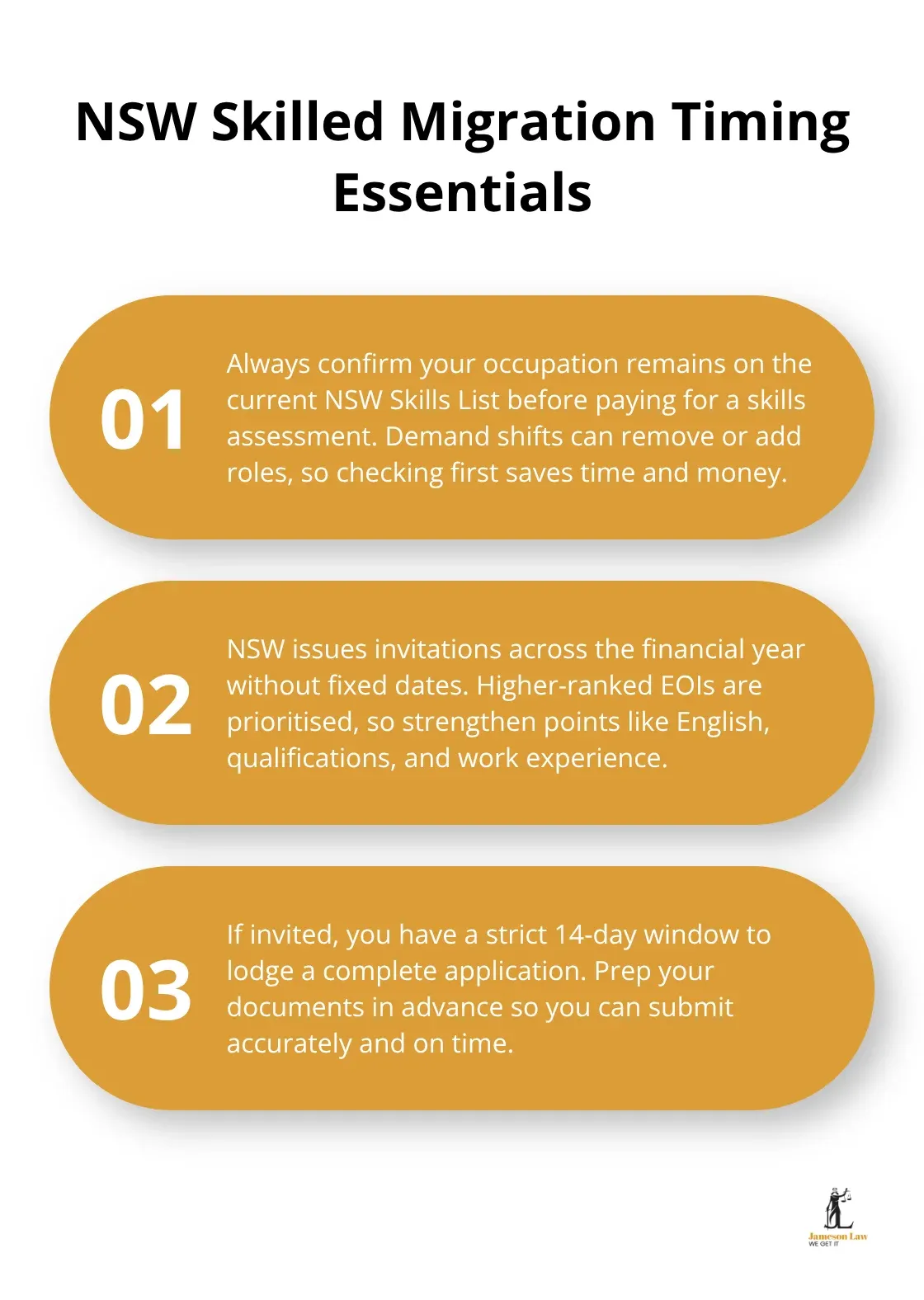
The NSW Skills List fluctuates based on dynamic workforce demand. You must verify your occupation’s current status before investing in a formal skills assessment. Invitations occur throughout the financial year without fixed dates, with selections heavily favouring higher-ranked Expressions of Interest (EOI) across age, English proficiency, education, and verified work experience.
Critical Deadline: Once NSW invites you to apply, you have exactly 14 days to submit a complete application with all supporting documents. This window cannot be extended under any circumstances.
When Professional Guidance Matters
If your circumstances involve complexities or your occupation sits on the borderline of eligibility, obtaining guidance from an expert immigration lawyer clarifies which pathway maximises your approval chances and limits exposure to refusals.
Building Your Visa Application Foundation
Organise Your Documents for Efficient Assessment
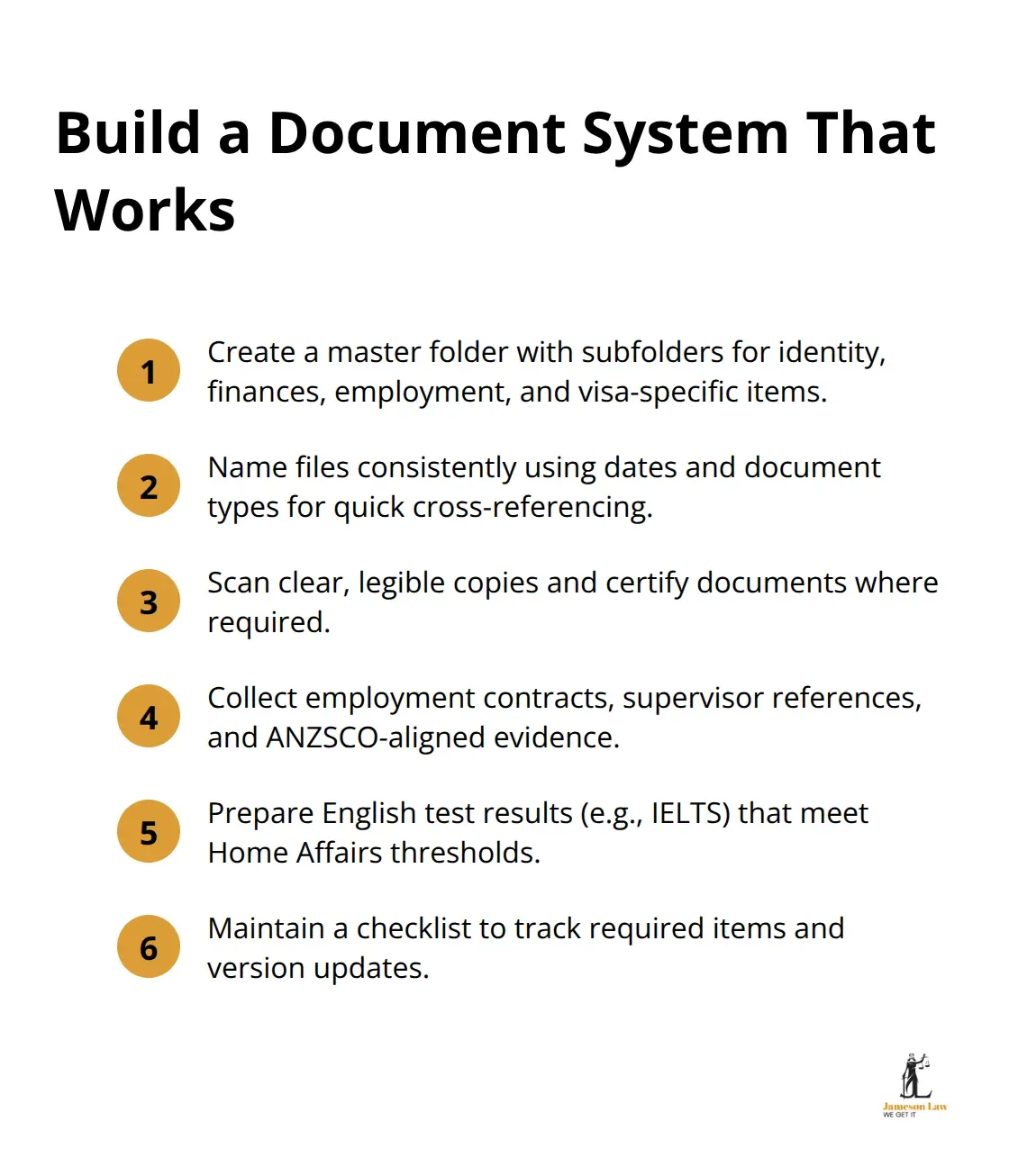
Immaculate documentation forms the backbone of every positive visa decision. Incomplete or poorly organised files remain the primary reason applications face severe delays or outright rejection. You must make the assessment straightforward by presenting everything in a logical, verifiable order.
- Skilled Migration: Provide certified employment contracts, reference letters from supervisors, and evidence that your work history strictly aligns with your ANZSCO classification.
- Student Visas: Submit NAATI-certified translations of overseas qualifications and valid English language test results (e.g., IELTS) that meet Home Affairs thresholds.
Maintain Consistency Across All Application Materials
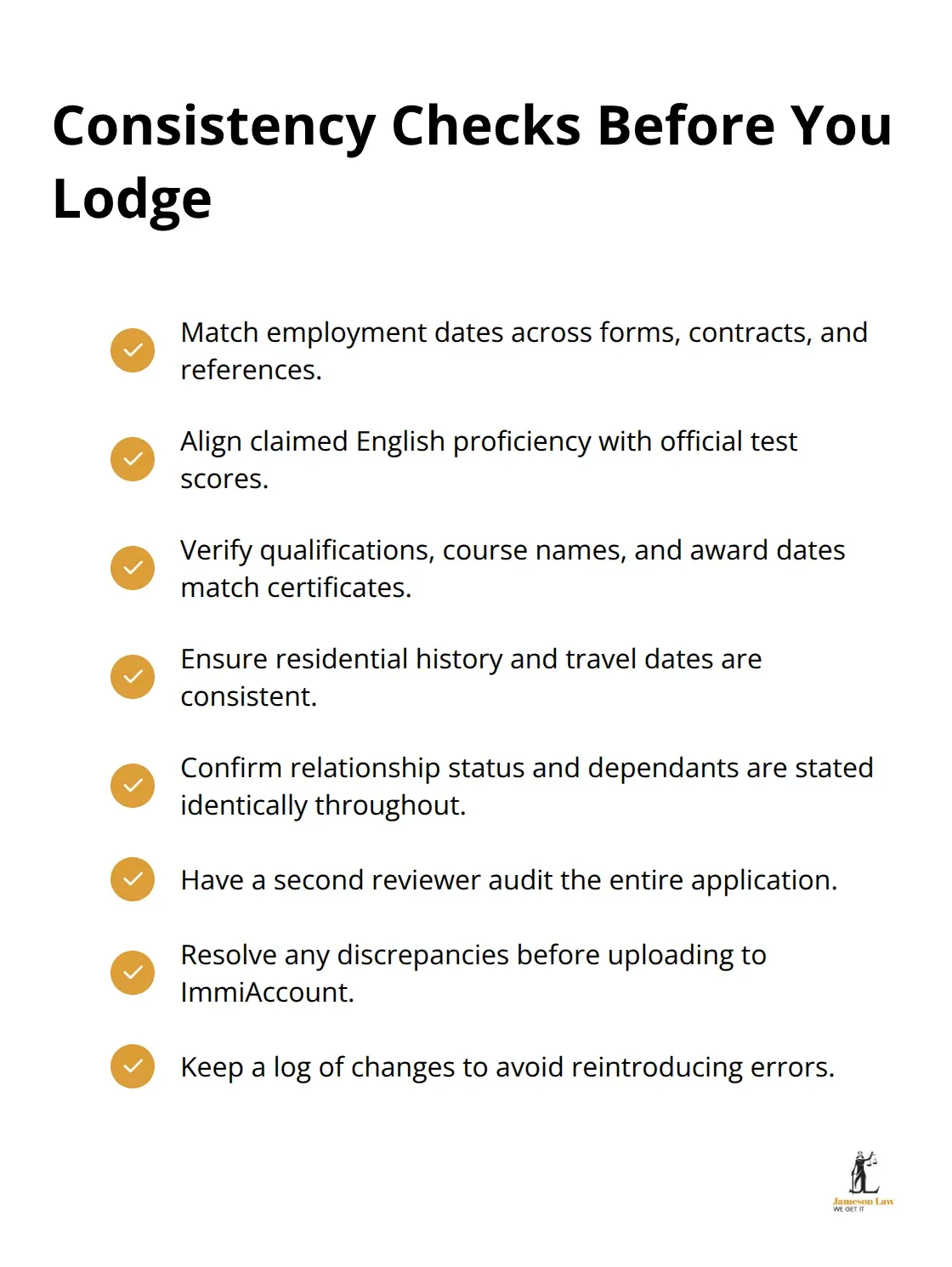
Inconsistencies between your application form, supporting documents, and interview responses trigger additional scrutiny. A single mismatch between your stated employment dates and your employment contract signals to assessing officers that your application warrants a deeper, lengthier investigation. Cross-reference every claim before formal lodgement to protect your credibility.
Meet Health and Character Obligations
Health and character requirements apply universally. The Department of Home Affairs provides a My Health Declaration service to help you complete required health checks efficiently. Overseas Student Health Cover (OSHC) is mandatory for student visa holders. Character requirements may include a police background check; the Home Affairs website specifies which countries trigger automatic character checks, so verify your position early.
Lodge Your Application Through ImmiAccount
Once gathered, you lodge your application through ImmiAccount. While you do not legally need a registered migration agent to lodge, highly experienced legal assistance solidifies your application. Nomination assessments for skilled visas typically conclude within six weeks of payment; contacting the assessment office during this period only risks extending the timeline.
What Derails Most Visa Applications
Inconsistencies Between Your Form and Supporting Documents
The difference between an approval and a refusal often rests on details applicants overlook. When you lodge through ImmiAccount, the system performs automatic validation checks on mandatory fields, but these checks only catch formatting errors, not factual inconsistencies. Claiming English proficiency while submitting test results below the required threshold will immediately stall your file.
Missing Documents That Trigger Automatic Delays
Missing documents carry a high rejection risk because officers simply cannot assess claims without evidence. For example, student visa applicants who submit a Letter of Offer but forget the active Confirmation of Enrolment (CoE) will face immediate issues. Download the official, up-to-date checklist for your specific subclass directly from the Home Affairs website and tick off each item systematically.
Health and Character Checks Cannot Be Rushed
Health and character requirements are non-negotiable. If you fail a health examination or character check, your application is refused regardless of your occupational qualifications. Delays in obtaining background checks from overseas authorities can stall your entire application for months. Initiate health and character processes immediately upon deciding to apply, not after lodging your primary visa form.
Final Thoughts
A successful immigration visa application NSW hinges on three fundamentals: thoroughly understanding your specific visa pathway, preparing meticulous documentation, and recognising when professional guidance is required to strengthen your case. Skilled migration, family reunion, and business visas all demand the same rigour in consistency and compliance.
After you lodge your application through ImmiAccount, your role shifts from active preparation to monitoring. Since skilled permanent visas take approximately 11 months to process, track your status online and respond promptly if the department requests additional information.
If your circumstances are complex, your occupation sits on the borderline of eligibility, or you’ve received a request for further information from Home Affairs, highly experienced legal advice becomes invaluable. At Jameson Law, we provide authoritative immigration law assistance tailored to your specific situation, helping you navigate ambiguity and strengthen weak areas before they derail your application in Sydney and across NSW.