

Waiting for a migration visa decision can feel endless. The processing timeline varies dramatically depending on your visa type, application quality, and current departmental workload.
At Jameson Law, our expert team has guided thousands of clients through this process, and we know exactly what influences your timeline. This guide breaks down realistic timeframes and shows you how to move your application forward faster in 2026.
How Long Does Each Visa Type Actually Take?
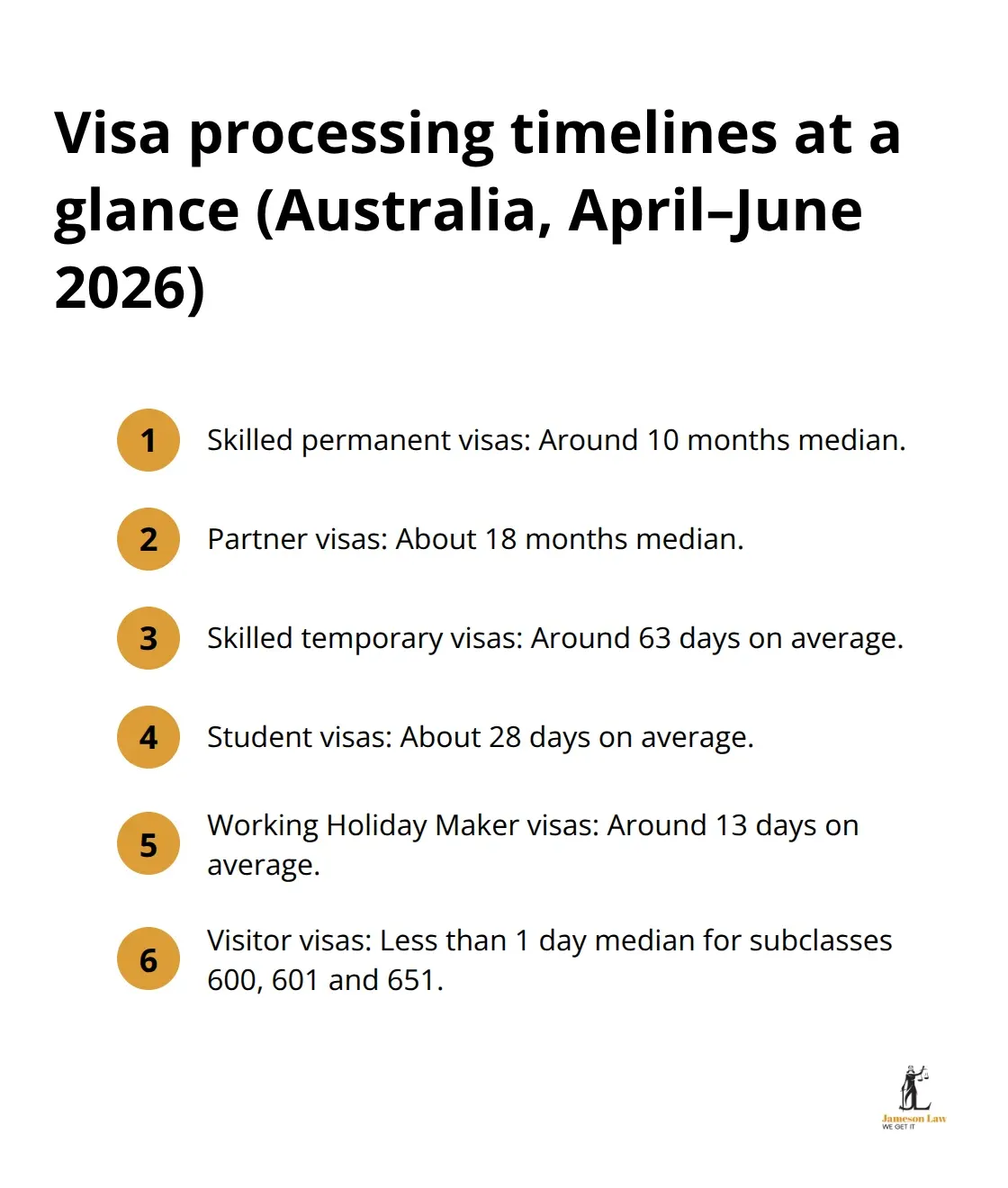
The variation in processing times reflects the complexity of each visa category. Permanent visas require extensive verification because they grant long-term residency rights, whereas temporary visas involve simpler assessments. Below is a realistic breakdown of the current landscape based on recent Department of Home Affairs processing data:
| Visa Category | Median Processing Time | Key Factors & Exceptions |
|---|---|---|
| Skilled Permanent | ~ 10 Months | Prioritised by Ministerial Direction No. 105 (regional, healthcare, teaching roles can take ~6 months). |
| Partner Visas | ~ 18 Months | Complex cases with character/health issues or multiple countries can take significantly longer. |
| Skilled Temporary | ~ 63 Days | Faster processing as they involve fewer permanent verification steps. |
| Student Visas | ~ 28 Days | Can be delayed if documentation for the Genuine Student requirement is incomplete. |
| Working Holiday | ~ 13 Days | Rapid turnaround, provided applications are completely decision-ready. |
| Visitor Visas | < 1 Day | Subclass 600 can take longer if the Department requests more info on travel intentions. |
Skilled permanent visas sit at around 10 months
Skilled permanent visas have a median processing time of approximately 10 months. This is the baseline, but your actual timeline depends heavily on your occupation and whether your employer operates in a regional area. Ministerial Direction No. 105 prioritises regional employer-sponsored roles, healthcare occupations, and teaching positions, which means some applicants move through the queue faster than others. If you work in a high-demand occupation like nursing, you could see a decision in 6 months. If you work in a lower-priority occupation, expect closer to 12 months or longer.
Partner visas take substantially longer
Partner visas have a median processing time of 18 months. This is substantially longer because the Department must rigorously verify the authenticity of your relationship and conduct thorough character and health assessments. Incomplete applications cause particular damage here. Missing police clearances, health reports, or relationship evidence will trigger information requests that add months to your timeline.
Business visas operate on different schedules
Business and investment visas do not typically appear in the Department’s published processing times, which tells you these visas are handled on a case-by-case basis due to their complexity. If you consider a business migration pathway, you will need to discuss timelines individually with a highly experienced legal adviser.
What Actually Slows Down Your Visa Application
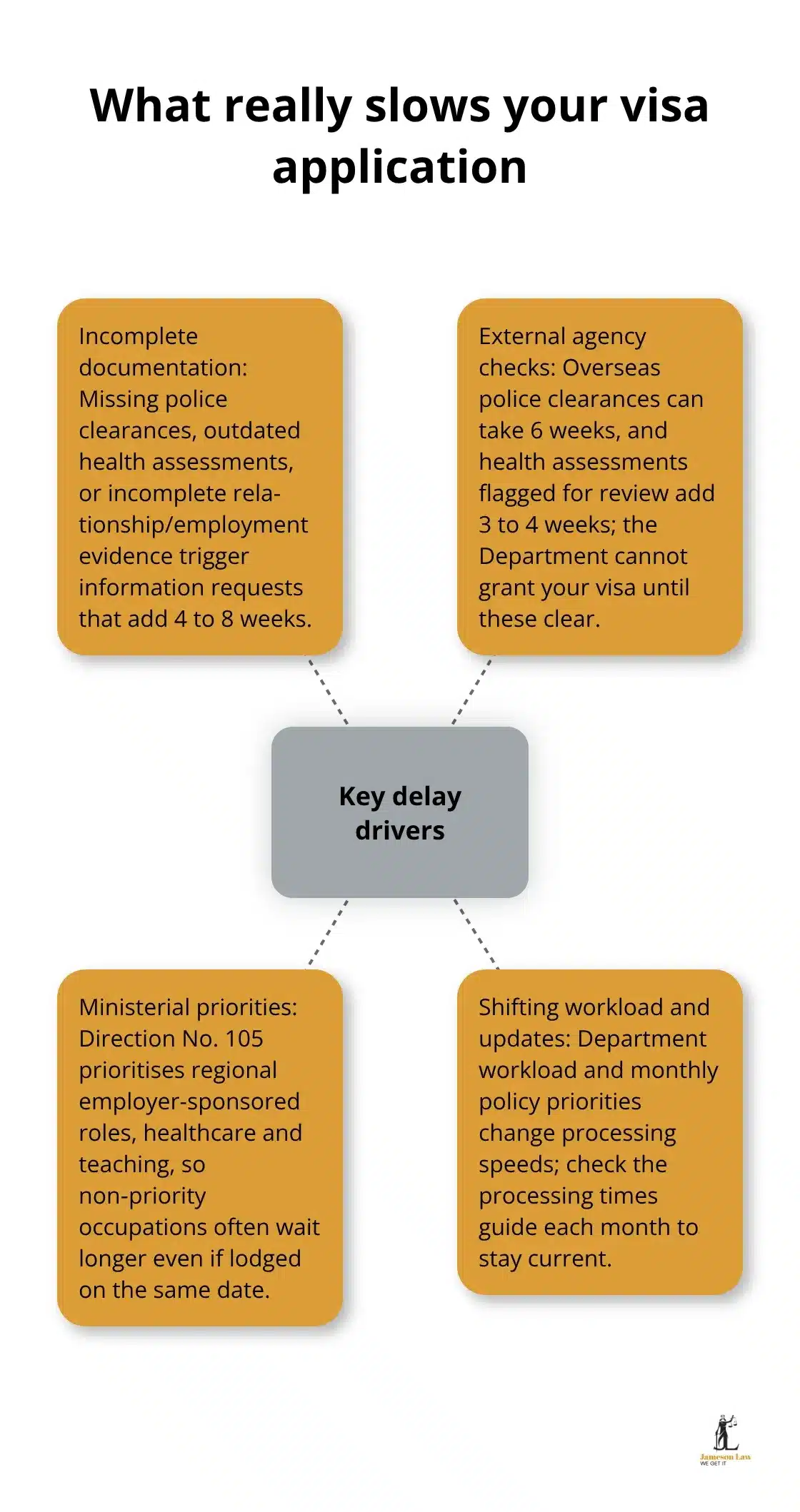
The Department of Home Affairs publishes median processing times, but these figures mask the real delays that occur inside individual applications. Applications with identical visa types move through at vastly different speeds. The difference almost always comes down to three controllable factors.
1. Incomplete documentation triggers information requests
Incomplete documentation stands as the single largest cause of delay across all visa types. Missing police clearances, outdated health assessments, or incomplete relationship evidence forces the Department to issue formal requests that add 4 to 8 weeks to your timeline. Online lodgement through ImmiAccount creates a clear record of what you submitted, but submitting incomplete documents online actually worsens your situation. Your application enters a holding pattern until the missing data is provided.
2. Health and character checks depend on external agencies
Health and character assessments depend on responses from agencies outside the Department’s control. A police clearance from overseas might take 6 weeks. A health assessment flagged for further review can extend 3 to 4 weeks beyond the standard medical exam. The Department cannot grant your visa until these checks clear. For skilled permanent visas processing in 10 months, health and character checks can consume 6 to 8 weeks of that period if not managed proactively.
3. Ministerial Direction No. 105 reshapes processing priority
The Department does not process applications strictly in the order they were lodged. Ministerial Direction No. 105 prioritises regional employer-sponsored skilled roles, healthcare occupations, and teaching positions. A regional accountant might receive a decision in 6 months while a metropolitan IT professional waits 12 months, even though both submitted on the same date. This reflects government policy, not application quality.
How to Accelerate Your Visa Processing
Start Health and Character Checks Immediately
Most applicants slow their own processing down through preventable mistakes. Start your health and character checks immediately after you decide to apply for a visa, not after the Department requests them. Order your police clearances and medical assessments from the outset. This parallel processing means these checks run alongside the Department’s assessment rather than halting your application.
Submit a Genuinely Decision-Ready Application
Your documentation package must be “decision-ready” before you click submit. This means:
- Every police clearance is current.
- Every health assessment is completed with approved panel physicians.
- Every employment record is certified.
- Every relationship document is robust and verified.
- Every skills assessment is currently valid.
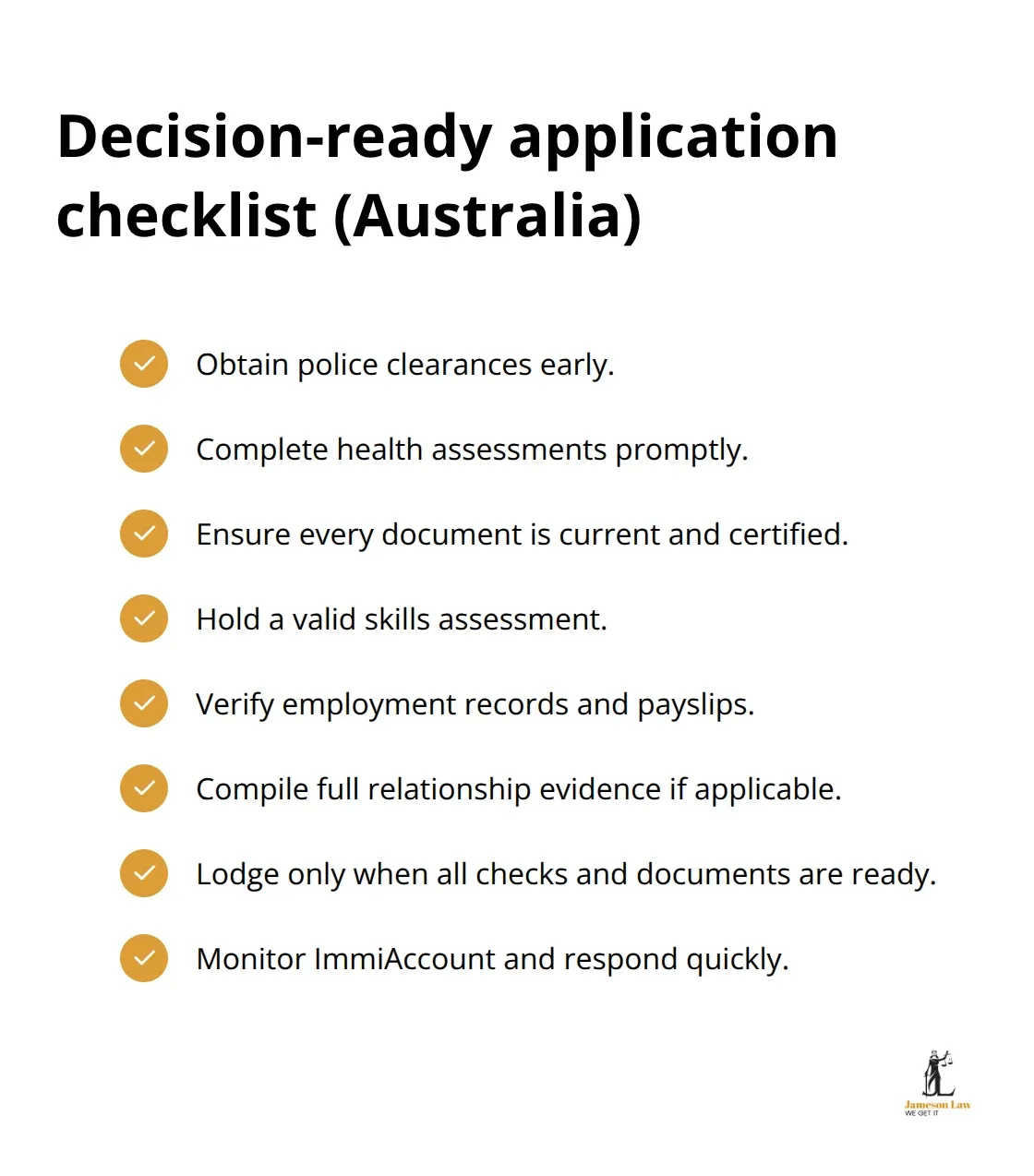
Audit your entire application against the specific visa criteria before you lodge. Incomplete evidence creates suspicion that extends timelines significantly.
Leverage Complete Documentation for Continuous Assessment
Applications with complete documentation move through assessment faster because the Department assesses them continuously rather than pausing to request missing information. The Department of Home Affairs updates processing times monthly, and these times reflect the reality of applications that meet submission standards. If you fall into the backlog of cases requiring information requests, your timeline extends far beyond the published medians.
Strategic Tip: The practical path forward is straightforward—gather everything now, verify completeness against the exact visa criteria, submit a decision-ready application, and monitor your ImmiAccount regularly. Speed comes from flawless preparation, not from hoping the Department processes an incomplete file faster.
Final Thoughts
Your migration visa timeline compresses or extends based on decisions you make before you submit your application. While the Department of Home Affairs publishes median processing times, you ultimately control the acceleration factors that matter most. By starting health and character checks immediately and ensuring your application is 100% decision-ready at the time of lodgement, you drastically reduce the chance of debilitating delays.
The clients who experience the fastest migration visa timeline are those who gather documentation thoroughly, ensuring the Department never needs to pause and request missing information. Those who experience delays are typically those who submit incomplete applications and then scramble to provide missing evidence.
If you need expert guidance navigating your specific situation or want highly experienced assistance preparing a flawless, decision-ready application, contact Jameson Law for a consultation. Our Sydney immigration team will help ensure your pathway to Australia is as swift and secure as possible.