PUBLICATION

Australia Visa Processing Times: What You Need to Know

"Understand Australia visa processing times, typical delays, and how to speed up your application approval."
Australia Visa Processing Times: What You Need to Know

Australia visa processing times vary dramatically depending on your visa category and application quality. At Jameson Law, we’ve helped hundreds of applicants navigate these timelines and understand what actually affects how long they’ll wait.

The difference between a fast approval and a delayed one often comes down to preparation and knowing the system. This guide breaks down realistic timeframes and shows you how to avoid common delays.

What Are the Real Processing Times for Each Visa Type

Skilled Migration Visas Move at Different Speeds

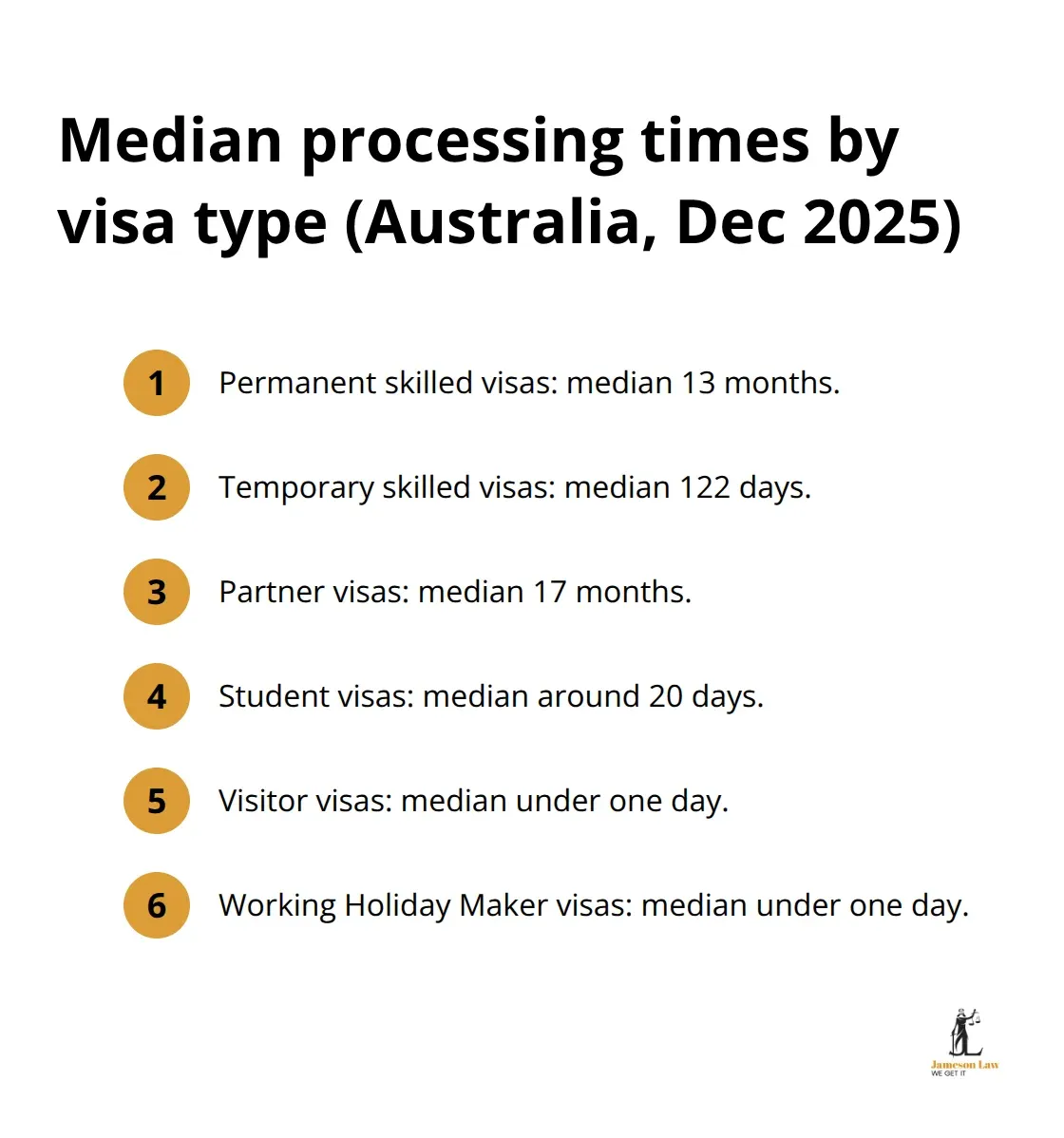
Skilled migration visas take between 6 and 13 months to process, depending on occupation demand and application completeness. The Department of Home Affairs reports a median processing time of 13 months for permanent skilled visas as of December 2025, though this varies significantly based on Ministerial Direction No. 105, which prioritises employer-sponsored visas for regional Australia and occupations in healthcare and teaching. Temporary skilled visas move faster at a median of 122 days, but incomplete applications destroy this advantage-submitting all required documents upfront matters more than most applicants realise.

Lodging your nomination and visa applications simultaneously for temporary skilled visas improves efficiency considerably. Occupation demand fluctuates monthly, so a 13-month estimate today might compress to 10 months next quarter if your occupation suddenly receives prioritisation. This unpredictability makes early application critical because waiting costs you time you cannot recover.

Family and Student Visas Operate on Completely Different Timelines

Partner visas sit at a median of 17 months, with complexity and relationship verification driving extended waits that regularly stretch past two years. Student visas process much faster at around 20 days median, but the Genuine Student assessment can add significant time if the Department of Home Affairs questions your intentions. The Department recommends lodging student applications well before your course start date and including all supporting documentation from day one-deferrals caused by late approvals cost thousands in accommodation and travel changes.

Visitor visas represent the exception to processing delays, with median times under one day for subclasses 600, 601, and 651. Working Holiday Maker visas also process in under one day. The gap between visitor visas and skilled or family visas reveals how assessment intensity directly impacts timeline.

Snapshot of median processing times for common Australian visa categories as of December 2025. - australia visa processing times

What Actually Slows Down Your Application

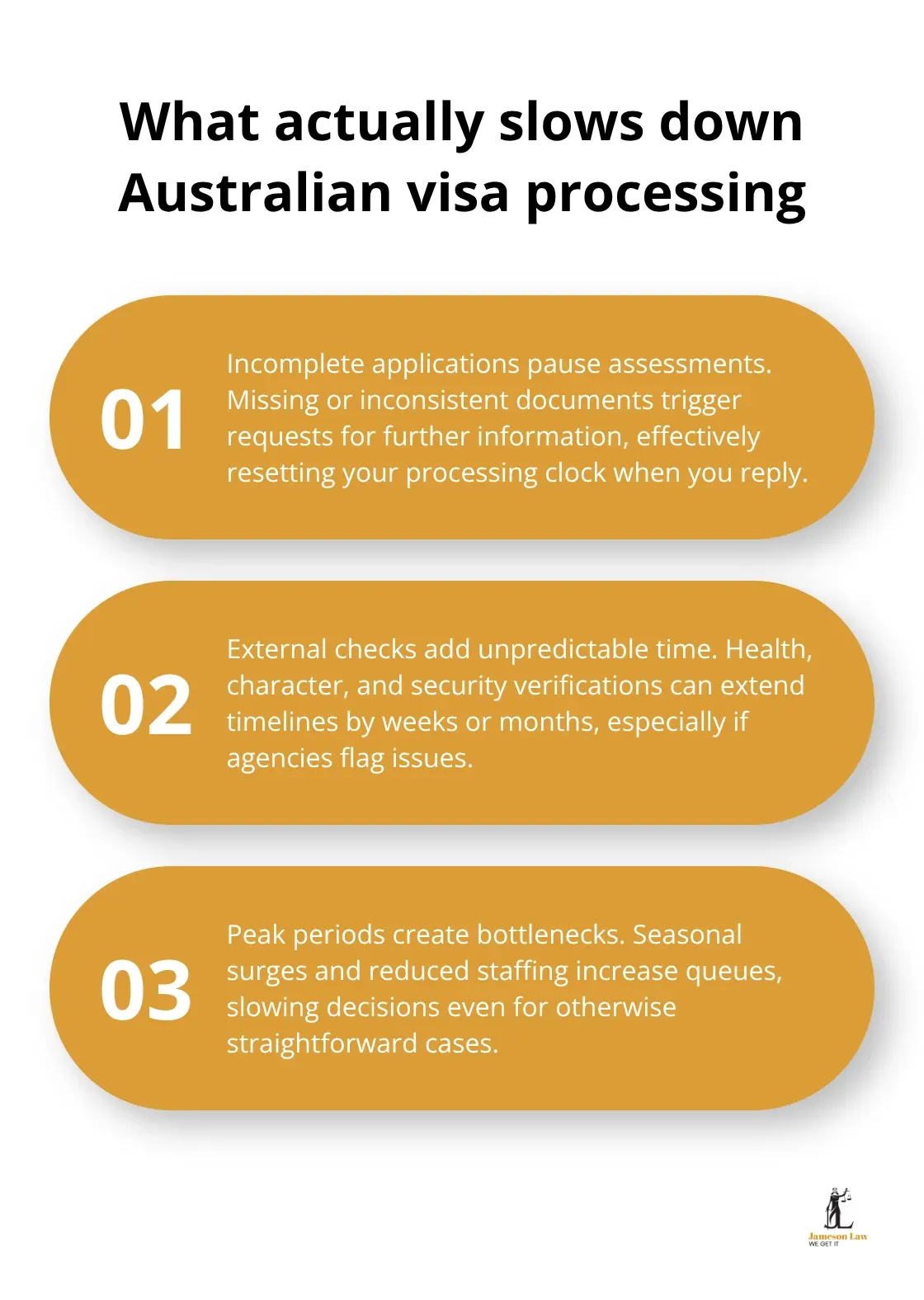
Health checks, character assessments, and security verifications add weeks or months depending on whether external agencies respond quickly or flag issues requiring additional investigation. Application volume during peak periods compounds delays; December 2025 saw backlogs across student, skilled, and partner categories due to holiday staffing reductions and a surge in lodgements targeting February–March 2026 intakes.

The Department publishes updated processing times regularly through their visa processing times guide, but these figures represent recent decisions, not guarantees. Your application’s actual timeline depends on documentation quality, background complexity, and departmental capacity in your specific visa stream at the moment your application lands. Understanding these variables helps you prepare strategically rather than hope for the best.

Three major factors that commonly delay Australian visa applications.

What Really Delays Your Visa Application

Incomplete Applications Destroy Your Timeline

Incomplete applications represent the single biggest cause of delays across every visa category, and the Department of Home Affairs confirms this repeatedly. When you submit missing documents, inconsistent information, or poorly organised evidence, the department does not automatically approve your application while waiting for clarification. Instead, they pause your assessment, send you a request, and your processing clock effectively resets once you respond. A document submitted on day one versus day 90 means a 90-day delay you created yourself.

The department processed Skilled temporary visas in a median of 122 days as of December 2025, but this assumes your application was complete from lodgement. Incomplete applications destroy this timeline entirely. You control this variable more than any other factor in your application.

External Checks Add Unpredictable Delays

Health checks, character assessments, and external security assessments and character checks add weeks or months depending on whether external agencies respond quickly or flag issues that require additional investigation. Security assessments in particular can stretch timelines dramatically if the department identifies any concerns requiring clarification or further investigation.

The complexity of your background directly influences how quickly these external checks complete. Someone with a straightforward employment history and no security concerns moves through these checks in weeks, while someone with international work history, visa changes, or any flags requiring verification can wait months for completion. You cannot accelerate these checks, but you can prepare comprehensive documentation that reduces the likelihood of additional requests.

Peak Periods Create Genuine Bottlenecks

Application volume during peak periods creates genuine delays beyond your control, and December 2025 proved this conclusively. The department faced reduced staffing during the December holiday period while simultaneously processing a surge in applications targeting February–March 2026 intakes for universities and skilled migration programmes. Partner visas faced very high delays during this period, skilled migration experienced high delays, and even student visas with their typically fast 20-day median saw significant slowdowns.

The department’s quarterly reports show how application flow rates change across quarters, with seasonal peaks in July and August for student visas and November through February for skilled migration creating predictable bottlenecks. Lodging your application outside peak periods genuinely improves your timeline if you have flexibility, though most applicants cannot control when they apply.

Policy Changes Increase Assessment Intensity

Late 2025 policy refinements increased assessment times across multiple visa categories. The department now conducts more detailed financial capacity checks for student visas and higher sponsor verification requirements for employer-sponsored visas. These policy changes mean applications submitted now face more thorough document reviews than applications submitted six months ago.

What you can control is ensuring your application arrives decision-ready with every document verified, organised, and cross-referenced to department requirements before submission. This preparation directly counters the impact of policy changes and application volume by removing the department’s reason to pause your assessment and request clarification.

How to Navigate These Delays Strategically

Understanding these delay factors allows you to build realistic timelines and contingency plans for your visa journey. The next section explores concrete strategies to speed up your application and avoid the delays that affect most applicants.

How to Actually Speed Up Your Visa Application

Submit Complete Applications on Day One

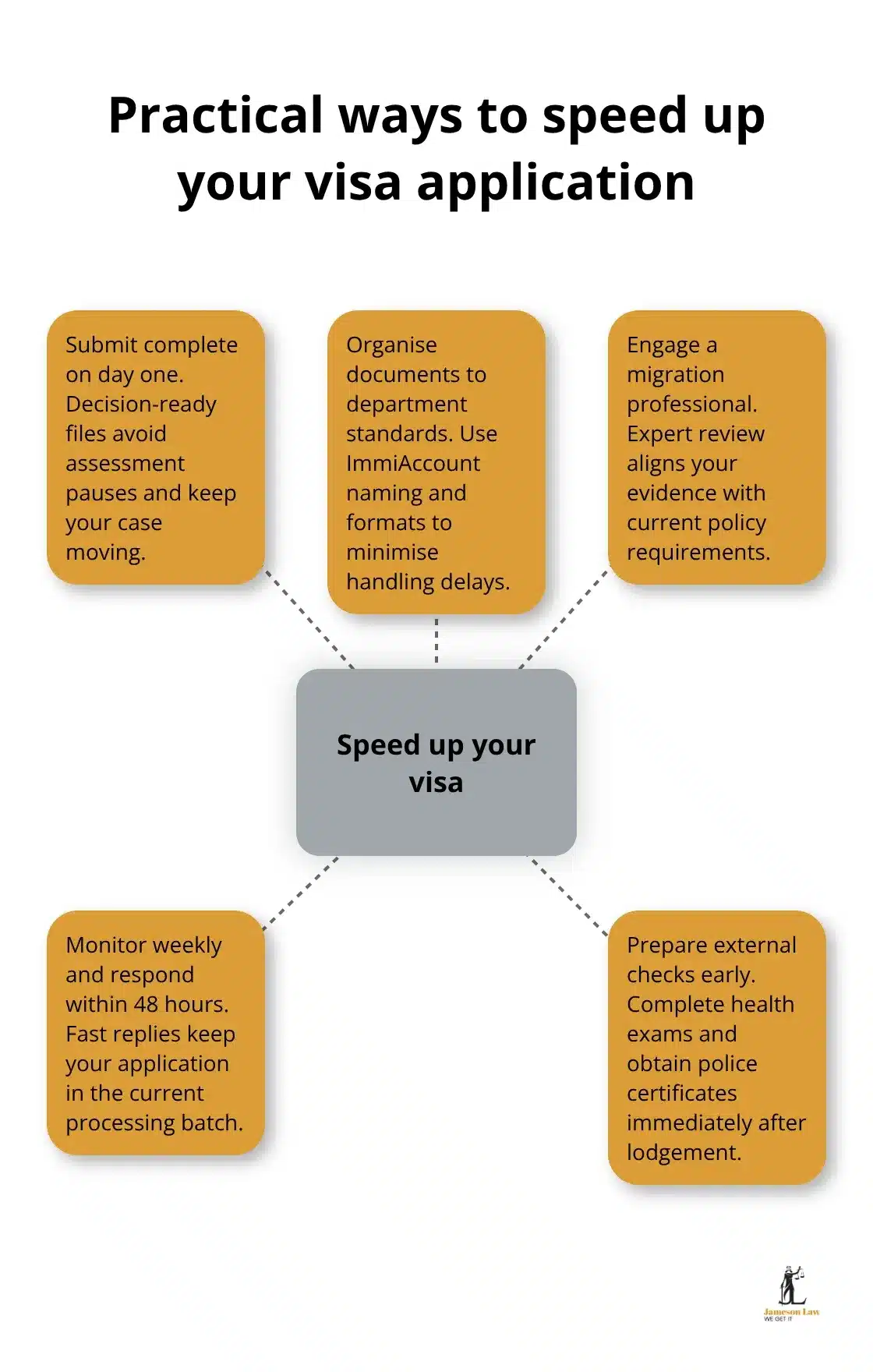
Submit your complete application on day one, not day 60. This single decision determines whether you wait 122 days for a skilled temporary visa or 200+ days. The Department of Home Affairs processes applications sequentially, meaning incomplete submissions trigger assessment pauses that reset your processing clock when you respond. You control this variable entirely.

Hub-and-spoke visual showing five steps to accelerate Australian visa processing. - australia visa processing times

Organise every document before lodgement: employment letters, qualification certificates, financial records, health assessments, character declarations, and relationship evidence if applicable. Cross-reference each document against the department’s checklist for your specific visa subclass. Missing a single page costs you months, not days. The department’s December 2025 backlog demonstrated this clearly-applications submitted with complete documentation moved through queues while incomplete submissions languished waiting for clarification.

Organise Documents in the Format the Department Requires

Use ImmiAccount, the Department of Home Affairs’ online portal, to upload documents in the exact format and naming structure the department specifies. Poor document organisation forces departmental staff to spend additional time locating information, which delays assessment. Create a spreadsheet matching each required document to your lodgement, noting upload dates and document versions. This preparation takes 10–15 hours upfront and saves 60–120 days in processing time.

Engage Professional Migration Guidance

Professional migration agents and legal practitioners understand departmental assessment priorities and documentation standards that most applicants miss entirely. Applications face rejection or delay because applicants misunderstand financial capacity requirements for student visas or fail to organise relationship evidence properly for partner visas. A migration professional reviews your application before lodgement, identifies gaps before submission, and ensures your documents align with current policy requirements.

This guidance costs money upfront but prevents costly delays and refusals. The department’s late 2025 policy refinements increased financial capacity checks and sponsor verification requirements-changes most applicants discover only after lodgement. Professional guidance positions you ahead of these shifts.

Monitor Your Application Weekly and Respond Promptly

Monitor your ImmiAccount status weekly, not monthly. The department sends requests for additional information through ImmiAccount, and delayed responses directly extend your timeline. Set a calendar reminder to check your account every seven days. The moment you see a request from the department, respond within 48 hours with organised, clearly labelled documents.

Department staff process applications in batches, and prompt responses mean your application stays in the current batch rather than deferring to the next cycle. Applicants responding within two days to departmental requests reduced overall processing delays compared to those responding after one week. Track your application’s progress against global visa processing times for your specific visa category and lodgement date. The Department of Home Affairs publishes quarterly reports showing application flow rates and decision volumes. If median processing time for your visa type is 13 months and you lodged four months ago, expect your assessment to progress. If eight months have passed with no updates beyond initial acknowledgement, contact the department through official channels to confirm your application status.

Prepare External Checks in Advance

External checks-health assessments, character verifications, security clearances-add unpredictable delays you cannot control, but you can accelerate them. Complete your health examinations immediately after lodgement rather than waiting for a departmental request. Obtain police certificates and character references before submission. These documents often require weeks to obtain from overseas agencies, and sourcing them proactively removes this delay factor. Your realistic timeline improves not through hoping the department moves faster, but through eliminating every delay you control and preparing for those you cannot.

Final Thoughts

Australia visa processing times range from under one day for visitor visas to 17 months for partner visas, but application quality determines your actual timeline far more than these median figures suggest. Incomplete documentation, disorganised evidence, and slow responses to departmental requests add months to your wait regardless of your visa category. You control these factors entirely, and controlling them separates applicants who experience smooth processing from those who face extended delays.

Professional migration guidance identifies documentation gaps before lodgement and positions your application ahead of policy changes that catch most applicants off guard. The department’s late 2025 refinements to financial capacity checks and sponsor verification requirements demonstrate how quickly assessment standards shift, and our team at Jameson Law anticipates these changes to protect your timeline. Contact us to review your visa strategy and build a realistic timeline for your application based on your specific circumstances.

Speak to an Expert Lawyer today

Laywers-Jameson-Law-The-best-law-firm-in-Sydney- Sydney Lawyers - Sydney
BOOK NOW

WE'RE IN IT TO WIN IT

Book your consultation

Book Now
Book Now Mobile 06 02 2025

This form submission is encrypted and secured to ensure your information remains confidential.

What our Clients

Related Publications:

What our clients say

.

Jameson Law - Voted the Best Law firm in Sydney Award

Legal Answers ... In Short

We're here to help

Our mission is to ensure our client matters are resolved successfully every time. Success to us does not simply involve winning, but moreover ensuring we take the most feasible, economic and stress-free path to help our clients achieve their goals. We fight hard for our clients, and always go by the motto: we’re in it to win it.

Jameson Law - Best Law Firm in Sydney

WE'RE IN IT TO WIN IT

Book your consultation

Call us now on (02) 8806 0866 or fill out the form below

Book Now Mobile

This form submission is encrypted and secured to ensure your information remains confidential.

WE'RE IN IT TO WIN IT

Book your consultation

Book Now Mobile 06 02 2025
lock

This form submission is encrypted and secured to ensure your information remains confidential.

Our Sydney Offices

Offices Parramatta and Sydney Jameson Law
Parramatta CBD - Head Office
jameson Law - Blacktown
jameson Law - Liverpool Office
Jameson Law - Bankstown
Court Houses We Frequent Jameson Law

Court Houses We Frequent

Balmain Local Court

Registry: Monday to Friday, 9:00am to 4:30pm

Bankstown Local Court

Court Operating Hours: 9:30am-4:30pm

Blacktown Local Court

Registry Hours: 9:00 – 4:30
Telephone Hours: 8:30 -4:30
Days open: Mon-Fri

Burwood Local Court

Registry Hours: 9:00 – 4:30
Telephone Hours: 8:30 – 4:30
Days open: Mon – Fri

Campbell Local Court

Registry Hours: 9:00 – 4:30
Telephone Hours: 8:30 – 4:30
Days open: Mon – Fri

Central Local Court

Registry Hours: 9:00 – 1:00 and 2:00 – 4:30
Telephone Hours: 8:30 – 4:30

Downing Local Court

Registry Hours: 9:00 – 1:00 and 2:00 – 4:30
Telephone Hours: 8:30 – 4:30

Wollongong Local Court

Registry Hours: 9:00 – 1:00 and 2:00 – 4:30
Telephone Hours: 8:30 – 4:30

Fairfield Local Court

Registry Hours: 9:00 – 1:00 and 2:00 – 4:30
Telephone Hours: 8:30 – 4:30

Hornsby Local Court

Registry Hours: 9:00 – 1:00 and 2:00 – 4:30
Telephone Hours: 8:30 – 4:30

Liverpool Local Court

Registry Hours: 9:00 – 1:00 and 2:00 – 4:30
Telephone Hours: 8:30 – 4:30

Manly Local Court

Registry Hours: 9:00 – 1:00 and 2:00 – 4:30
Telephone Hours: 8:30 – 4:30

Newtown Local Court

Registry Hours: 9:00 – 1:00 and 2:00 – 4:30
Telephone Hours: 8:30 – 4:30

Parramatta Local Court

Registry Hours: 9:00 – 1:00 and 2:00 – 4:30
Telephone Hours: 8:30 – 4:30

Penrith Local Court

Registry Hours: 9:00 – 1:00 and 2:00 – 4:30
Telephone Hours: 8:30 – 4:30

Sutherland Local Court

Registry Hours: 9:00 – 1:00 and 2:00 – 4:30
Telephone Hours: 8:30 – 4:30

Waverley Local Court

Registry Hours: 9:00 – 1:00 and 2:00 – 4:30
Telephone Hours: 8:30 – 4:30

Windsor Local Court

Registry Hours: 9:00 – 1:00 and 2:00 – 4:30
Telephone Hours: 8:30 – 4:30

Wollongong Local Court

Registry Hours: 9:00 – 1:00 and 2:00 – 4:30
Telephone Hours: 8:30 – 4:30

Downing Centre District Court

Registry Hours: 9:00 – 4:30
Telephone Hours: 8:30 – 4:30
Days open: Mon – Fri

Parramatta District Court

Registry Hours: 9:00 – 4:30
Days open: Mon-Fri

Penrith District Court

Registry Hours: 9:00 – 4:30
Days open: Mon-Fri

Campbelltown District Court

Registry Hours: 9:00 – 4:30
Days open: Mon – Fri

Liverpool District Court

Registry Hours: 9:00 – 4:30
Days open: Mon – Fri

Wollongong District Court

Registry Hours: 9:00 – 1:00 and 2:00 – 4:30
Telephone Hours: 8:30 – 4:30

Supreme Court New South Wales

Registry Hours: 9:00 AM – 4:30 PM
Telephone Hours: 8:30 AM – 4:30 PM
Days Open: Monday to Friday

Federal Circuit and Family Court of Australia

Registry Hours: 9:00 AM – 4:30 PM
Telephone Hours: 8:30 AM – 5:00 PM
Days Open: Monday to Friday

Federal Court

Monday to Friday, 8:30 AM – 4:30 PM

High Court

Monday to Friday, 8:30 AM – 5:00 PM

Children’s Court of New South Wales

Registry Hours: 9:00 AM – 4:30 PM
Telephone Hours: 8:30 AM – 4:30 PM
Days Open: Monday to Friday

Coroner’s Court New South Wales

Registry Hours: 9:00 AM – 4:30 PM
Telephone Hours: 8:30 AM – 4:30 PM
Days Open: Monday to Friday

Industrial Relations Commission of New South Wales

Registry Hours: 9:00 AM – 4:30 PM
Telephone Hours: 8:30 AM – 4:30 PM
Days Open: Monday to Friday

Land and Environment Court of New South Wales

Registry Hours: 9:00 AM – 4:30 PM
Telephone Hours: 8:30 AM – 4:30 PM
Days Open: Monday to Friday

WE'RE IN IT TO WIN IT

Book your consultation

Book Now
Book Now Mobile 06 02 2025
lock

This form submission is encrypted and secured to ensure your information remains confidential.