

Getting a visa approved in NSW involves far more than simply filling out forms and hoping for a positive outcome. The process demands absolute precision, relentless attention to detail, and a deep understanding of what Australian immigration authorities actually scrutinise.
At Jameson Law, our expert immigration lawyer Sydney team has helped countless individuals navigate these complex applications successfully. Whether you are pursuing skilled migration, family reunion, or temporary work arrangements in 2026, understanding your legal requirements makes all the difference between approval and costly refusal.
Visa Categories and Documentation Requirements in NSW
Skilled Migration Visas
NSW actively attracts professionals through skilled migration pathways managed by the Department of Home Affairs. The Skilled Nominated visa (subclass 190) and the Skilled Work Regional visa (subclass 491) both require highly competitive NSW state sponsorship.
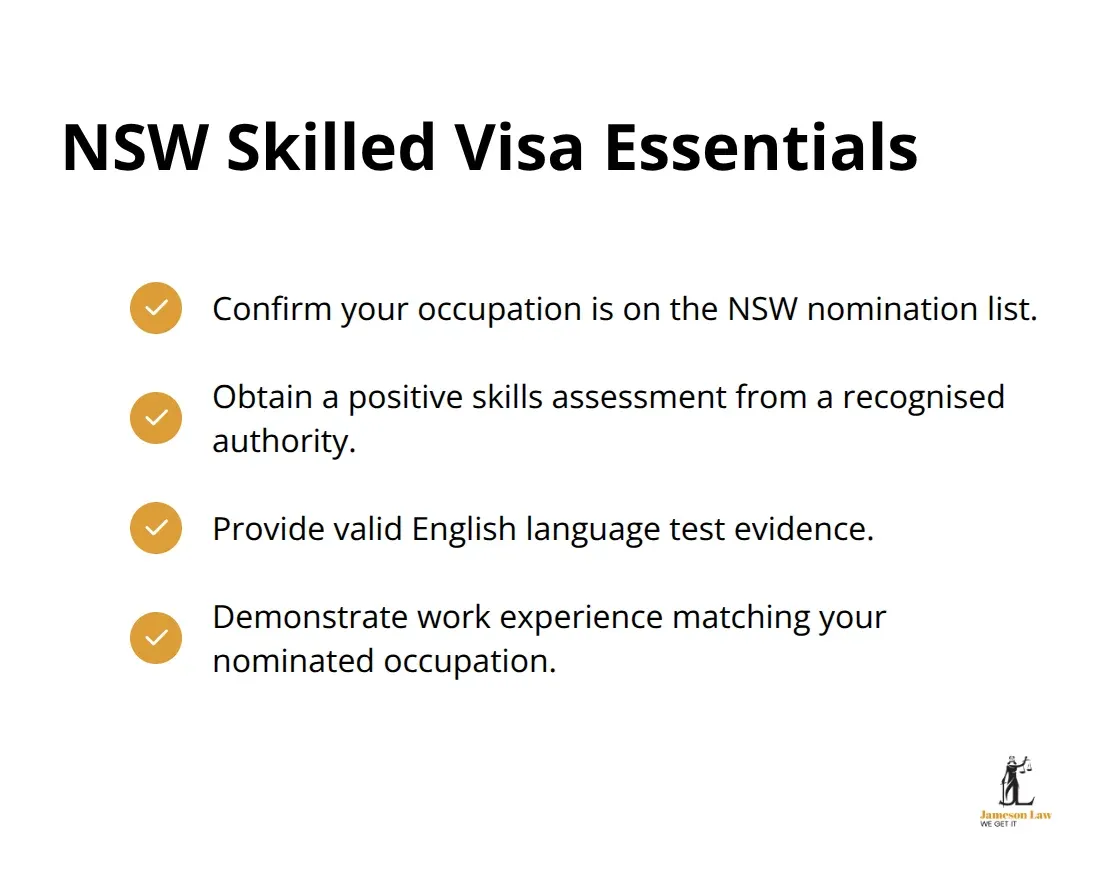
Under the 2026-27 Migration Program, the Subclass 190 remains heavily prioritised for onshore applicants. To qualify, you must secure a positive skills assessment from a recognised authority, prove English language proficiency (typically IELTS or PTE), and demonstrate work experience that perfectly matches your nominated occupation. Processing times currently range from 8 to 12 months, assuming your application is “decision-ready.”
| Visa Pathway | Core Documentation Required | Current Challenges |
|---|---|---|
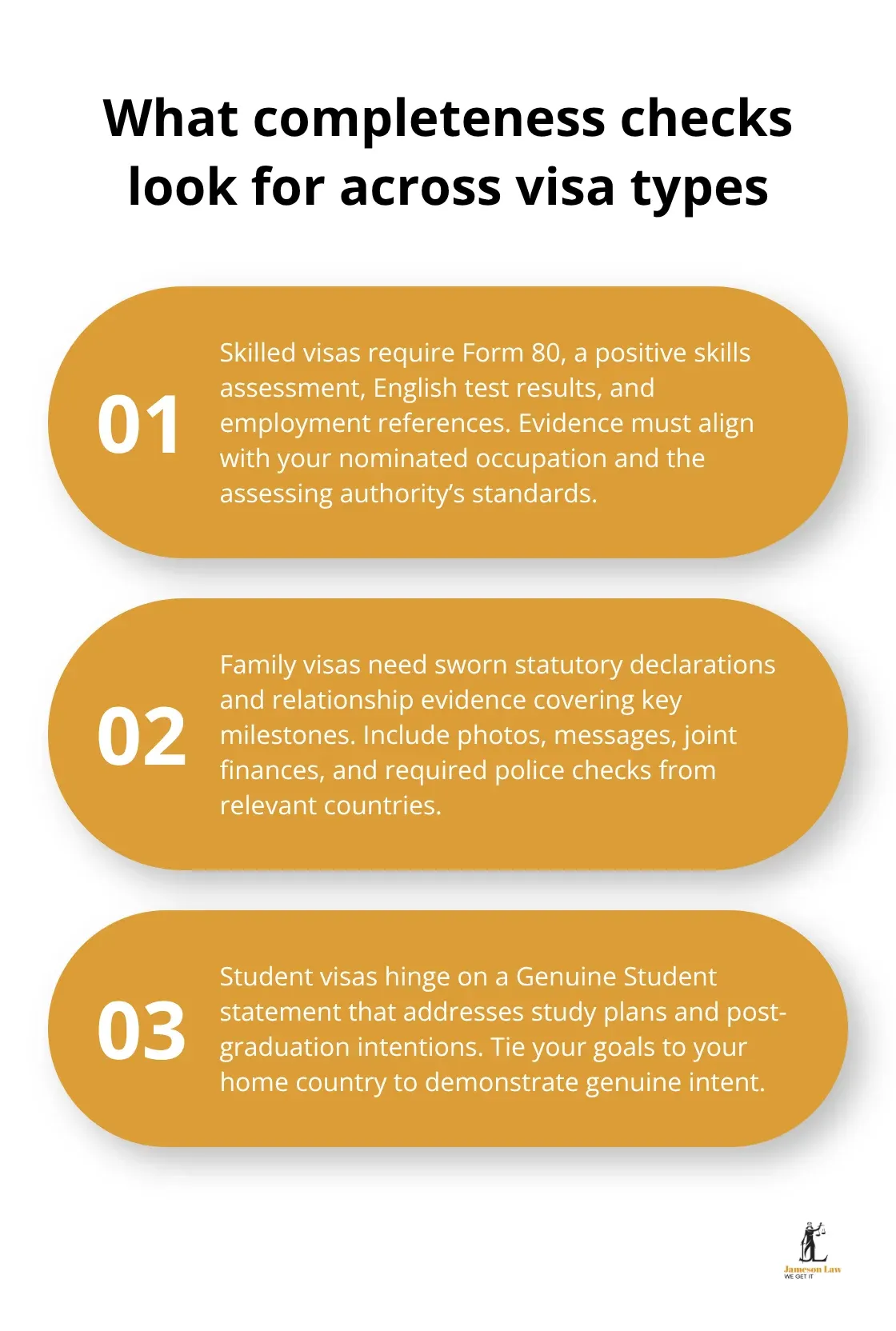
| Skilled Visas (190 / 491) | Valid Skills Assessment, Form 80, English Test, EOI Invitation. | High points competition; changing state occupation lists. |
| Partner Visas (820 / 801) | Statutory declarations, joint financial records, cohabitation proof. | Strict scrutiny on the “genuine and continuing” relationship test. |
| Student Visas (500 / 485) | Genuine Student (GS) statement, financial capacity proof, OSHC. | New age limit drops to 35 for 485 Temporary Graduates (2026 rule). |
Family Reunion Visas
Australian citizens and permanent residents can sponsor partners, children, or parents. Partner visas require comprehensive relationship evidence spanning your entire time together. You will significantly strengthen your application by presenting chronological photos, message logs, and joint financial records (like shared bank accounts or leases) that indisputably demonstrate relationship authenticity.
How Your Visa Application Gets Assessed
The Completeness Check Phase
The moment you submit your application via ImmiAccount, it enters a structured assessment process. The initial stage is a completeness check (usually taking 2 to 4 weeks). The Department verifies that all mandatory forms and supporting documents are present.
Many unrepresented applications fail instantly here. The Department actively rejects incomplete applications outright, sending them back without substantive assessment. This triggers devastating delays.
Processing Timelines and RFIs
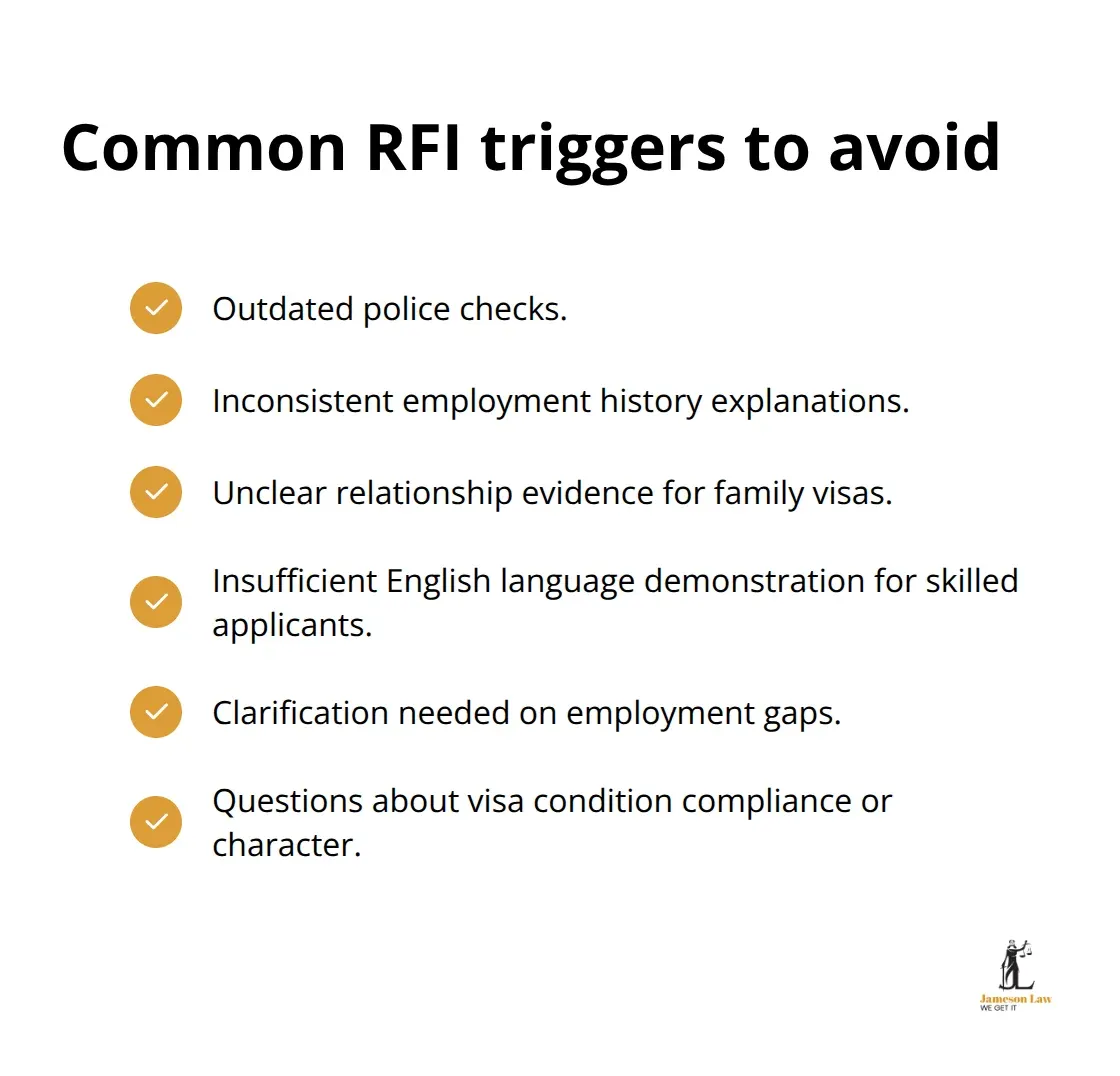
Applications frequently stall when the Department issues a formal Request for Further Information (RFI). Common triggers include:
- Outdated police checks or expired English language results.
- Inconsistent employment history explanations.
- Unclear relationship timelines in Partner Visas.
You typically have a strict 28-day window to respond to an RFI. Missing this deadline results in automatic visa refusal.
Why You Need Legal Help With Your Visa Application
Stopping Applications From Failing
Expert immigration lawyers prevent applications from failing at the completeness stage. Legal professionals review your documentation against the Department’s internal assessment criteria—not just the generic public checklist. We understand exactly how case officers evaluate documents and what gaps trigger devastating RFIs.
Navigating Administrative Review and Tribunal Proceedings
If you have already received a visa refusal, an administrative review through the Administrative Review Tribunal (ART) requires you to legally demonstrate that the Department’s decision was unreasonable or based on a factual error.
Legal professionals construct review applications that pinpoint exactly where the Department misinterpreted your evidence or applied migration policy incorrectly. Attempting tribunal proceedings without a lawyer significantly drastically reduces your chances of overturning the refusal.
Managing Complex Character Concerns
Complex circumstances—such as character concerns, previous visa cancellations (like Section 501 refusals), or gaps in employment history—require highly strategic legal navigation. These situations require far more than generic documentation; they demand a robust legal strategy that reframes your circumstances within the strict parameters of the Migration Act 1958.
Final Thoughts
Australian visa applications succeed when you treat them as rigorous legal submissions rather than simple administrative tasks. The Department of Home Affairs assesses your case against strict, unforgiving legislative criteria, and missing strategic evidence routinely results in permanent rejection.
An expert immigration lawyer Sydney team identifies gaps in your documentation before submission, constructs impenetrable evidence narratives tailored to your circumstances, and fiercely navigates tribunal reviews if issues arise. With processing times stretching into months or years, doing it right the first time is your most cost-effective strategy.
At Jameson Law, we understand that visa applications involve significant personal, financial, and emotional stakes. Contact us today to discuss your immigration matter with our highly experienced Sydney team and secure a legally sound pathway for your future in Australia.