Getting your visa application Australia approved requires knowing exactly what to do and when to do it. The process involves multiple steps, from choosing the right visa type to submitting your documents correctly.
At Jameson Law, we’ve helped countless people navigate Australian visa requirements successfully. This guide walks you through each stage so you can avoid costly mistakes and move forward with confidence.
Which Visa Type Matches Your Situation
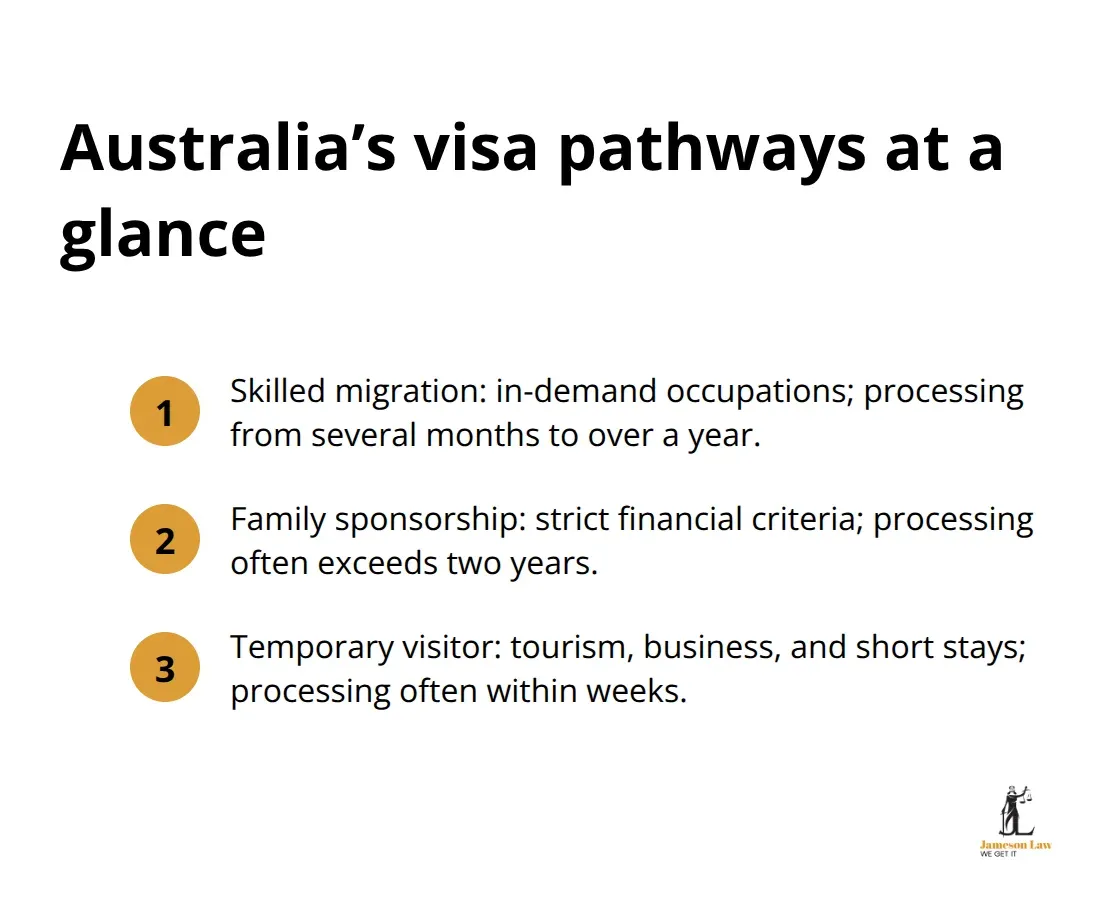
Australia offers three primary visa pathways, and selecting the right one makes the difference between a smooth application and months of delays. Skilled migration visas suit professionals with in-demand qualifications and work experience. The Department of Home Affairs prioritises skilled workers in occupations listed on the skilled occupation list, and processing times typically range from several months to over a year depending on your visa subclass. Family sponsorship visas apply if an Australian citizen or permanent resident relative can sponsor you, though these visas involve strict financial requirements and lengthy processing periods. Temporary visitor visas cover tourism, business visits, and short-term stays, with processing often completed within weeks rather than months.
Your choice depends entirely on your circumstances, employment prospects, family connections, and intended length of stay in Australia.
Skilled Migration Visas Demand Documented Expertise
Skilled migration visas require you to prove your qualifications match an occupation Australia needs. You must obtain a skills assessment from the relevant assessing authority for your occupation, provide evidence of work experience (typically three months of payslips, tax statements, or bank statements showing employment income), and demonstrate English language proficiency through approved tests like IELTS or PTE. The Department of Home Affairs requires your employment history to be thoroughly documented; a work reference alone will not suffice. If your employer nominates you for a sponsored skilled visa, they lodge the nomination first and you receive a Transaction Reference Number, then you can apply before the nomination is finalised to shorten overall processing time. Points-based skilled independent visas require you to score sufficient points based on age, English ability, work experience, and qualifications.
Family Sponsorship Visas Require Financial Commitment
Family sponsorship visas require your Australian sponsor to meet strict financial requirements and provide an undertaking to support you. Your sponsor must demonstrate they can support your settlement without relying on government assistance, which means providing recent tax returns, payslips, and asset statements. Processing times for family visas frequently exceed two years because the Department of Home Affairs conducts thorough assessments of both your sponsor’s capacity and your own circumstances. These visas carry genuine financial risk for sponsors, so relatives must understand they are legally liable if you require government support during the sponsorship period.
Temporary Visitor Visas Suit Short-Term Stays
Temporary visitor visas allow tourism, business activities, or short visits for periods typically ranging from three months to twelve months. Processing moves faster than migration visas because the Department conducts less extensive background checks for short-term stays. You must demonstrate you have sufficient funds to support yourself, hold return travel plans, and maintain ties to your home country that encourage you to leave Australia when your visa expires.
Matching Your Circumstances to the Right Pathway
Your visa category determines which documents you must prepare, how long processing will take, and what financial or employment evidence the Department requires. Once you identify which pathway suits your situation, you can move forward with confidence in gathering the specific documentation that authorities will assess.
Getting Your Application Ready
Identifying your visa category narrows the scope of what you need to prepare, but the actual work starts when you gather evidence. The Department of Home Affairs assesses applications based on what you submit, not what you intend to submit, so incomplete documentation remains the single biggest cause of delays. Skilled migration applications require employment history spanning at least three months of recent payslips, tax statements, or bank statements showing consistent income from your nominated occupation. The Department explicitly states that a work reference alone will not suffice, yet many applicants rely on this and face requests for additional information that extend processing by months.
Documentation Requirements by Visa Type
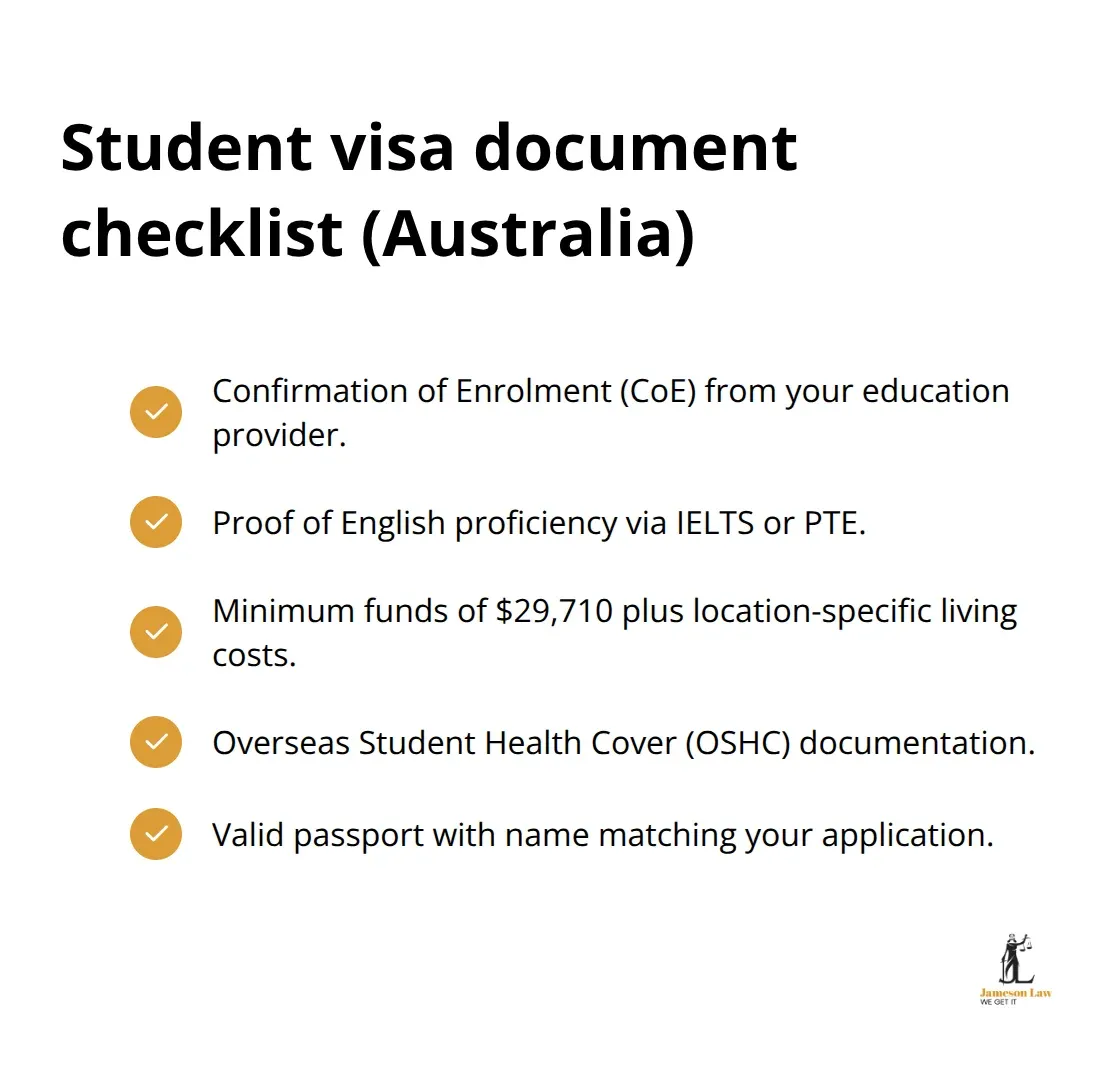
Family sponsorship visas demand your sponsor’s recent tax returns, payslips covering the past two years, and asset statements proving financial capacity to support you without government assistance. Student visas require your Confirmation of Enrolment from your education provider, proof of English language proficiency from approved tests like IELTS or PTE, evidence of minimum funds of $29,710 plus location-specific living costs, and Overseas Student Health Cover documentation. Temporary visitor visas need proof of sufficient funds, return travel plans, and evidence of ties to your home country.

Use the web-evidentiary tool to identify documentation requirements for your specific visa type before you begin collecting documents.
Police Certificates and Identity Documents
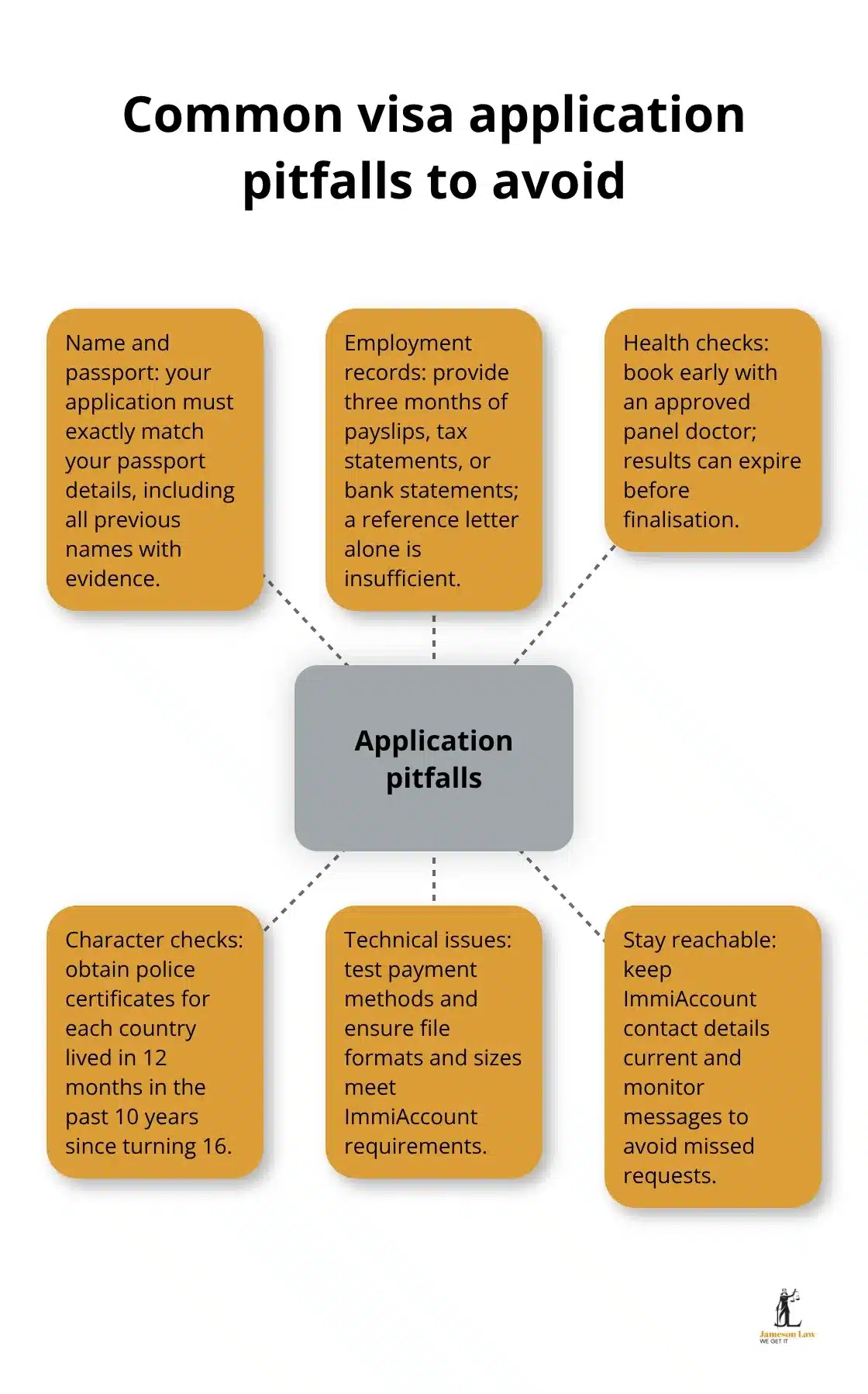
Police certificates must cover every country where you have lived for 12 months in the past 10 years since turning 16, and you must provide certificates for all family members aged over 16. All non-English documents require professional translation; if translated in Australia, include the translator’s NAATI practitioner number, and if translated overseas, include the translator’s full name, address, phone number and qualifications. Your passport must remain valid throughout the application process, so verify your passport expiry date before you submit anything. Name accuracy matters significantly-your name must match your passport exactly, and you must include all previous names with evidence of any name changes (marriage certificates, divorce documents, or official name-change records from the relevant authority).
Submitting Through ImmiAccount
Submitting your application through ImmiAccount, the Department of Home Affairs’ online portal, gives you the fastest processing and immediate confirmation of receipt. Create your ImmiAccount early and opt to receive messages from the Department so you receive notifications about requests for additional information or updates on your application status. Payment issues frequently block successful submission, so verify your payment method works before you attempt to lodge, and common attachment problems prevent documents from uploading, so test each document file before final submission. Once lodged, track your application through ImmiAccount and update your contact details immediately if you change your phone number, email, or address; the Department cannot reach you if your details are outdated, and they will not wait indefinitely for responses to requests for additional information.
Processing Times and Application Tracking
Processing times vary significantly depending on visa type, with temporary visitor visas sometimes decided within weeks, skilled migration visas typically taking several months to over a year, and family sponsorship visas frequently exceeding two years. Check the Department’s processing times for your visa type, as these figures represent the time from lodgement to a decision, not the time until you receive your visa grant notice in your email inbox. Understanding these timelines helps you plan your move to Australia realistically and avoid the frustration that comes from unrealistic expectations about when the Department will finalise your application.
What Derails Most Visa Applications
Incomplete information and missing documents account for the majority of visa application delays at the Department of Home Affairs. Applicants submit their applications only to receive requests for additional information weeks later, pushing their timeline back by months. The Department assesses your application based solely on what you lodge, not on what you intend to provide later, so anything missing on submission day creates immediate problems.
Name and Passport Accuracy Matter Absolutely
Name mismatches between your application and passport cause rejections that force you to start again from scratch. Your name must match your passport exactly, and you must declare all previous names with supporting evidence of name changes such as marriage certificates or divorce documents. Many applicants overlook this detail entirely, assuming minor variations don’t matter, then face devastating delays when the Department flags the inconsistency.
Your passport must remain valid throughout the entire application process and your visa grant period. Verify your expiry date before you lodge anything, because an expired passport invalidates your application even if everything else is perfect.
Employment History Documentation Requires Actual Financial Records
Employment history documentation proves particularly problematic because the Department requires three months of recent payslips, tax statements, or bank statements showing consistent income from your nominated occupation. A work reference letter alone will not satisfy this requirement, yet applicants routinely submit only a letter and wonder why the Department requests additional information. You need actual financial documents that prove you earned money in your nominated field during the specified timeframe.
Health and Character Assessments Demand Early Action
Health examinations and character requirements trip up applicants who leave these steps until the last moment. The Department of Home Affairs requires health examination results from an approved panel doctor. Starting your health checks too late means your results may expire before your visa is finalised, forcing you to undergo expensive repeat examinations.
Use the My Health Declarations service to identify which health checks your visa type requires, then book your appointment with an approved panel doctor immediately after you determine your visa category. Police certificates present another timing challenge because you must provide certificates for every country where you have lived for 12 months in the past 10 years since turning 16, covering all family members aged over 16. Obtaining these certificates from overseas authorities takes weeks or months, so request them early rather than waiting until you’re ready to submit your application.
Non-English certificates require professional translation with either a NAATI practitioner number if translated in Australia or the translator’s full name, address, phone number and qualifications if translated overseas. Applicants frequently submit unverified translations or omit translator credentials, triggering requests for corrected documentation.
Technical Submission Failures Prevent Lodgement
Payment issues and attachment problems block successful submission through ImmiAccount more frequently than applicants realise. Test your payment method before you lodge your application, as declined payments delay submission and create frustration when you discover the problem after spending hours preparing your documents. Document attachment failures occur when file formats are incompatible or file sizes exceed limits. Upload each document individually to ImmiAccount before final submission to identify and resolve attachment problems in advance.

Once you lodge your application, track its progress through ImmiAccount and update your contact details immediately if you change your phone number, email address, or residential address. The Department cannot process your application if they cannot reach you, and they will not wait indefinitely for responses to requests for additional information. Applicants who move house or change phone numbers without updating their ImmiAccount details miss critical Department communications, resulting in application rejection or unnecessary delays. Check ImmiAccount at least weekly after lodgement to monitor your application status and respond promptly to any requests for additional information.
Final Thoughts
A successful visa application Australia depends on three fundamentals: selecting the correct visa category, preparing complete and accurate documentation, and submitting through the proper channels before deadlines pass. The Department of Home Affairs assesses each application based solely on what you lodge on submission day, so incomplete applications trigger requests for additional information that extend processing by weeks or months. Your name must match your passport exactly, your employment history requires actual financial records rather than reference letters, and your health and character assessments demand early action because results expire and overseas certificates take months to obtain.
Immigration law involves complex requirements that vary significantly depending on your visa type, personal circumstances, and employment history (and many applicants underestimate the documentation burden or misunderstand which evidence the Department actually requires). After you submit your application, monitor your ImmiAccount weekly and respond promptly to any Department requests for additional information. Update your contact details immediately if you change your phone number, email address, or residential address, because the Department cannot process your application if they cannot reach you.
If your circumstances are complex, your employment history is difficult to document, or you are uncertain which visa category suits your situation, professional legal assistance can prevent expensive mistakes. Contact Jameson Law to discuss your visa application requirements and receive guidance tailored to your specific circumstances.