

Australian immigration changes in 2025 and 2026 are reshaping your visa options and application pathways. Whether you’re planning to migrate for work, study, or family reasons, understanding these updates is essential to your success.
At Jameson Law, our highly experienced Sydney immigration team has seen firsthand how quickly immigration policy shifts can affect your plans. This guide breaks down what’s changed and how it impacts your next steps.
What Changed in Australian Immigration in 2025 and 2026
The Migration Act Amendments and Third-Country Transfers
The Australian Department of Home Affairs released significant amendments to the Migration Act 1958 that fundamentally altered how visa decisions are made and enforced. The most consequential change removes procedural fairness protections for certain non-citizens facing third-country transfer decisions. Individuals can now face relocation without a meaningful opportunity to respond to allegations or provide their perspective. This shift directly affects asylum seekers, protection visa applicants, and anyone in immigration detention.
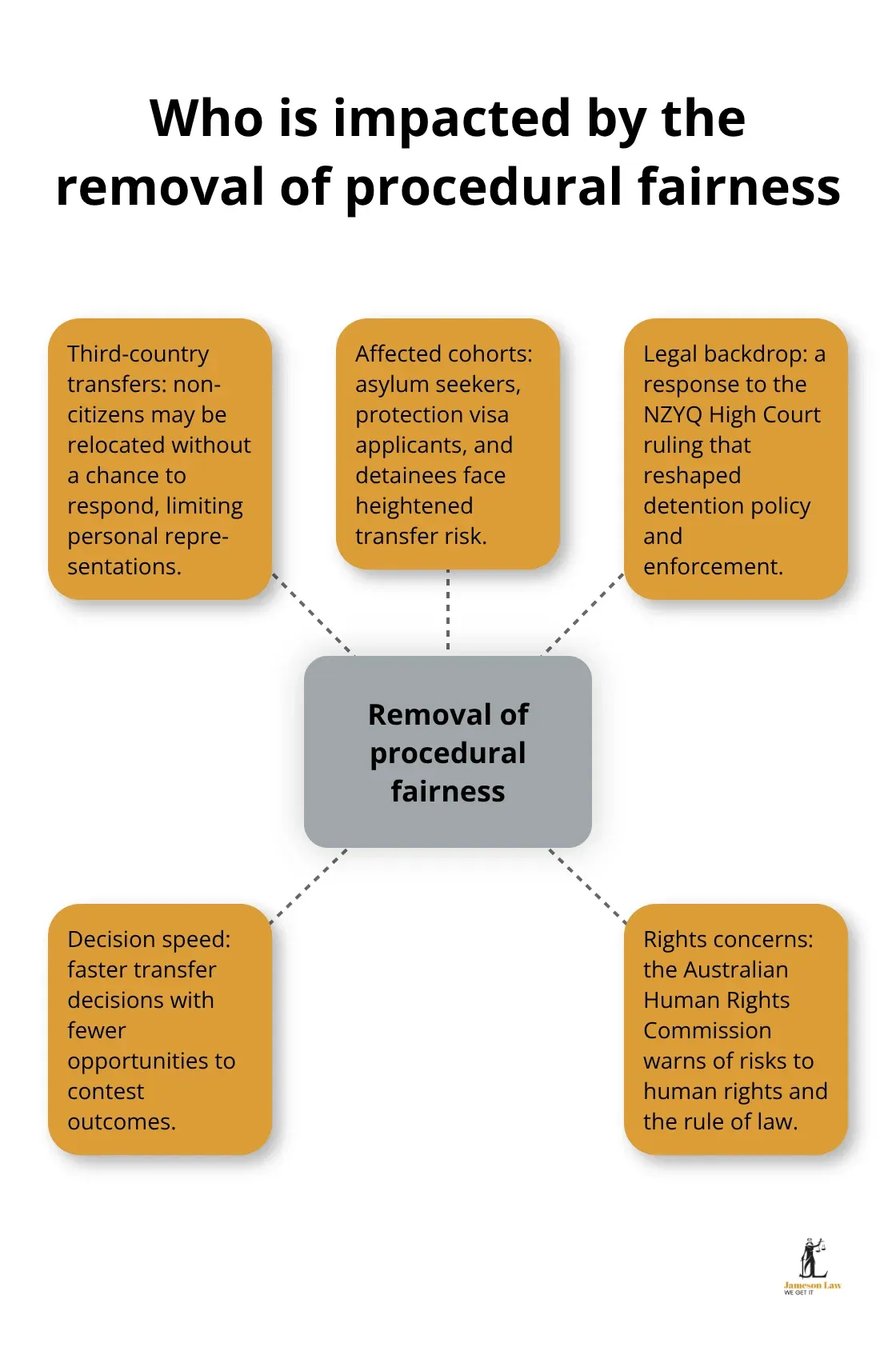
The government introduced these amendments following the 2023 High Court decision in NZYQ, which ruled that indefinite immigration detention without a deportation pathway is unconstitutional. That ruling released hundreds of detainees and exposed gaps in the previous system.
How Third-Country Reception Arrangements Work
The government’s response includes third-country reception arrangements where Australia pays other nations to accept non-citizens, accelerating transfer processes significantly. Retrospective validation provisions now allow the government to validate visa decisions made in the past, potentially creating liability for people who previously relied on those decisions.
These amendments reshape who can access protection pathways and how quickly decisions reach finalisation. The Australian Human Rights Commission has warned that removing procedural fairness risks violating human rights and undermining the rule of law.
Immediate Practical Impact on Your Visa Application
If you are an asylum seeker or protection visa applicant, your case could now face assessment and transfer to a third country without the procedural protections that previously existed. If you are in immigration detention, the timeline for resolution has shifted from indefinite detention to potential rapid third-country transfer.
Processing procedures have changed, and applications now face retrospective validation, meaning older visa grants could theoretically face review or challenge. The government framed these changes as maintaining principled migration policy while preserving system integrity, but the reality demands extreme caution for applicants.
Staying Informed About Policy Evolution
The Department of Home Affairs regularly publishes updates through its Newsroom and official speeches, so tracking these channels directly keeps you informed as policies evolve. If you navigate visa applications, protection claims, or immigration detention, monitoring these changes and obtaining timely, expert legal advice from a trusted Sydney immigration lawyer becomes essential.
Your Visa Pathways in 2026
Skilled Migration and the Points System
Skilled migration remains the most accessible route for individuals seeking permanent residency, though the SkillSelect points system continues to shift in ways that directly impact your competitiveness. The Department of Home Affairs sets annual migration planning levels that determine how many places are available across different visa streams.
In 2026, skilled occupations in healthcare, construction, and information technology dominate the priority list, meaning applicants in these fields face shorter processing times and higher approval rates. The points system itself rewards age, English proficiency, work experience, and qualifications, but your total score must reach the minimum threshold to be invited to apply.
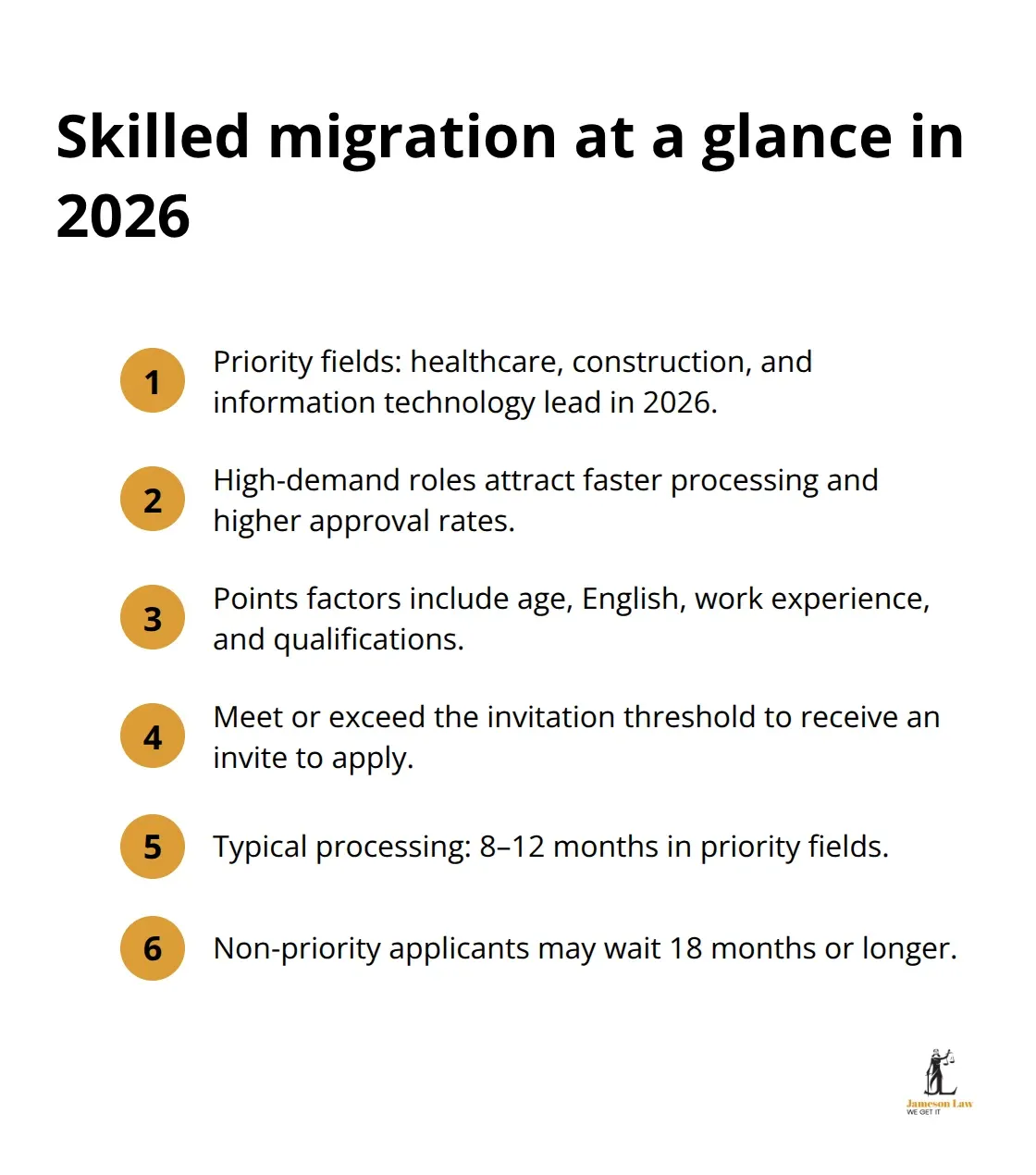
If you work in a high-demand field and hold relevant qualifications, you can expect processing to take between 8 to 12 months from application to decision, whereas applicants in less critical occupations may wait 18 months or longer.
Family Reunion Visas and Sponsorship Requirements
Family reunion visas operate under a different framework entirely, prioritising Australian citizens and permanent residents who sponsor close relatives. Your eligibility depends on having a qualified sponsor and meeting strict character and health requirements. Processing times for family visas typically range from 12 to 24 months. This pathway moves slower than skilled migration but offers more predictability if your documentation is complete from the outset.
Student and Temporary Work Visas as Transition Pathways
Student visas function as practical stepping stones toward permanent residency rather than standalone outcomes, and understanding this distinction shapes your entire migration strategy. With hundreds of thousands of international students arriving annually, many use their qualification period to gain local work experience and build networks that support later permanent visa applications.
Employer-Sponsored Temporary Visas: The Skills in Demand Visa
In a major update to the migration system, the old Temporary Skill Shortage visa was officially replaced by the Skills in Demand visa (Subclass 482). Along with the subclass 494 (Skilled Employer Sponsored Regional), these operate as employer-sponsored arrangements where your visa depends entirely on your employment relationship, meaning job loss directly threatens your visa status.
The critical advantage of these temporary pathways lies in their role as transition points: many visa holders progress from student status to the Skills in Demand visa, and then directly to permanent residency through structured employer sponsorship.
Recent Changes Affecting All Visa Holders
The recent amendments to the Migration Act mean that even temporary visa holders can now face third-country transfer without procedural fairness protections if the government determines you pose a security risk or fail a character assessment. These changes affect your visa security regardless of which pathway you pursue, making legal guidance essential before you accept any visa offer.
How the 2026 Changes Reshape Your Visa Assessment
Character Assessment and Third-Country Transfer Risks
The Migration Act amendments fundamentally alter what visa assessors examine when reviewing your application. Character assessments now carry significantly higher stakes because the removal of procedural fairness for third-country transfer decisions means assessors can recommend transfer without giving you a chance to explain mitigating circumstances.
Any criminal conviction, even minor traffic offences, receives intense scrutiny under the new framework. If you have any criminal history whatsoever, you must obtain advice from a highly experienced legal team before submitting your visa application, because your eligibility assessment under the new framework differs substantially from pre-2026 standards.
Documentation and Retrospective Validation Requirements
Documentation requirements have shifted in ways that demand immediate action. Retrospective validation provisions mean that documents you submitted years ago in previous visa applications can now face renewed scrutiny, potentially creating complications for your current application.
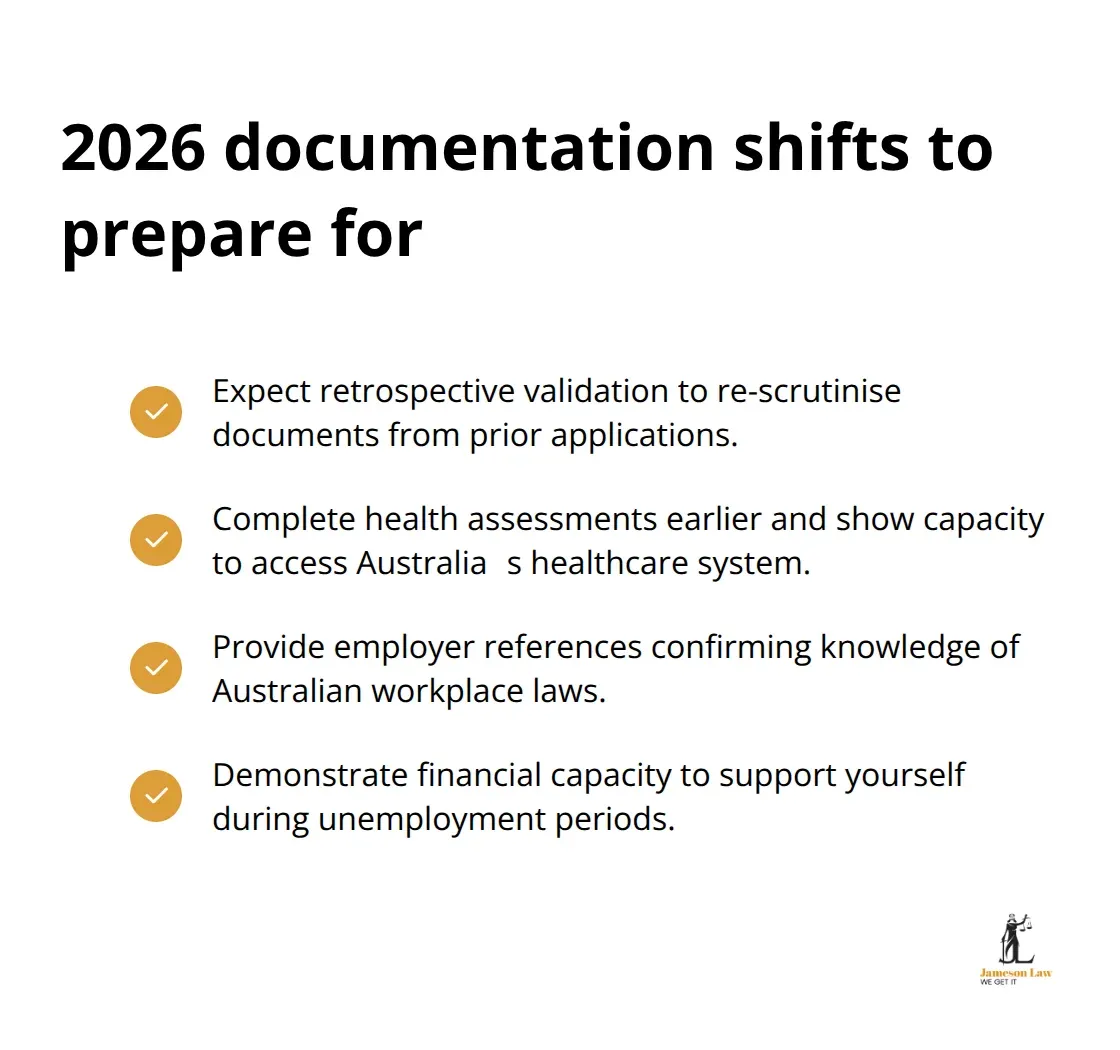
Health assessments now occur earlier in the process, and assessors examine not only infectious diseases but also your capacity to access healthcare within Australia’s system. Employment references require explicit confirmation that your employer understands Australian workplace laws and obligations.
Qualifications and Priority Occupation Status
If you’re applying for skilled migration, you’ll need evidence that your qualifications remain current and that your occupation still appears on the Department of Home Affairs priority list for 2026. Assessors now strictly verify that your credentials align with Australian standards via authorised assessing bodies. This verification process adds weeks to assessment timelines, so applicants must prepare comprehensive qualification documentation well before lodging.
Final Thoughts
Australian immigration changes in 2025 and 2026 have fundamentally reshaped how you must approach visa applications and long-term migration planning. The removal of procedural fairness protections, the introduction of the Skills in Demand framework, third-country transfer arrangements, and retrospective validation of past decisions mean your visa security depends on understanding these shifts before you apply.
Your next step depends on your current situation. If you plan to apply for any visa type, verify your occupation’s priority status on the Department of Home Affairs website. If you have any criminal history or character concerns, obtain expert legal advice immediately because assessment standards have tightened significantly across Sydney and the rest of the nation.
Professional immigration advice tailored to your specific circumstances represents your most valuable investment right now. The changes outlined in this guide interact differently depending on your occupation, personal history, and family situation. Contact Jameson Law today to discuss your 2026 visa strategy and move forward with accurate, authoritative legal support.