


A head injury can completely change your life in a matter of seconds. Whether it occurred from a severe workplace accident, a motor vehicle crash, or a public slip and fall, the long-term physical, cognitive, and financial impact can quickly become overwhelming.
At Jameson Law, our expert personal injury team helps NSW residents navigate their rights to head injury compensation NSW. This comprehensive 2026 guide walks you through the step-by-step claims process, how modern brain injury damage is calculated, and what immediate actions you must take to protect your entitlements.
What Types of Head Injuries Qualify for Compensation?
Traumatic Brain Injuries (TBI) from physical accidents and Acquired Brain Injuries (ABI) from medical anomalies represent two completely distinct pathways to compensation in New South Wales. Correctly identifying your category directly dictates your legal strategy framework.
- Traumatic Brain Injuries (TBI): Occur when an external physical force damages brain tissue—typically arising from car crashes, workplace falls, or severe impacts. This includes skull fractures, complex concussions, and intracranial haematomas.
- Acquired Brain Injuries (ABI): Stem from medical incidents rather than external physical trauma, such as strokes, profound oxygen deprivation (anoxia), or severe clinical oversights resulting in actionable medical negligence.
Severity and Whole Person Impairment (WPI) Thresholds
Your ultimate injury severity rating dictates whether you qualify for standard statutory benefits or substantial lump-sum damages. The Personal Injury Commission (PIC) uses specialized medical metrics to classify head trauma categories:
| Impairment Classification | Statutory Threshold | Compensation Entitlements |
|---|---|---|
| Threshold Injury | Under 10% Whole Person Impairment (WPI) | Weekly income replacement support and reasonable medical treatment costs up to 52 weeks. |
| Above-Threshold Injury | Greater than 10% WPI (15% for general civil public liability) | Access to long-term weekly benefits, future economic loss, and substantial lump-sum payouts for pain and suffering. |
How to Claim Head Injury Compensation in NSW
1. Establish Negligence and Liability
Proving liability forms the core legal baseline of your compensation file. You must demonstrate that the at-fault party owed you a clear duty of care, breached that standard, and directly caused your head trauma.
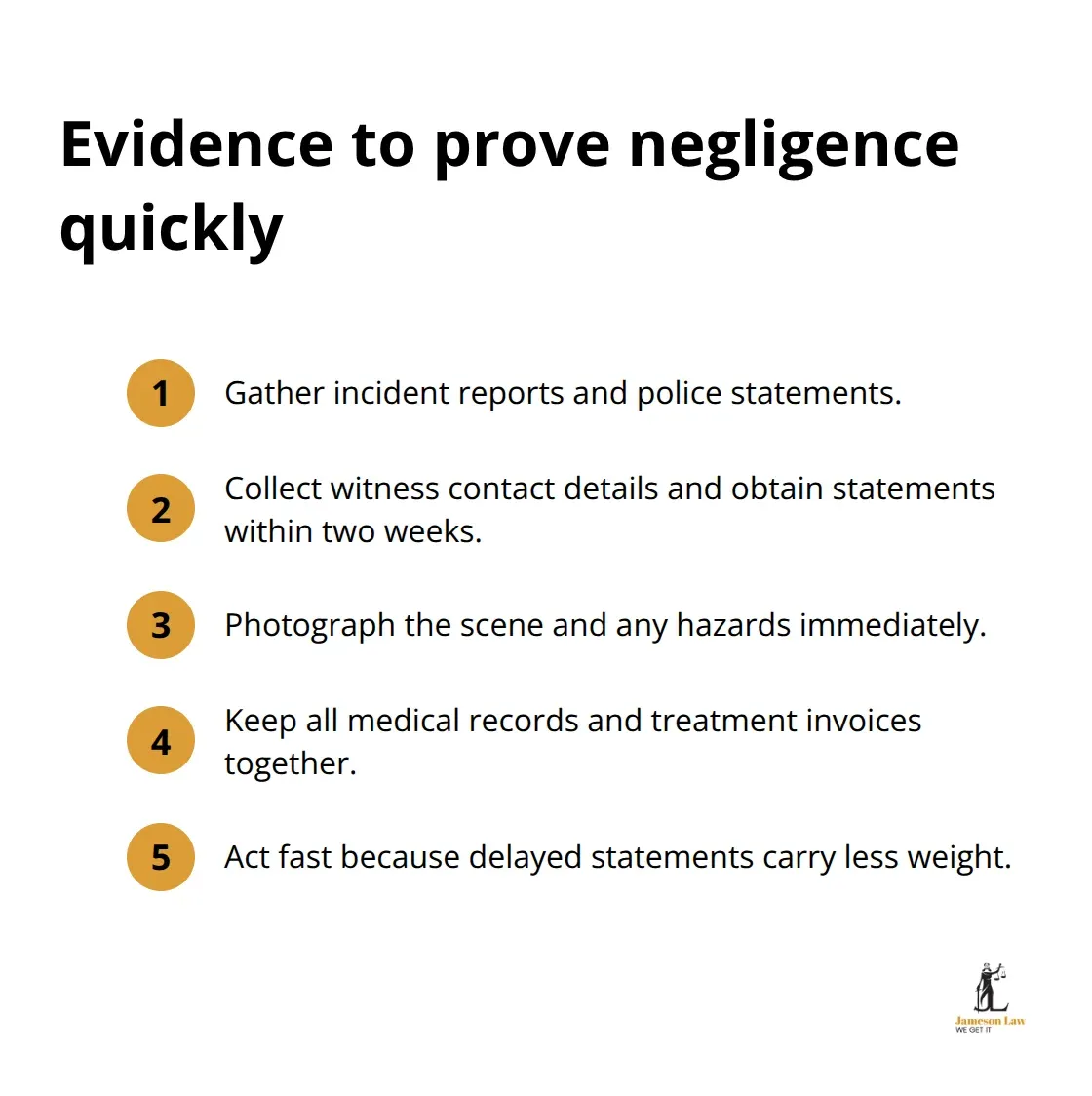
To successfully demonstrate this breach, you must compile empirical evidence beyond medical files alone. Secure official police event reports, independent witness statements, CCTV footage, and clear accident scene photographs within the first few weeks of the incident.
2. Compile Meticulous Medico-Legal Evidence
Your clinical documentation must align precisely with NSW evaluation standards. Alongside hospital discharge summaries and neurological reports, your solicitor will arrange a formal Independent Medico-Legal Examination.
This specialist medical evaluation calculates your WPI rating strictly according to the Guidelines for the Evaluation of Permanent Impairment. Scheduling this assessment within three to four months of your injury ensures your persistent cognitive or behavioral symptoms are documented while acute and completely credible.
3. Lodge Your Claim With the Insurer
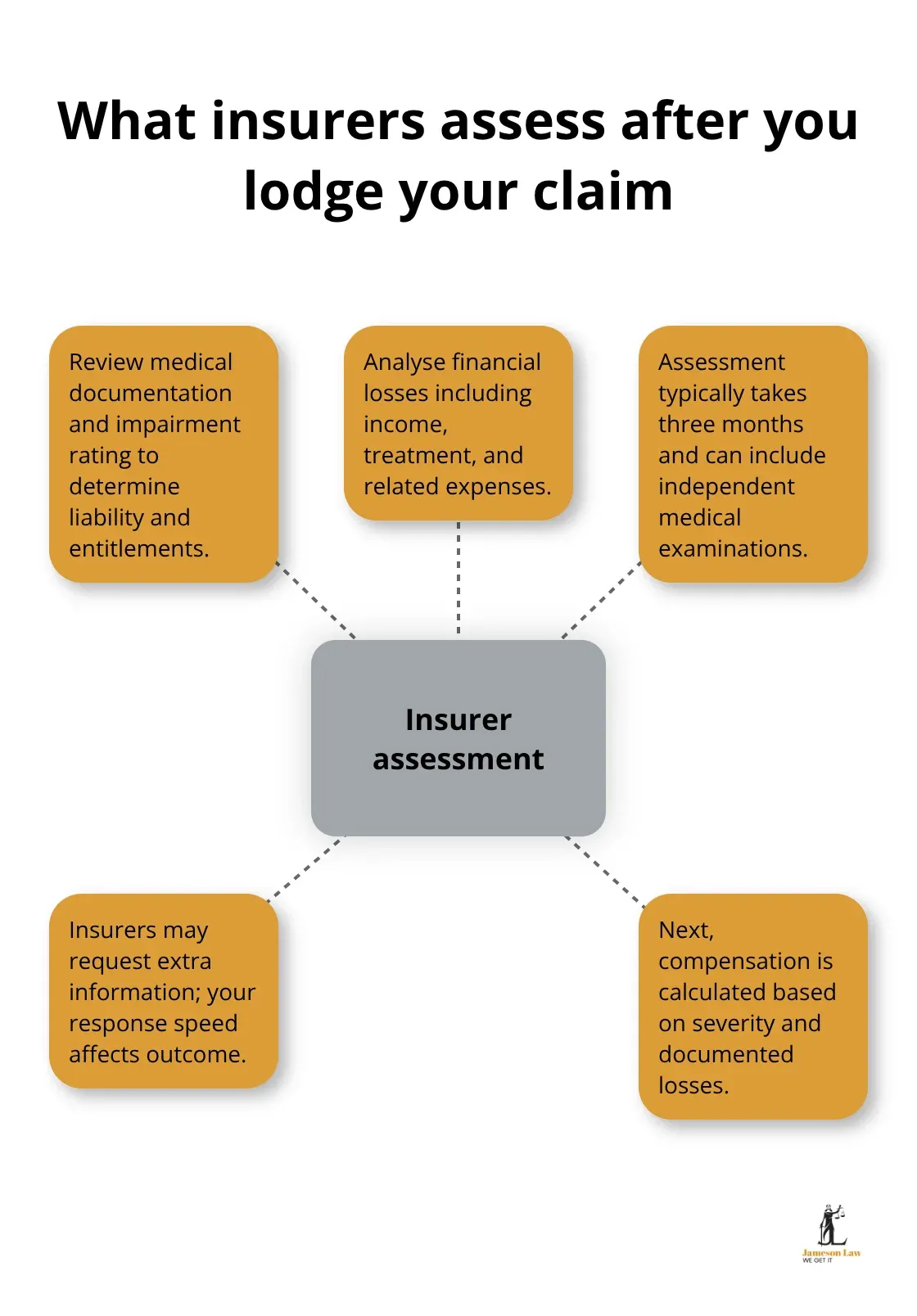
Once compiled, your formal claim is lodged with the liable insurer (such as a CTP or workers’ compensation carrier). The insurer holds a statutory timeframe (usually 14 to 28 days) to request documents or schedule a counter-examination.
Most claims are systematically routed through the Personal Injury Commission’s Pathway Portal to streamline dispute resolution and push the matter toward structured mediation rather than a protracted court trial.
How Compensation is Calculated
Head injury financial assessments are divided into two distinct common law classifications: economic loss and non-economic damages.
Economic Loss and Weekly Income Support
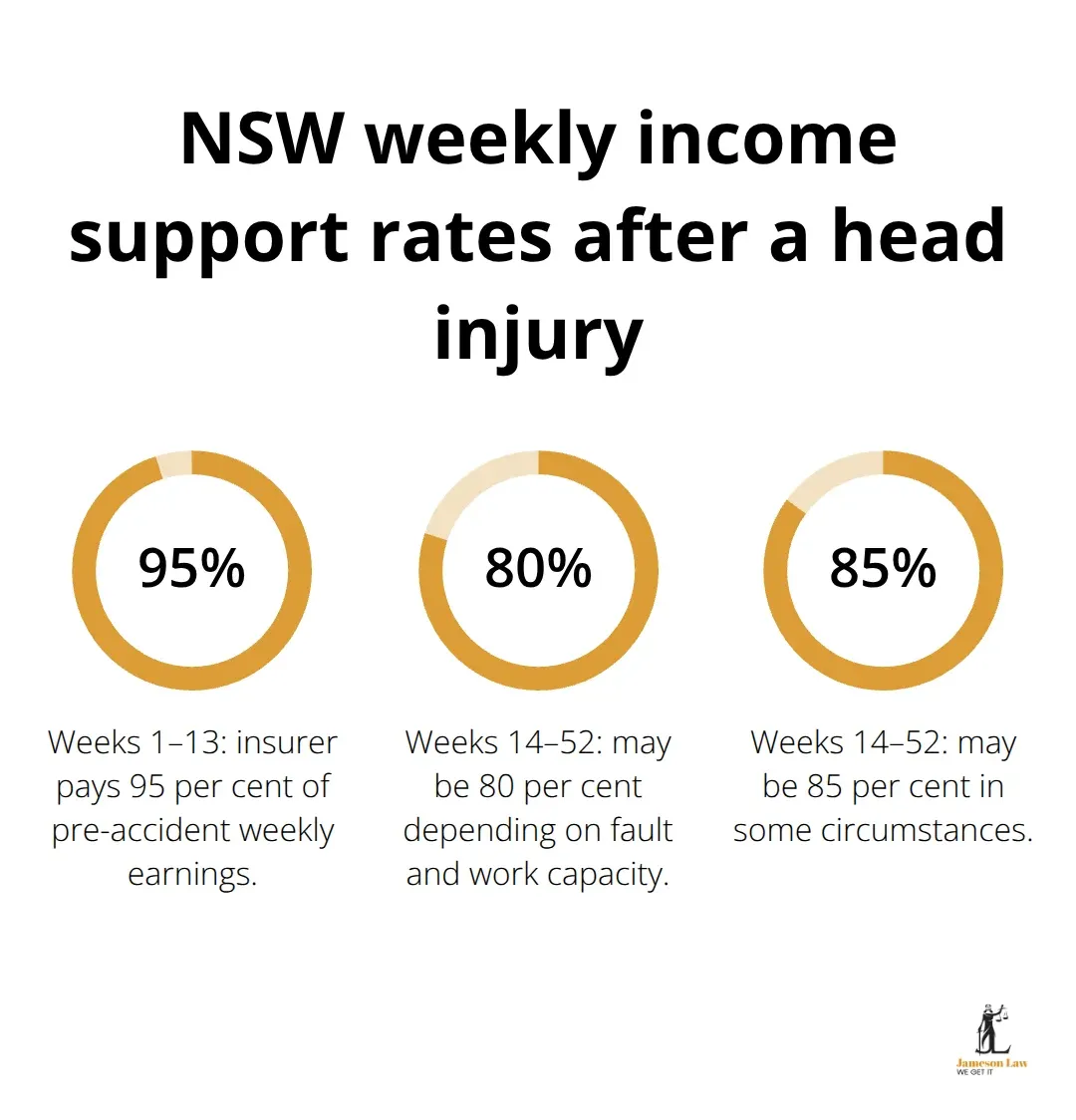
Economic damages cover any quantifiable financial burden flowing from the accident. This includes historical out-of-pocket medical bills, lost wages, and rehabilitation therapy invoices. For post-2017 CTP motor accidents, weekly income replacement support follows a structured statutory scale:
| Claim Timeline | Income Replacement Percentage (No Work Capacity) |
|---|---|
| Weeks 1 to 13 | Paid at 95% of your Pre-Accident Weekly Earnings (PAWE). |
| Weeks 14 to 52 | Steps down to 80% or 85% of your PAWE based on your capacity. |
For individuals facing permanent, long-term cognitive damage, future economic loss forms the largest portion of their claim. If a 35-year-old professional can no longer work due to neurological deficits, their future lost earnings are forensically calculated through to their expected retirement age, often resulting in multi-million dollar parameters.
Non-Economic Loss (Pain and Suffering)
Non-economic loss compensates you for intangible damages such as pain, suffering, emotional trauma, and the structural loss of your independence. Under the State Insurance Regulatory Authority (SIRA) guidelines, these lump sums are scaled strictly according to your WPI percentage. While minor concussion residuals might yield between $25,000 and $50,000, catastrophic, life-altering traumatic brain trauma can safely exceed several hundred thousand dollars under indexed 2026 caps.
Final Thoughts
Successfully navigating a head injury compensation NSW claim demands three immediate, non-negotiable actions: acting decisively within strict statutory timeframes to preserve evidence, compiling comprehensive medical documentation that aligns with WPI metrics, and responding rapidly to corporate insurer requests.
Attempting to settle a brain injury claim independently places you at an extreme disadvantage. Insurers deploy highly trained adjusters and corporate legal teams whose sole metric is minimizing their payout. A specialized personal injury lawyer serves to balance the scales, accurately projecting your lifetime care costs and forcing insurers to negotiate a realistic settlement.
At Jameson Law, our highly experienced Sydney team manages head and traumatic brain injury claims on a strict No Win, No Fee framework, ensuring you face absolutely no upfront legal costs during your recovery. Contact us today for a free, comprehensive evaluation of your claim’s parameters, and let us protect your long-term medical and financial security.