

Family Visa Australia Requirements: Navigating Your Pathway to Sydney
Moving to Australia with family members involves navigating complex visa requirements. Whether you’re sponsoring a partner, parent, or child, establishing your eligibility and executing the application flawlessly is essential to securing a favourable outcome.
At Jameson Law, we have helped countless families understand their family visa Australia requirements and move through the application process smoothly. This guide breaks down the key steps, costs, and critical timelines you need to know for 2026.
Understanding Australia’s Family Visa Categories
Partner Visas and Relationship Requirements
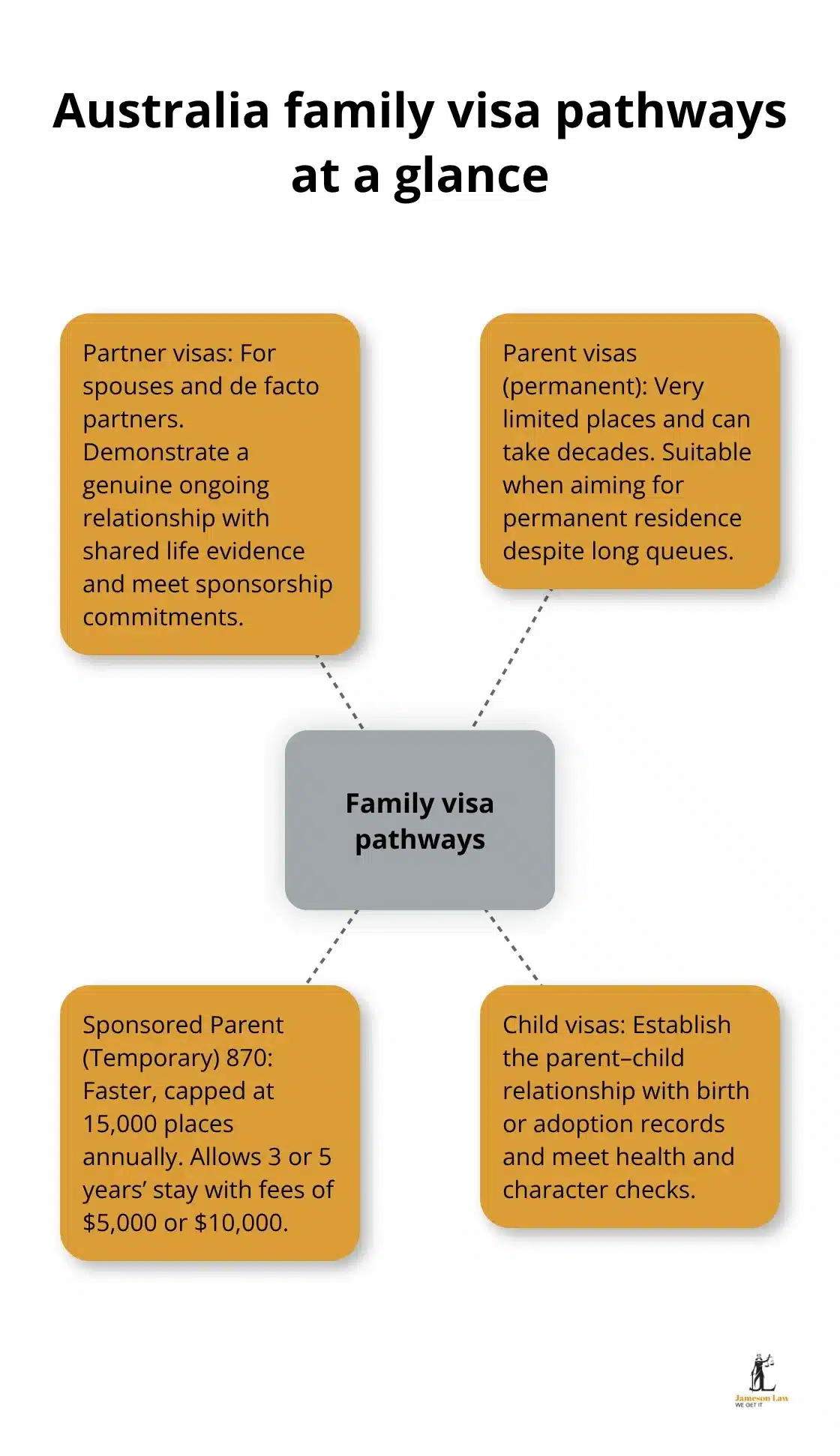
Australian citizens and permanent residents can sponsor their spouse or de facto partner through a Partner visa. To qualify, you must formally demonstrate a genuine, ongoing relationship through hard evidence of cohabitation, shared financial commitments, or joint property ownership.
The Department of Home Affairs requires a minimum 12-month relationship history, though this strict threshold can occasionally be waived in exceptional circumstances. Partner visas can be lodged onshore or offshore, with processing times varying significantly depending on your application’s completeness. The sponsor must commit to supporting their partner if they cannot support themselves, typically for up to ten years or until permanent residency is achieved.
Parent Visas: Permanent and Temporary Options
Parent visas operate differently and present unique challenges. The permanent Parent visa has extremely limited allocations—accounting for less than 1% of total permanent migration—and can take decades to process.
The Sponsored Parent (Temporary) visa subclass 870 offers a much faster alternative with an annual cap of 15,000 places. This temporary pathway allows parents to stay in Australia for either three or five years.
Financial Threshold Note: Sponsors for the subclass 870 visa must be Australian citizens or permanent residents earning a combined taxable income of at least $83,454.80 annually for the most recent financial year.
The parent must also hold adequate health insurance, demonstrate sufficient funds for their stay, and satisfy all rigorous character requirements.
Child Visas and Documentation Obligations
Child visas require the sponsoring parent to demonstrate legal guardianship and provide irrefutable evidence of the parent-child relationship via birth certificates or formal adoption documentation. If the child was born through IVF or surrogacy arrangements, you must provide the relevant medical and custody documents.
All family visa applicants aged 17 and over must submit police checks from every country where they have lived for 12 months or more since turning 16. Furthermore, all applicants must pass health and character assessments—though the Department explicitly advises against undergoing health examinations until formally requested, as medical clearances hold limited validity periods.
Financial Evidence Across All Family Visas
Proof of financial capacity to support dependent family members is essential across all categories. Financial evidence must be current and verifiable through official documents such as Australian Taxation Office (ATO) returns and payslips. The Department will rigorously assess whether the sponsor can meet their financial obligations without relying on government assistance.
Getting Your Application Documents Right
Documentation makes or breaks a family visa application. Incomplete or poorly organised submissions sink to the bottom of the Department’s queue, which processes thousands of files monthly. A disorganised application can delay your family’s arrival in NSW by six months or more.
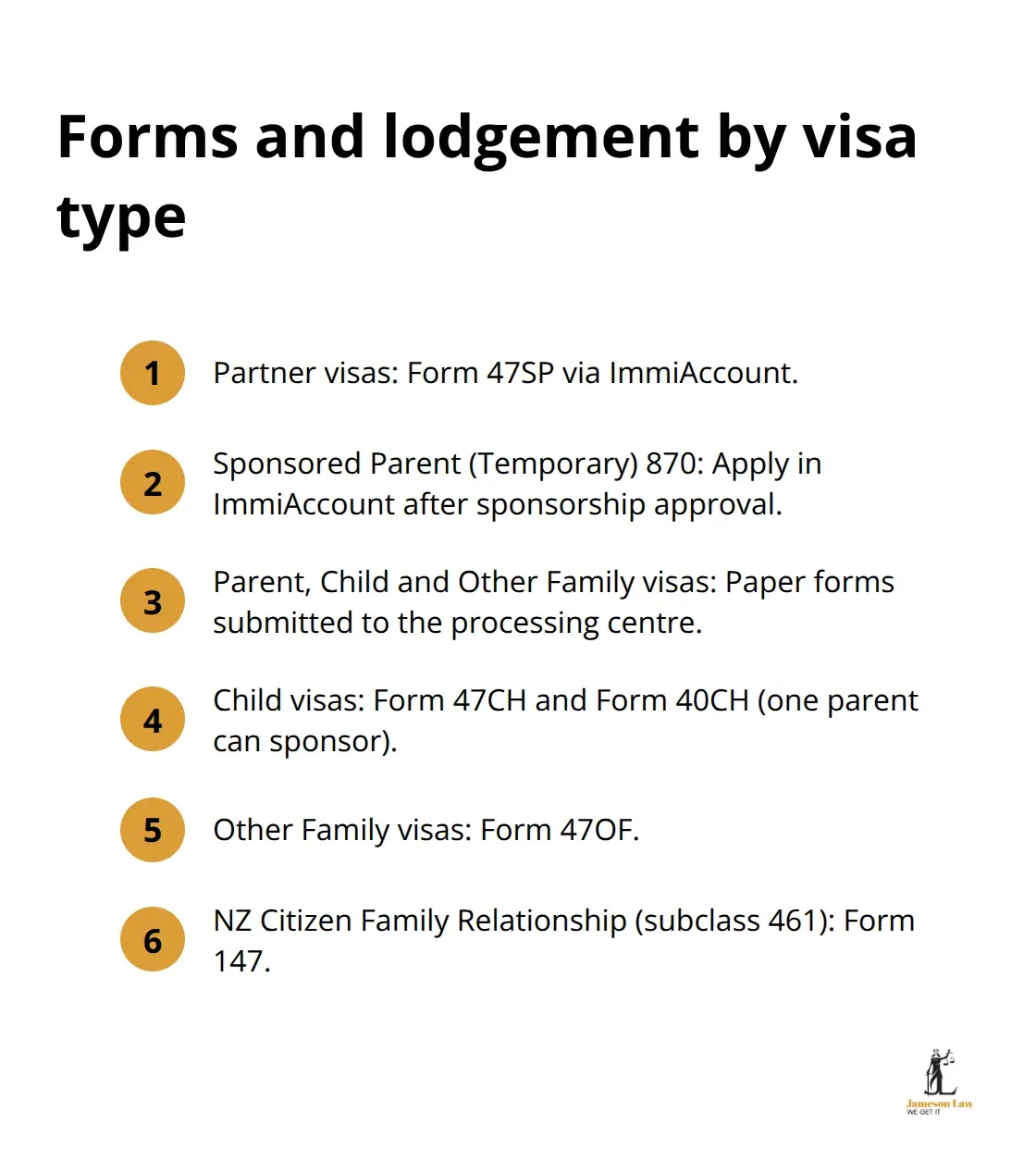
| Family Visa Type | Required Forms | Lodgement Method |
|---|---|---|
| Partner Visa | Form 47SP | Online (ImmiAccount) |
| Sponsored Parent (Subclass 870) | Post-Sponsorship Approval | Online (ImmiAccount) |
| Child Visa | Form 47CH & Form 40CH | Paper Lodgement |
| Other Family Visa | Form 47OF | Paper Lodgement |
| NZ Citizen Family (Subclass 461) | Form 147 | Paper Lodgement |
Identity and Name Requirements
Identity documents must match your passport exactly. You must list every previous name you have ever used; the Department rejects applications where the applicant’s name on a birth certificate inexplicably differs from their passport.
Your 10-year residential and travel history must be complete and entirely accurate for you and any dependent children. This means accounting for every country you lived in for more than a few weeks. Missing months raise red flags and trigger requests for clarification. Passport copies alone are insufficient—you need dated evidence of residency, such as rental agreements or utility bills.
Translation and Document Preparation
You must translate all non-English documents into English before submitting. If translated within Australia, include the translator’s NAATI practitioner number. If translated offshore, provide the translator’s full name, address, phone number, and professional qualifications.
Relationship and Family Documentation
Partner visas demand evidence of a genuinely ongoing relationship. Do not just supply marriage certificates; provide comprehensive evidence showing shared finances, joint bank accounts, and property ownership spanning your entire relationship history. The Department wants to see that you actively share a life together, not just a formal legal arrangement.
Processing Times and Costs
Family visa costs and processing times vary dramatically depending on which subclass you pursue and how decision-ready your application is. The Department publishes indicative processing times, but these are merely estimates.
Visa Fees by Category
Base application fees range from approximately $5,000 to over $10,000 depending on the visa duration. For example, the Sponsored Parent Temporary visa costs $5,000 for a three-year grant or $10,000 for a five-year grant, remaining substantially cheaper than pursuing permanent contributory parent visas.
Hidden Costs and Budget Planning
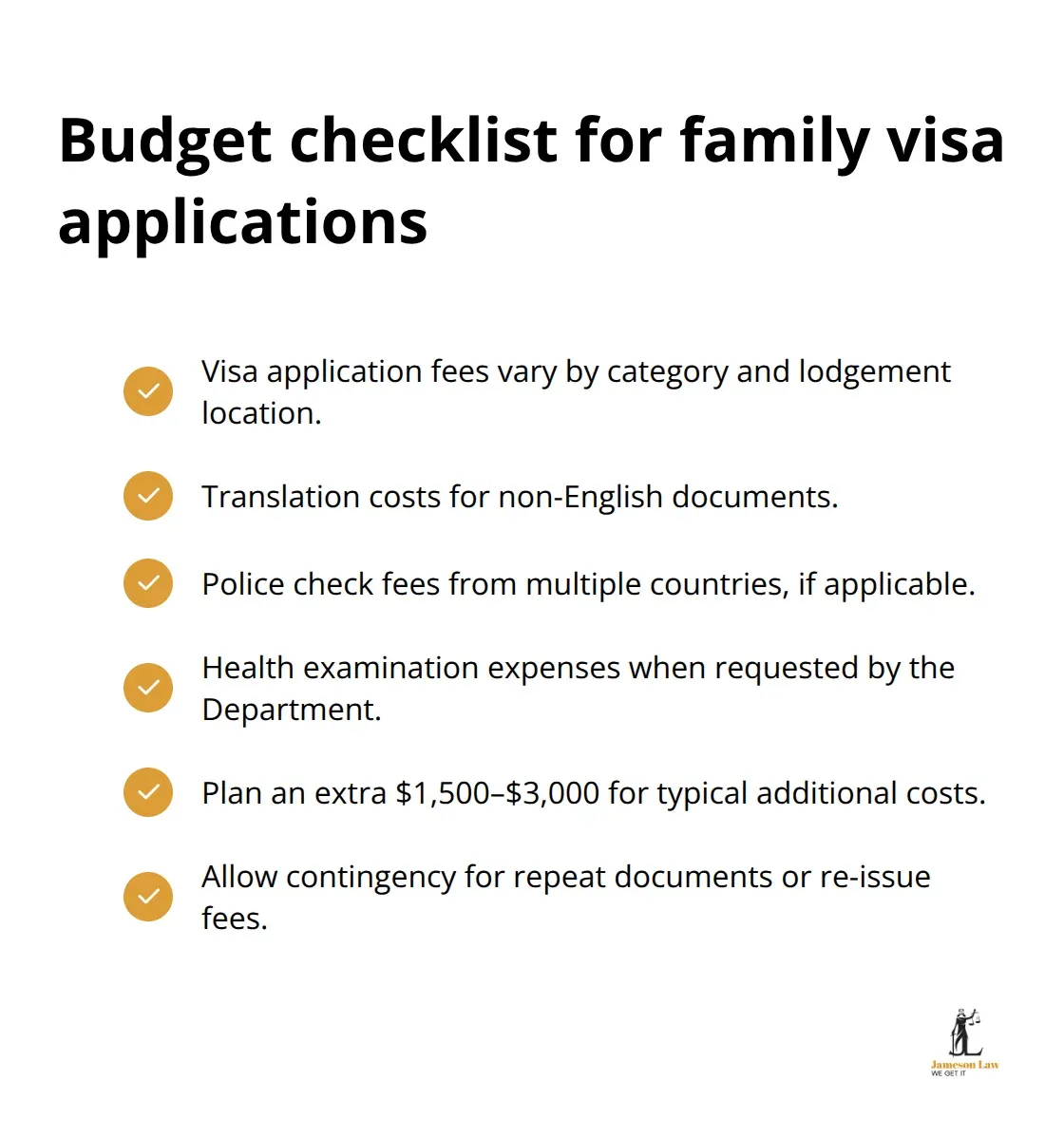
Beyond the primary visa fees, you will encounter additional operational expenses that can easily add $1,500 to $3,000 to your total budget:
- NAATI-certified translation costs for all foreign documents.
- Police check fees from various international jurisdictions.
- Health examination and biometric costs when formally requested by the Department.
Accelerating Your Application
The biggest mistake families make is submitting incomplete applications and expecting to add documents later. A fully decision-ready application submitted upfront eliminates assessment bottlenecks. Keep your ImmiAccount thoroughly updated throughout processing, opt into electronic communications for faster notifications, and respond immediately to any official Department requests for information to prevent accidental cancellations.
Final Thoughts
Securing success with your family visa Australia requirements demands meticulous attention to detail and a profound understanding of departmental policy. Whether you are navigating the strict financial thresholds of the Sponsored Parent Temporary visa subclass 870 or compiling a decade of relationship evidence for a Partner visa, a structured, decision-ready submission is your strongest asset.
If your situation involves a complex relationship history, multiple international background checks, or any unusual operational circumstances, highly experienced legal guidance ensures you avoid costly delays and rejections.
At Jameson Law, we provide authoritative immigration law assistance for clients in Sydney and across NSW. We help families navigate these rigorous statutory requirements with clarity and confidence. Contact our expert team today to map out the most secure pathway for your family’s future in Australia.