


Reckless driving charges in NSW carry serious consequences, from hefty fines to licence suspension and even jail time. The line between reckless driving and dangerous driving NSW can be unclear, which is why understanding the specific offence matters for your defence.
At Jameson Law, we’ve helped countless clients navigate these charges and explore their legal options. This guide breaks down what constitutes reckless driving, the penalties you face, and the defence strategies that work.
What Reckless Driving Means Under NSW Law
The Legal Definition and Mental State
Under the NSW Road Transport Act 2013, reckless driving occurs when a driver operates a motor vehicle recklessly or negligently in a way that endangers or is likely to endanger any person. The key distinction lies in the driver’s mental state at the time. Reckless driving involves a conscious disregard for risk-the driver knew their conduct posed a danger but proceeded anyway. This differs fundamentally from dangerous driving, which carries a higher threshold and involves conduct so dangerous it warrants criminal prosecution.
Dangerous driving under section 52A of the Crimes Act 1900 requires proof that the driver’s conduct endangered the life of another person or was so dangerous a reasonable person would regard it as obviously dangerous. In practical terms, reckless driving sits between careless driving (a traffic offence) and dangerous driving (a serious criminal offence). Police and prosecutors must prove the driver acted with awareness of the risk they were creating, not merely that they were careless or made a mistake.
Why This Distinction Matters for Your Defence
This distinction affects your defence strategy significantly because the evidence required to prove recklessness differs from what prosecutors need for dangerous driving charges. A prosecutor must show you consciously recognised the danger your actions created. If they can only prove you were careless or made an error in judgment, that won’t satisfy the recklessness threshold. Understanding this gap in their case becomes central to mounting an effective defence.
Reckless Behaviour in Real Situations
Reckless driving charges typically involve conduct beyond ordinary traffic violations. Speeding excessively through a residential area while weaving between parked cars demonstrates reckless disregard for pedestrian safety. Driving while fatigued when you know you’re struggling to keep your eyes open, then swerving across lanes, shows conscious awareness of danger.
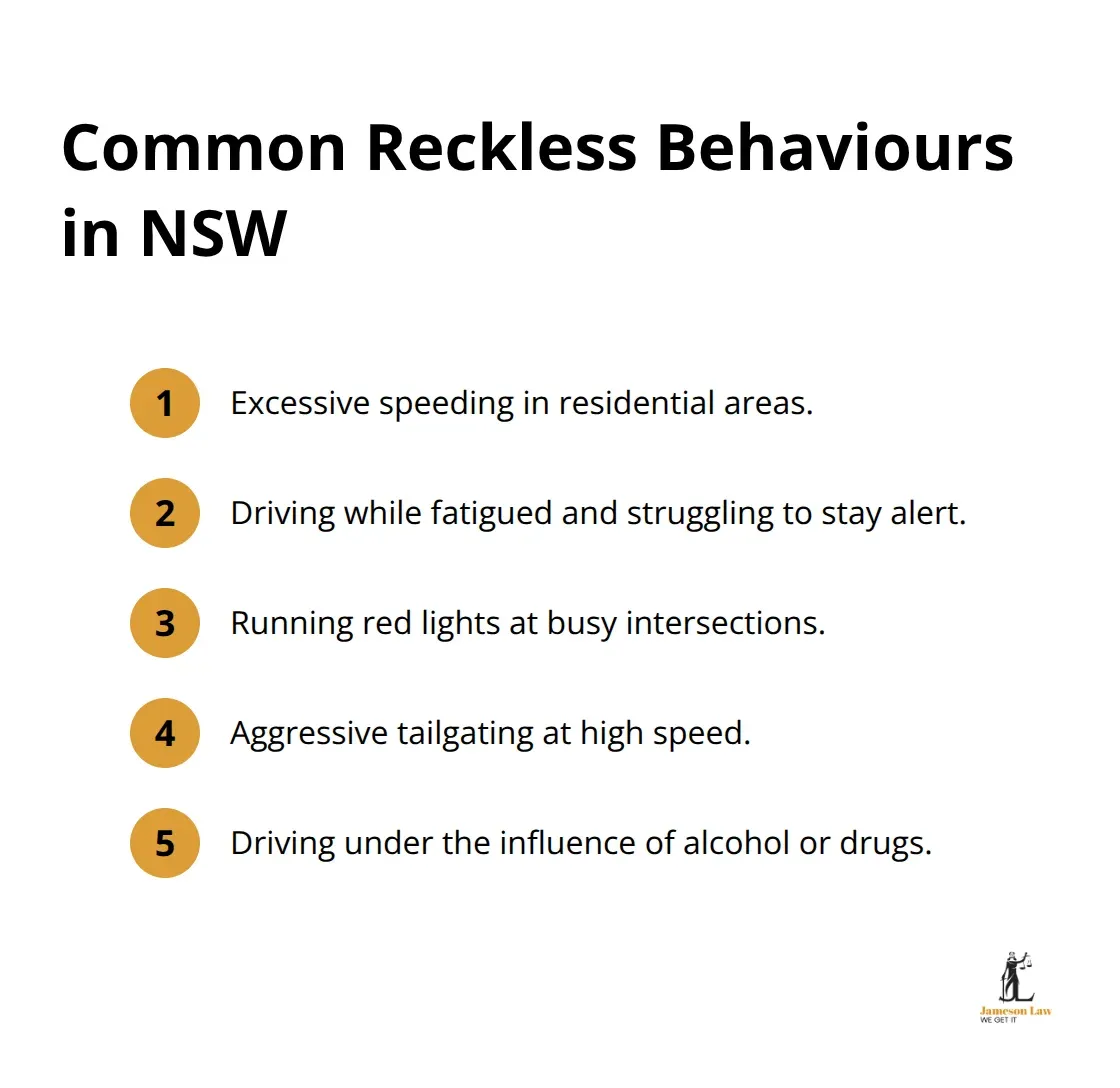
Running a red light at an intersection with heavy foot traffic is reckless when the driver sees the light change but accelerates through anyway.
Tailgating aggressively on a motorway at high speed, repeatedly flashing headlights and forcing other drivers to brake suddenly, constitutes reckless conduct. Driving under the influence of drugs or alcohol, knowing your reaction time and judgment are impaired, represents perhaps the clearest example of conscious disregard for risk. The common thread in all these scenarios is that the driver understood their actions created genuine danger but chose to continue regardless.
How Courts Assess Recklessness
Courts examine the totality of circumstances when assessing whether conduct was genuinely reckless or merely careless. They consider road conditions, visibility, traffic volume, and the driver’s apparent awareness at the time. A prosecutor must prove not just that you drove dangerously, but that you acted with knowledge of the risk. This requirement creates opportunities to challenge their evidence and demonstrate that your actions, while perhaps poor judgment, did not meet the recklessness threshold.
The penalties for reckless driving offences in NSW reflect the seriousness with which courts treat this conduct.
Penalties for Reckless Driving Offences
Financial Penalties and Licence Suspension
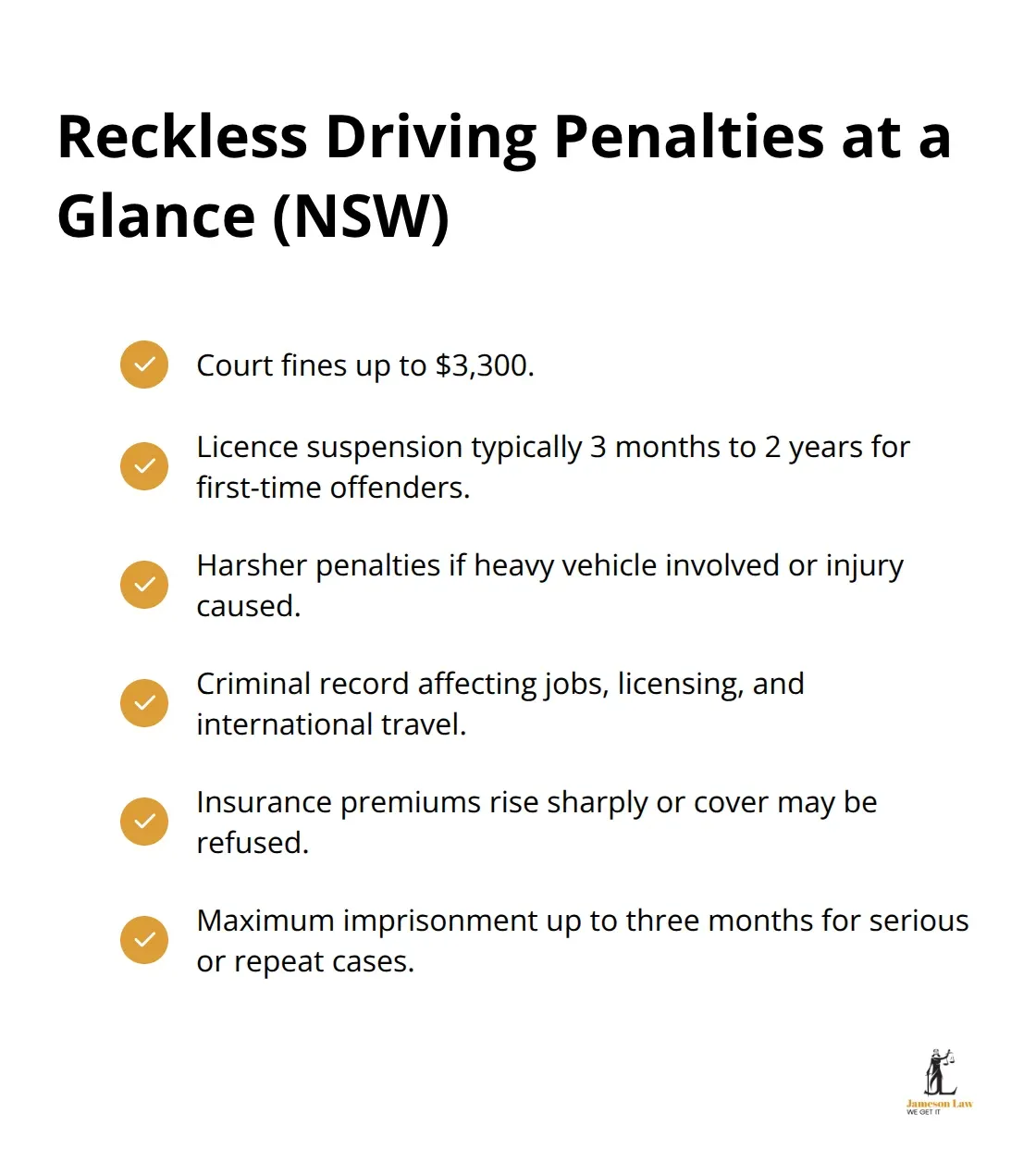
Reckless driving convictions carry substantial financial and driving penalties that extend well beyond the courtroom. Under the NSW Road Transport Act 2013, courts can impose fines up to $3,300 for reckless driving offences, though the actual amount depends on your driving history, the circumstances of the offence, and whether aggravating factors exist. Licence suspension is almost guaranteed with reckless driving charges. First-time offenders typically face suspension periods ranging from three months to two years, while repeat offenders can expect longer periods or even disqualification.
The NSW legislation allows courts discretion in setting suspension lengths, meaning your defence strategy and circumstances directly influence whether you receive the minimum or maximum penalty. If the offence involves a heavy vehicle or caused injury, courts frequently impose harsher penalties.
Criminal Record and Employment Impact
Beyond fines and suspension, a reckless driving conviction triggers a criminal record that affects employment prospects, professional licensing, and travel to countries like the United States. Your driving record becomes permanently tainted, affecting your ability to secure employment in roles requiring a clean licence such as delivery driving, taxi work, or professional driving positions. Employers in transport, logistics, and security sectors conduct background checks that reveal these convictions, often resulting in automatic rejection.
Insurance Consequences
Insurance companies view reckless driving convictions as extremely high-risk, often refusing to renew policies or charging substantially higher premiums for years following conviction. Some insurers simply won’t cover drivers with reckless driving on their record, leaving you unable to legally drive. Your premium increases substantially, and insurers require disclosure of the conviction for years. The financial impact extends beyond immediate fines and insurance-court costs, legal representation, and lost income during licence suspension add up quickly.
Imprisonment and Aggravating Factors
Imprisonment remains a realistic possibility for reckless driving charges. The maximum penalty under section 52 of the Road Transport Act is three months imprisonment, though courts typically reserve custodial sentences for the most serious circumstances or repeat offenders. Aggravating factors that increase the likelihood of jail time include causing injury or death, driving with a suspended licence, high speeds in populated areas, or multiple prior traffic convictions.
These penalties demonstrate why mounting a strong defence early becomes essential rather than accepting the charges or proceeding without proper legal guidance. Understanding what defence strategies can work in your situation requires examining the evidence prosecutors rely on and the weaknesses you can expose.
How to Challenge Reckless Driving Evidence
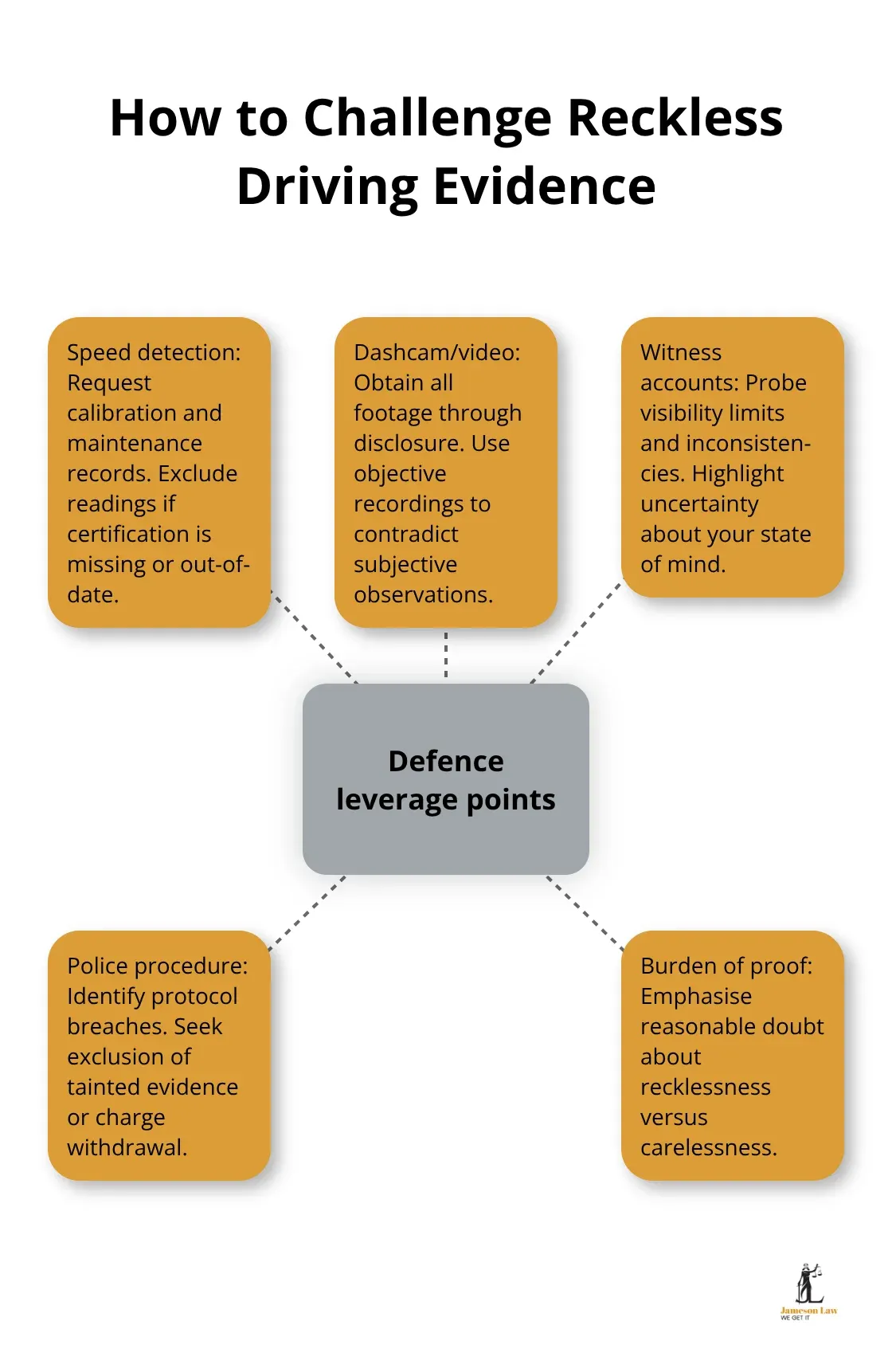
The strength of a reckless driving prosecution rests entirely on the evidence police gathered and how they gathered it. Prosecutors must prove you acted with conscious disregard for risk, not simply that you drove poorly. This requirement creates genuine opportunities to expose weaknesses in their case. Police procedures, dashcam footage, witness statements, and speed detection methods all contain potential vulnerabilities that a solid defence strategy can exploit.
Speed Detection Equipment and Calibration Records
Equipment calibration records become critical when police rely on speed cameras or radar guns to establish excessive speed. NSW legislation requires speed detection devices to undergo regular calibration and maintenance, with documented evidence of these tests available through freedom of information requests. If police cannot produce certified calibration records within the required timeframe before the alleged offence, the speed evidence becomes inadmissible.
Courts frequently exclude speed evidence when officers fail to maintain proper documentation. Request all calibration records early in proceedings through disclosure obligations. The absence of these records significantly weakens the prosecution’s case and may result in charge withdrawal.
Dashcam Footage and Visual Evidence
Dashcam footage from police vehicles or nearby vehicles often contradicts what officers claim they witnessed, particularly regarding visibility, road conditions, and your vehicle’s actual speed. Request all available footage early in proceedings through disclosure obligations. This footage frequently reveals that officers mischaracterised the circumstances or that visibility conditions made their observations unreliable.
Video evidence also exposes inconsistencies between police statements and what actually occurred. Courts place substantial weight on objective video recordings, which often undermine officer testimony about your state of mind or the danger your driving created.
Witness Statement Inconsistencies
Witness statements frequently contain inconsistencies or reveal that witnesses had limited visibility when the alleged conduct occurred. Cross-examination of prosecution witnesses often uncovers that they cannot definitively state your state of mind or whether you consciously recognised any danger. The prosecution carries the burden of proof beyond reasonable doubt, meaning any reasonable uncertainty about whether you acted recklessly rather than carelessly favours your defence.
Prosecution witnesses often admit under questioning that they could not see clearly, that road conditions obscured their view, or that they made assumptions about your intentions. These admissions substantially weaken the case against you.
Police Procedure and Lawful Conduct
Officers must follow strict protocols during traffic stops, including proper identification, explaining why they stopped you, and documenting their observations contemporaneously. Breaches of these procedures can lead to evidence being excluded or charges being withdrawn. Video recordings of your interactions with police (available through dashboard cameras or mobile phones) frequently reveal that officers failed to follow proper procedures or that their recollection differs substantially from what the recording shows.
NSW courts increasingly scrutinise whether police acted lawfully throughout the investigation process. Procedural errors provide grounds for excluding evidence or challenging the reliability of their observations. A procedural breach early in the investigation can contaminate the entire case against you, potentially resulting in acquittal or charge withdrawal before trial.
Final Thoughts
Reckless driving charges in NSW carry substantial penalties that extend far beyond the courtroom. Fines up to $3,300, licence suspension ranging from three months to two years, criminal records affecting employment, and potential imprisonment up to three months create serious consequences for your life and career. Insurance premiums increase dramatically or coverage becomes unavailable entirely, while employment prospects suffer particularly in roles requiring a clean driving record.
Prosecutors must prove you acted with conscious disregard for risk, not merely that you drove carelessly. This requirement creates genuine opportunities to expose weaknesses in their evidence through speed detection equipment calibration records, dashcam footage, witness statement inconsistencies, and police procedure breaches. Early examination of disclosure materials frequently reveals that the evidence falls short of proving recklessness beyond reasonable doubt, distinguishing your case from more serious dangerous driving NSW charges.
Contact Jameson Law to discuss your situation and explore every available defence option. We provide practical legal advice tailored to your circumstances and work to protect your rights while minimising the impact on your life.