


Most Australians put off estate planning because they think it’s only for the wealthy or elderly. The truth is simpler: without a valid will and proper planning, your family faces legal chaos and unnecessary costs when you pass away.
At Jameson Law, we’ve seen firsthand how estate planning basics in Australia protect what matters most. This guide walks you through what you need to know to get started.
What Estate Planning Actually Means
Understanding Estate Planning in Australia
Estate planning involves organising your assets, deciding who receives them after you die, and appointing someone to manage your estate. In Australia, this process includes creating a will, naming an executor, and sometimes establishing trusts or powers of attorney. Many people assume estate planning only applies to those with substantial wealth, but this misconception costs Australian families dearly. The reality is that anyone with assets, dependents, or specific wishes about their estate needs a plan.
Why Your Estate Plan Matters
Without a plan, state intestacy laws dictate how your assets are distributed-which rarely aligns with what families actually want. When someone dies without a valid will in NSW, their family must navigate the intestacy rules under the Succession Act 1965, which can take months or years to resolve. Court applications cost thousands of dollars, and family members often end up fighting over assets or management decisions.
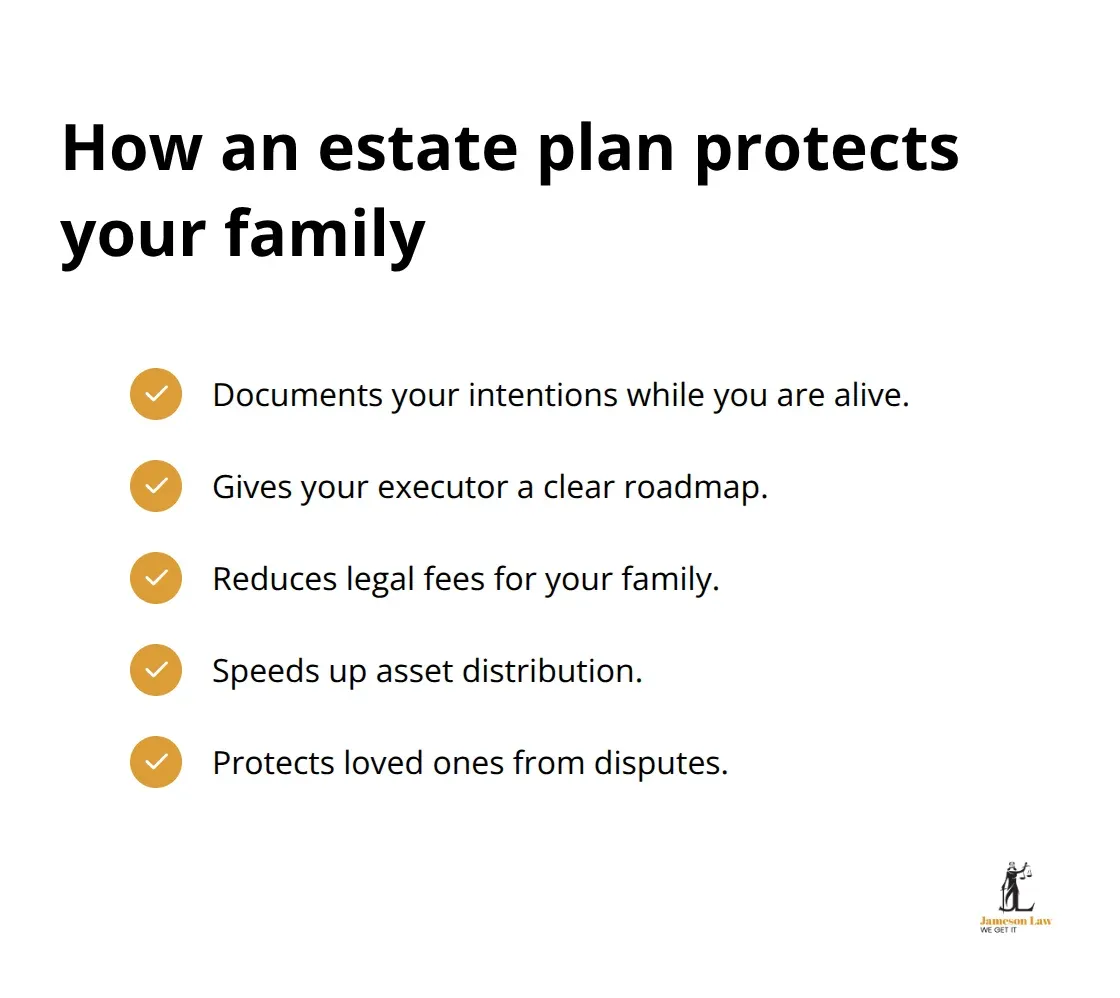
Estate planning prevents these problems by clearly documenting your intentions while you’re alive. It gives your executor a clear roadmap, reduces legal fees, speeds up asset distribution, and protects your family from disputes.
Who Needs Estate Planning
Whether you own a home, have children, run a small business, or simply want to leave money to specific people or charities, estate planning removes ambiguity and prevents the state from making decisions for you. Starting now (regardless of your age or wealth level) means your family won’t face financial strain or uncertainty when they’re grieving. Most Australians underestimate how quickly estate matters become expensive and emotionally draining without proper planning.
The process protects what matters most by ensuring your wishes take priority over default legal rules. Your family gains clarity, your assets reach the right people, and your executor has the authority to act without constant court intervention. These practical benefits apply whether your estate is modest or substantial.
Moving Forward With Your Estate Plan
Understanding what estate planning actually means is the first step toward protecting your family. The next part of this guide covers the specific legal requirements for creating a valid will in NSW, including what makes a will legally binding and how to name an executor who can carry out your wishes.
Building a Legally Valid Will in NSW
Meeting the Legal Requirements
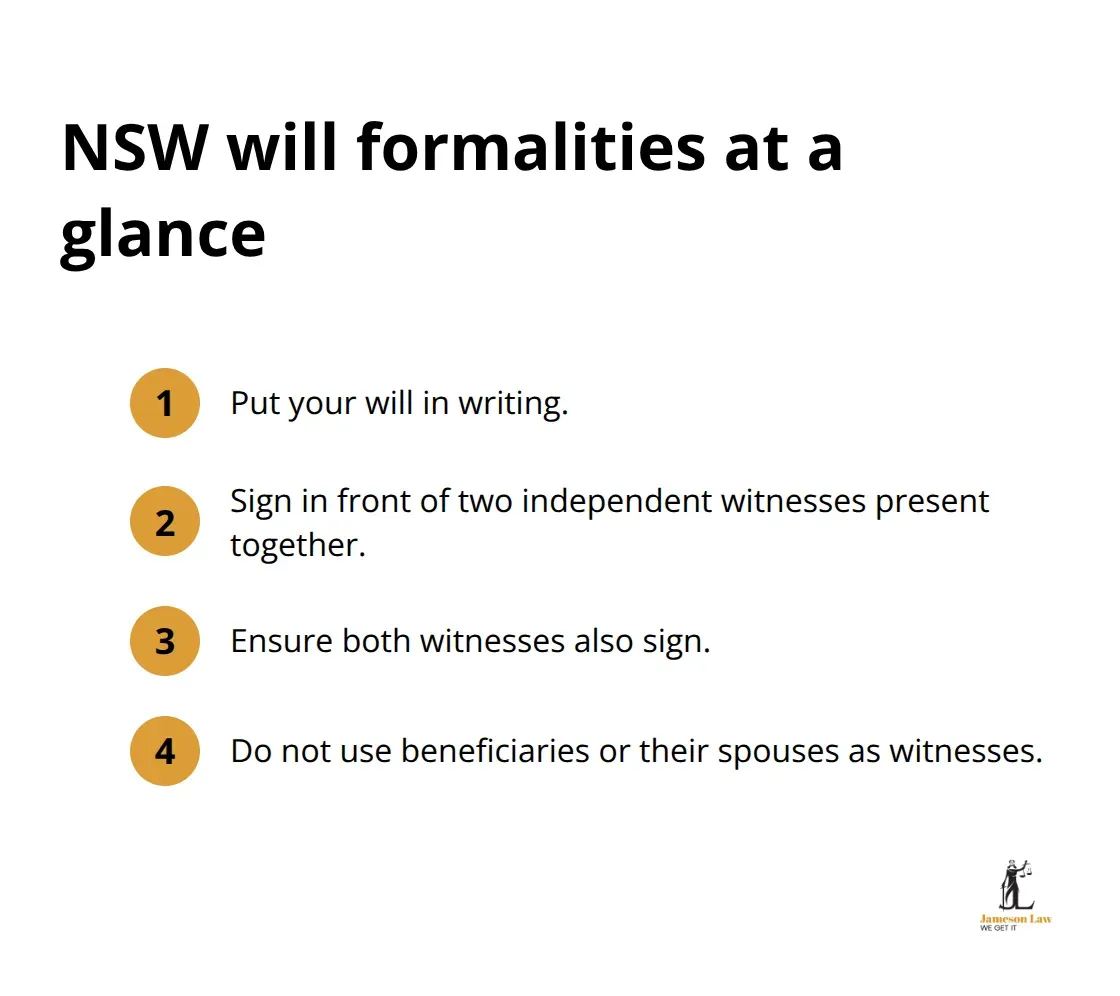
A will must meet strict legal requirements in NSW to be valid and binding. Under the Succession Act 1965, your will must be in writing, signed by you in front of two independent witnesses who are both present at the same time, and each witness must also sign the document. The witnesses cannot be beneficiaries or married to beneficiaries, as this creates a conflict of interest that can invalidate their witnessing.
Many people make costly mistakes here by having a family member witness the document or signing it without proper witnesses present.
The signature requirement exists specifically to prove you understood what you were signing and weren’t under pressure. If your will doesn’t meet these formalities, NSW courts may refuse to recognise it, leaving your estate subject to intestacy rules instead. Courts do have limited power to validate informal wills under section 21 of the Succession Act, but this requires a court application that costs thousands of dollars and takes months to resolve. Avoid this entirely by getting the formalities right from the start.
Choosing Your Executor
Your executor must be someone trustworthy who can manage your estate, pay debts and taxes, distribute assets according to your wishes, and potentially handle disputes. Many people name a spouse or adult child, but you should consider whether that person has the time, financial knowledge, and emotional capacity to handle the role while grieving. Some people choose a professional executor to avoid burdening family members, though this costs between 2 and 5 per cent of your estate value.
Naming Your Beneficiaries
Your beneficiaries should be named clearly with their full names and relationship to you, not vague descriptions like “my eldest son,” as this can create confusion if circumstances change. If you have minor children, name a guardian in your will as well, since the court will appoint someone if you don’t specify your preference. This decision protects your children by ensuring they go to someone you trust rather than someone the state selects.
Keeping Your Will Current
You should review your will every three to five years or whenever major life events occur, such as marriage, divorce, the birth of children, significant changes in your financial situation, or acquiring property in another state. Many people create a will and never update it, which means outdated provisions can create unintended consequences or leave assets to people you no longer want to benefit. Regular updates keep your will aligned with your actual wishes and family circumstances.
Understanding Intestacy as the Alternative
Without a valid will that meets these requirements, NSW intestacy rules under the Succession Act 1965 dictate how your assets are distributed-which rarely aligns with what families actually want. When someone dies without a valid will in NSW, their family must navigate these rules, which can take months or years to resolve. Court applications cost thousands of dollars, and family members often end up fighting over assets or management decisions. A properly drafted will prevents these problems entirely by clearly documenting your intentions while you’re alive.
What Happens When You Die Without a Will
How NSW Intestacy Rules Distribute Your Estate
When someone dies without a valid will in NSW, the Succession Act 1965 takes over completely. The intestacy rules under this act dictate exactly who receives your assets, and this distribution almost never matches what families actually want. If you’re married with children, your spouse receives the first $250,000 of your estate plus half of everything above that amount, with your children splitting the remainder.
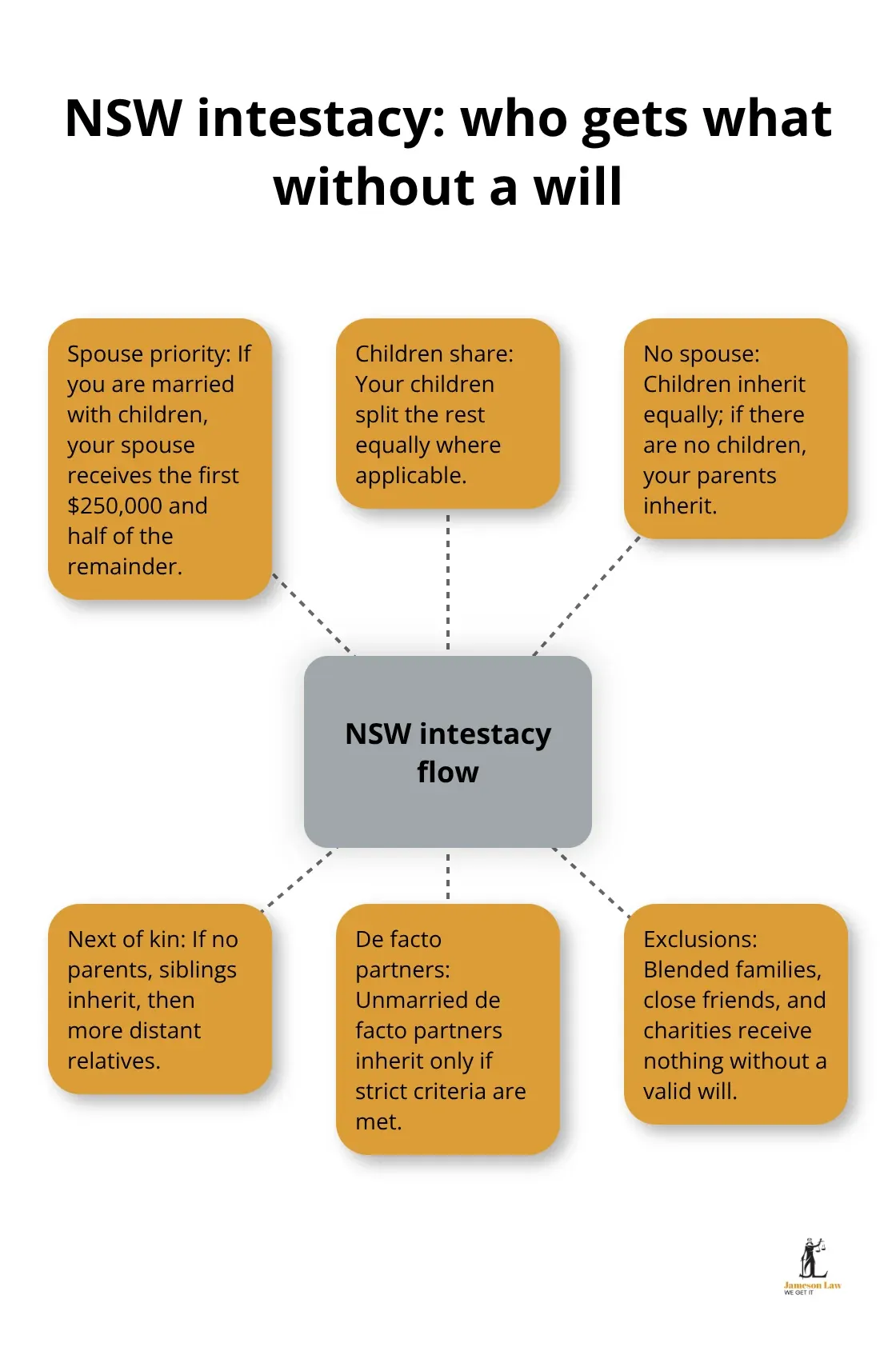
If you have no spouse, your children inherit equally. If you have no children, your parents inherit, then siblings, then more distant relatives. This rigid formula means blended families, de facto partners, close friends, or charities you cared about receive nothing, regardless of your actual wishes.
Who Can Inherit Under Intestacy Laws
The intestacy rules apply to unmarried de facto partners only if they meet strict criteria, which often leaves long-term partners without inheritance rights. Your family must apply to the court for letters of administration, a process that typically takes four to six months before your estate can be distributed at all. During this time, bills, mortgages, and property taxes continue accumulating, and your family cannot access funds to cover these expenses. If your estate includes property in multiple states, the complications multiply significantly, requiring separate applications in each state.
The Real Costs of Dying Without a Will
Court applications to challenge intestacy outcomes or clarify who qualifies as a dependent cost between $5,000 and $15,000 in legal fees alone, and these disputes frequently drag on for two to three years while grieving families fight over money. Intestacy applications now take longer than ever due to court backlogs, with some cases stretching beyond twelve months. Your executor has no clear authority without a will, meaning they must seek court approval for basic decisions like selling property or paying debts.
Guardianship and Family Complications
If minor children are involved and no guardian is named in a will, the court appoints a guardian, which may not be the person you would have chosen. The emotional toll on your family compounds these practical problems, as they navigate legal processes while grieving and often disagreeing about how to handle your affairs. A properly drafted will eliminates these delays, costs, and family conflicts entirely by establishing your intentions clearly while you’re alive.
Final Thoughts
Estate planning basics in Australia protect your family from months of legal delays, thousands of dollars in court costs, and the emotional strain of intestacy disputes-regardless of your age or wealth. A valid will prevents the state from distributing your estate according to rigid formulas that rarely match your actual wishes, while naming an executor and beneficiaries clearly removes ambiguity when your family needs certainty most. These steps take far less time than you might expect, yet they deliver enormous peace of mind.
Your immediate next step involves three decisions: documenting your wishes in a legally valid will, naming an executor you trust, and committing to review your plan every few years as your circumstances change. If your situation involves minor children, property in multiple states, a blended family, or significant assets, professional legal advice becomes even more valuable. We at Jameson Law specialise in wills and estate planning, and we can guide you through the specific requirements under NSW law to ensure your will meets all legal formalities and reflects your true intentions.
Contact Jameson Law to discuss your estate planning needs and take the first step toward protecting what matters most to your family.