

A visa refusal can feel like a dead end, but it’s not. You have legal options to challenge the decision, and understanding your visa refusal appeal rights in NSW is the first step toward fighting back.
At Jameson Law, we’ve helped countless people navigate the appeals process and overturn unfair refusals. This guide walks you through exactly what happens next, from lodging your appeal to gathering the evidence that strengthens your case.
Why Immigration Authorities Refuse Visas
The Main Grounds for Visa Refusal
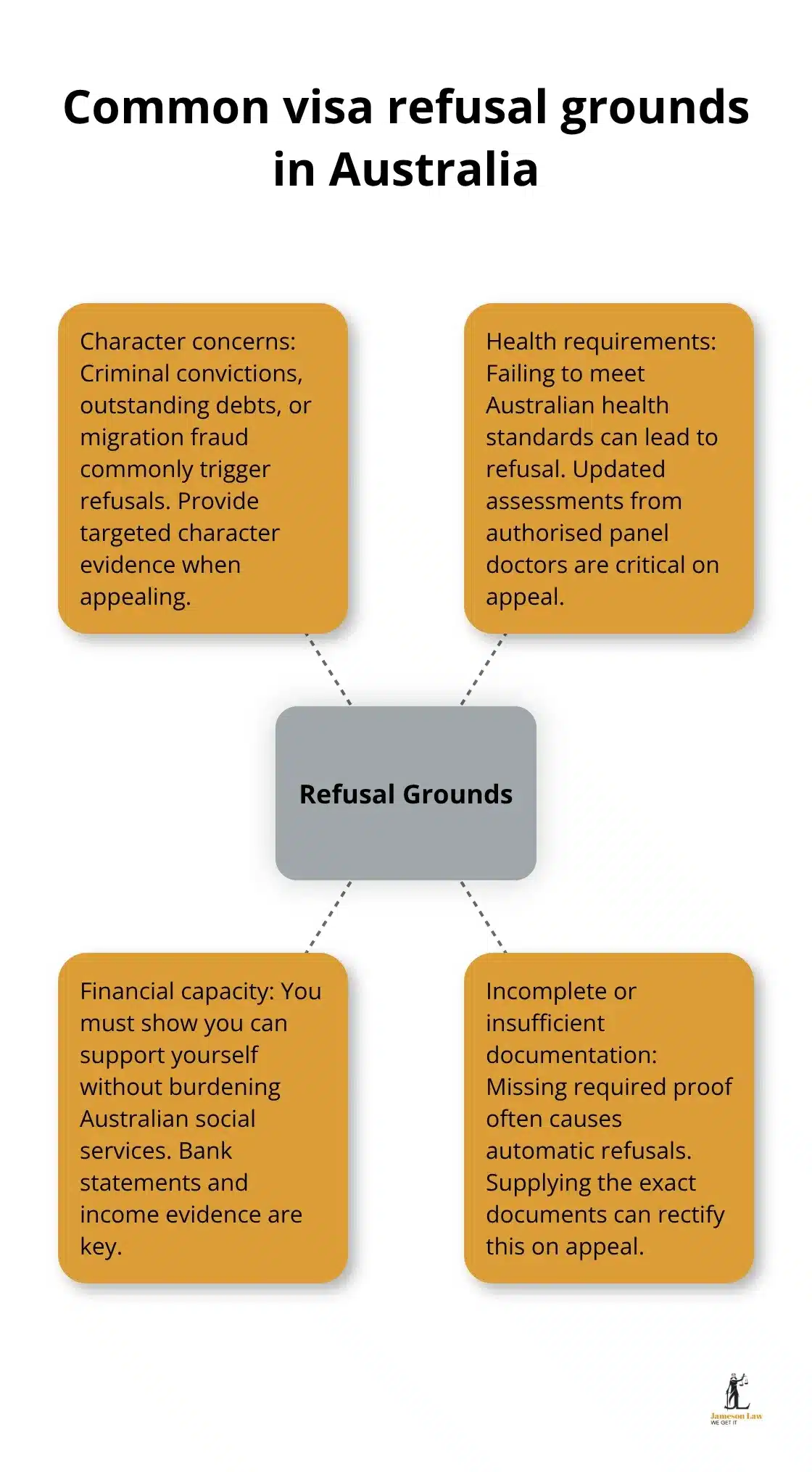
Immigration authorities refuse visas for specific, identifiable reasons outlined in the Migration Act 1958 and related legislation. The most common grounds involve health requirements, character assessments, and failure to meet visa conditions. Character concerns represent a significant portion of refusals, particularly when applicants have criminal convictions, outstanding debts, or involvement in migration fraud. Health refusals occur when applicants fail to meet Australian health standards, which the department defines through specific medical conditions and testing requirements. Financial capacity is another major factor-authorities assess whether you can genuinely support yourself or your family without becoming a burden on Australian social services.
Documentation and Incomplete Applications
Incomplete documentation causes many refusals, though not because authorities found something fundamentally wrong with your application. Applicants often submit insufficient evidence of employment, education, or family relationships. The department requires specific documentation to verify your claims, and missing pieces can trigger an automatic refusal. This ground differs significantly from character or health refusals because you can address it more straightforwardly in an appeal.
Why the Refusal Reason Matters for Your Appeal
The exact reason for your refusal directly determines your appeal strategy. The refusal letter from the Department of Home Affairs should specify which legislative provisions led to the decision, though these letters sometimes lack sufficient detail. A character refusal requires completely different evidence than a health refusal, and you cannot successfully appeal without targeting the actual grounds cited. You have the right to request a detailed statement of reasons if the initial refusal letter is vague, and you should make this request immediately.
How the Appeals Tribunal Assesses Your Case
The Administrative Appeals Tribunal, which handles visa refusal appeals, will only consider whether the original decision was lawful based on the grounds that were actually considered (not new grounds you might discover later). This limitation means you must identify precisely what went wrong and what evidence will address it. Professional legal assistance often proves valuable at this stage because identifying the actual problem and gathering targeted evidence determines whether your appeal has genuine prospects of success.
How to Appeal a Visa Refusal in NSW
Understanding the Administrative Appeals Tribunal
The Administrative Appeals Tribunal is your formal avenue to challenge a visa refusal decision. This independent body reviews whether the Department of Home Affairs made a lawful decision based on the Migration Act 1958. The AAT does not reconsider the case from scratch or make decisions based on new grounds you discover after refusal. Instead, it examines whether the original decision was justified under the law. This distinction matters because you cannot simply submit entirely different evidence and expect a successful outcome. You must address the actual reasons cited in your refusal letter.
Why Your Refusal Grounds Determine Your Appeal Strategy
If the Department refused your visa on character grounds, you cannot win by proving you meet health requirements instead. The AAT will only overturn a decision if it finds the Department acted outside its legal authority, failed to consider mandatory considerations, or based the decision on factually incorrect information. Your appeal strategy must align precisely with what the refusal letter states. Mismatched evidence and grounds will result in rejection, regardless of how strong your supporting documentation appears.
Critical Deadlines and Application Requirements
You have 28 days from the date of the refusal decision to lodge an appeal with the AAT, though this timeframe can extend in limited circumstances. The Department of Home Affairs will provide this deadline clearly in your refusal letter. Missing this deadline means you lose your right to appeal entirely, with no exceptions.
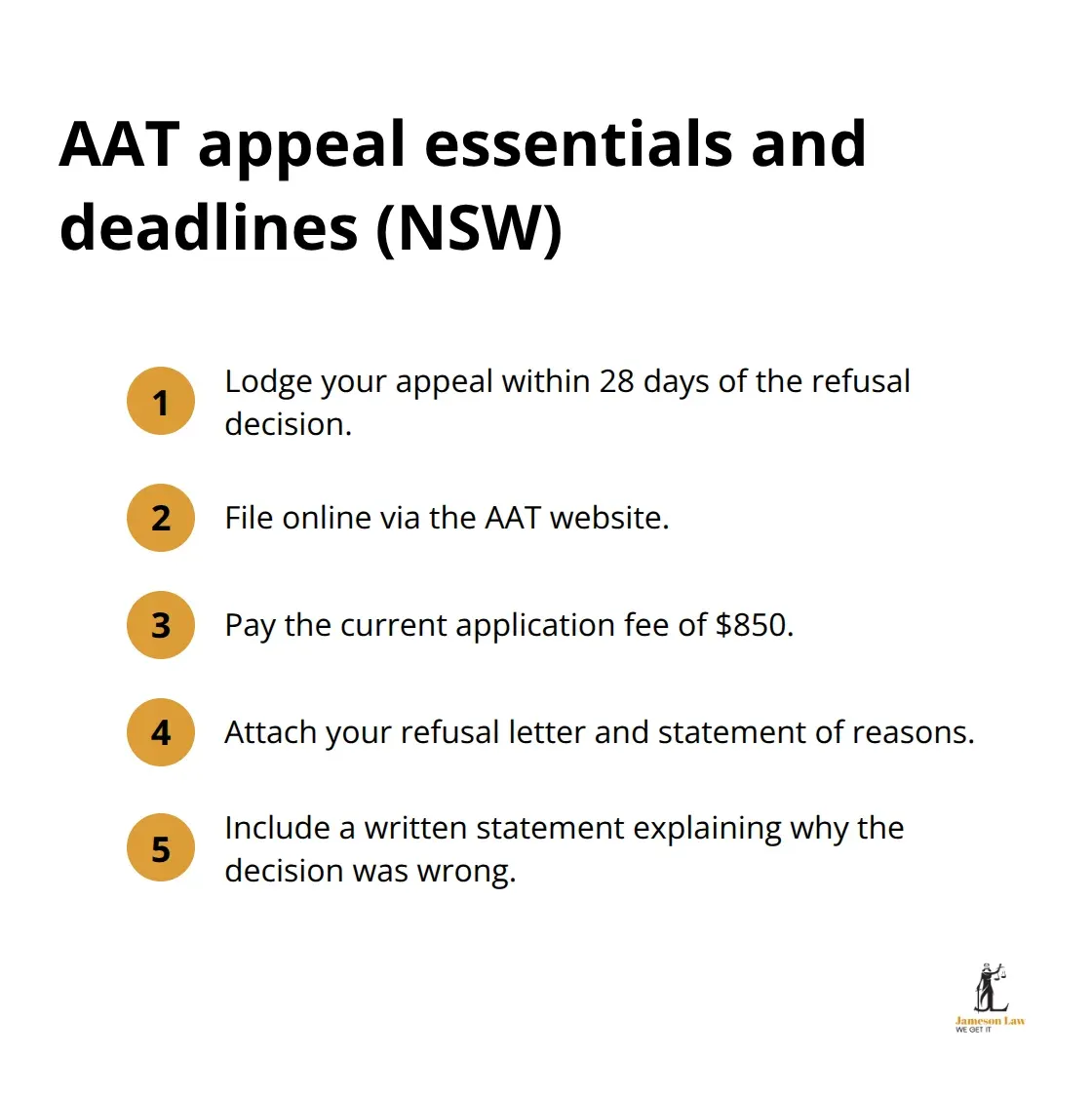
You must submit your appeal application online through the AAT’s website, along with the application fee (currently $850). Your submission must include your original refusal letter, the detailed statement of reasons from Home Affairs, and a written statement explaining why you believe the decision was wrong.
Once lodged, your case typically takes 6 to 12 months to reach a hearing, depending on the AAT’s workload and case complexity. The AAT requires you to identify the specific legislative provisions the Department should have applied differently and what evidence supports your position. Many applicants underestimate the importance of this written statement, treating it as a formality when it actually shapes how the tribunal views your entire case.
Targeting Your Evidence to the Refusal Ground
Your evidence must directly contradict the Department’s findings or demonstrate they overlooked critical information. Character refusals require statutory declarations from employers, community leaders, or character referees who can attest to your conduct and ties to Australia. Health refusals need updated medical assessments from panel doctors authorised by the Department, showing you now meet health standards. Financial capacity cases demand bank statements, employment contracts, and evidence of income spanning several months.
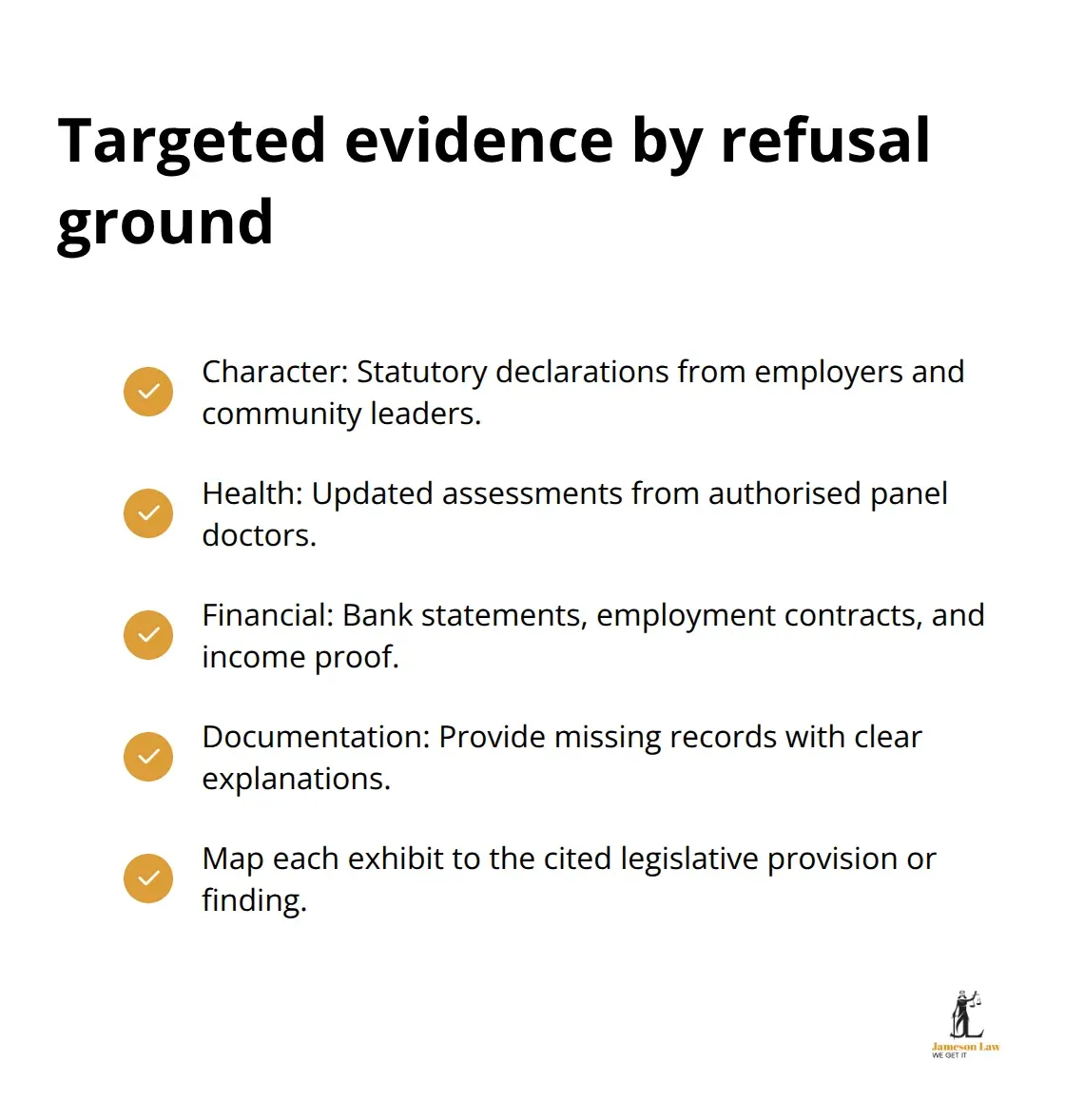
Many applicants submit generic supporting letters rather than targeted evidence addressing the specific refusal ground. Your documentation strategy must align precisely with what the AAT needs to overturn the original decision. This focused approach separates appeals that succeed from those that fail, regardless of how compelling your overall circumstances may appear.
Moving Forward With Your Appeal
Once you understand the exact grounds for refusal and gather targeted evidence, you’re ready to prepare your formal submission. The next stage involves structuring your written statement and supporting documentation in a way that presents your case most persuasively to the tribunal.
Building Your Strongest Appeal Case
Address the Exact Grounds for Refusal
The difference between a successful appeal and a rejected one often comes down to how precisely you address the Department’s original concerns. Your refusal letter identified specific reasons the Department refused your visa, and your appeal must dismantle those exact reasons with targeted evidence. Generic supporting documents or character references that don’t speak to the actual grounds cited will not persuade the AAT. If the Department refused you on character grounds due to a criminal conviction, submitting evidence of your employment history accomplishes nothing. You need declarations from people who can speak directly to your rehabilitation, your community standing since the conviction, and why the Department’s character assessment was flawed.
Match Your Evidence to the Refusal Ground
If health was the issue, you need updated medical assessments from panel doctors authorised by the Department of Home Affairs, not general practitioner reports. If incomplete documentation caused the refusal, you need to provide exactly what was missing, with explanations of why the original submission was inadequate. Financial capacity cases demand bank statements spanning at least three to six months, employment contracts or letters confirming income, proof of assets, and evidence showing how you’ll support yourself without relying on Australian social services.
Most appellants either submit evidence addressing the wrong grounds or fail to present their evidence in a way that directly challenges the Department’s reasoning. Appellants who succeed typically spend considerable time understanding precisely what the Department claimed to have found or not found, then structure their evidence as a point-by-point rebuttal. This means reading your refusal letter multiple times, requesting a detailed statement of reasons from Home Affairs if the letter lacks specificity, and mapping each piece of evidence to the legislative provision or factual finding you’re challenging.
Strengthen Character Refusal Appeals
Character refusals demand declarations that go beyond vague endorsements, with declarants explaining their knowledge of you, specific examples of your conduct that contradict the Department’s assessment, and their understanding of Australian values and community standards. Your declarants should include employers, community leaders, or people who can speak to your rehabilitation and current standing. Each declaration must address the specific character concern the Department raised, whether that involves a criminal conviction, financial misconduct, or involvement in migration fraud.
Invest in Professional Legal Representation
Immigration lawyers who regularly appear before the AAT know exactly what evidence the tribunal finds persuasive, how to structure your written statement to frame your case compellingly, and which procedural steps protect your rights throughout the appeal. The AAT receives hundreds of visa refusal appeals annually, and tribunal members have seen every variation of poorly prepared cases. Investing in legal assistance now often determines whether you overturn the refusal or exhaust your appeal rights without success. A lawyer can identify weaknesses in the Department’s reasoning that you might miss, strengthen your evidence strategy, and present your case in the most persuasive way possible to the tribunal.
Final Thoughts
A visa refusal does not end your options. You hold genuine visa refusal appeal rights in NSW, and exercising them correctly determines your success or failure. The appeal process demands three essential actions: identifying the exact grounds for refusal, gathering evidence that directly addresses those grounds, and submitting your application within 28 days of the refusal decision. Missing this deadline eliminates your right to appeal entirely, so acting quickly matters more than acting perfectly.
The Administrative Appeals Tribunal will only overturn a refusal if the Department of Home Affairs made a lawful error. This means your appeal strategy must align precisely with what the refusal letter states, and generic supporting documents accomplish nothing if they don’t address the actual grounds cited. Character refusals need targeted declarations addressing rehabilitation and community standing, health refusals require updated medical assessments from authorised panel doctors, and financial capacity cases demand bank statements and employment verification spanning several months.
Immigration lawyers who regularly appear before the AAT understand what evidence persuades tribunal members and how to structure your written statement compellingly. They identify weaknesses in the Department’s reasoning that you might miss and present your case in the most persuasive way possible. Contact Jameson Law to discuss your visa refusal appeal rights with someone who understands the process and can guide you through each stage.