

Visa processing times in Australia can feel unpredictable, especially when your future depends on approval. The Department of Home Affairs handles thousands of applications monthly, and timeframes vary dramatically depending on visa type and circumstances.
At Jameson Law, we’ve guided countless clients through this process. Understanding what influences your processing timeline-and how to work within it-makes a real difference to your outcome.
What Controls Your Visa Timeline
Factors That Shape Processing Speed
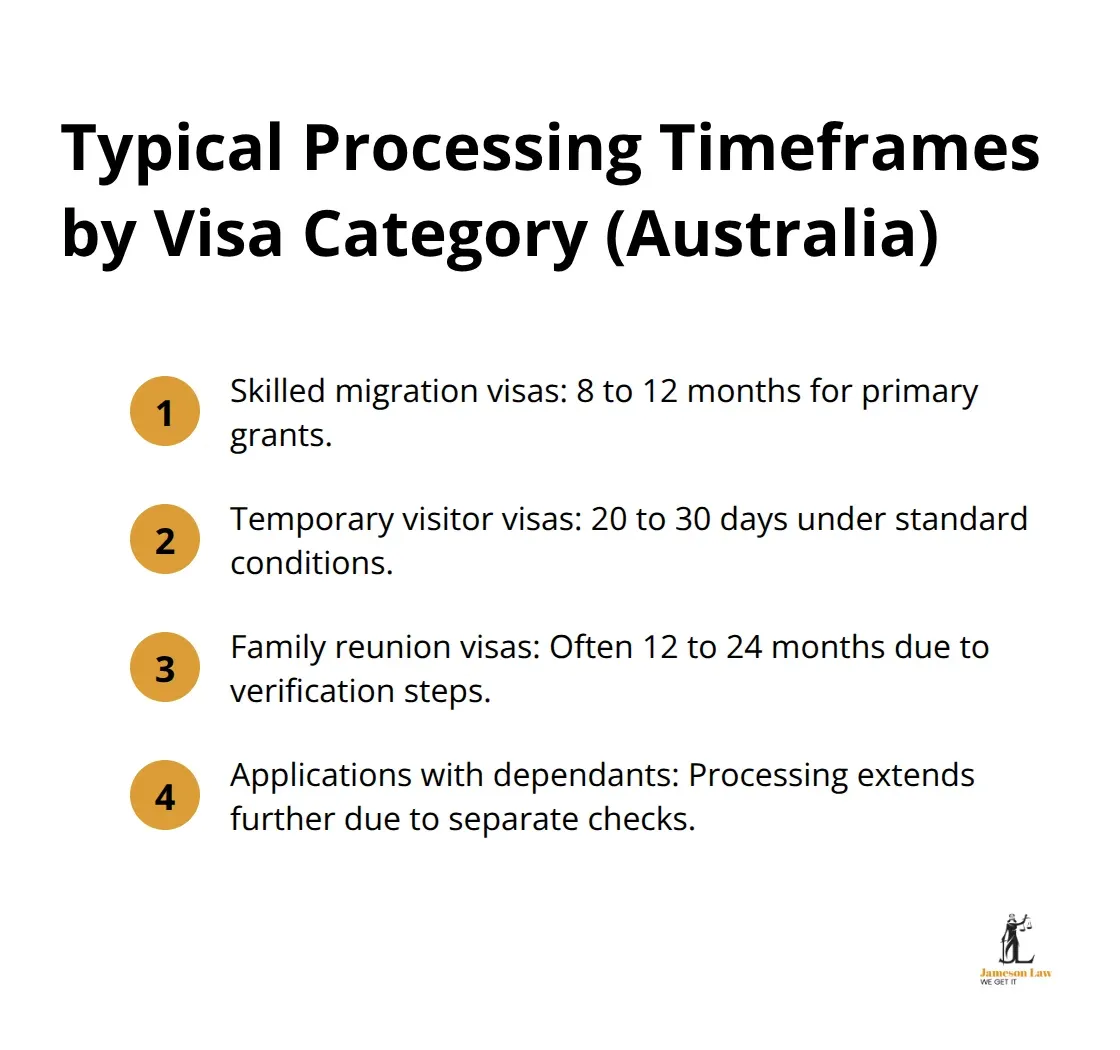
Processing times for Australian visas depend on several concrete factors that Home Affairs considers when assessing your application. Visa complexity matters significantly-a Skilled Independent visa requires verification of qualifications, work history, and English language proficiency, which takes longer than processing a visitor visa that primarily needs security checks. The completeness of your documentation directly impacts speed. Home Affairs publishes median processing timeframes on its website, meaning half of applications are decided faster and half slower.
Standard Timeframes Across Visa Categories
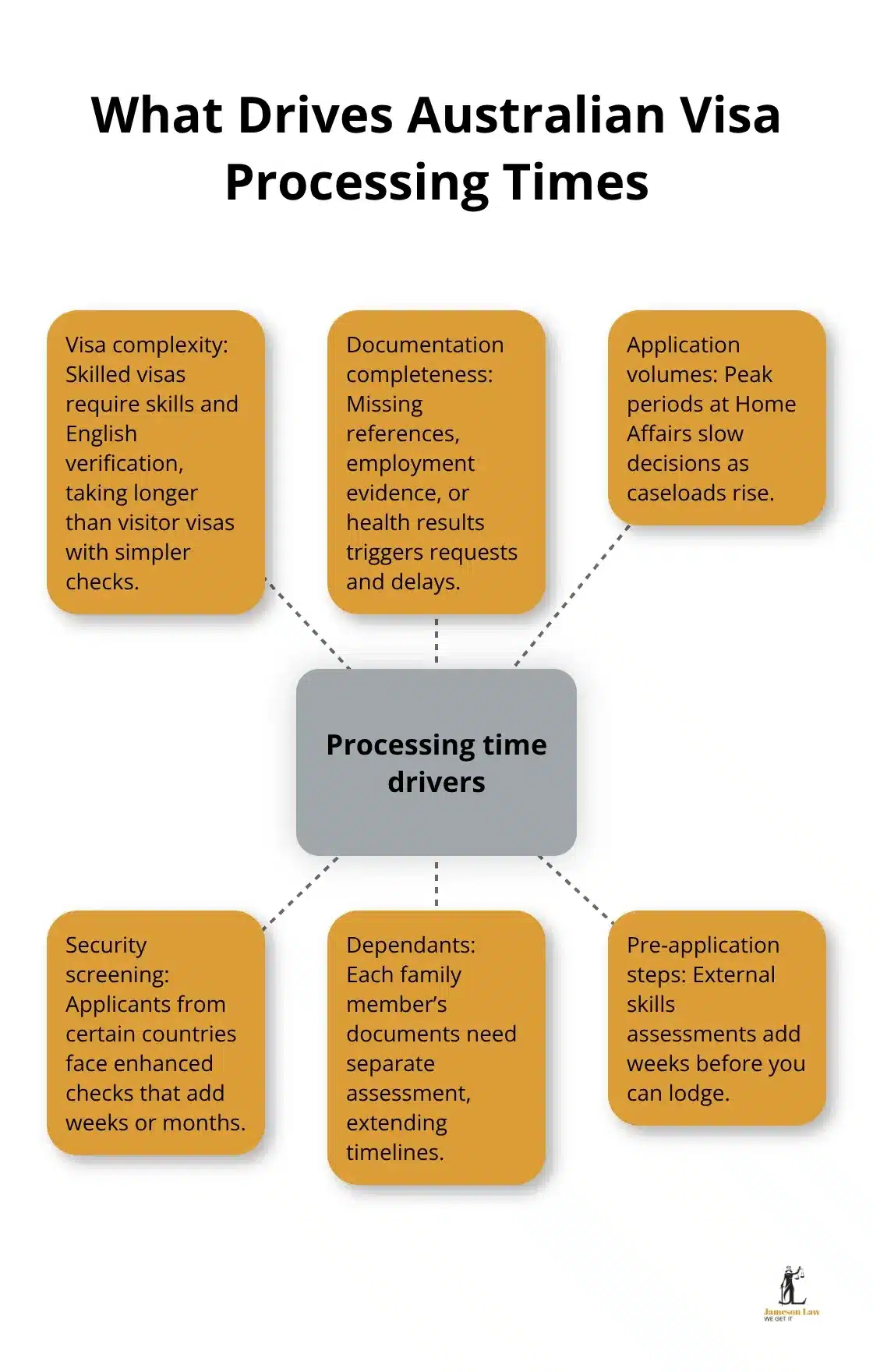
As of 2024, skilled migration visas typically take between 8 to 12 months for the primary visa to be granted, though this varies based on occupation and whether your nominated occupation appears on the skilled occupation list. Temporary visitor visas generally process within 20 to 30 days, but applications flagged for additional security or health checks can extend significantly beyond these timeframes. Family reunion visas sit between these extremes, often taking 12 to 24 months because Home Affairs conducts relationship verification and financial capacity assessments. If you apply for a visa with dependants, processing extends further since each family member’s documentation requires separate verification.
External Pressures on Your Timeline
The volume of applications Home Affairs receives affects individual processing speed-during peak periods, timeframes lengthen noticeably. Your location and citizenship also influence speed; applicants from certain countries face additional security screening that adds weeks or months to processing. Home Affairs provides processing time estimates as a range rather than a guarantee, which reflects the variability across applications.
How to Accelerate Your Application
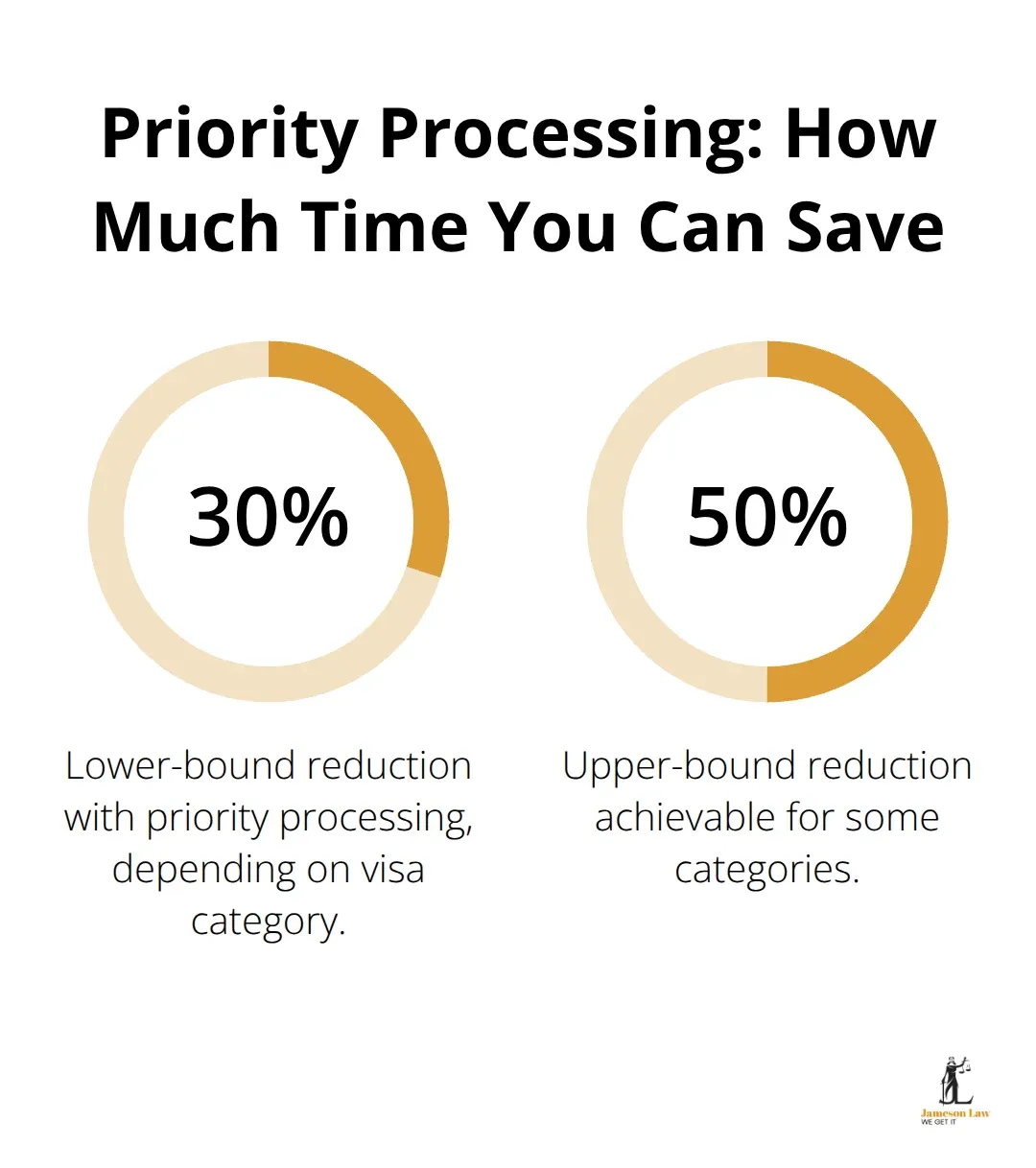
Priority processing is available for specific visa types and circumstances, typically costing additional fees but reducing standard timeframes by roughly 30 to 50 per cent depending on the visa category. Incomplete applications are a major delay factor-missing character references, employment verification, or health examination results can add months as Home Affairs returns your application for correction. Try submitting documentation that exceeds requirements rather than meeting minimum standards, as this approach typically accelerates processing by avoiding requests for additional information.
Moving Forward With Your Application
Understanding these specific timeframes and requirements allows you to plan more realistically and take action where you can genuinely influence the outcome. The strategies you adopt now-particularly around documentation quality and processing options-directly shape how quickly Home Affairs moves your application forward.
Processing Times Across Australia’s Main Visa Categories
Skilled Migration Visas: The Longest Processing Pathway
Skilled migration visas represent the longest processing pathway in Australia’s immigration system. As of 2024, the Department of Home Affairs reports median processing times of 8 to 12 months for primary visa grants, though occupations facing higher demand or additional scrutiny extend well beyond this range. Accountants and IT professionals currently experience processing times at the upper end of this spectrum because Home Affairs conducts thorough skills assessment verification through bodies like CPA Australia or the Australian Computer Society. Your qualifications must pass verification against Australian standards, which adds substantial time to the timeline.
If you apply with a partner or dependants, add another 2 to 4 months as each family member’s documentation requires separate processing. The skills assessment itself, which occurs before your visa application, takes 4 to 8 weeks depending on your occupation and the assessing authority’s workload. Incomplete applications are returned by Home Affairs, which effectively restarts the clock-submitting a complete application with all character references, employment verification letters, and health examination results upfront reduces delays significantly.
Family Reunion Visas: Relationship and Financial Verification
Family reunion visas operate on a fundamentally different timeline because Home Affairs prioritises relationship verification and financial capacity checks over occupational assessment. Partner visas typically take 12 to 24 months from application to decision, with variation depending on whether you apply onshore or offshore and the complexity of your relationship history. Parent visas move considerably slower, often taking 24 to 30 months because Home Affairs conducts detailed financial assessments to confirm the sponsoring child can support their parent without accessing Australian welfare services.
Child visas process around 12 to 18 months. The financial capacity requirement (particularly for parent visas) explains much of this extended timeframe, as Home Affairs verifies income, assets, and ongoing financial commitment through detailed documentation review.
Temporary Visitor Visas: Speed and Security Trade-offs
Temporary visitor visas process fastest of all visa types, with standard timeframes between 20 to 30 days, making them suitable when you need quick approval for tourism, business visits, or short-term family visits. Applications flagged for additional security checks or health examinations routinely extend to 60 to 90 days. Applicants from countries requiring enhanced security screening face processing delays of several months regardless of visa type.
Priority processing for visitor visas reduces processing time to 10 to 15 days, which proves worthwhile when your travel dates are fixed. The decision to pursue priority processing cannot be reversed once your application is lodged with Home Affairs, so assess whether this option aligns with your timeline needs before submission.
When Processing Times Matter Most
Your location and citizenship influence processing speed significantly-some countries trigger additional security screening that adds weeks or months to any visa category. Home Affairs provides processing time estimates as a range rather than a guarantee, which reflects the variability across applications. Understanding which visa category matches your circumstances allows you to plan realistically and identify where priority processing or additional documentation might accelerate your outcome.
The strategies you adopt now-particularly around documentation quality and processing options-directly shape how quickly Home Affairs moves your application forward. Knowing your visa category’s typical timeframe helps you prepare for what lies ahead and identify when professional legal assistance becomes valuable for your specific circumstances.
How to Speed Up Your Visa Application
Submit Complete Documentation From the Start
Documentation quality determines whether Home Affairs processes your application smoothly or requests additional information that adds months to your timeline. Most applicants submit only what Home Affairs asks for, but this approach creates delays. Instead, include supporting documents that strengthen your case before Home Affairs requests them. For skilled migration visas, this means submitting employment reference letters that detail your specific duties and responsibilities, qualification transcripts from your tertiary institution, and evidence of English language proficiency even if your primary occupation doesn’t strictly require it.
Character references should come from professional contacts who can speak to your work ethic and reliability, not personal friends. Health examination results should be submitted with your initial application rather than waiting for Home Affairs to request them. This approach typically reduces processing time by 4 to 8 weeks because Home Affairs avoids the cycle of requesting missing documents and waiting for your response.
Strengthen Financial Documentation for Family Visas
For family reunion visas, financial documentation requires particular attention. Provide recent tax returns, payslips covering the last two years, bank statements showing consistent savings patterns, and employment contracts confirming ongoing income. Home Affairs assesses financial capacity conservatively, so documentation showing financial stability above the minimum threshold accelerates approval.
Submit all documents in the format Home Affairs specifies on its website, as applications submitted in incorrect formats are returned for resubmission. This simple step prevents unnecessary delays that restart your processing timeline.
Consider Priority Processing Options
Priority processing remains underutilised despite its effectiveness in reducing timeframes. Skilled migration visa applicants can reduce processing time through priority processing, which costs additional fees depending on visa type. Temporary visitor visa priority processing reduces timeframes from 20 to 30 days to roughly 10 to 15 days, making it worthwhile when your travel dates are fixed and cannot be delayed.
The decision to pursue priority processing must be made when lodging your application and cannot be reversed, so assess your timeline requirements carefully before submission. Family reunion visas are not eligible for priority processing through standard Home Affairs channels, which means these applications proceed at standard pace regardless of urgency.
Seek Professional Review for Complex Applications
Professional legal assistance becomes valuable when your circumstances involve complexity that increases processing risk. Visa applications involving previous visa cancellations, criminal history, character concerns, or relationship history requiring detailed explanation benefit significantly from professional review before submission. This review identifies potential concerns Home Affairs might raise, which allows you to address these issues proactively rather than reactively.
This approach prevents applications being returned for clarification or additional information, which effectively restarts processing timeframes. Applications involving dependants or complex family structures also warrant professional guidance because each family member’s documentation must satisfy Home Affairs requirements independently.
Final Thoughts
Visa processing times in Australia demand realistic planning rather than optimistic guessing. The timeframes we’ve outlined reflect current Department of Home Affairs operations, and understanding where your application sits within these ranges allows you to prepare accordingly. Skilled migration visas take 8 to 12 months, family reunion visas stretch to 12 to 30 months depending on type, and temporary visitor visas process within 20 to 30 days under standard conditions. These aren’t arbitrary figures-they reflect the verification work Home Affairs must complete for each visa category.
Your documentation quality directly influences where your application lands within these timeframes. Submitting complete, accurate paperwork from the outset prevents the delays that come from Home Affairs requesting additional information. Priority processing, where available, genuinely reduces waiting periods by 30 to 50 per cent, making it worth considering when your circumstances allow (particularly for visitor visas with fixed travel dates).
Professional legal assistance becomes particularly valuable when your circumstances involve complexity. Previous visa issues, character concerns, dependant family members, or relationship history requiring explanation benefit from professional review before submission. Contact Jameson Law to discuss your visa application with our immigration law team and identify where delays might occur in your specific situation.