


Most Australians put off estate planning because they think it’s only for the wealthy or elderly. The truth is that having a will and understanding estate planning basics in Australia protects your family regardless of your age or assets.
At Jameson Law, we’ve seen firsthand how proper planning prevents costly disputes and stress when it matters most. This guide walks you through everything you need to know to get started.
What Estate Planning Actually Means
Understanding Estate Planning in Australia
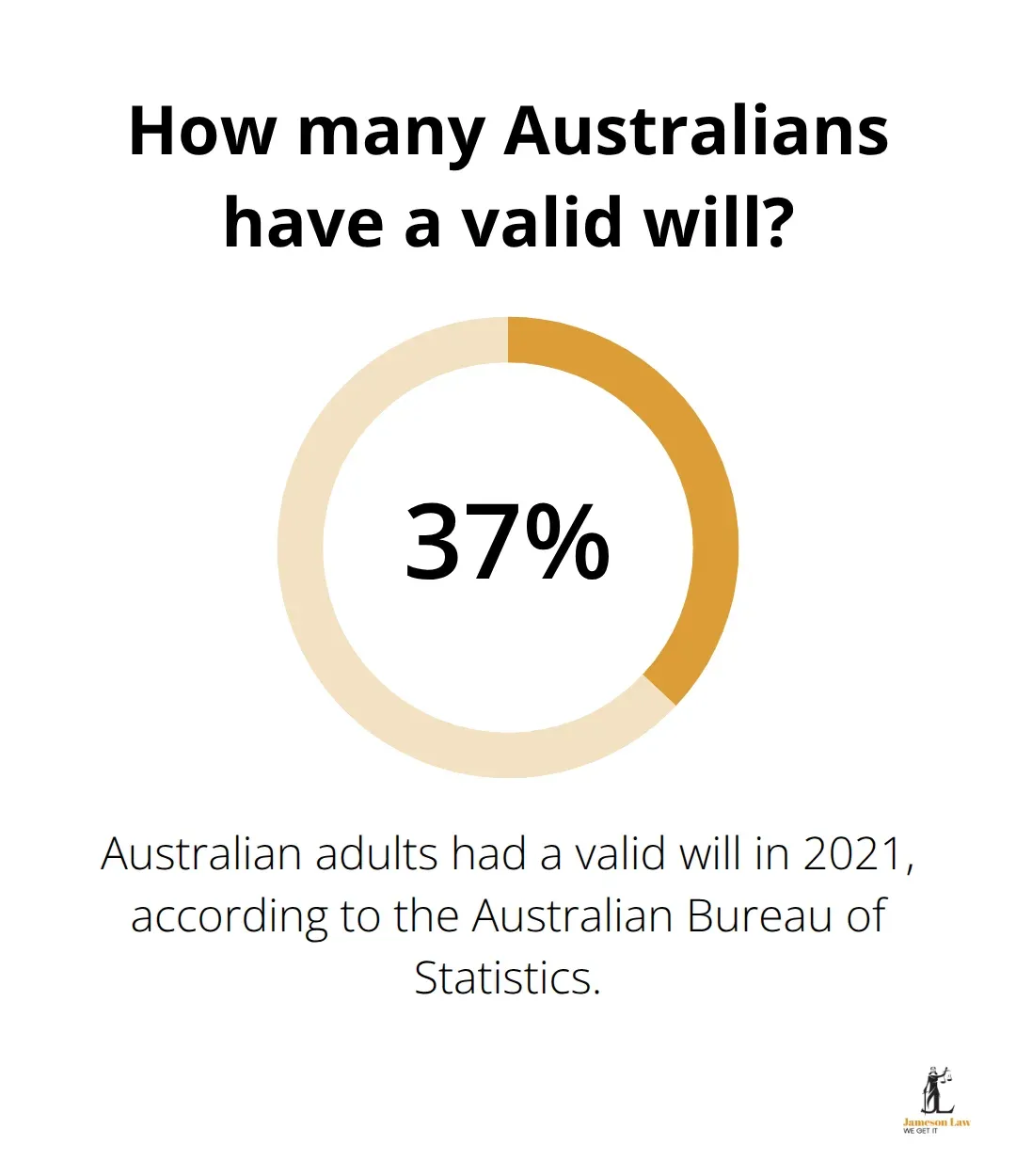
Estate planning in Australia involves organising your assets, deciding who receives them after you die, and putting legal structures in place to make that happen smoothly. Under Australian law, this starts with creating a will-a legally binding document that sets out your wishes. However, estate planning extends far beyond a will alone. The Australian Bureau of Statistics found that as of 2021, around 37% of Australian adults had a valid will in place, meaning the majority of people have no documented plan for their estates at all. This gap creates serious problems.
When someone dies without a will, their assets are distributed according to intestacy laws, which means the government essentially decides who gets what, regardless of your actual wishes. The process becomes slower, more expensive, and often more emotionally draining for your family.
What a Proper Estate Plan Covers
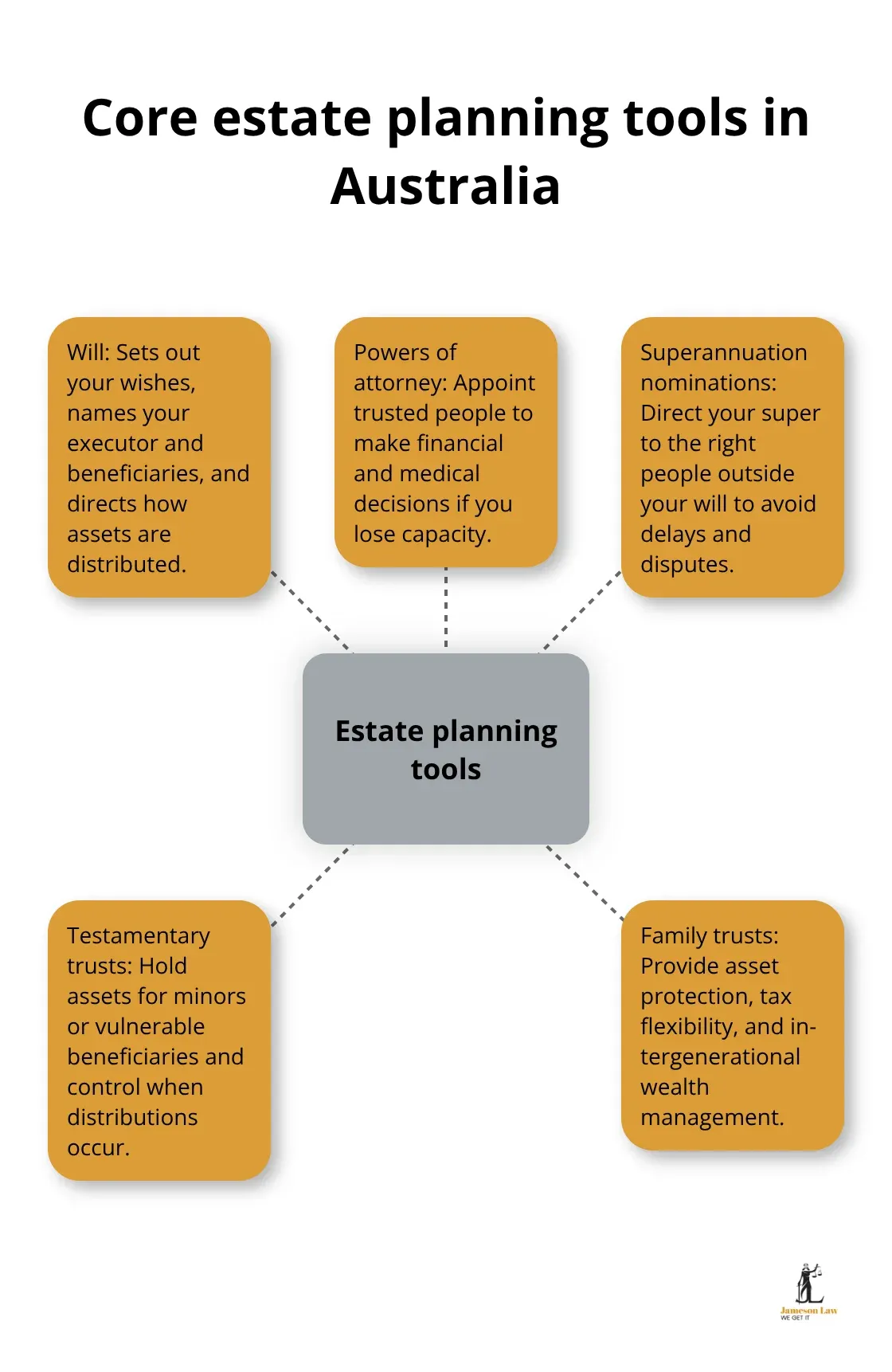
A proper estate plan addresses several key areas. Your will specifies who your executor is, names your beneficiaries, and outlines how your assets should be distributed. Powers of attorney allow you to appoint someone to make financial or medical decisions if you become unable to do so. Superannuation beneficiary nominations ensure your super passes to the right people outside your will. Family trusts can provide asset protection and tax efficiency for your family. Each of these tools serves a specific purpose, and most people benefit from using more than one.
Why Age and Wealth Don’t Determine Your Need for Planning
Many people believe estate planning is only necessary if you’re wealthy or elderly, but this misconception costs Australian families thousands of dollars every year. Someone in their 30s with young children, a mortgage, and a modest income actually needs estate planning more urgently than a retiree. If something happens to you, your children need guardianship arrangements, your debts need to be managed, and your family needs to know what you want. The ATO reports that estate planning mistakes regularly result in families paying significantly more tax than necessary on inherited assets.
Common Misconceptions That Cost Families Money
Another common misconception is that having a will automatically solves everything. A will only covers assets held in your personal name. Superannuation, investment bonds, and assets held in trusts bypass your will entirely and go to nominated beneficiaries instead. If your nominations are outdated or missing, your super might go to an ex-partner or your estate instead of your children. The cost of fixing these problems after death far exceeds the cost of getting it right upfront.
People also often assume that estate planning is a one-time event. In reality, your plan needs reviewing every three to five years, especially after major life changes like marriage, divorce, having children, significant changes in your financial situation, or acquiring new assets. NSW law recognises this through provisions in the Succession Act 1995 that allow courts to adjust wills in certain circumstances, but relying on the courts to fix your planning is expensive and uncertain. These misconceptions explain why so many families face unnecessary complications when they should be focusing on grieving and moving forward.
The specific steps you take to create your will depend on your circumstances, your assets, and your family situation. Understanding what a valid will requires under NSW law helps you avoid costly mistakes before they happen.
Building Your Will Step by Step in NSW
Map Out Your Complete Financial Picture
Creating a valid will in NSW requires more than good intentions. Start by listing everything you own, including your home, vehicles, investments, superannuation, and personal items of value. Write down what each asset is worth and note which ones are held jointly, in a trust, or have named beneficiaries already.
Superannuation and life insurance with beneficiary nominations won’t pass through your will, so separating these from your personal assets prevents confusion later. Your liabilities matter equally-mortgages, personal loans, credit cards, and other debts reduce what your beneficiaries actually receive. Many people overlook this step and their families discover unexpected debts after death. Once you have a complete picture of your financial situation, you can make realistic decisions about who gets what and provide your executor with the information they need to settle your estate properly.
Choose Your Executor With Care
Naming an executor and your beneficiaries requires careful thought because these decisions directly affect how smoothly your estate is managed. Your executor handles everything after you die-they administer the estate and carry out the instructions in your will. Choose someone organised, trustworthy, and willing to take on this responsibility. Many people name a spouse or adult child, but you can also appoint a professional executor like a solicitor or trust company if your family situation is complex.
Meet NSW Legal Requirements for a Valid Will
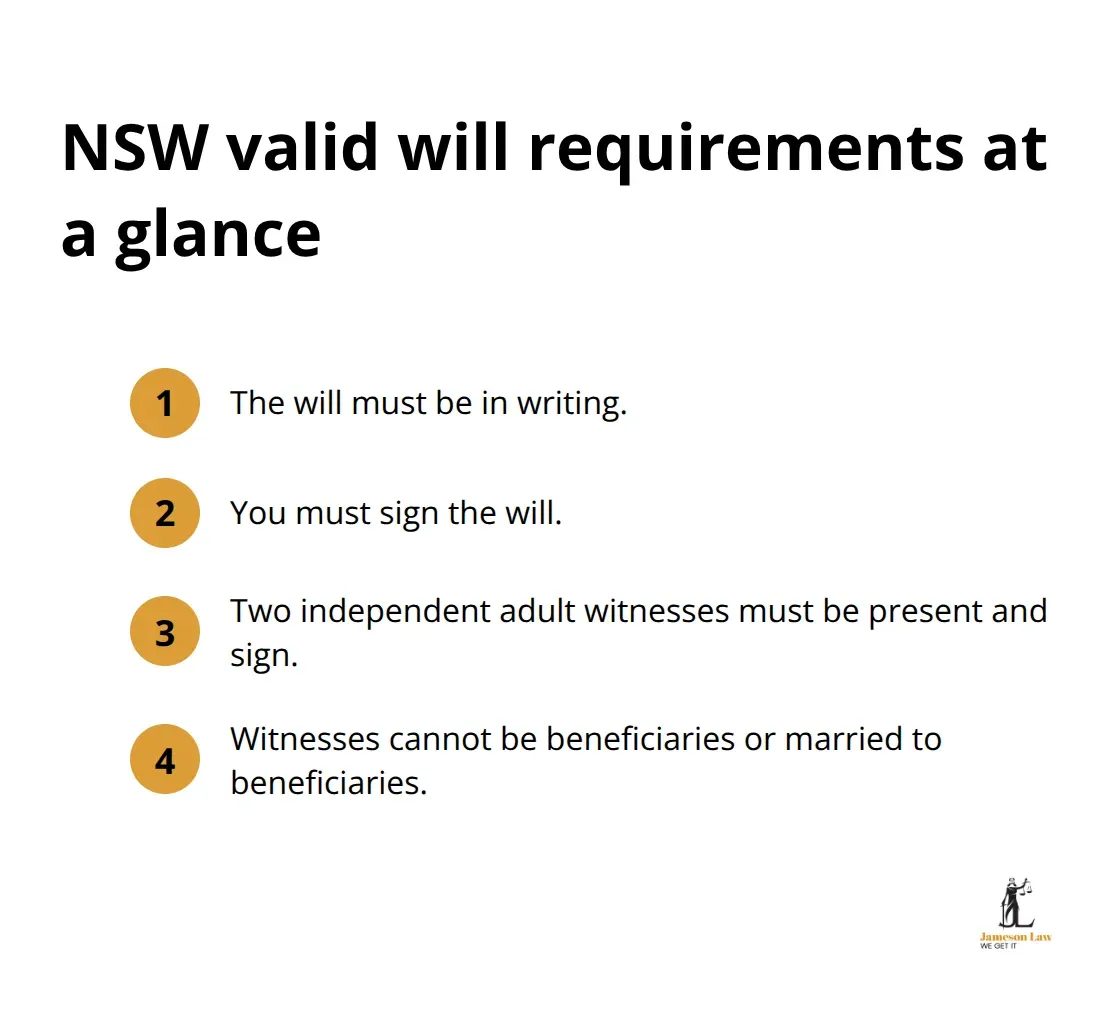
Under NSW law, a valid will must be in writing, signed by you in front of two independent adult witnesses who must also sign it, and your witnesses cannot be beneficiaries or married to beneficiaries. This requirement exists specifically to prevent claims that you were pressured or that someone forged your signature. If your will doesn’t meet these formal requirements, NSW courts may refuse to recognise it, leaving your estate to be distributed under intestacy laws instead.
Protect Your Will After Execution
Once your will is properly executed, store it safely-either with your solicitor, at the NSW Land Registry Services, or in a secure location at home that your executor knows about. Never lock it in a safe deposit box because your executor may face delays accessing it after your death. Your executor also needs to know where you’ve stored your will and have access to your complete asset and liability information (including superannuation beneficiary nominations and life insurance details).
With your will properly created and stored, the next step involves understanding what other legal tools can work alongside your will to protect your family and manage your affairs if you become unable to do so yourself.
What Else You Need Beyond Your Will
Superannuation and Life Insurance Nominations
Your will handles only the assets in your personal name, but that covers perhaps 60% of what most people actually own. Superannuation, life insurance with beneficiary nominations, and assets held in trusts pass directly to named beneficiaries and completely bypass your will. This gap is where most estate plans fail. The ATO reports that outdated or missing superannuation beneficiary nominations alone cost Australian families millions annually in unnecessary tax and inheritance disputes. Your superannuation balance typically represents 15–20% of your total wealth by retirement, yet most people never update their nominations after major life events. If you’re married and your nomination still names an ex-partner, your super goes to them regardless of what your will says. If you have no nomination, your super goes to your estate and becomes subject to your will, triggering probate delays and additional tax complications. Updating your super nomination takes 15 minutes and costs nothing, yet it’s the most overlooked estate planning task in Australia.
Powers of Attorney: Planning for Incapacity
Powers of attorney solve a different problem entirely-they address what happens while you’re still alive but unable to make decisions. An enduring power of attorney lets you appoint someone to manage your financial affairs if you become incapacitated, and an enduring power of attorney for healthcare covers medical decisions. Without these documents, your family faces court applications and significant delays if you suffer a stroke, accident, or illness that leaves you unable to sign documents or communicate your wishes. These appointments take effect only when you lose capacity, so you retain full control over your finances and healthcare decisions until that point occurs.
Testamentary Trusts for Minor Beneficiaries
A testamentary trust is created in your will and comes into effect only after you die, allowing you to leave assets in trust for minor children, grandchildren, or beneficiaries who cannot manage money themselves. This protects young beneficiaries from receiving large sums outright and gives them time to mature while a trustee manages the funds. The trustee holds the assets, pays for the beneficiary’s education and living expenses, and distributes capital when the beneficiary reaches an age you specify in your will.
Family Trusts for Asset Protection
A family trust established during your lifetime operates differently-it’s a separate legal entity that holds assets and distributes income and capital to beneficiaries according to the trust deed. Family trusts provide asset protection, potential tax efficiency, and flexibility in managing family wealth across multiple generations. The choice between testamentary trusts and family trusts depends entirely on your family circumstances, asset levels, and tax position.
Integrating Your Estate Planning Documents
Most people benefit from having at least an enduring power of attorney alongside their will, and anyone with significant superannuation or complex family arrangements should address all three areas before a crisis forces rushed decisions. Your complete estate picture-your will, powers of attorney, superannuation nominations, and any existing trusts-works best as an integrated strategy rather than separate documents handled independently.
Getting Started With Estate Planning Basics Australia
Estate planning basics Australia doesn’t require perfection before you take action. Start with what you can do now-create your will, update your superannuation nominations, and appoint powers of attorney. These three steps address the most common gaps that leave families struggling after a death or incapacity.
The mistakes we see most often are straightforward to avoid: don’t assume your will covers everything, don’t leave superannuation nominations outdated, and don’t delay because you think your situation is too simple. Even modest estates benefit from proper planning, and you should review your arrangements every three to five years, especially after marriage, divorce, having children, or significant financial changes. Professional legal advice becomes important when your situation involves multiple assets, blended families, business interests, or complex tax considerations (a solicitor can identify gaps you might miss and ensure your documents work together as an integrated strategy).
Write down your assets and liabilities, identify who you want as your executor, and decide who should benefit from your estate. Then contact a legal professional to turn those decisions into properly executed documents. We at Jameson Law provide wills and estate planning services to help Australians get this right, and we’re here to answer questions about your specific circumstances.