

A dog bite injury in NSW can leave you with serious physical and emotional wounds. Beyond the immediate pain, you’re often facing medical bills, lost wages, and uncertainty about your legal options.
At Jameson Law, we’ve helped many NSW residents navigate dog bite claims and secure fair compensation. This guide walks you through your rights, the steps to take, and the settlement options available to you.
What You Can Actually Claim After a Dog Bite in NSW
Dog Owner Liability Under NSW Law
In NSW, dog owners are legally responsible for injuries their dogs cause, whether the attack happens on the owner’s property or in a public space. The Dogs Act 1966 (NSW) establishes this liability clearly, meaning you have a legitimate claim pathway. However, understanding what damages you can actually recover is essential before you pursue a settlement. Many clients underestimate their claims because they don’t know the full scope of what’s recoverable under NSW law.
Economic and Non-Economic Damages
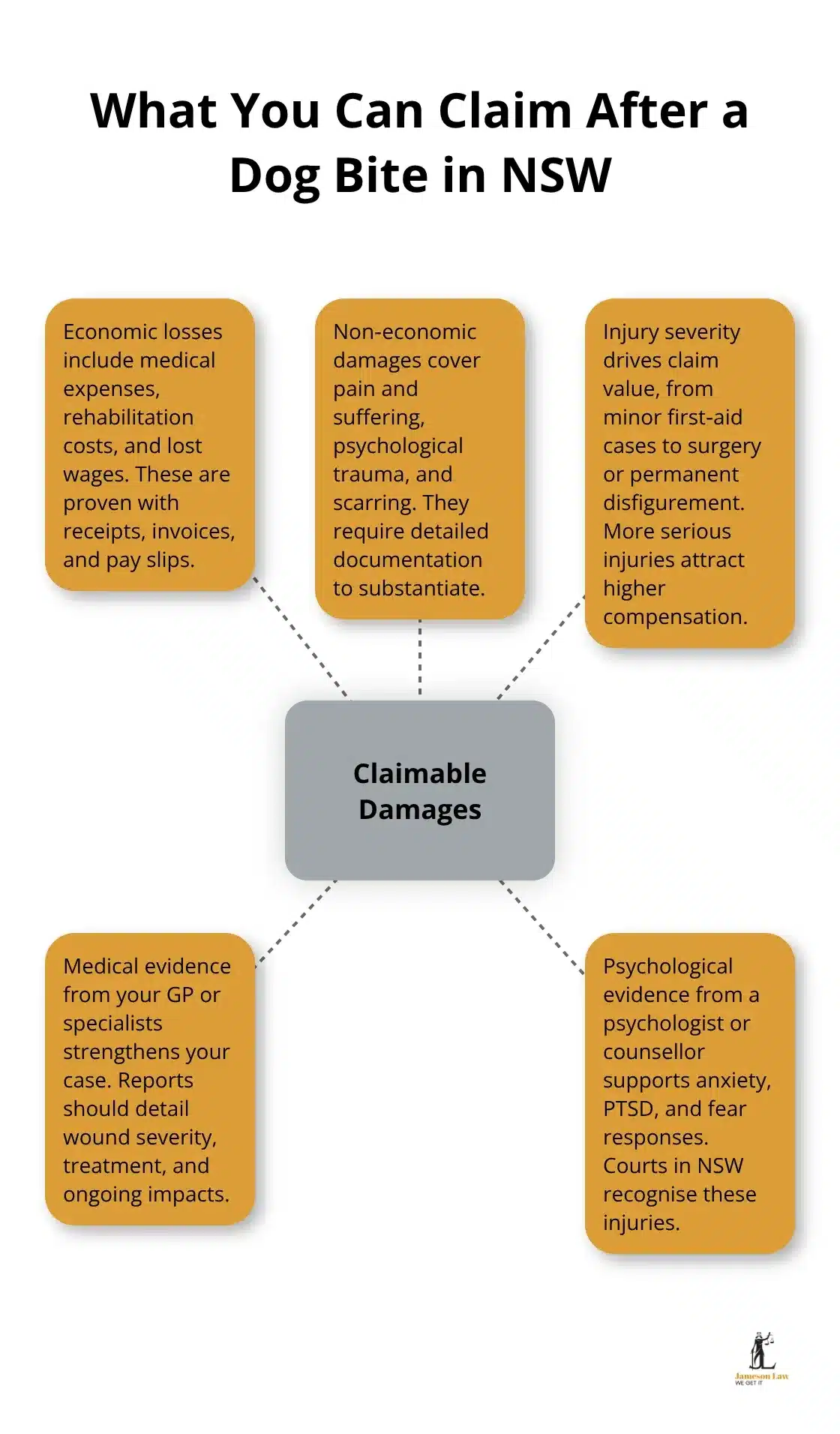
Economic losses like medical expenses, rehabilitation costs, and lost wages are straightforward to claim with receipts and pay slips. Non-economic damages for pain and suffering, psychological trauma, and scarring require more detailed documentation but are equally valid. NSW courts recognise that dog bite injuries often cause lasting emotional distress, and compensation reflects this reality.
The severity of your injury directly affects your claim value, so a minor bite requiring basic first aid differs significantly from an attack causing permanent disfigurement or requiring surgery. Medical reports from your treating doctor or a specialist strengthen your claim significantly because they document the injury’s severity and ongoing impact. If you’ve experienced psychological effects like anxiety or post-traumatic stress from the incident, evidence from a psychologist or counsellor supports this component of your claim.
Time Limits and Evidence Collection
You have three years from the date of the incident to lodge a claim in NSW, which sounds generous but requires prompt action to gather evidence while memories are fresh and witnesses remain contactable. Don’t delay reporting the incident or seeking medical attention, as gaps in your documentation weaken your position during settlement negotiations. Gather all receipts, medical records, appointment letters, and wage loss documentation from your employer immediately after the incident.
Insurance Coverage and Settlement Calculations
The dog owner’s insurance policy typically covers these claims, which is why identifying the correct insurer early matters. Most home and contents policies include liability coverage for pet-related injuries, though some policies exclude certain dog breeds or have specific conditions. When you contact the insurer, provide a clear account of what happened, your injuries, and all expenses incurred.
NSW uses a structured approach to calculating pain and suffering awards based on comparable court decisions, so your claim amount isn’t arbitrary. A dog bite requiring stitches and leaves minor scarring sits in a different compensation bracket than one causing nerve damage or requiring reconstructive surgery. The insurer will scrutinise your claim, so comprehensive evidence prevents disputes later and often results in faster, more favourable settlements.
Understanding your claim value is one thing-actually negotiating with insurers and pursuing settlement is another. The next section covers how to approach these conversations strategically.
What to Do Immediately After a Dog Bite
Seek Medical Attention and Document Your Injuries
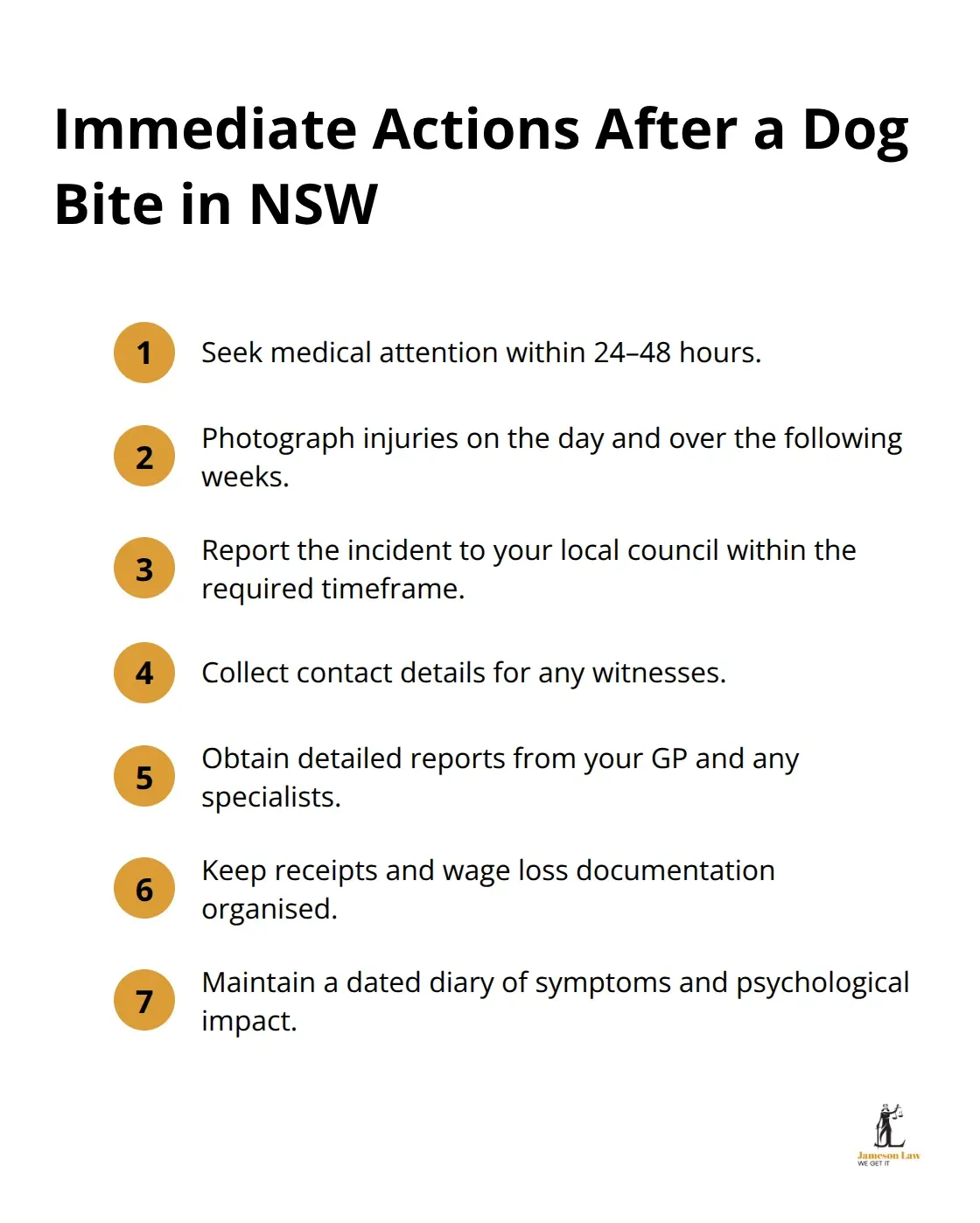
Medical attention within the first 24 to 48 hours after a dog bite establishes the foundation for your entire claim. Medical professionals assess infection risk, document wound severity, and create an official record that insurers will rely on during settlement discussions. Photograph your injuries from multiple angles on the day of the incident and again over the following weeks as bruising develops and scarring becomes visible. These photos demonstrate progression and severity in ways that written descriptions cannot match. The combination of medical records and photographic evidence creates a compelling case when you negotiate compensation.
Report the Incident and Gather Witness Information
You must report the incident to your local council or relevant local government authority within their specified timeframe, typically within 24 hours. Different councils operate slightly different reporting procedures, so check your council’s website for the exact process in your area. This official report creates a documented record and may trigger an investigation into whether the dog has a history of attacks, which strengthens your position considerably if the dog was previously known to be dangerous.
Note the exact location, date, and time of the attack. Identify and collect contact details from any witnesses who saw the incident, as their statements carry significant weight during settlement negotiations. Contact the dog owner and exchange basic information, but avoid detailed discussions about fault or accepting blame for anything.
Collect Comprehensive Medical Documentation
Request detailed reports from your GP or the emergency department that treated you, including wound depth, location, whether stitches were required, and any antibiotics prescribed. If you required specialist treatment from a surgeon, plastic surgeon, or infectious disease specialist, obtain detailed reports from them as well. These specialists’ reports establish the injury’s severity and any ongoing treatment needs, which directly affects your settlement amount.
Gather all receipts for medical expenses, pharmacy costs, and travel to appointments. If you needed time off work, obtain a letter from your employer confirming the dates and your usual wage, as lost income is a recoverable economic loss. Maintain organised files with all documents clearly labelled by date and category, as insurers expect comprehensive evidence when they assess your claim.
Document Psychological Impact and Recovery Progress
If you experienced psychological effects like anxiety, nightmares, or fear of dogs after the incident, arrange an assessment with a psychologist or counsellor and obtain their written report. NSW courts recognise that dog bite injuries frequently cause psychological effects, and psychological evidence significantly increases your claim value. Keep a dated diary documenting your recovery, pain levels, limitations on daily activities, and any ongoing symptoms. This contemporaneous record proves more persuasive than relying on memory later.
The strength of your evidence directly determines how insurers value your claim and whether they offer fair compensation. Once you’ve gathered this documentation, you’re positioned to approach settlement negotiations strategically.
Getting the Right Settlement Amount
Negotiating with the dog owner’s insurer starts the moment you contact them with your claim. Insurers employ assessment teams trained to minimise payouts, so you need to present your evidence strategically rather than handing over documents passively. Contact the insurer in writing, not by phone, and include a clear summary of the incident, your injuries, and the expenses you’ve incurred. Provide copies of your medical reports, photographs of injuries, council incident reports, and receipts for all expenses. The insurer has a legal obligation to respond within a reasonable timeframe, typically 14 days, though complex claims may take longer.
Insurers often make initial offers that undervalue claims, particularly when they sense you lack legal representation or appear unsure of your claim’s worth. Your documentation quality directly influences their opening position, so comprehensive evidence leads to higher initial offers and faster negotiations overall.
How Insurers Calculate Your Compensation
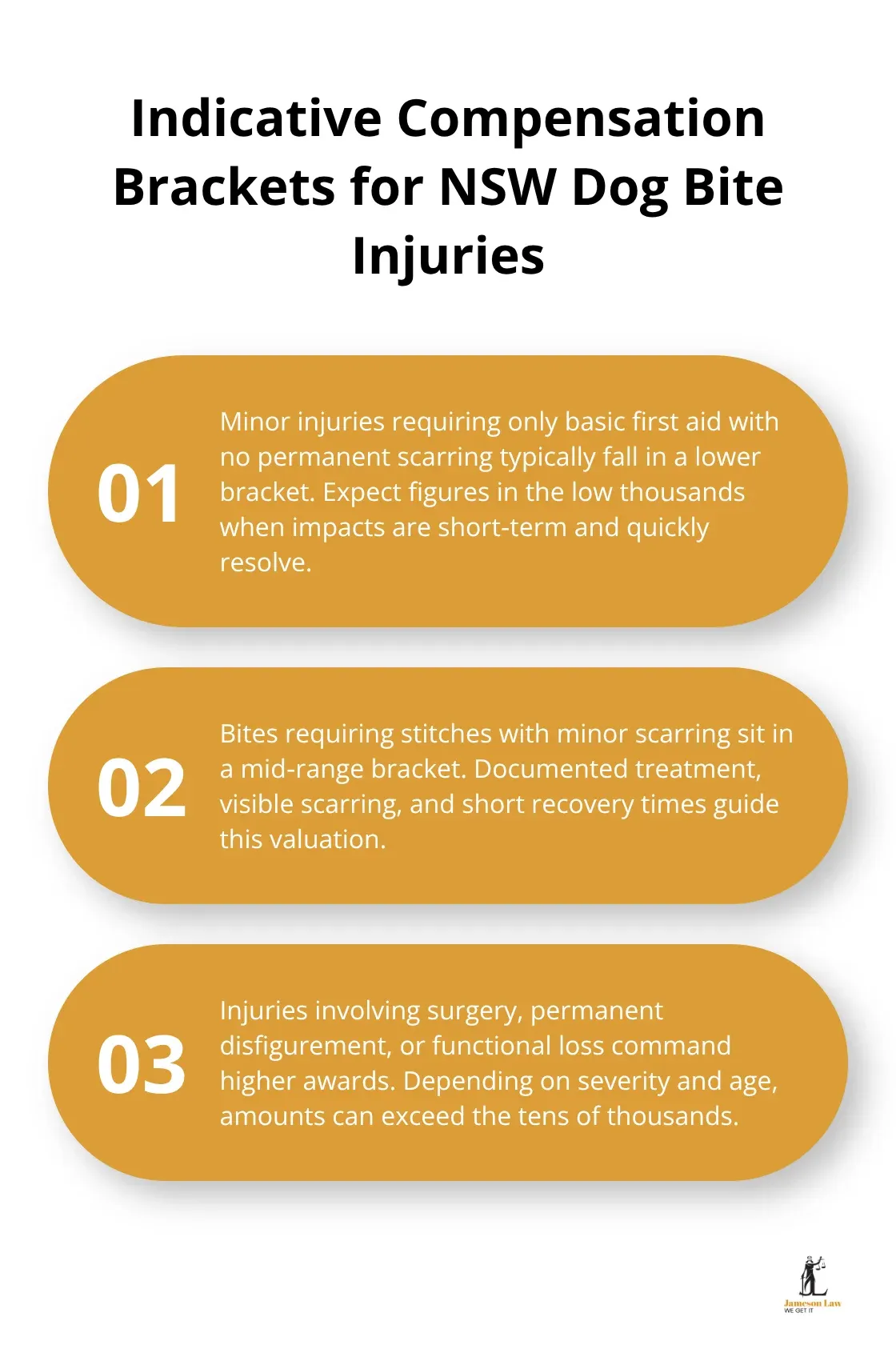
NSW courts use established guidelines for calculating pain and suffering damages, and insurers reference these when determining settlement amounts. A dog bite requiring basic first aid and leaving no permanent scarring typically attracts compensation between $2,000 and $5,000, while bites requiring stitches and leaving minor scars range from $5,000 to $15,000. Injuries requiring surgery or causing permanent disfigurement or functional loss command significantly higher amounts, often exceeding $30,000 depending on the severity and your age at the time of injury.
The insurer will scrutinise your medical evidence closely, so gaps between the injury’s apparent severity and your claimed damages create room for them to dispute your figure. Psychological injuries documented by a qualified psychologist or counsellor add substantial value to your claim, as NSW courts consistently award damages for anxiety, post-traumatic stress, and fear responses following dog attacks.
Lost wages must be supported by employer letters confirming your usual income and the dates you were unable to work. The insurer calculates this by multiplying your daily wage by the number of days lost, then adds your medical expenses, travel costs, and any ongoing treatment expenses.
Responding to Settlement Offers Strategically
When the insurer makes an offer, you are not obligated to accept it immediately regardless of the amount. Request a detailed breakdown showing how they calculated each component of their offer, as vague offers often indicate they have undervalued specific elements like psychological injury or lost wages. If their offer falls significantly below your documented losses plus a reasonable pain and suffering component, submit a counter-offer with detailed justification for each figure.
Provide additional evidence if you have it, such as updated medical reports, specialist assessments, or evidence of ongoing symptoms. Insurers expect negotiation and factor this into their opening offers, so a reasonable counter-offer often results in movement toward a middle ground. If the insurer refuses to increase their offer substantially after you have provided additional evidence, obtaining legal advice becomes worthwhile, as litigation costs and court awards often exceed what insurers will settle for.
Document all communication with the insurer, including dates, names of staff members you speak with, and summaries of conversations (this creates a record if disputes arise later). When settlement discussions stall or the insurer’s position seems unreasonable, legal representation can shift the dynamic significantly, as insurers take formal legal claims more seriously than unrepresented claimants.
Final Thoughts
A dog bite injury NSW case succeeds when you act strategically from the moment the incident occurs. Medical attention within 24 to 48 hours, comprehensive documentation of your injuries and expenses, and understanding how insurers calculate compensation form the foundation of your claim. NSW law holds dog owners liable regardless of location, economic and non-economic damages are both recoverable, and you have three years to lodge your claim-but evidence quality determines whether insurers offer fair compensation or attempt to minimise their payout.
The settlement process requires you to present your case confidently rather than accepting initial offers passively. Insurers expect negotiation and factor this into their opening positions, so a well-documented counter-offer often produces meaningful movement toward fair compensation. When settlement discussions stall or the insurer’s position seems unreasonable, legal representation shifts the dynamic significantly because insurers take formal legal claims more seriously than unrepresented claimants.
You should seek legal advice if the insurer refuses to increase their offer substantially after you provide additional evidence, if settlement discussions have stalled for more than a month, or if you feel uncertain about whether their offer reflects your actual losses and injury severity. We at Jameson Law specialise in personal injury claims and can assess your case at no cost, helping you understand your claim’s true value and whether pursuing litigation makes financial sense. Contact Jameson Law to discuss your dog bite injury NSW situation with an experienced legal team.