

Building disputes NSW can drain your time, money, and patience. Whether you’re dealing with defective work, contract disagreements, or construction delays, knowing your legal options makes a real difference.
At Jameson Law, we’ve helped countless property owners navigate these conflicts and reach fair outcomes. This guide walks you through the pathways available to resolve your dispute.
Understanding Building Disputes in NSW
What Counts as a Building Dispute
Building disputes in NSW cover far more than shoddy workmanship. A dispute arises whenever a disagreement emerges between a homeowner, builder, contractor, or tradesperson over construction work, costs, timelines, or contractual obligations. The most common disputes involve defective work where structural issues, water damage, or faulty installations appear months or years after completion. Contract disputes happen when builders fail to deliver work as specified, charge unexpected costs, or abandon projects mid-way. Delay disputes occur when construction timelines blow out significantly, causing financial strain and disruption.
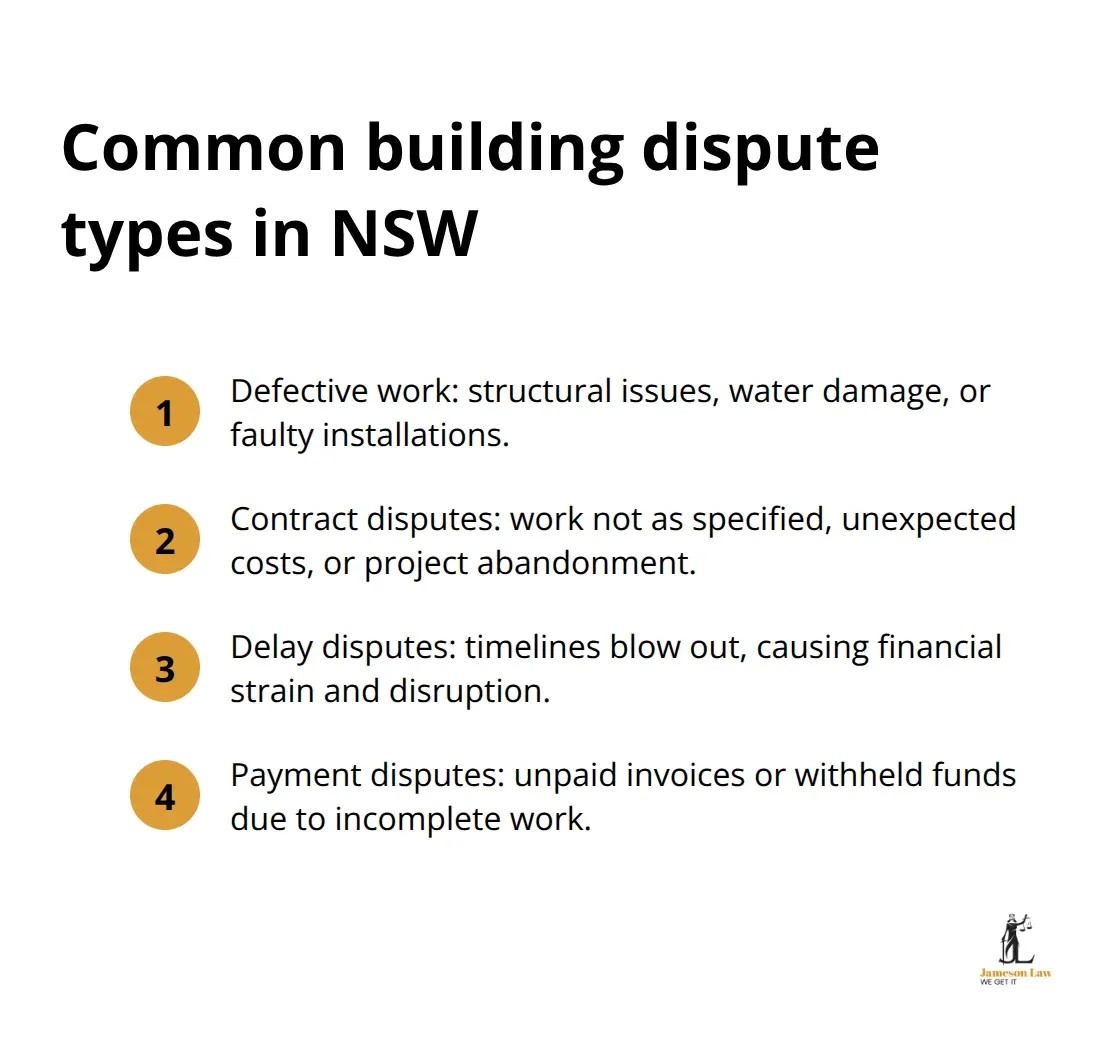
Payment disputes are frequent too, with builders claiming unpaid invoices or homeowners withholding funds due to incomplete work.
Fair Trading NSW records thousands of building complaints annually across the state. The financial stakes are substantial-defects can cost anywhere from a few thousand dollars for minor fixes to hundreds of thousands for structural problems. What makes these disputes particularly frustrating is that they often involve significant emotional investment alongside the financial outlay, especially when the property is your home.
Root Causes of Building Disputes
Poor communication, unclear contracts, and inadequate supervision during construction typically underlie these disputes. Many disputes arise because initial contracts lack detail about specifications, timelines, or payment schedules, leaving room for conflicting interpretations. Inadequate site inspections mean defects go unnoticed until after practical completion, making it harder to hold builders accountable. Cost blowouts frequently occur when variations aren’t properly documented or when unforeseen site conditions force changes. Timeline pressures often lead to rushed work and corners being cut.
Time and Cost Implications
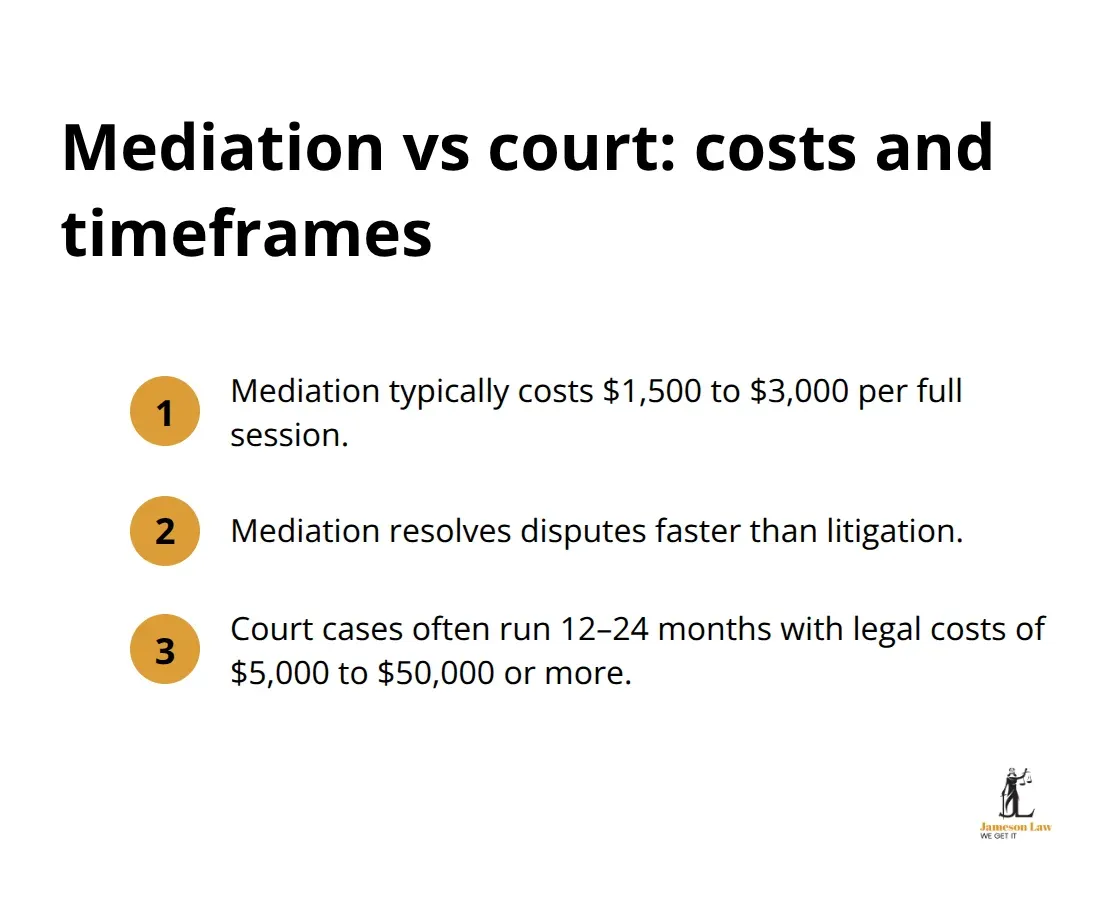
The resolution process itself demands time and money. Negotiation takes weeks, mediation costs include reading and preparation charged at $500 per hour plus GST, and court proceedings can stretch over 12 to 24 months with legal costs ranging from $5,000 to $50,000 or more. The longer a dispute sits unresolved, the more expensive and emotionally draining it becomes. Acting quickly and understanding your options from the outset matters significantly.
Understanding what constitutes a building dispute and why they occur positions you to take action before costs spiral. Your next step involves exploring the specific legal pathways available to resolve your situation.
Resolving Your Building Dispute
Starting with Direct Negotiation
When a building dispute emerges, most property owners ask the same question: how do I fix this without spending a fortune? Direct negotiation with your builder remains the fastest and cheapest option when both parties are willing to talk. Many disputes resolve within weeks through straightforward conversation, often without formal involvement.
Negotiation only works if the builder engages in good faith and if you have clear documentation of the dispute. Keep detailed records of all communications, photographs of defects, quotes for repairs, and copies of your original contract. Start with written communication to your builder outlining the specific defects, the remedial work required, and a reasonable timeframe for resolution.
Moving to Mediation When Negotiation Fails
If your builder refuses to engage or disputes liability, mediation offers a practical middle ground. Mediation costs considerably less than court proceedings, typically ranging from $1,500 to $3,000 for a full session, and resolves disputes faster than litigation. The process allows both parties to work through disagreements with a neutral third party present, often leading to mutually acceptable solutions.
Using NCAT for Accessible Dispute Resolution
The NSW Civil and Administrative Tribunal (NCAT) operates a specialised building division that handles disputes involving residential building work with claims up to $10,000, making it accessible for many homeowners without needing a lawyer. NCAT applications cost between $100 and $500 depending on the claim amount, and the tribunal aims to finalise cases within three to six months. This pathway provides a formal but relatively affordable option when mediation doesn’t succeed.
Understanding the Home Building Act Protections
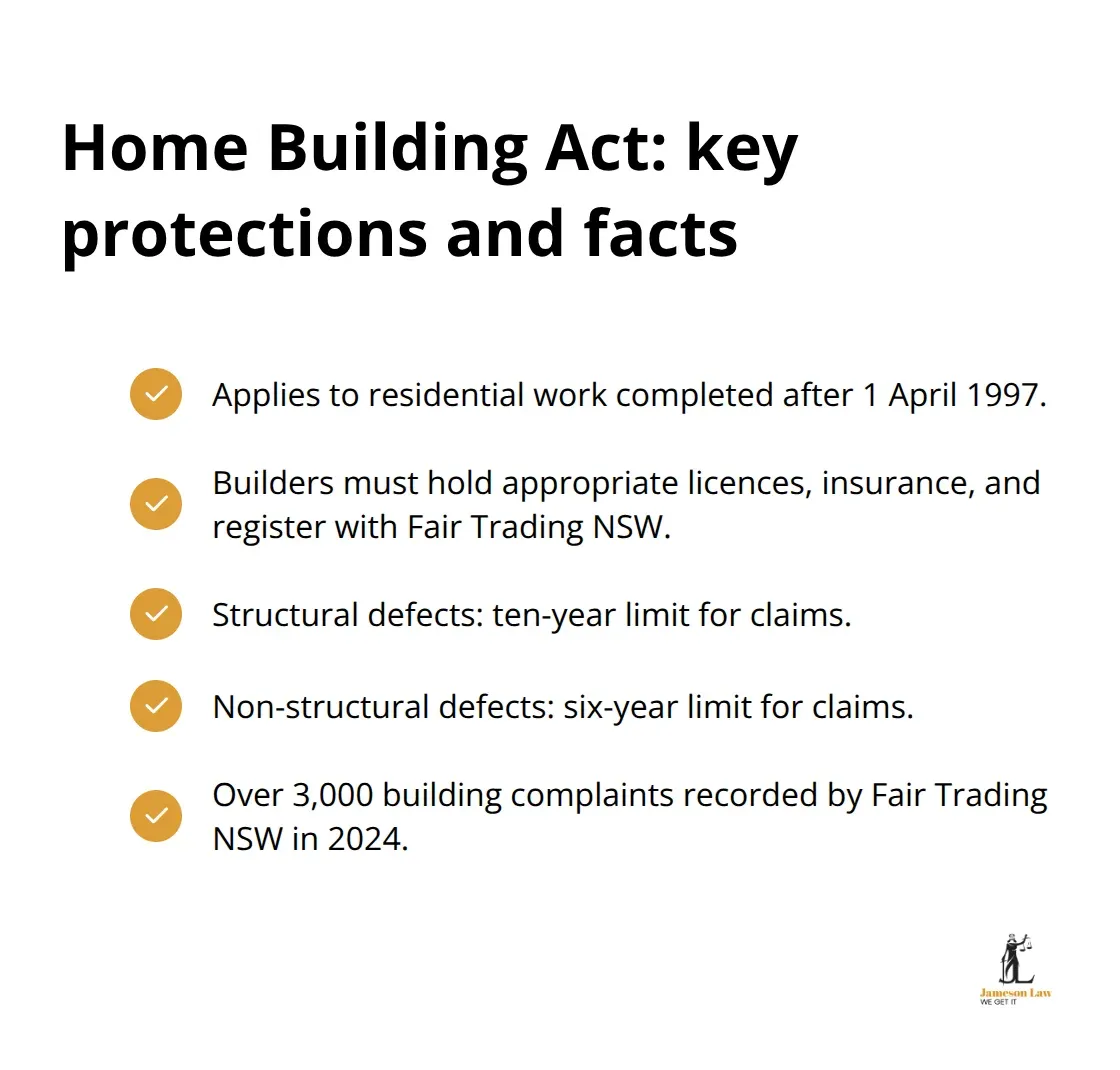
The Home Building Act 1989 provides additional protection for residential building work completed after 1 April 1997. You can lodge complaints with Fair Trading NSW if your builder is uninsured or if work breaches building standards. These protections exist specifically to help homeowners hold builders accountable when disputes arise.
Recognising When Court Litigation Becomes Necessary
Court litigation should be your final option because it’s expensive and slow, potentially costing $20,000 to $50,000 in legal fees and stretching across 12 to 24 months. Only pursue court proceedings if the dispute value justifies the cost and time investment, or if the defect poses safety risks requiring urgent judicial intervention. The financial and temporal burden of litigation makes it unsuitable for smaller disputes or situations where faster resolution is possible through other means.
Understanding which pathway suits your situation depends on the dispute value, the builder’s willingness to engage, and the urgency of the matter. The next section examines the specific legislation that governs building disputes in NSW and the consumer protections available to you.
What Laws Protect You in Building Disputes
The Home Building Act 1989 and Your Rights
The Home Building Act 1989 stands as your primary legal safeguard when disputes arise over residential building work in NSW. This legislation applies to most building contracts for residential work completed after 1 April 1997 and creates specific obligations for builders and protections for homeowners. The Act requires builders to hold appropriate licences and insurance, register with Fair Trading NSW, and complete work in a proper and professional manner. If your builder fails to meet these obligations, you can lodge a complaint with Fair Trading NSW, which investigates breaches and takes enforcement action.
Fair Trading NSW received over 3,000 building complaints in 2024, and many homeowners successfully resolved disputes through their complaint process without needing court intervention. The Act establishes a ten-year limit for structural defects and a six-year limit for non-structural defects, meaning you can pursue claims within these timeframes even if disputes surface years later. Understanding these timeframes matters because waiting too long weakens your position.
The Home Building Compensation Fund
When a builder is uninsured or unregistered, Fair Trading NSW can access the Home Building Compensation Fund to cover legitimate claims up to certain limits. This safety net protects you when the builder themselves cannot pay for remedial work. The fund exists specifically to help homeowners in situations where normal recovery routes fail, providing a backstop when disputes involve unscrupulous or insolvent builders.
Building Standards and Compliance
Building standards compliance forms a critical part of dispute resolution. The Building Code of Australia sets minimum standards for building safety, health and sustainability, and any work failing to meet these standards provides strong grounds for dispute resolution in your favour. Environmental Planning and Assessment Act 1979 requirements also intersect with building disputes when approvals, permits or planning conditions affect the scope of work or its legality.
When defects relate to non-compliance with building standards or planning requirements, you hold considerably stronger leverage in negotiations or tribunal proceedings because the builder has objectively breached legal obligations rather than merely disagreeing about quality or interpretation. This is why documenting exactly which standards or codes your building work has breached matters enormously when building your case.
Building Inspections and Expert Evidence
An independent building inspector’s report that specifically references the Building Code of Australia or relevant NSW standards transforms a subjective dispute about workmanship into an objective legal breach. This expert evidence makes settlement or tribunal success far more likely because it provides concrete proof of non-compliance rather than relying on your word against the builder’s. The cost of a professional inspection (typically $500 to $1,500 depending on property size) often pays for itself through stronger negotiating positions or successful tribunal claims.
Final Thoughts
Building disputes NSW require swift action to protect your interests and control costs. Negotiation offers the fastest resolution when builders engage in good faith, while mediation provides a structured alternative that costs far less than court proceedings. NCAT delivers an accessible tribunal option for claims under $10,000, and court litigation remains available when the dispute value justifies the expense and delay involved in formal proceedings.
The Home Building Act 1989 and Fair Trading NSW protections give you concrete leverage in disputes. These safeguards include the ten-year structural defect limit, access to the Home Building Compensation Fund when builders are uninsured, and objective grounds for claims based on building standards compliance. An independent building inspection that references the Building Code of Australia transforms your negotiating position considerably by providing expert evidence rather than subjective arguments about quality.
Timing determines your success and the final cost of resolution. Act quickly by documenting defects, gathering repair quotes, and attempting written negotiation with your builder. When disputes involve complex legal issues, significant financial stakes, or uncooperative builders, contact Jameson Law to discuss your specific situation and determine the best pathway forward.