

Australian citizenship eligibility depends on several specific requirements that many people find confusing. At Jameson Law, we’ve helped countless clients navigate this process and understand exactly where they stand.
The good news is that eligibility isn’t mysterious once you know what Home Affairs is actually looking for. This guide breaks down the residency rules, character assessment, language requirements, and application steps so you can move forward with confidence.
What Makes You Eligible for Australian Citizenship
Australian citizenship requires you to meet several hard requirements set by the Department of Home Affairs. The most important is residency duration. If you hold a permanent visa, you must have lived in Australia for at least two years in the four years before you apply, with at least 12 months of that as a permanent resident. This is not flexible. If you fail to meet these timeframes, Home Affairs will refuse your application.
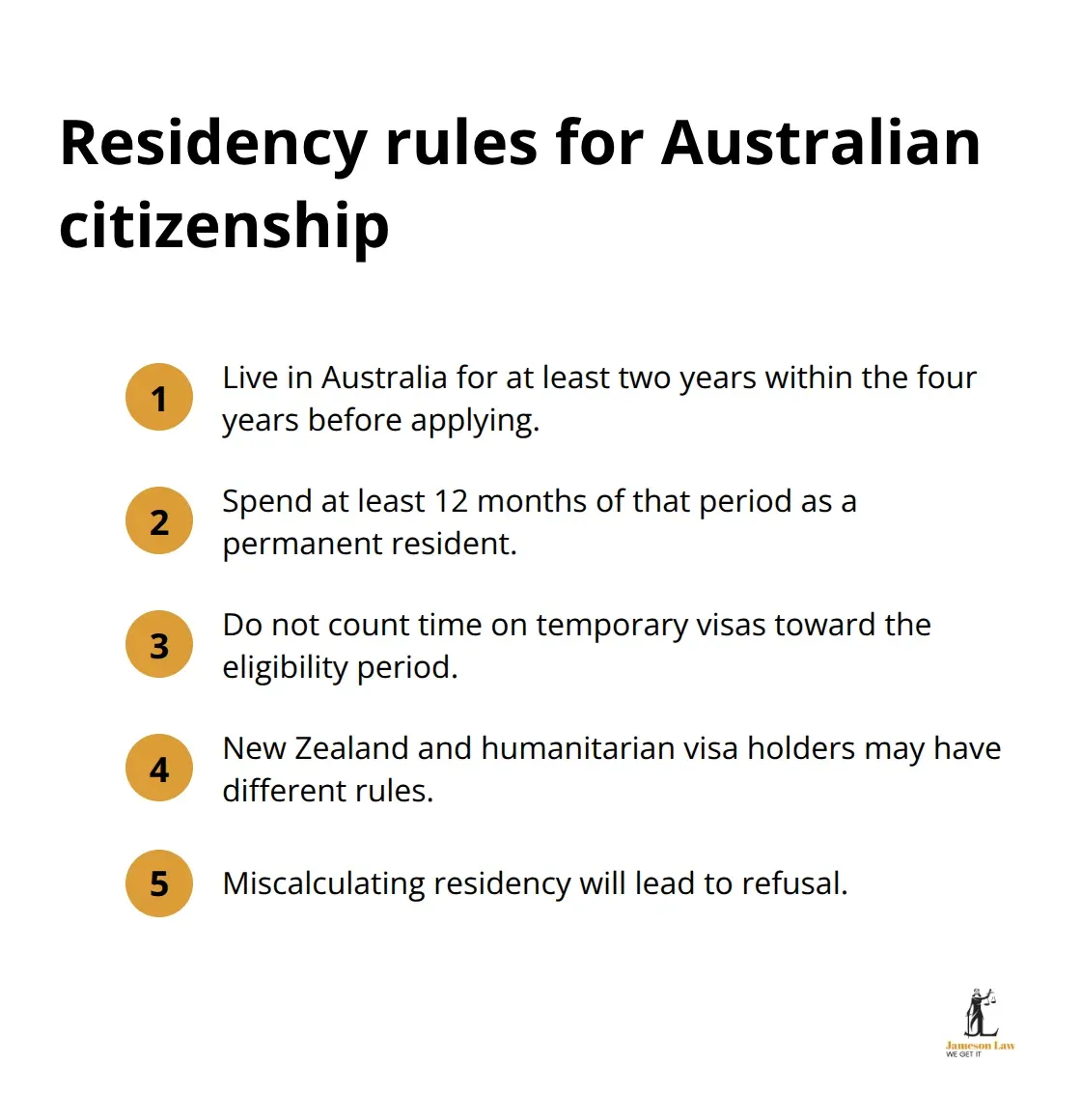
Some visa holders face different rules-if you are a New Zealand citizen or humanitarian visa holder, the requirements can vary, so you should check the specific criteria for your visa type before you lodge anything.
Character Assessment Matters Most
Character assessment is where many applications fail. Home Affairs does not just check your criminal record. They examine your conduct over the previous 10 years and assess whether you are of good character. This includes traffic offences, civil disputes, fraud allegations, and even social media conduct in some cases. Character concerns account for a significant portion of citizenship refusals according to Australian Institute of Criminology data. You must be honest about any issues. If you have been convicted of a crime attracting a sentence of 12 months or more, you are automatically ineligible. Sentences under 12 months do not create automatic bars, but they still count against you in the character assessment. If you have concerns about your record, you should obtain legal advice before you apply rather than submit an application and hope for the best.
Age and Residency Timing
If you are under 18, your parents or guardians must apply on your behalf, and they must meet the standard residency requirements themselves. The two-year requirement counts from when you became a permanent resident, not from when you first arrived in Australia. This matters because some people spend years on temporary visas before they secure permanent residency. Those temporary visa years do not count toward your eligibility period. Home Affairs has become stricter about this over recent years, and they cross-check visa records carefully. If your calculation of residency time is wrong, Home Affairs will refuse your application.
English Language Requirements
You must demonstrate functional English. The bar is not high-you need to show you can communicate in basic English in everyday situations. Most people satisfy this through conversation during their interview or by holding a qualification like IELTS at band 4.5 or higher. However, you will also face a citizenship test covering Australian history, government, values, and rights. The test contains 20 multiple-choice questions and you need 15 correct answers to pass. Many people underestimate this component. The questions cover topics like how Parliament works, what the Constitution says, and Australian values such as respect for the rule of law. Home Affairs publishes the official study guide, and you should work through it thoroughly rather than take a casual approach. If you fail the test, Home Affairs will refuse your application, and you will need to wait before you reapply.
What Happens Next
Once you understand where you stand against these eligibility criteria, the next step involves preparing your documentation and forms for lodgement with Home Affairs.
Lodging Your Application
Organising Your Documentation
You must organise your documentation before you contact Home Affairs. The Department requires certified copies of your passport, birth certificate, visa grant letters, and proof of identity. You will also need to provide evidence of your residency period in Australia, such as passport stamps or airline tickets if you travelled overseas during this time.
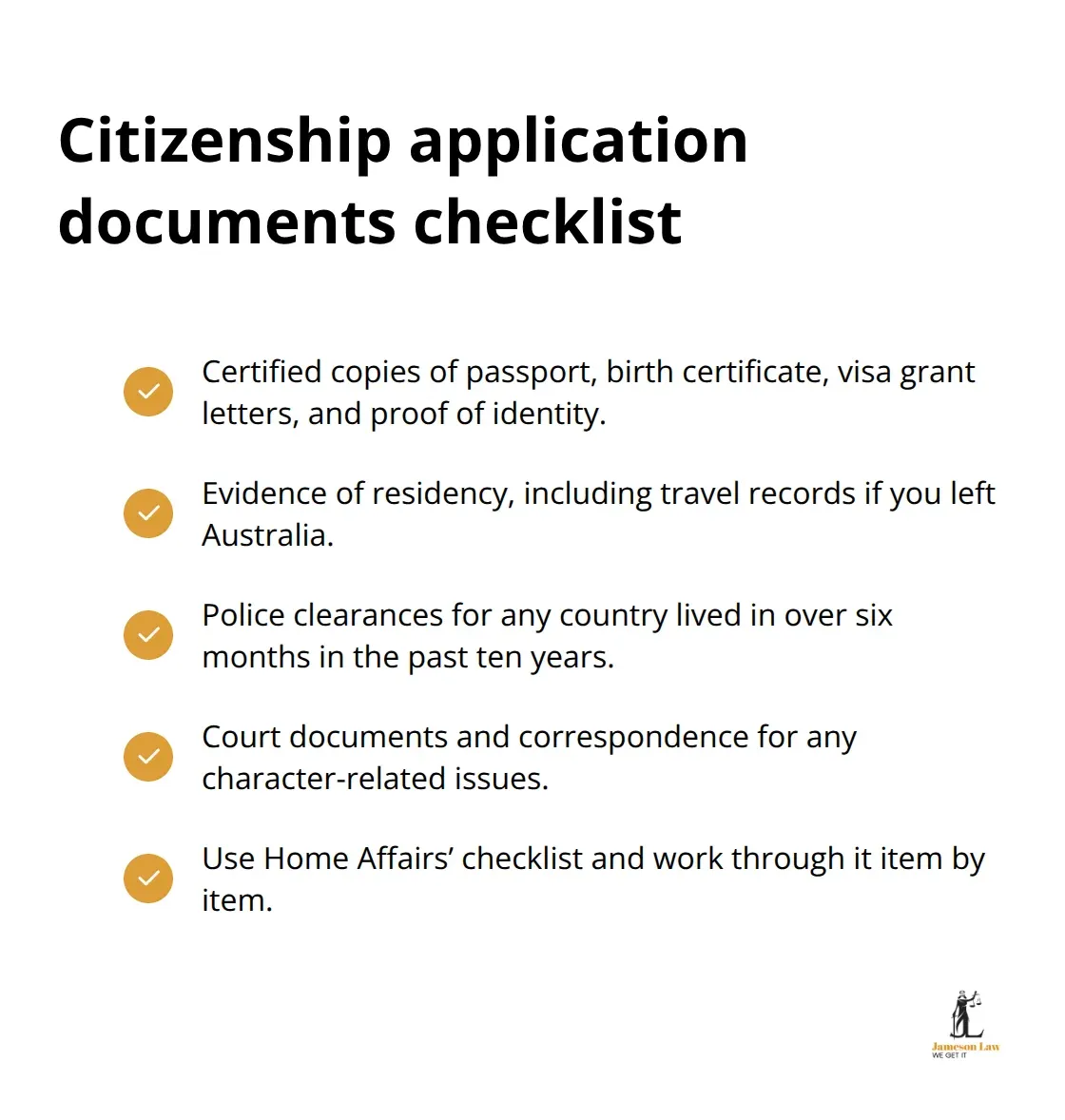
Home Affairs publishes a detailed checklist on its website, and you should work through it item by item rather than guessing what might be needed.
Many applications face delays because applicants submit incomplete documentation. Missing documents can extend processing by weeks or months. If you have lived overseas for more than six months in the past ten years, you must obtain police clearance certificates from every country where you resided. Character documentation represents where most people fall short-you need copies of court documents or relevant correspondence for any civil disputes, traffic matters, or conduct issues.
Submitting Your Application Online
You lodge your application through the Home Affairs website, and the system guides you through each section. The application form itself takes most people between two and four hours to complete accurately. Home Affairs cross-references your application against its own records, so dishonesty or omissions will be discovered and result in refusal. You will receive an acknowledgement email confirming receipt of your application.
Do not assume silence means approval. Many applicants wait passively without checking their application status, only to discover months later that Home Affairs requested documents they never received notification about. Log into your account regularly to check for any requests or updates.
Understanding Processing Timeframes
Processing times currently sit between four and six months for straightforward applications, though complex cases involving character concerns can take twelve months or longer according to Home Affairs data. If Home Affairs asks for information, you must respond within the timeframe specified (typically 28 days). Missing deadlines gives Home Affairs grounds to refuse your application without further consideration.
Once processing is complete, Home Affairs will notify you of the outcome by mail and email. However, the outcome depends heavily on how Home Affairs assesses your specific circumstances.
Why Most Citizenship Applications Fail
Character Assessment Triggers Refusals
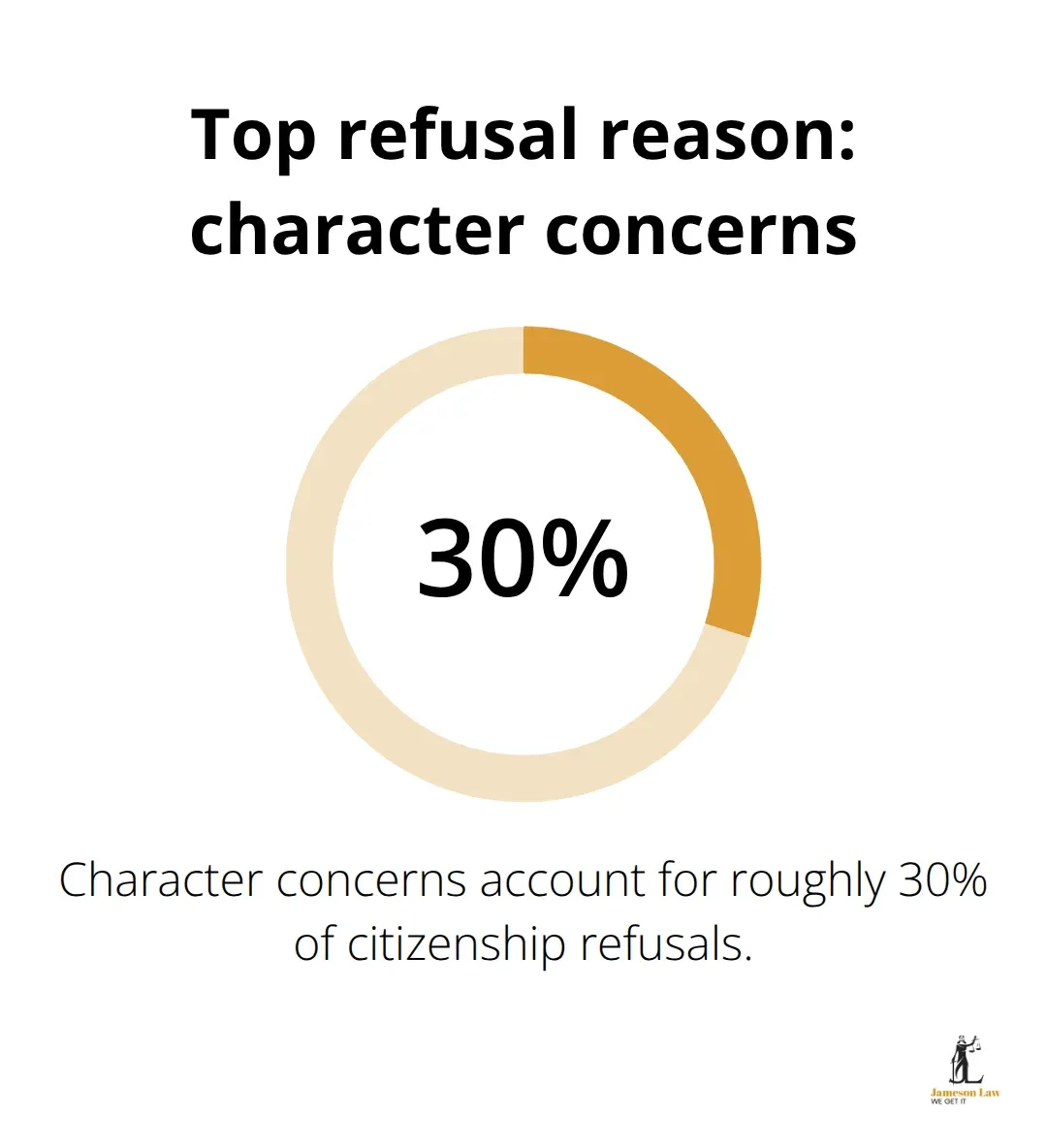
Home Affairs refuses citizenship applications at a higher rate than many people expect. According to Department of Home Affairs data, character concerns represent the single largest category of refusals, accounting for roughly 30 percent of all rejections. Home Affairs assesses far more than just criminal convictions. Traffic offences, unpaid fines, civil court judgments, and patterns of behaviour flagged through social media can all trigger character concerns.
If you received a traffic fine for drink driving or accumulated multiple speeding penalties, Home Affairs will scrutinise your application carefully. The character assessment period covers the past ten years, so issues from a decade ago still count against you. Many applicants underestimate this component and assume minor matters will be overlooked. They are wrong.
Home Affairs cross-checks your application against police records, court databases, and financial records. If you fail to disclose a matter that Home Affairs later discovers, they will refuse your application on the grounds of dishonesty, which is far worse than disclosing the original issue upfront. If you have any concerns about your character assessment, obtain legal advice before you submit your application. A lawyer can advise whether specific matters will create barriers and help you present your circumstances honestly and strategically.
Residency Timing Errors Cause Rejection
Residency timing errors represent the second major refusal category. Applicants frequently miscalculate their residency period by including temporary visa years that do not count toward eligibility. The rule is precise: you need two years of permanent residency in the four years before you apply. If you spent three years on a skilled migration visa before securing permanent residency, those three years do not count. Only the permanent residency period counts.
Home Affairs maintains detailed visa records and cross-checks your calculation automatically. If your maths is wrong, your application fails. This happens repeatedly because applicants confuse the date they first arrived in Australia with the date they became a permanent resident. These are two different dates, and only the permanent residency date matters for your eligibility calculation.
Citizenship Test Failures and Language Gaps
Citizenship test failures rank as the third major reason for refusal. The test requires 15 correct answers from 20 multiple-choice questions. Home Affairs publishes the official study materials, and many applicants fail because they do not prepare adequately. The questions test knowledge of how Parliament operates, constitutional principles, and Australian values including the rule of law and equality. These topics require genuine study rather than casual reading.
If you fail the test, Home Affairs refuses your application, and you must wait before reapplying. Language proficiency rarely causes refusal on its own because the bar is low, but combined with citizenship test failure, weak English skills make passing the knowledge assessment much harder. If English is not your first language, allocate extra time to study the citizenship materials and consider working through practice questions with someone who can explain difficult concepts clearly.
Final Thoughts
Australian citizenship eligibility requires you to meet specific requirements around residency, character, language, and knowledge of Australia. You must have lived in Australia as a permanent resident for at least two years in the four years before you apply, passed a character assessment covering the past ten years, demonstrated functional English, and answered 15 out of 20 questions correctly on the citizenship test. Once you confirm you meet these criteria, you should gather your documentation carefully before you lodge anything with Home Affairs.
Incomplete applications cause delays and rejections, so you need to organise your passport, birth certificate, visa grant letters, proof of residency, and any character-related documents before submission. If you have lived overseas for more than six months in the past ten years, you must obtain police clearance certificates from those countries. You then complete your application through the Home Affairs website, check your account regularly for requests, and respond to any information requests within the specified timeframe.
If you have concerns about your character assessment, residency calculation, or citizenship test preparation, professional legal advice makes a real difference. Many applications fail because applicants miscalculate residency periods, underestimate character concerns, or submit incomplete documentation. We at Jameson Law provide immigration law services to help you understand your position and navigate this process correctly-contact us to arrange a consultation if you want to discuss your specific circumstances before you apply.