

Becoming an Australian citizen is a significant milestone, but the pathway can feel overwhelming without clear guidance. At Jameson Law, we’ve helped countless people navigate citizenship application Australia requirements and understand exactly what they need to do.
This guide walks you through eligibility, documentation, and the application process step-by-step. We’ll also cover common obstacles and how to overcome them.
Eligibility Requirements for Australian Citizenship
Residency Duration: The Foundation
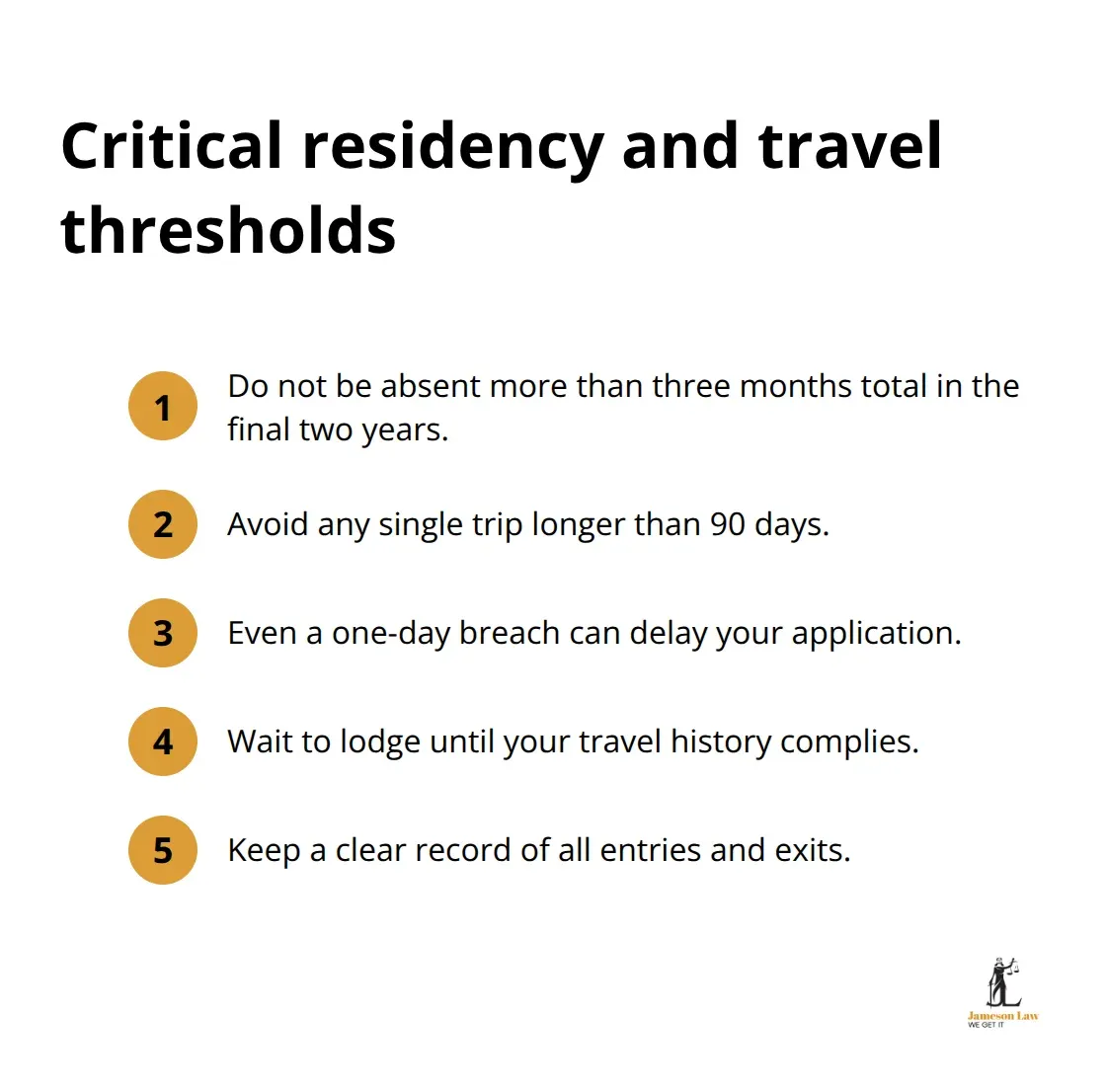
Australian citizenship requires you to meet strict residency thresholds before you can apply. You must hold a permanent resident visa for at least four years, and you must physically remain in Australia for at least two of those four years. Home Affairs tracks your movements through its database, so your travel history determines whether you meet this requirement.
The final two years before your application matter most. You cannot be absent from Australia for more than three months in total during this period, and you cannot leave for more than 90 days in any single trip. Home Affairs applies these limits rigidly-exceeding them by even one day can delay your application. If your travel history shows you’ve breached these thresholds, you’ll need to wait until you comply before lodging your application.
Character Assessment: What Home Affairs Examines
Character assessment extends far beyond a standard police check. Home Affairs conducts a thorough investigation into your entire conduct history, examining criminal convictions, drug offences, dishonesty, violence, and immigration violations both in Australia and overseas.
Minor traffic offences typically won’t affect your application, but any criminal conviction receives scrutiny. If you’ve been sentenced to imprisonment for 12 months or longer, you’re generally ineligible. Home Affairs also investigates whether you’ve complied with Australian laws and your visa conditions. If you’ve overstayed a visa, worked illegally, or breached visa conditions, these violations directly impact your character assessment and can result in rejection.
English Language Proficiency: Demonstrating Competency
You must demonstrate competency in both spoken and written English. Most applicants satisfy this requirement by passing an approved English language test-IELTS, TOEFL, or PTE are commonly accepted-with a minimum score typically around band 4.5 to 5.0 depending on the test type.
Home Affairs exempts you from formal testing if English was the language of instruction for at least five years of your primary or secondary education. You’re also exempt if you completed tertiary qualifications in English in an English-speaking country. Home Affairs accepts evidence from your employment or education history that demonstrates sustained English language use, so you don’t necessarily need a formal test result if you can show practical proficiency through your background.
Health Assessment: Understanding the Standards
Health assessment focuses on whether you pose a risk to public health or require ongoing high-cost treatment. You’ll complete a medical examination with an approved panel doctor, and Home Affairs will evaluate your health against specific criteria.
Certain infectious diseases, significant mental health conditions, and disabilities requiring expensive ongoing treatment can affect your eligibility, though Home Affairs applies these grounds narrowly. Most applicants pass the health assessment without complications. If you have a known health condition, understanding Home Affairs’ assessment criteria before you apply helps you prepare appropriate medical documentation and avoid delays. Your next step involves gathering the specific documents Home Affairs requires and understanding exactly how to lodge your application.
Application Process and Documentation
Preparing Your Documentation Checklist
Home Affairs requires you to submit specific documents that prove your eligibility across every category we’ve covered. The documents you lodge form the foundation of your entire assessment, so accuracy matters more than speed. Prepare a citizenship application checklist before you start gathering evidence. You’ll need your birth certificate, passport, permanent resident visa grant letter, and evidence of your four years permanent residency status. Home Affairs cross-checks your travel history against your passport stamps and its own border records, so collect copies of every page showing entry and exit dates.
Proving Your Residency and Physical Presence
For the two-year residency requirement, gather employment letters, rental agreements, utility bills, or tax returns that prove your physical presence in Australia during the critical final two years. These documents should cover the entire period and show consistent Australian residence. Home Affairs examines this evidence carefully, so provide documents that span the full timeframe without gaps. If you’ve moved house during this period, include documentation from each address to establish continuity of residence.
Character Assessment Documentation
Your character assessment demands police certificates from every country you’ve lived in for more than six months during the past ten years, including your home country. Order these early because international police certificates can take two to three months to arrive. If you have any criminal convictions, traffic offences, or visa breaches in your history, prepare detailed written statements explaining the circumstances and what you’ve learned. Home Affairs prefers transparent disclosure over discovering issues during their investigation.
English Language and Health Evidence
Your English language test results or exemption evidence must be current and clearly demonstrate you meet the minimum standard. Medical examination results from an approved panel doctor must be submitted as part of your application, so schedule this appointment well before you lodge. Ensure your panel doctor is on Home Affairs’ approved list, as results from non-approved practitioners will not be accepted.
Lodging Your Application Online
Home Affairs processes all applications entirely through its online portal at immi.homeaffairs.gov.au-you cannot submit a paper application. Create your account, upload every document as a PDF file, and ensure file names are clear and organised by category. Home Affairs processes applications in order of receipt, and the current processing timeframe for standard cases can extend beyond two years. You’ll receive a receipt notice immediately after lodging, which serves as proof of your application date.
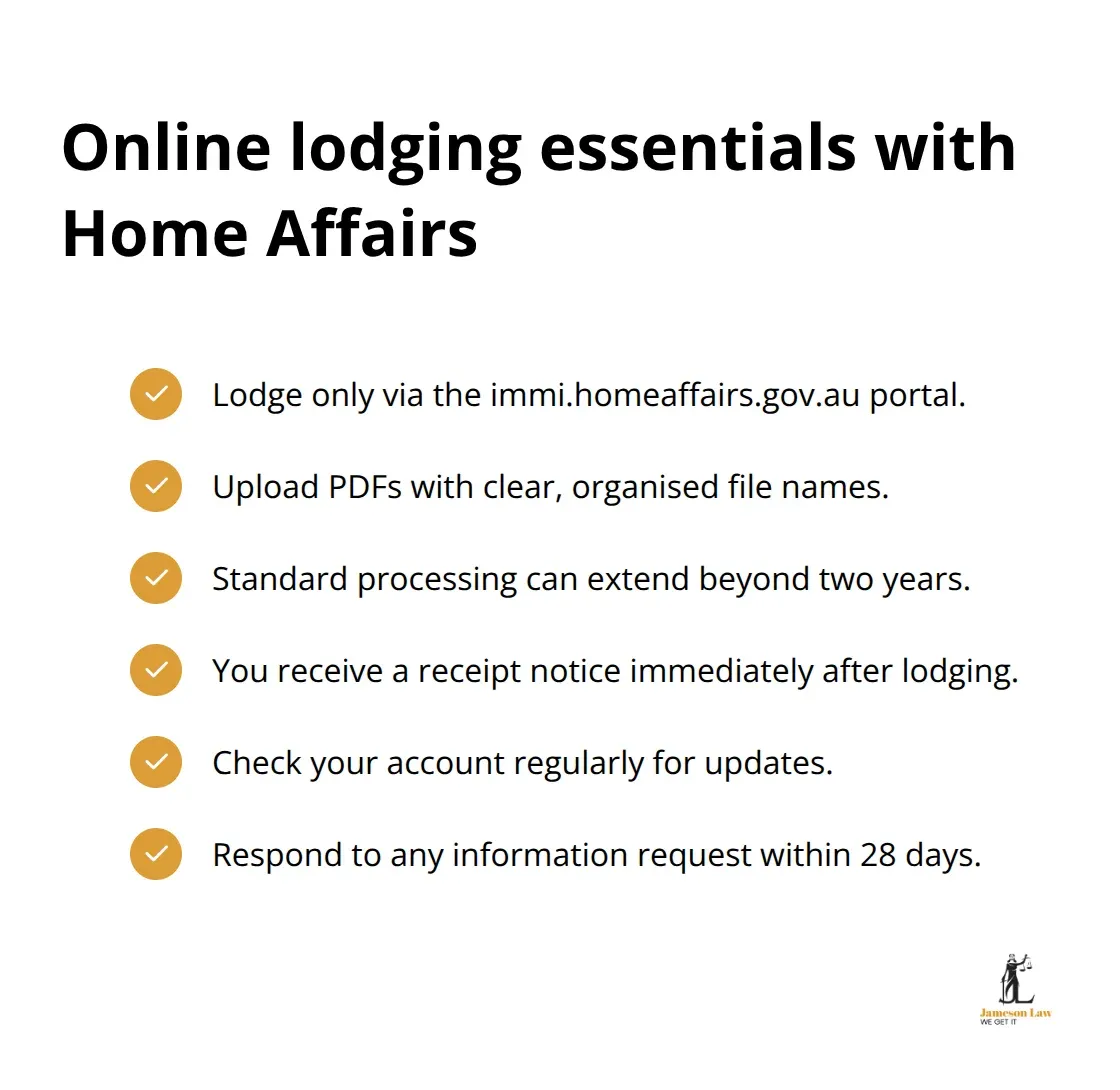
Home Affairs will contact you if they need additional information, and they typically allow 28 days to respond to information requests. Missing this deadline can result in your application being refused without further opportunity to provide documents. Check your online account regularly for status updates and communications. Processing times have increased significantly since 2023 as application volumes have grown, so plan accordingly and avoid making major travel or employment decisions until you receive your decision. Lodging sooner rather than later gives you a better position in the processing queue. Once you’ve submitted your application, understanding what happens next-and what obstacles might arise-helps you prepare for the assessment phase.
Common Challenges and How to Address Them
Most citizenship applications proceed without major obstacles, but rejection does happen and understanding why matters far more than the rejection itself. Home Affairs rejects applications primarily for three reasons: failure to meet residency requirements, character assessment failure, or insufficient documentation. When Home Affairs rejects your application, they provide written reasons explaining their decision. This document is your roadmap for understanding exactly what went wrong and whether you can fix it.
Understanding Rejection Reasons and Your Options
Character assessment rejections are the hardest to overturn because Home Affairs applies strict standards to criminal history and visa compliance. If you were sentenced to imprisonment for 12 months or more at any point, you cannot proceed further. If Home Affairs discovered undisclosed criminal convictions or visa breaches you failed to mention in your application, they view this as dishonesty and will almost certainly reject you permanently. However, if your rejection relates to residency duration or documentation gaps, you have clearer options. You can lodge a new application once you meet the residency requirements, or you can request Home Affairs review their decision if you believe they misinterpreted your evidence.
The review process typically takes six months and costs nothing, but you must submit new evidence or compelling arguments explaining why their original assessment was incorrect. Many applicants strengthen weak documentation by obtaining statutory declarations from employers or landlords confirming their residence during the assessment period, then requesting Home Affairs reconsider.
Fixing Documentation Problems Before Rejection Occurs
Documentation issues represent the most common reason applications face delays or requests for further information. Home Affairs requires PDF files under 5MB each, and they reject files that are corrupted, poorly scanned, or missing critical pages. Your birth certificate must show both parents’ names, your passport must display every page including blank pages, and your police certificates must be official documents with security features intact.
Applicants often submit photocopies of photocopies that become illegible during scanning, then face 28-day deadlines to resubmit. Scan original documents at 300 DPI using a proper document scanner, not a mobile phone camera, because Home Affairs’ automated systems struggle with phone photos and may reject them outright. Character assessment documentation causes the most serious problems because applicants frequently omit minor criminal matters they believe are irrelevant. Traffic offences with fines, drink-driving convictions, domestic violence orders, or theft charges from 15 years ago must all be disclosed.
Home Affairs cross-checks your disclosure against police certificates from every state and territory you’ve lived in, and discovering undisclosed matters almost guarantees rejection. If you have any criminal history whatsoever, obtain your police certificate first, then disclose everything Home Affairs will find anyway. Write a detailed statement explaining each matter, what you learned, and how your circumstances have changed since then. Home Affairs respects honest disclosure far more than discovering omissions during their investigation.
Preparing for Your Interview and Assessment Questions
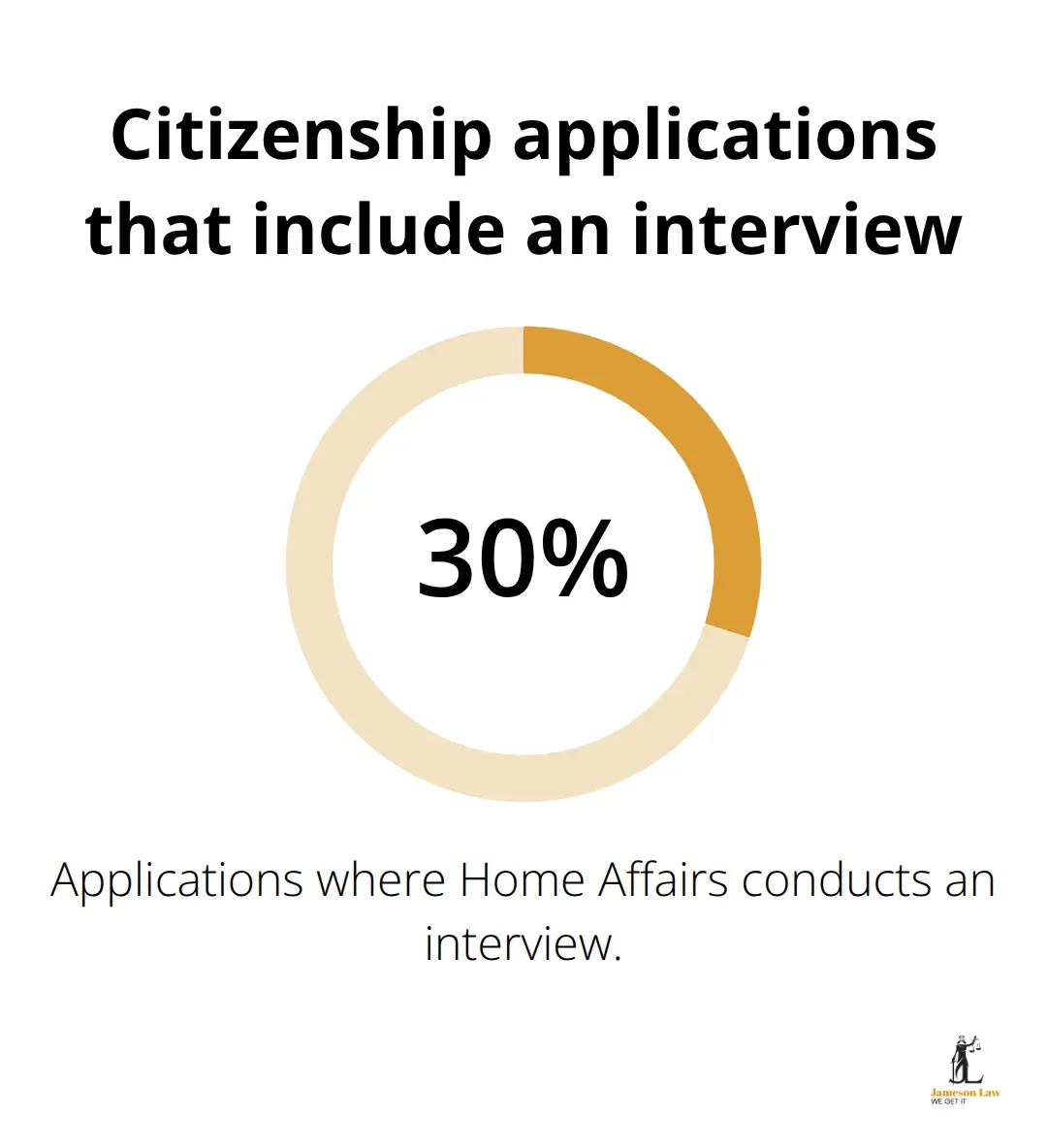
Home Affairs conducts interviews for approximately 30 per cent of citizenship applications, typically focusing on character concerns or documentation inconsistencies. These interviews are not casual conversations. Home Affairs officers prepare extensively using your application documents, and they ask pointed questions designed to test whether your statements are truthful.
If your employment letters claim you worked continuously in Australia during the assessment period, but your passport shows you were overseas for four months, you’ll face direct questions about this discrepancy.
Prepare written answers to every potential inconsistency in your application before your interview. Practice explaining any gaps in your residence, employment, or documentation using specific dates and reasons. Most interview questions follow predictable patterns. Officers ask about your employment history, where you’ve lived, your understanding of Australian values and law, and whether you’ve complied with visa conditions. They verify your English proficiency through conversation, so speaking clearly and asking for clarification if needed demonstrates genuine language competency far better than memorised answers.
If Home Affairs conducted a character investigation and discovered matters you disclosed, they’ll ask you to explain these in detail. Never minimise serious matters or change your story from what you wrote in your application. Inconsistency between your written statements and verbal explanations immediately raises credibility concerns. Home Affairs officers are experienced at detecting evasion, so direct answers acknowledging past mistakes and explaining how you’ve changed are far more effective than defensive or vague responses. The decision to approve or reject your application often rests on the officer’s assessment of your character during this interview, making honest preparation essential.
Final Thoughts
Your citizenship application Australia journey concludes with approval, but understanding what happens next matters just as much as the application itself. Home Affairs values transparency and completeness far more than perfection, so if you disclosed your full history, provided clear evidence of your eligibility, and answered interview questions honestly, you positioned yourself for success. Most applicants who prepare thoroughly and disclose everything receive approval without major complications.
Once Home Affairs approves your application, you receive a citizenship certificate and can apply for an Australian passport (this opens doors to employment, travel, and full participation in Australian civic life). The approval letter itself does not automatically grant you these benefits-you must take active steps to obtain your passport and update your records with relevant organisations. Many applicants delay this process and miss opportunities because they do not understand what comes after approval.
The citizenship application process involves complex legal requirements, strict documentation standards, and assessment criteria that vary based on your individual circumstances. If your application involves character concerns, significant gaps in your residence history, health issues, or documentation problems, contact Jameson Law for immigration law assistance before you lodge. Our team provides guidance tailored to your circumstances and helps you navigate citizenship applications with confidence.