


An Apprehended Violence Order can significantly impact your life, whether you’re seeking protection or facing allegations. Understanding how these orders work in NSW is essential for protecting your rights and making informed decisions.
At Jameson Law, we’ve helped countless clients navigate AVO matters with clarity and confidence. This guide walks you through everything you need to know about protection orders in NSW.
What an AVO Actually Is
An Apprehended Violence Order is a court order that restricts someone’s behaviour towards another person. In NSW, these orders operate under the Crimes (Domestic and Personal Violence) Act 2007 and protect people from violence, threats, harassment, or intimidation. The order itself is not a criminal conviction, but breaching one carries serious penalties and potential jail time. AVOs offer flexibility-courts can tailor them to your specific situation, whether that involves staying away from a location, ceasing contact, or surrendering weapons. NSW Police can issue interim orders on the spot, which then face testing in court within days, giving the system real teeth when someone faces immediate danger.
Three Main Types of Orders
NSW recognises three distinct AVO categories, and understanding which applies to your situation matters considerably. Standard domestic violence orders protect people in intimate relationships, including current and former spouses, de facto partners, and family members. Apprehended Personal Violence Orders cover situations outside domestic relationships-workplace harassment, neighbourhood disputes, or threats from acquaintances all fall into this category. The third category, issued by police without court involvement initially, operates as an interim measure that can last up to 12 months. The distinction matters because the evidence required and defences available differ between categories.
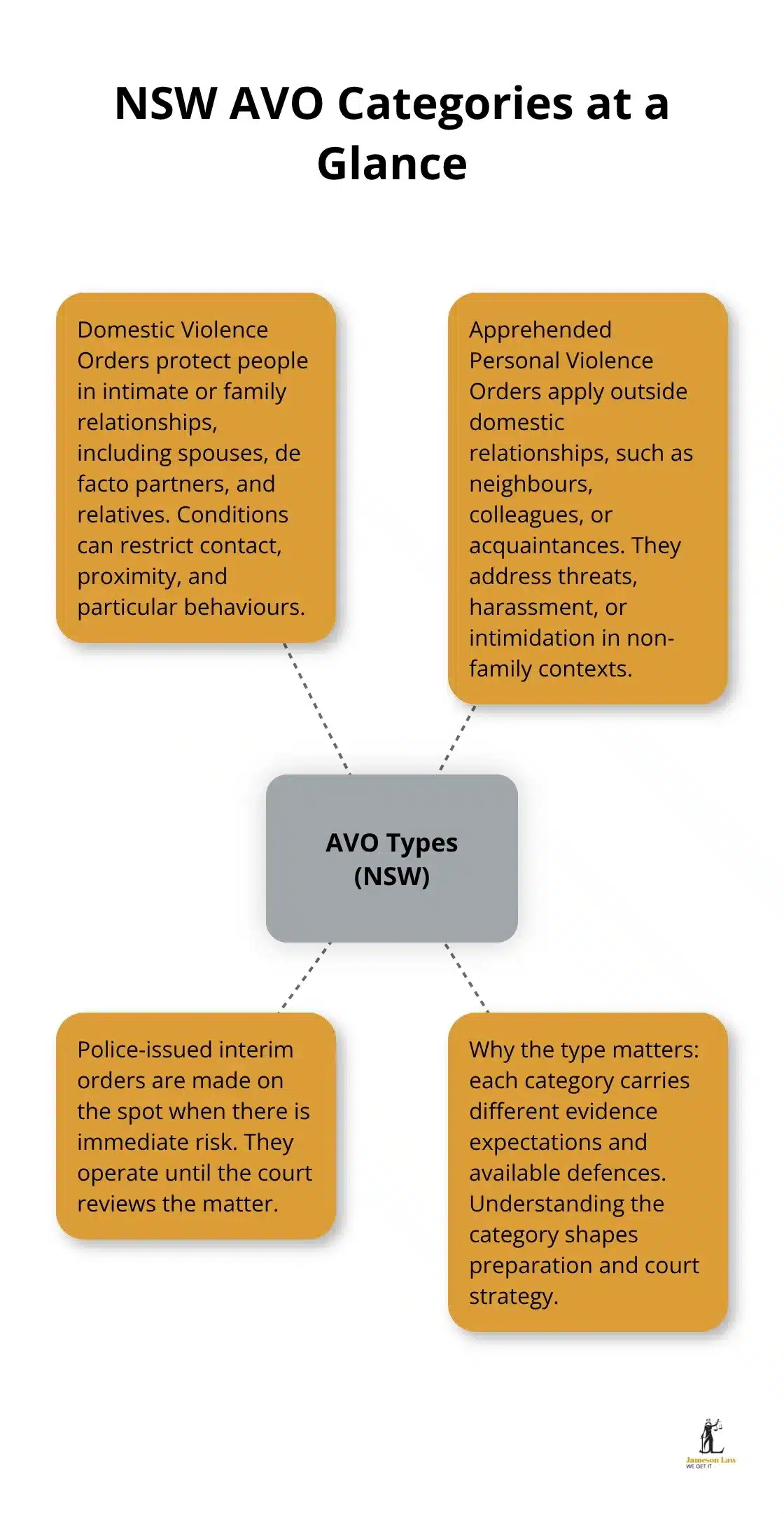
Someone facing allegations in a workplace context will prepare differently than someone in a family situation, and the court applies different lenses to each scenario.
Who Can Actually Apply
Anyone with a legitimate fear of violence or threats can apply for an AVO, and this includes not just the direct target but also parents applying on behalf of children, carers for vulnerable people, and organisations protecting employees. NSW Police can apply on behalf of victims, which removes the burden from traumatised people in some cases. The threshold for applying isn’t high-you need to demonstrate a reasonable fear, not absolute certainty of danger. However, courts reject applications regularly when applicants lack evidence or when their fear appears unreasonable given the circumstances. Vexatious applications (where someone repeatedly applies without genuine grounds) result in dismissal and potential costs orders against the applicant.
What Happens Next
Once you understand what an AVO is and who can apply, the practical steps matter. The application process requires specific evidence and documentation, and knowing what courts expect makes a real difference to your outcome.
Building Your AVO Application
Gathering Evidence That Courts Take Seriously
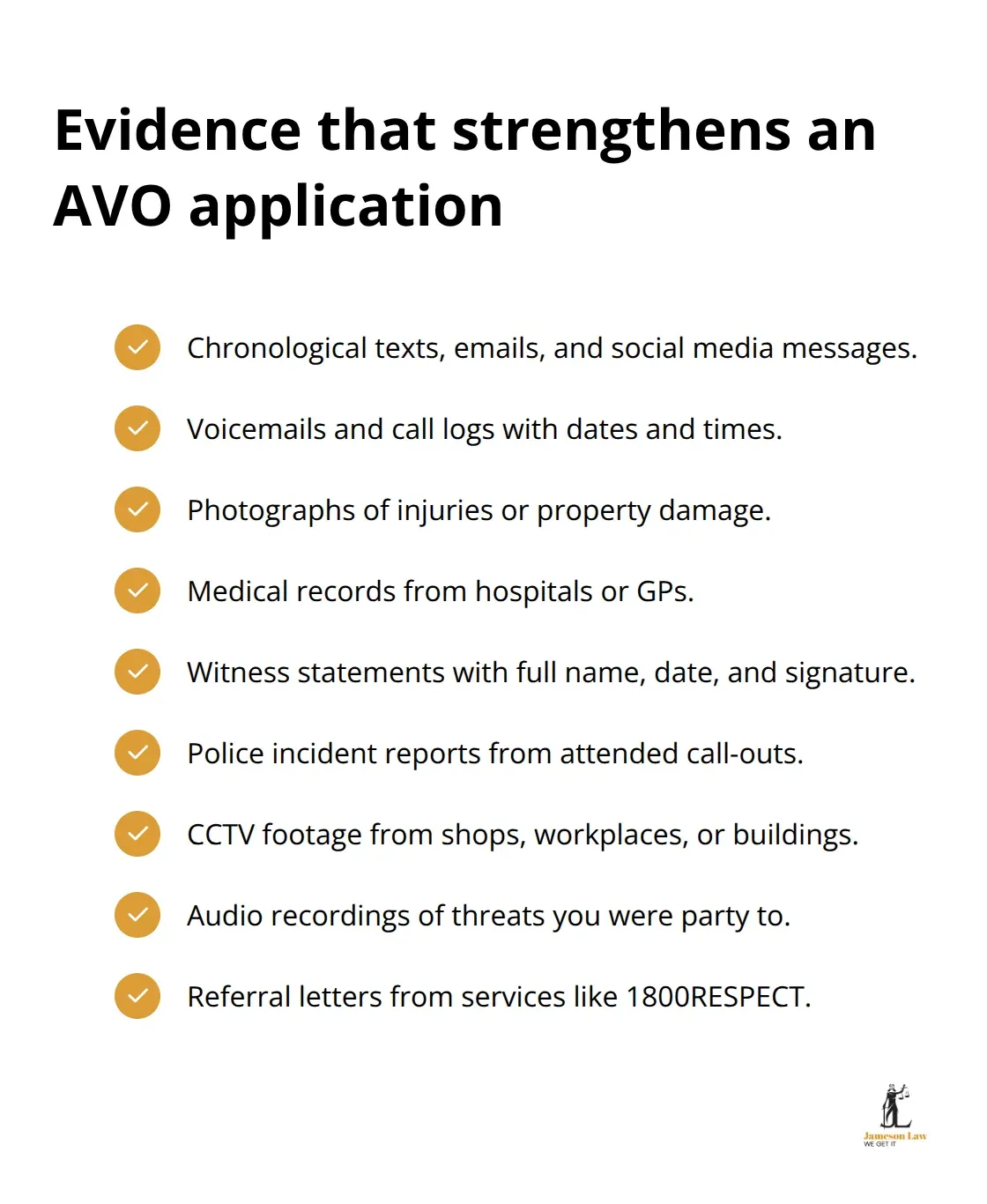
Documented evidence transforms an AVO application from a weak narrative into a compelling case that courts take seriously. Applications supported by documented evidence succeed at significantly higher rates than those relying on testimony alone. Start collecting evidence immediately, not weeks before your court date.
Text messages, emails, social media messages, voicemails, and photographs of injuries or property damage all matter. Attach dates and times to everything you collect. NSW courts expect chronological documentation that shows a pattern of behaviour, not isolated incidents. Medical records carry enormous weight if violence caused injury-obtain reports from hospitals or GPs who treated you. Witness statements strengthen applications considerably, particularly from people who directly observed the threatening behaviour or violence. Write these statements down with the witness’s full name, date, and signature.
Police incident reports significantly strengthen applications, so request a copy from NSW Police if they’ve attended previous incidents. CCTV footage from shops, workplaces, or residential buildings provides objective evidence courts find difficult to dispute. Audio recordings of threats are admissible in NSW courts if you’re part of the conversation, though recordings made without your involvement face legal challenges. Domestic violence support services like 1800RESPECT can provide referral letters documenting your contact with them, which demonstrates your fear was genuine enough to seek professional help.
Filing Your Application with the Local Court
The Local Court in your area accepts applications during business hours, and court staff can guide you through the filing process without charge. Prepare a written statement explaining the violence or threats you’ve experienced, structured chronologically with specific dates and descriptions of what happened. Court staff will ask you questions about your application to confirm you understand what you’re asking for, so prepare to explain which specific behaviours concern you most and why you fear further harm.
Your first court appearance matters more than most applicants realise. Dress formally, arrive early, and bring all your evidence documents in a folder organised by date. The magistrate will ask you questions about the incidents you’ve documented and whether you’re willing to accept certain conditions in the order rather than rejecting it outright. Courts appreciate applicants who demonstrate flexibility about the order’s specific terms, showing you’re genuinely seeking protection rather than punishment.
Presenting Your Case at the Hearing
If the respondent appears, they’ll have the opportunity to respond to your allegations and present their own account. This is not a criminal trial, so the standard of proof is lower-the court only needs to be satisfied on the balance of probabilities that your fear is reasonable. The magistrate controls the process and prevents aggressive questioning, so cross-examination concerns need not overwhelm you.
Bring supporting witnesses if they’re available, as their direct observation of incidents carries more weight than your account alone. The court typically makes a decision on the day or within several weeks, and interim orders often remain in place during this waiting period. Having legal representation strengthens your application considerably, though it’s not required. Well-prepared applications with solid evidence succeed regularly in NSW courts.
Once you’ve presented your case and the court makes its decision, you’ll need to understand what happens if the respondent challenges your application or if you face allegations yourself.
Defending Against an AVO Application
When you receive an AVO application, your immediate reaction might be defensive, but the most effective response comes from understanding exactly what you’re facing and preparing methodically. The respondent’s position in NSW courts is stronger than many people assume, particularly when you gather evidence and present a coherent account of events. Courts hear both sides of every AVO matter, and magistrates regularly dismiss applications or impose minimal conditions when the respondent demonstrates the applicant’s fear is unreasonable or when the alleged incidents didn’t occur as described.
Understanding Your Position as the Respondent
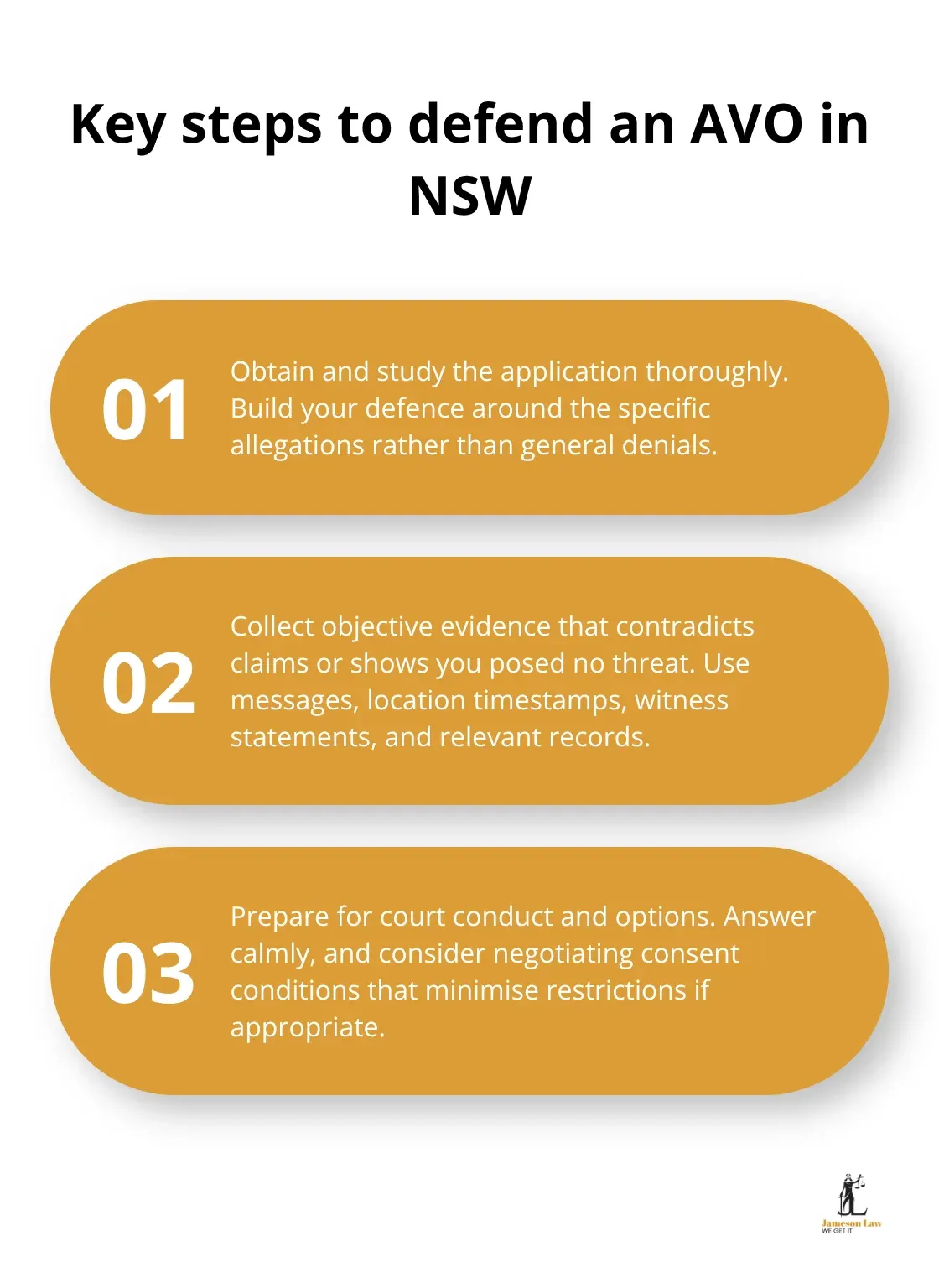
Your first critical step is obtaining a copy of the application documents immediately from the court, which outlines precisely what the applicant alleges and what they’re seeking. Read this carefully multiple times, because your defence must directly address their specific claims rather than making general denials. The court appearance date gives you a window to prepare, and most respondents waste this time worrying instead of building their case. Start collecting your own evidence immediately, focusing on documents that contradict the applicant’s account or demonstrate you posed no threat.
Gathering Evidence That Supports Your Defence
Text messages, emails, social media messages and timestamps showing your location or activities matter enormously when they contradict allegations. If the applicant claims you threatened them on a specific date, evidence showing you were elsewhere demolishes that allegation. Witness statements from people who know both you and the applicant, or who were present during the incidents in question, carry substantial weight with magistrates. Ask these witnesses to write brief statements including their full name, date, and signature, focusing on what they directly observed rather than character references.
Police records work in your favour if they show the applicant previously made false reports or if attending officers noted inconsistencies in their account. Audio or video recordings you made as part of your daily interactions provide objective evidence courts find compelling, though recordings of conversations you weren’t party to face legal challenges. If the applicant previously dropped AVO applications or withdrew them, obtain court records showing this history. Medical records are equally important for your defence if you suffered injuries during the alleged incidents, because these create an objective record contradicting claims you were the aggressor.
Preparing for Your Court Hearing
At your court hearing, dress professionally and arrive early, bringing all documents organised by date in a folder. The magistrate will ask you questions about the allegations, and you should answer directly and calmly without becoming emotional or argumentative. Courts recognise that false or exaggerated applications do occur, and magistrates dismiss applications regularly based on insufficient evidence or unreasonable fear claims. If the applicant cannot demonstrate a reasonable fear based on the balance of probabilities, the application fails entirely.
Negotiating Order Conditions
Consider whether accepting certain conditions in the order might suit your circumstances better than contesting the application, particularly if conditions impose minimal restrictions on your life. Many respondents successfully negotiate modified orders that protect the applicant while avoiding unnecessary restrictions on your freedom. This approach (sometimes called consent orders) can resolve matters quickly and avoid the uncertainty of a contested hearing. Legal representation strengthens your defence considerably, and experienced lawyers have helped numerous respondents navigate these matters and achieve outcomes far better than they initially expected.
Final Thoughts
AVOs in NSW operate within a clear legal framework, and understanding how they work protects your interests whether you’re seeking protection or responding to allegations. The evidence you gather, the way you present your case, and your willingness to engage with the court process all determine your outcome far more than the initial circumstances of your situation. Many AVO applications succeed or fail based on preparation rather than the underlying facts.
Applicants who arrive with organised evidence and clear accounts of specific incidents achieve better outcomes than those who rely on emotional testimony alone. Respondents who gather contradictory evidence and present coherent defences regularly see applications dismissed or significantly modified. An AVO lawyer NSW can review the specific allegations against you, identify weaknesses in the applicant’s case, or strengthen your application with evidence and strategy tailored to your circumstances.
Navigating an AVO matter without legal guidance leaves you vulnerable to procedural mistakes and missed opportunities to strengthen your position. If you’re facing an AVO application or considering applying for one, seeking legal advice early gives you the best chance of achieving an outcome that protects your interests and reflects the actual circumstances of your case.