


Facing bail proceedings in NSW can feel overwhelming, especially when you are unsure of your rights, the legal thresholds, and your immediate options. At Jameson Law, our expert criminal defence team has helped countless clients navigate bail information NSW to secure their freedom.
This 2026 guide breaks down exactly how the modern bail framework operates—including recent monumental changes to the Local Court—what strict conditions you might face, and the strategic steps you must take to aggressively challenge or vary your bail arrangements.
How Bail Works in NSW
The Centralised Bail Division (2025 & 2026 Updates)
Bail in NSW is not a single system—it is a complex legislative framework under the Bail Act 2013 (NSW). The moment police formally charge you, one of three outcomes occurs: police release you unconditionally, police grant you bail with conditions, or police refuse bail entirely.
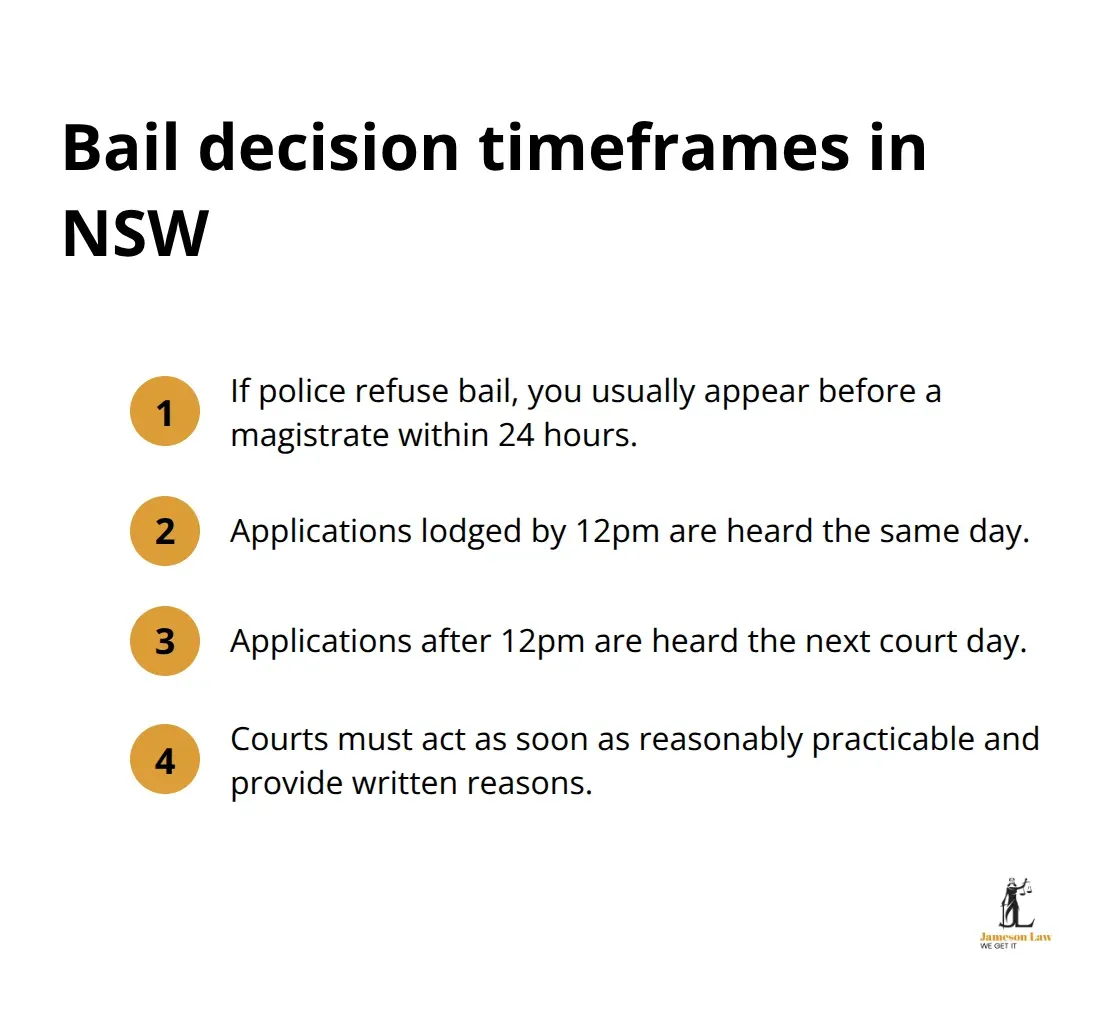
If refused by police, your matter is escalated to the courts. As of July 2025, NSW established a centralised Bail Division within the Local Court to handle adult bail hearings. This operates completely via Audio Visual Link (AVL/Webex), standardising bail assessments statewide and allowing your family to dial in virtually for support.
Critical 2026 Legal Update: Following the commencement of the Local Court and Bail Legislation Amendment Act 2025 on 28 March 2026, Magistrates in NSW were officially elevated and are now titled Judges of the Local Court. Your application is now heard and determined by a Judge at this initial level.
The Unacceptable Risk and “Show Cause” Tests
Nearly everyone charged with an offence can apply for bail, but the legal hurdle depends heavily on the severity of your charge:
| Offence Category | Bail Presumption | The Legal Test Applied |
|---|---|---|
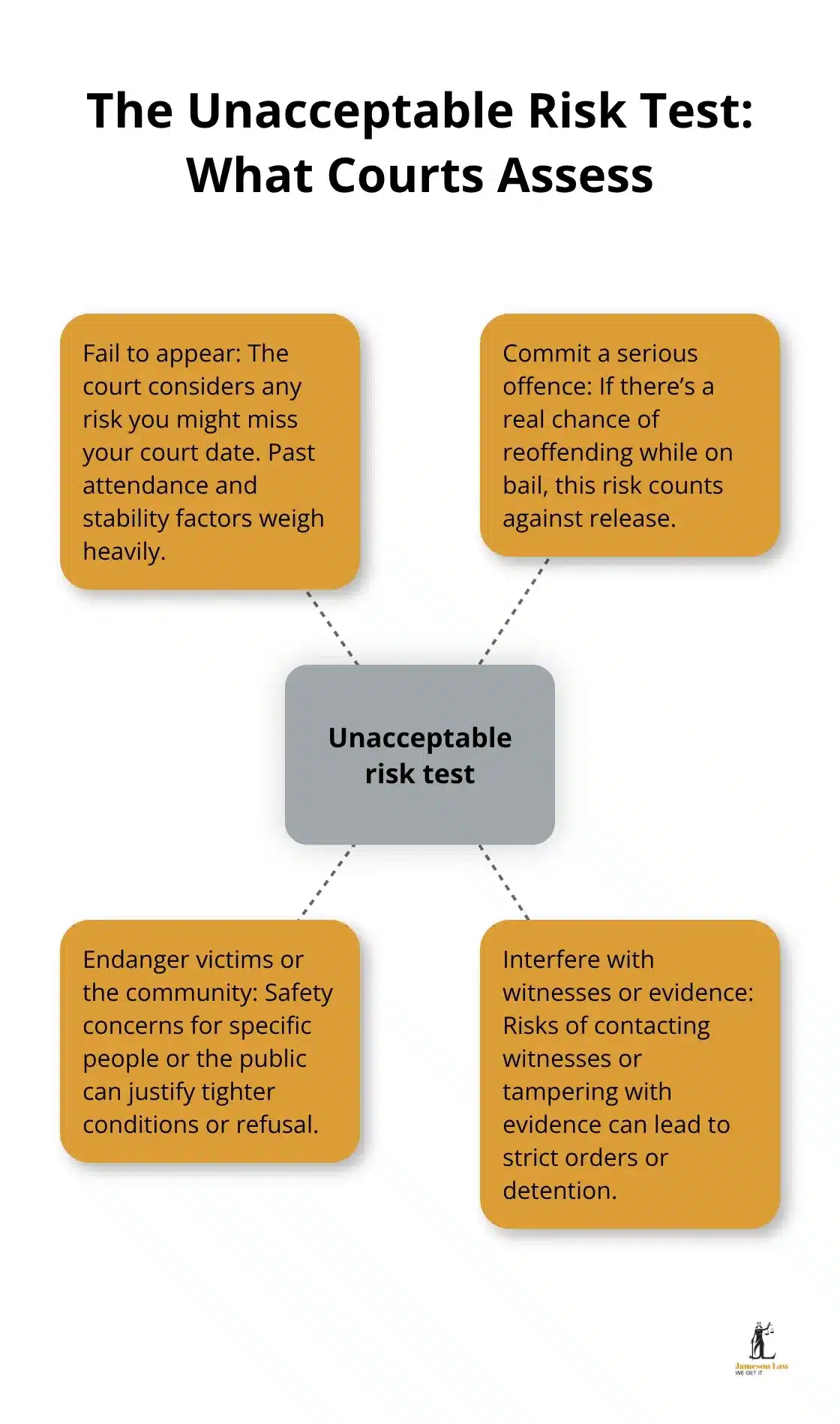
| General Offences | Right to Release | The prosecution must explicitly prove that granting you bail poses an “Unacceptable Risk” (e.g., fleeing, interfering with witnesses, or committing further crimes). |
| Show Cause Offences | Presumption Against Bail | You must proactively prove why your detention is not justified. Note: Recent harsh reforms now include serious domestic violence, commercial drug supply, and repeat youth crime in this tier. |
Your Rights in a Bail Hearing
How Legal Representation Strengthens Your Application
Under the Bail Act, police must facilitate your access to a legal practitioner while you are in custody. In the highly compressed environment of the Bail Division—where oral submissions are strictly time-limited—having an expert lawyer is vital. A criminal lawyer structurally analyses the prosecution’s concerns and prepares concrete supporting documentation (like employment letters or surety guarantees) to neutralize them.
Challenging and Varying Bail Conditions
Bail conditions must be reasonable, proportionate to the offence, and practically feasible to comply with. If you are granted bail on the condition that you reside at your parents’ address, but they suddenly move interstate, that is a material change.
You can apply to vary bail by filing an Application for Variation of Bail Conditions at the Local Court. You should obtain legal advice before applying, as the Judge will heavily scrutinise whether the change is genuine. Importantly, you generally only get one shot at a bail application at the Local Court level unless your circumstances genuinely change, meaning a poorly prepared application completely wastes your opportunity.
Common Bail Conditions and What They Mean
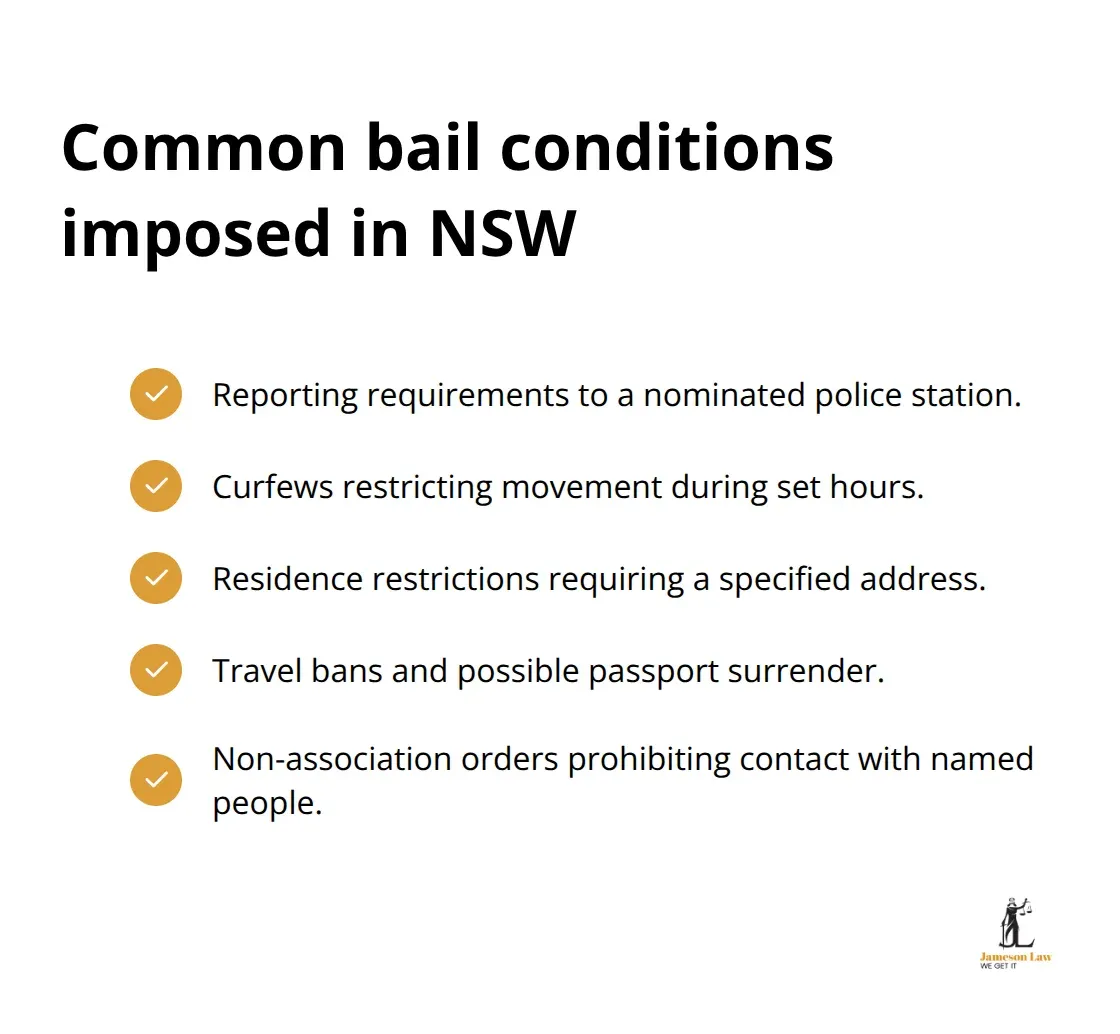
Bail conditions sit between freedom and detention. They are not punishments—Courts impose them strictly to manage identified risks.
| Condition Type | Practical Meaning & Restrictions | Action if Unworkable |
|---|---|---|
| Reporting | Attend a nominated police station on set days/times. | Apply for variation (e.g., phone reporting) if it severely conflicts with employment. |
| Curfews | Remain at your approved residence during specific hours (e.g., 7pm to 6am). | Seek variation with proof of changed shift work or medical emergencies. |
| Non-Association | Strict ban on contacting specific individuals (victims, witnesses, or co-accused) directly or indirectly. | Obtain legal advice immediately; a single text message risks instant arrest and bail revocation. |
Final Thoughts
Bail information NSW demonstrates that your rights during proceedings are real and enforceable. You hold the right to immediate legal representation, the power to challenge disproportionate conditions, and the ability to apply for variation when your employment or living situation inevitably changes.
Breaching bail conditions or ignoring impractical requirements creates devastating outcomes. A single missed reporting appointment or an unauthorized text message can trigger a sudden arrest, bail revocation, and months of remand awaiting trial. If a condition becomes impossible to comply with, file a variation application immediately rather than risking non-compliance.
When you face the virtual Bail Division, securing expert legal representation transforms your outcome. At Jameson Law, our highly experienced Sydney defence team understands exactly how to neutralize Unacceptable Risk factors and advocate successfully in the modern Local Court. Contact us immediately to discuss your bail application and secure your freedom.