
Being charged with a crime in NSW is overwhelming. The decisions you make in those first hours and days can shape the entire outcome of your case.
At Jameson Law, we’ve seen how the right defence lawyer Sydney can make the difference between a conviction and a dismissal. This guide walks you through finding local representation, understanding your rights, and building a strong defence strategy.
When Criminal Charges Are Brought Against You
The moment police charge you with a crime in NSW, the criminal justice system moves quickly, and your understanding of what comes next directly affects your defence strategy. The NSW criminal process follows a structured path through Local Court first, then potentially to District or Supreme Court depending on the offence. Most criminal matters in NSW start in Local Court before a magistrate, which means your initial decisions about how to respond-whether to plead, what evidence to challenge, and how to present your case-happen under time pressure when you’re least equipped to think clearly. This is not the moment to delay getting legal advice. The first 28 days after charging are critical because they determine what disclosure you receive from police, what bail conditions apply to you, and whether you have grounds to challenge the evidence against you before trial.

Police investigations and your rights during arrest
When police investigate a crime, they rely heavily on statements from victims and witnesses. Your defence strategy must start by reviewing these statements carefully for inconsistencies, contradictions, or gaps that weaken the prosecution’s case. Police are required to disclose all evidence to you before court, but you must actively request access to video evidence, CCTV footage, and witness statements as early as possible. If video evidence exists-and in modern investigations it often does-you should arrange to view it with police before your court date rather than discovering it for the first time in the courtroom. During police interviews, you have the right to remain silent and the right to have a lawyer present. Many people think they can talk their way out of trouble, but anything you say can and will be used against you. Your lawyer will advise you on whether to participate in a police interview and how to protect yourself during questioning.
Bail applications and immediate protection
If police arrest you, bail applications happen quickly, sometimes within hours. The magistrate decides whether to release you on bail, refuse bail, or impose conditions. A lawyer who argues your bail application immediately can mean the difference between going home or spending days in custody waiting for a hearing. Your lawyer presents evidence and arguments to show you pose no flight risk and will comply with conditions. This early intervention protects your freedom while your case proceeds.
The committal process and evidence testing
The committal process tests whether police have enough evidence to proceed to a higher court, and this is your opportunity to object to weak evidence or demand further disclosure from the prosecution. If the matter moves to District or Supreme Court, multiple court mentions occur before trial, and each one requires preparation. Your lawyer needs to understand the prosecution’s strategy early-the NSW Office of the Director of Public Prosecutions follows established policies that guide how they build their case, and knowing these steps helps your lawyer anticipate what’s coming.
Plea decisions and diversion options
Early Appropriate Guilty Plea reforms introduced in NSW in 2018 create pressure to resolve cases quickly, but this does not mean you should plead guilty without fully understanding your options. A guilty plea ends your case, but it also ends your chance to challenge the evidence. Some charges can be resolved through diversion programmes outside court entirely, which may help you avoid a criminal record. Your lawyer should explain every possible outcome from worst-case to best-case so you can make an informed decision about whether to proceed to trial or negotiate a resolution. The 28-day window to appeal a conviction or sentence after it is handed down is your final safety net, but it only works if you act within that timeframe.
Understanding these early stages of the criminal process sets the foundation for everything that follows. The decisions you make now-about disclosure, bail, and plea strategy-directly influence whether you can build an effective defence. Once you grasp what happens in these critical first weeks, you need to focus on finding a defence lawyer who understands Sydney’s courts and can navigate these processes with the local knowledge that makes a real difference.
Choosing a Defence Lawyer Who Knows Sydney’s Courts
Local court knowledge shapes your defence strategy
The difference between a defence lawyer and a defence lawyer who understands Sydney’s Local, District, and Supreme Courts is the difference between generic advice and strategy that works. Sydney’s courts operate with specific procedures, timing expectations, and magistrate preferences that matter enormously when your freedom is at stake. A lawyer based outside Sydney or without regular practice in these courts will miss local nuances that affect outcomes. When you contact a defence firm, ask directly how many cases they’ve handled in the specific court where your matter will be heard. If they hesitate or give vague answers, move on.
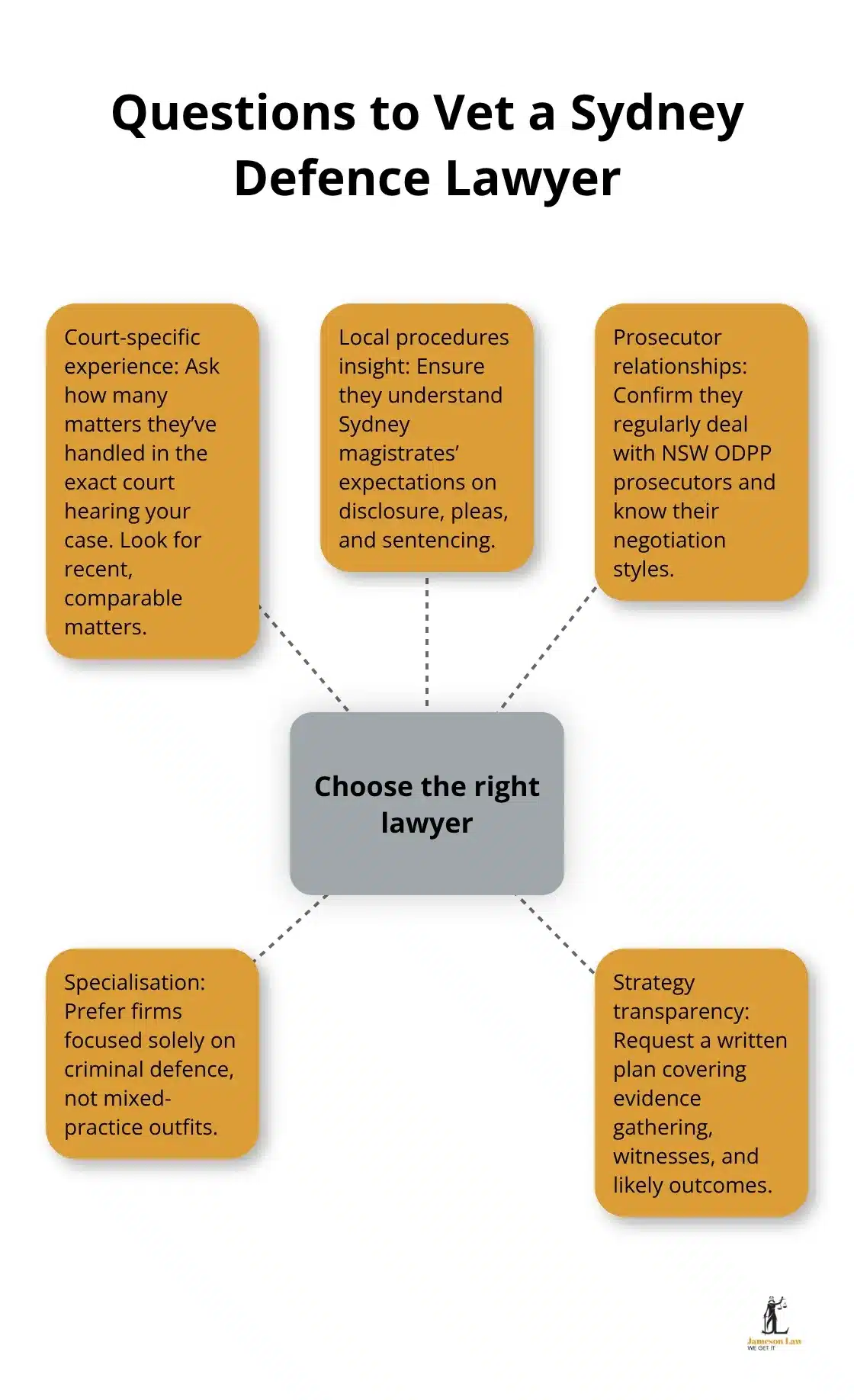
A lawyer who regularly appears before the magistrates at Downing Centre Local Court understands their expectations around disclosure timing, plea negotiations, and sentencing submissions in ways that a lawyer working primarily in other regions simply cannot match. Experience in Sydney’s courts also means your lawyer has established relationships with prosecutors at the NSW Office of the Director of Public Prosecutions, which matters when negotiating early guilty pleas or diversion options. These relationships don’t guarantee outcomes, but they do mean your lawyer can read the room and identify realistic options faster than someone unfamiliar with how these prosecutors typically approach similar charges.
Criminal law specialisation matters more than you think
Specialisation in criminal defence is non-negotiable. A firm that handles criminal law alongside family law, property disputes, and commercial litigation will not give your case the focus it demands. Criminal defence requires deep knowledge of evidence law, bail principles, and sentencing precedents that take years to develop. Ask whether the firm handles only criminal matters or splits focus across multiple practice areas.
When you meet with a lawyer, they should ask you detailed questions about the specific facts of your case, the evidence police have, and your version of events. If a lawyer spends more time talking about their firm’s general approach than understanding your situation, that’s a red flag.
Request a detailed defence plan before you commit
Request a clear defence plan before you commit: how will evidence be gathered, which witnesses will be interviewed, what cross-examination strategies will be used, and what are the realistic outcomes given the prosecution’s evidence. A competent defence lawyer will outline worst-case, likely-case, and best-case scenarios so you can make informed decisions about plea timing and trial strategy.
Ask for a detailed timeline showing every court appearance, filing deadline, and decision point so you understand what to expect rather than being surprised by sudden changes. This roadmap protects you from uncertainty and keeps your case moving forward with purpose.
Clarify costs and explore your options
Clarify costs upfront and explore whether the firm offers fixed fees for specific services, reduced fees for hardship cases, or payment plans. Some matters qualify for Legal Aid NSW support, and your lawyer should explain whether you’re eligible and how to apply. A firm willing to discuss costs openly and explore options demonstrates they’re focused on access, not just billable hours.
Once you’ve identified a lawyer who understands Sydney’s courts, specialises in criminal defence, and commits to a clear strategy tailored to your case, you’re ready to move forward. The next step involves understanding how your lawyer will actually build your defence-gathering the evidence that challenges the prosecution’s case and preparing you for what happens in the courtroom.
Building Your Defence Strategy
Your defence starts the moment your lawyer receives the police brief. Most people assume defence happens in court, but the real work occurs in the weeks before trial when your lawyer gathers evidence, identifies weaknesses in the prosecution’s case, and decides whether negotiation or trial serves you better. The prosecution must prove guilt beyond reasonable doubt, and your job is to find and expose every gap in their evidence.
Request all disclosure from police immediately
Request all disclosure from police immediately, including CCTV footage, witness statements, and forensic reports. Video evidence proves particularly valuable because it shows exactly what happened without interpretation. If police investigated your matter, they filmed interactions, collected statements, and documented the scene. Access this material early so your lawyer can identify inconsistencies between what witnesses claim and what the footage actually shows. Inconsistencies matter enormously at trial because they undermine witness credibility.
Interview witnesses before trial, not during it
Your lawyer should interview key witnesses who support your version of events before trial, not during it. A witness who has thought through their account and discussed it with your lawyer performs far better under cross-examination than someone meeting your lawyer for the first time in the courtroom. Document everything in writing so your lawyer knows exactly what each witness will say and can prepare questions that strengthen your case. This preparation transforms witness testimony from uncertain to reliable.
Negotiate with prosecutors at the right time
Negotiation with prosecutors happens throughout the process, but timing matters more than most people realise. Early Appropriate Guilty Plea reforms in NSW encourage resolution before trial, and prosecutors often offer better terms if you resolve matters quickly. However, this pressure cuts both ways. If the prosecution’s case is weak, your lawyer should resist early resolution and force them to prove their case at trial. If the evidence against you is overwhelming, early negotiation may result in reduced charges or agreed facts that lower your sentence significantly.
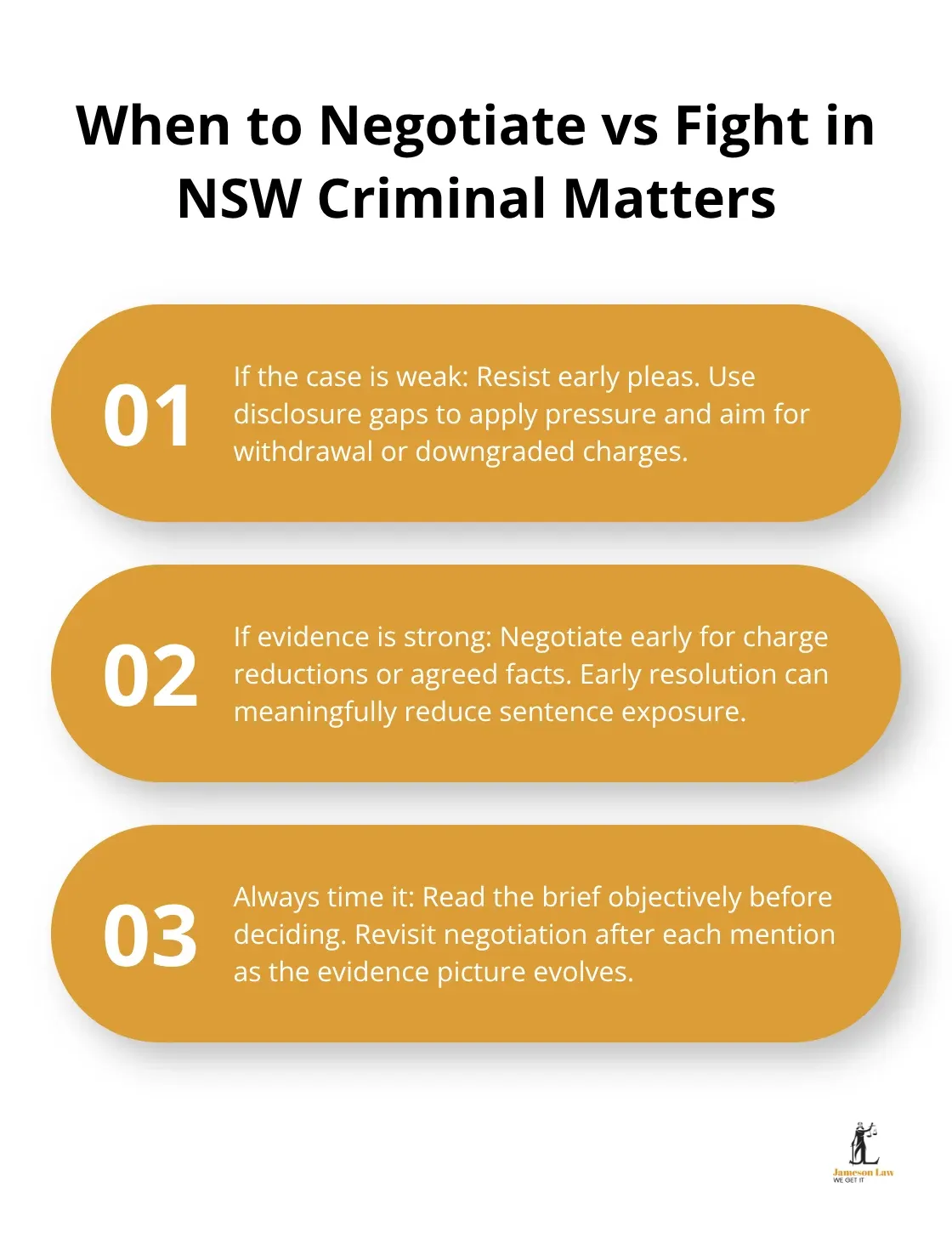
Your lawyer must read the prosecution brief objectively and advise you honestly about realistic outcomes. Some matters resolve through diversion programmes entirely, which means charges disappear and no conviction appears on your record. Ask your lawyer whether diversion is available for your specific charge.
Prepare for trial months in advance
If your case proceeds to trial, preparation starts months in advance. Your lawyer prepares a detailed cross-examination strategy targeting every weakness in the prosecution’s evidence. Cross-examination is not about attacking witnesses but about testing whether their evidence holds up under questioning. The goal is to create reasonable doubt. In District and Supreme Court trials, a jury hears your case, which means your lawyer must prepare evidence and arguments that persuade twelve ordinary people, not just a magistrate. This requires different tactics than Local Court proceedings.
Walk through courtroom procedures with your lawyer
Your lawyer should walk you through exactly what will happen in the courtroom, what questions you will face if you give evidence, and what to avoid saying. Many defendants harm their own case by giving evidence without thorough preparation with your lawyer about what the prosecution will ask and how to answer truthfully without volunteering information that damages you.
Final Thoughts
Being charged with a crime in NSW forces you to make decisions that affect your life for years. The path forward depends entirely on the quality of advice you receive in those critical early weeks. A defence lawyer Sydney who understands local court procedures, knows the prosecutors you’ll face, and commits to a clear strategy tailored to your specific circumstances makes an enormous difference in outcomes. Generic legal advice from someone unfamiliar with how Sydney’s courts operate will cost you far more than the fee you save by choosing a cheaper option.
Your defence starts before trial, not during it. It begins with securing disclosure from police, reviewing evidence for inconsistencies, and making informed decisions about plea timing and negotiation. It continues through witness preparation, cross-examination strategy, and courtroom procedure. Every step either strengthens or weakens your position because every step shapes how prosecutors and judges perceive your case.
Your next step is contacting a defence firm that specialises exclusively in criminal law and has genuine experience in the courts where your matter will be heard. Ask direct questions about their local experience, request a detailed defence plan, and clarify costs upfront. Contact Jameson Law for a consultation to discuss your case and explore your options.