A breathalyser reading can feel like a death sentence, but it’s not the end of the road. Police conduct these tests thousands of times across NSW each year, and many contain errors that a drink driving lawyer can expose.
At Jameson Law, we’ve helped clients challenge flawed breathalyser evidence and walk away with reduced charges or acquittals. This guide shows you exactly where tests go wrong and what legal options you have.
How NSW Breathalyser Tests Actually Work
The Two-Stage Testing System
NSW police conduct breathalyser testing in two distinct stages, and understanding the difference between them is essential to challenging the evidence. The first stage involves a roadside breath test using a handheld device at the side of the road during a traffic stop. This initial test serves as screening only and the court cannot use it as evidence in drink driving prosecutions. If that roadside result indicates alcohol above the legal limit, police will arrest you and transport you to a police station or booze bus for the second stage: evidentiary breath analysis. The court uses this second reading as primary evidence in drink driving cases under the Road Transport Act 2013.
Timing Requirements and Legal Vulnerabilities
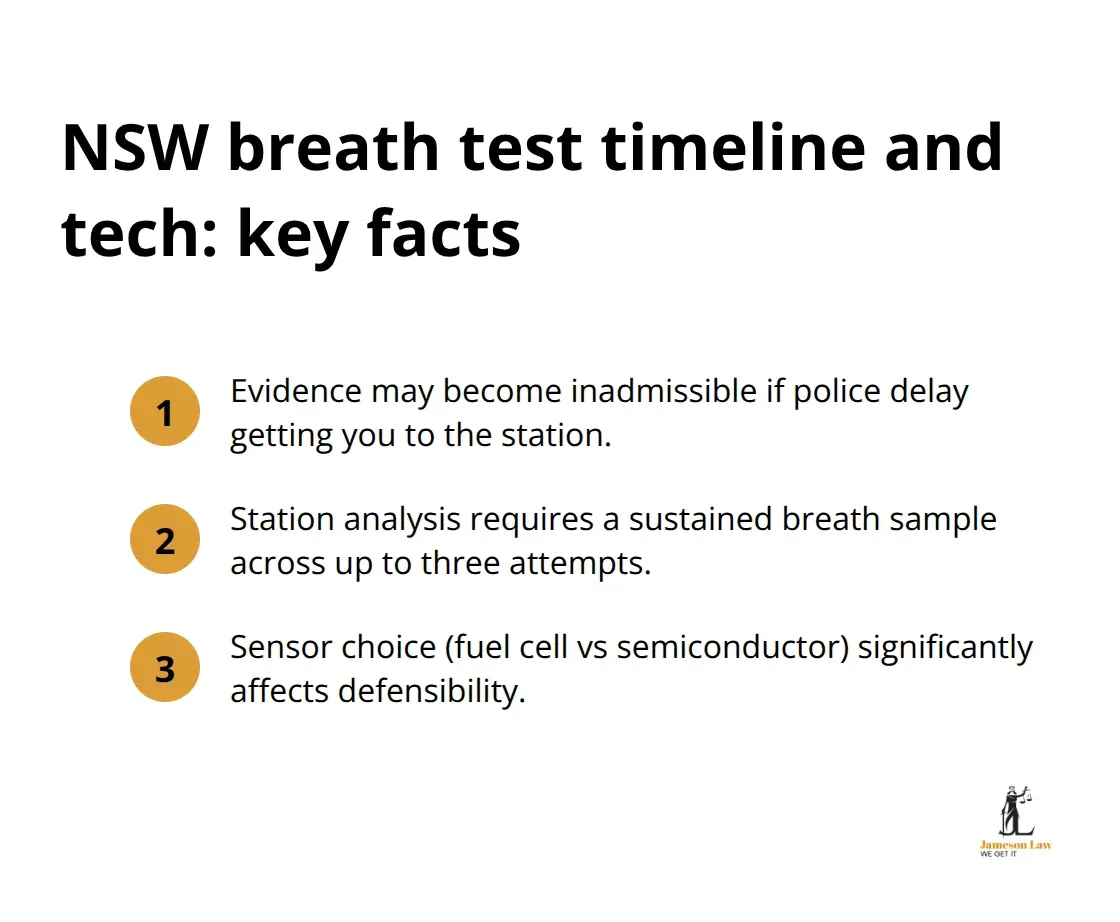
The entire process from roadside test to station analysis must occur within two hours of driving, according to Schedule 3 of the Road Transport Act 2013. This timing window creates the first vulnerability in the prosecution’s case. If police delay getting you to the station, the evidence may become inadmissible. At the station, you must provide a sustained breath sample across up to three attempts into an evidentiary breath machine. These machines use either semiconductor sensors or fuel cell sensors, and the choice of technology matters significantly for your defence.
Sensor Technology and Accuracy
Fuel cell sensors are substantially more accurate than semiconductor sensors because they detect ethanol specifically and measure down to 0.001 grams per 210 litres of breath. Semiconductor sensors are cheaper but prone to false positives from interfering substances like acetone from ketogenic diets or medical conditions such as diabetes. The difference matters enormously when challenging evidence because semiconductor-based readings are far easier to attack in court. This technical distinction often provides the foundation for successful challenges to breathalyser results.
Calibration and Maintenance Standards
Police must follow strict calibration and maintenance protocols for these machines to establish legal reliability. Under the Road Transport Act 2013, evidentiary breath machines require regular calibration every 6 to 12 months using a simulator with known breath alcohol concentrations. If police cannot produce proper service logs showing recent calibration, the entire reading becomes questionable. Sensor drift occurs naturally with high-volume testing, and if recalibration has not been performed as recommended, unnoticed inaccuracies accumulate. Requesting calibration records is non-negotiable when you challenge breathalyser evidence.
Procedural Requirements That Protect Your Rights
Police must also follow specific procedural requirements that create additional grounds for challenge. A 15-minute waiting period applies after you have vomited or ingested anything, and the officer must use a fresh mouthpiece for each test to prevent cross-contamination. Mouth alcohol from recent drinking, alcohol-based hand sanitiser, or medical reflux can artificially inflate readings if the test occurs too soon after these events. The legal framework requires police to comply with all these steps precisely. Any deviation from procedure, any gap in calibration documentation, or any failure to account for interfering factors creates reasonable doubt about the reading’s accuracy. This is where most defences gain traction-not through proving you were actually sober, but through exposing that the testing process itself was fundamentally flawed. Understanding these vulnerabilities positions you to work effectively with a criminal defence lawyer who can identify which procedural or technical failures apply to your case.
Where Breathalyser Tests Fail
Police make mistakes during breathalyser testing far more often than most drivers realise, and these errors create genuine grounds to challenge the evidence against you. The Road Transport Act 2013 Schedule 3 sets out strict procedural requirements, and when police fail to follow them precisely, the entire reading becomes vulnerable.
Procedural Breaches That Undermine Your Case
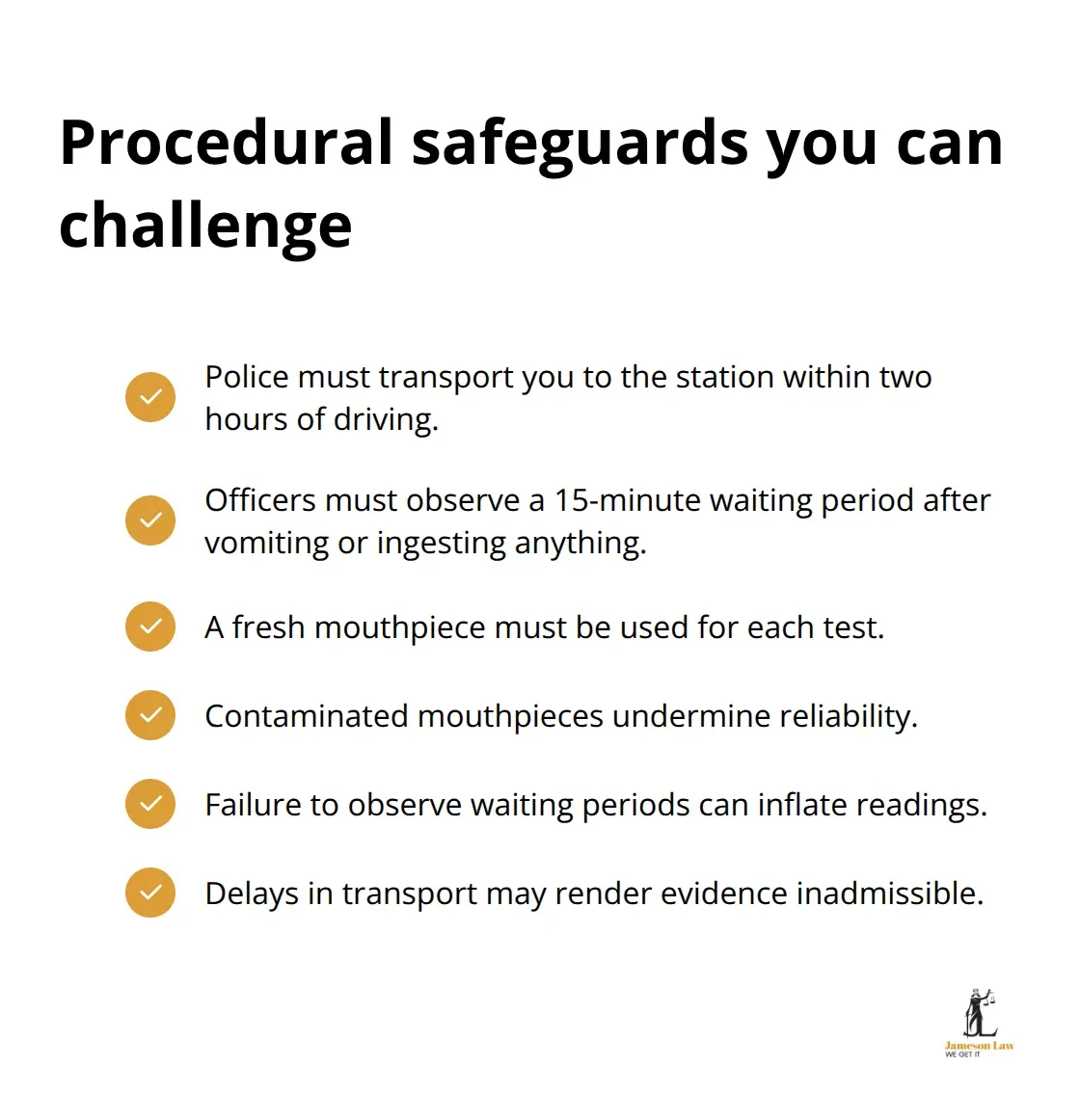
The two-hour window from driving to breath analysis represents one critical deadline, but many others exist. Police must transport you to the station within this timeframe, observe the 15-minute waiting period after vomiting or eating, and use a fresh mouthpiece for each test. If police delay transporting you, fail to observe the waiting period, or use a contaminated mouthpiece, these breaches undermine the reliability of the result.
You need to obtain police records, body-worn camera footage, and the station logbook to verify what actually happened during your test. Any gap between what the law requires and what police actually did forms your starting point for a defence. Courts recognise that procedural compliance matters because each step exists to prevent artificial inflation of readings or contamination of samples.
Equipment Defects and Calibration Failures
Equipment defects present another powerful avenue of challenge. The evidentiary breath machine must undergo calibration every 6 to 12 months under NSW Police procedures, and if the service logs show calibration was overdue or missing entirely, the machine’s readings cannot be trusted. Sensor drift accumulates naturally with high-volume testing, meaning machines tested hundreds of times without recalibration produce wildly inaccurate results.
Request the calibration records for the specific machine used on your test date. If the logs are incomplete, inconsistent, or show the machine was overdue for service, the prosecution’s primary evidence collapses. Courts recognise that fuel cell sensors can read up to 3 decimal places accurately, but semiconductor sensors are far less reliable and prone to false positives from acetone, ketones, and other interfering compounds. Knowing which sensor type was in the machine used during your test gives you concrete grounds to challenge accuracy.
Medical and Environmental Factors That Inflate Results
Medical and environmental factors frequently inflate breathalyser readings, and these are often overlooked by police but recognised by courts. Mouth alcohol from reflux, vomiting, recent drinking, or even alcohol-based hand sanitiser can artificially spike a result if the test occurs too soon after exposure. Ketogenic diets produce acetone in your breath, which semiconductor sensors often misidentify as ethanol, producing false positives. Diabetes, acid reflux, and certain medications trigger similar interference.
If you had any of these conditions on the day of your test, this constitutes critical evidence. Discuss your medical history, diet, recent food and drink, and any reflux or vomiting with your drink driving lawyer so they can obtain expert toxicology evidence showing your actual BAC was lower at the time of driving. The prosecution must prove its case beyond reasonable doubt, and reasonable doubt emerges when you show the testing process was flawed, the equipment was uncalibrated, or medical factors artificially inflated the reading.
Building Your Defence Strategy
You do not need to prove you were sober. You simply need to show the evidence against you is unreliable, and that threshold is far easier to meet when you examine the procedural and technical facts surrounding your specific test. Each procedural error, each gap in calibration records, and each medical factor that could have affected the result strengthens your position. The next step involves gathering the right evidence and expert support to present these findings effectively in court.
Building Your Defence With Expert Evidence and Strategic Advocacy
How Expert Evidence Strengthens Your Case
Forensic toxicologists model your alcohol metabolism to show your blood alcohol concentration was substantially lower at the time of driving than what the breathalyser recorded hours later. This evidence directly counters the prosecution’s case because courts understand that alcohol metabolises at approximately one standard drink per hour. If police tested you well after driving, the reading overstates your BAC at the critical moment. Request an independent blood test within two hours of your breath analysis if you have not already done so-blood evidence carries far greater weight than breath evidence in NSW courts because it measures actual BAC directly rather than estimating from breath samples. Discrepancies between breath and blood readings provide concrete grounds for challenge and often lead to charge reductions from high-range to mid-range offences, which substantially lowers penalties including licence disqualification periods and mandatory interlock device orders.
Obtaining Critical Documentation and Footage
Your defence lawyer must obtain the calibration records, maintenance logs, and service history for the specific machine used during your test. Request body-worn camera footage from the testing station to verify whether police observed the 15-minute waiting period after you ate or drank anything, whether they used a fresh mouthpiece, and whether they followed proper procedure throughout. If calibration was overdue, or the sensor type was a semiconductor rather than fuel cell, these facts alone create reasonable doubt about the reading’s accuracy.
Cross-Examination and Procedural Challenges
Cross-examination of the police officer who conducted your test focuses on procedural failures rather than attacking credibility-courts respond far better when you expose what the evidence shows rather than suggesting the officer lied. Medical factors matter enormously.
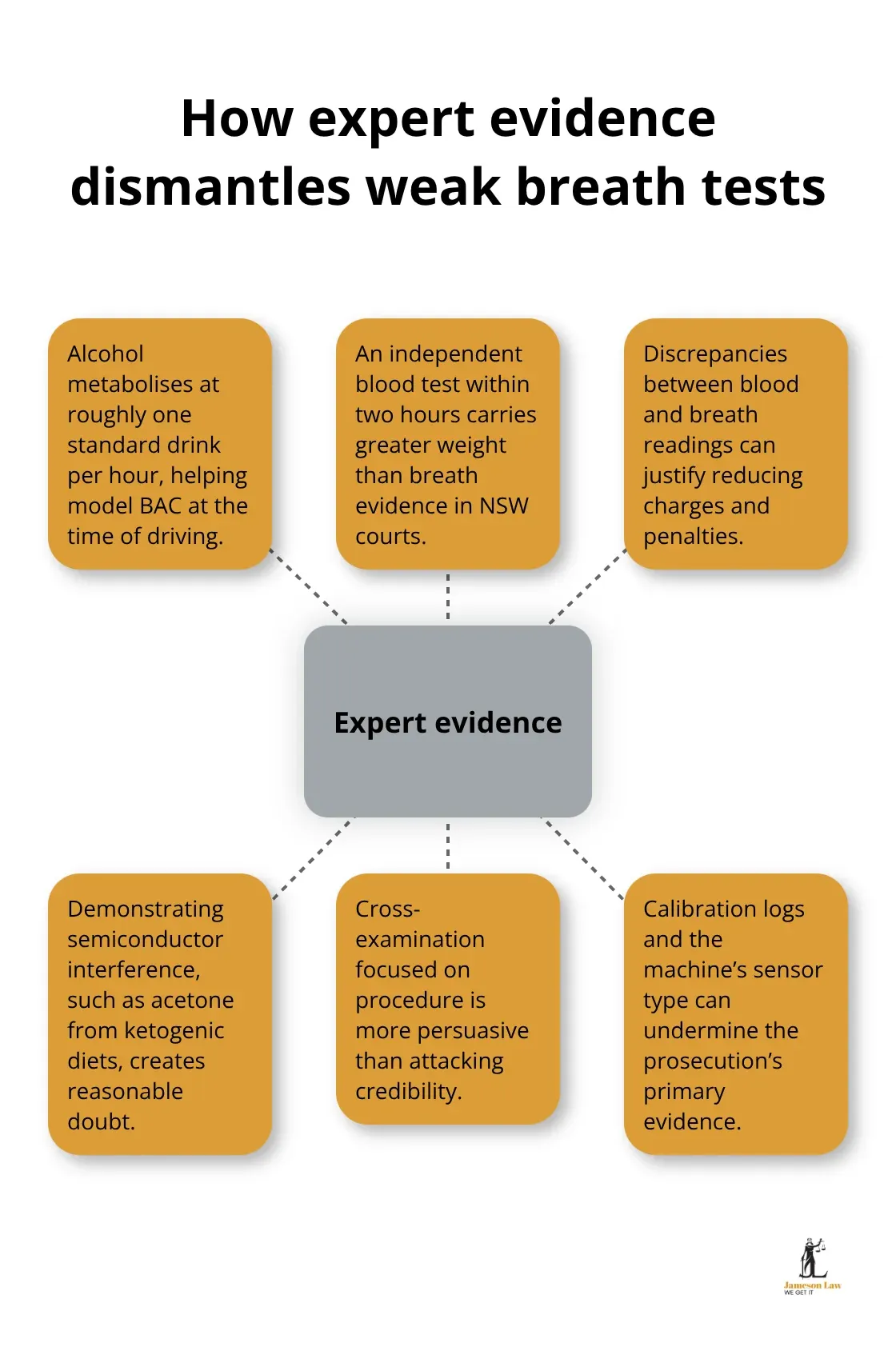
If you have diabetes, acid reflux, or were on a ketogenic diet, your lawyer can present expert evidence showing how these conditions artificially inflate semiconductor sensor readings. The prosecution must prove guilt beyond reasonable doubt, and that threshold drops dramatically when you present technical and procedural evidence showing the testing process itself was fundamentally unreliable.
Working With an Experienced Criminal Defence Lawyer
A criminal defence lawyer experienced in drink driving matters knows which specific questions expose testing failures, which expert witnesses carry weight in NSW courts, and which charge reductions are realistic given your circumstances. They understand the technical aspects of breathalyser equipment and can identify weaknesses in the prosecution’s evidence that you might otherwise miss. This expertise proves invaluable when you face serious drink driving charges and need to mount an effective defence strategy.
Final Thoughts
Challenging breathalyser evidence in NSW requires you to expose procedural failures, equipment defects, or medical factors that undermined the testing process. You do not need to prove you were sober-you simply need to demonstrate that the testing procedure was flawed or the equipment unreliable, and courts recognise this distinction. Procedural breaches, missing calibration records, contaminated mouthpieces, or medical conditions that inflated your reading all create reasonable doubt about the prosecution’s case.
Act quickly by requesting police records, body-worn camera footage, and calibration logs from the testing station. Discuss your medical history, diet, and any reflux or vomiting with a drink driving lawyer who can identify which specific vulnerabilities apply to your circumstances. An experienced lawyer knows which expert witnesses carry weight in NSW courts and which charge reductions are realistic for your situation.
We at Jameson Law understand the technical and legal complexities of breathalyser challenges and have helped clients expose flawed testing and achieve outcomes ranging from charge reductions to acquittals. Contact us today to discuss your case and protect your rights.