Getting a visa approved in NSW involves more than just filling out forms and hoping for the best. The process demands precision, attention to detail, and knowledge of what immigration authorities actually look for.
At Jameson Law, we’ve helped countless people navigate visa applications successfully. Whether you’re pursuing skilled migration, family reunion, or temporary work arrangements, understanding your options and requirements makes all the difference.
Visa Categories and Documentation Requirements in NSW
Skilled Migration Visas
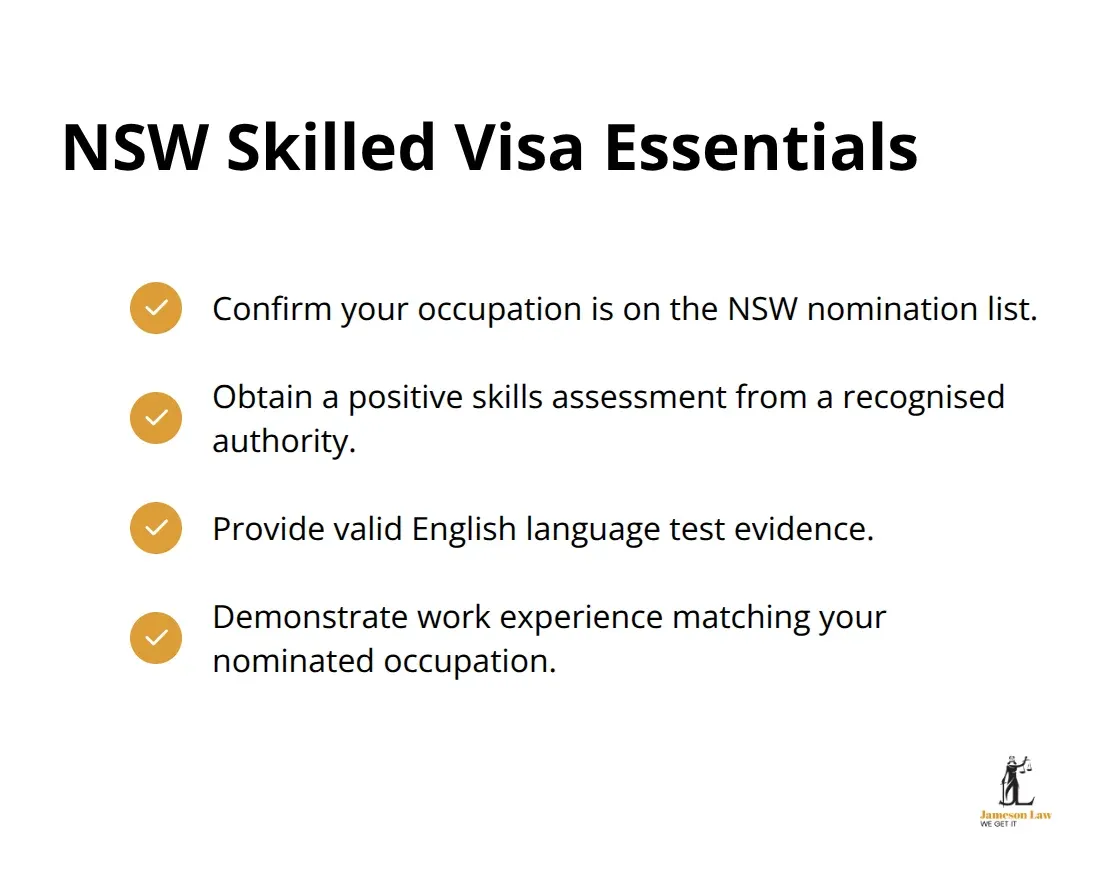
NSW attracts professionals through skilled migration pathways managed by the Department of Home Affairs. The Skilled Nominated visa (subclass 190) and the Skilled Work Regional visa (subclass 491) both require NSW state sponsorship. Your occupation must appear on the state nomination lists to qualify. You’ll need a skills assessment from a recognised assessing authority, proof of English language proficiency, and work experience that matches your nominated occupation. Processing times for skilled visas typically range from 8 to 12 months, though application completeness affects this timeline significantly.

Family Reunion Visas
Australian citizens and permanent residents can sponsor partners, children, or parents through family reunion visas. Partner visas require statutory declarations, relationship evidence spanning your entire time together, and police checks covering every country where you’ve lived for 12 months or more in the past 10 years. You’ll strengthen your application by presenting photos, messages, and joint financial records that demonstrate your relationship authenticity. Parent visas involve substantial financial commitments and longer processing periods, often exceeding 2 years. Each family visa category has different evidentiary thresholds that you must meet to progress your application.
Temporary Visas and Work Permits
Student visas require you to submit a Genuine Student statement that explains your study plans, future goals, and ties to your home country. Temporary work visas depend on employer sponsorship and visa conditions that restrict where and how you can work. These visas serve different purposes, so understanding which one suits your circumstances prevents costly mistakes early in the process.
Documentation Completeness and Processing Speed
The Department of Home Affairs publishes visa-specific checklists that prevent missing paperwork-a common cause of delays. Health examinations and police clearances frequently create bottlenecks, so you should schedule these early to protect your timeline. Non-English documents require accredited translators and certified copies to meet verification standards. Each visa category prioritises different evidence: skilled visas focus on employment credentials and skills assessments, family visas demand relationship proof through photos and joint finances, while student and temporary work visas emphasise genuine intention and employer documentation.
Staying Current With Requirements
Visa rules and processing requirements change regularly, so you should review the Department of Home Affairs’ official guidance before compiling your application. This approach prevents costly mistakes and ensures your documentation aligns with current standards. Understanding which category suits your circumstances and what evidence each one demands sets the foundation for a stronger application-and determines whether you’ll need professional legal assistance to navigate more complex situations.
How Your Visa Application Gets Assessed
The Completeness Check Phase
The moment you submit your application to the Department of Home Affairs, it enters a structured assessment process that determines whether you move forward or face delays and rejections. Initial assessment begins with a completeness check, where the Department verifies that all mandatory forms, supporting documents, and fees are present. This stage typically takes 2 to 4 weeks.
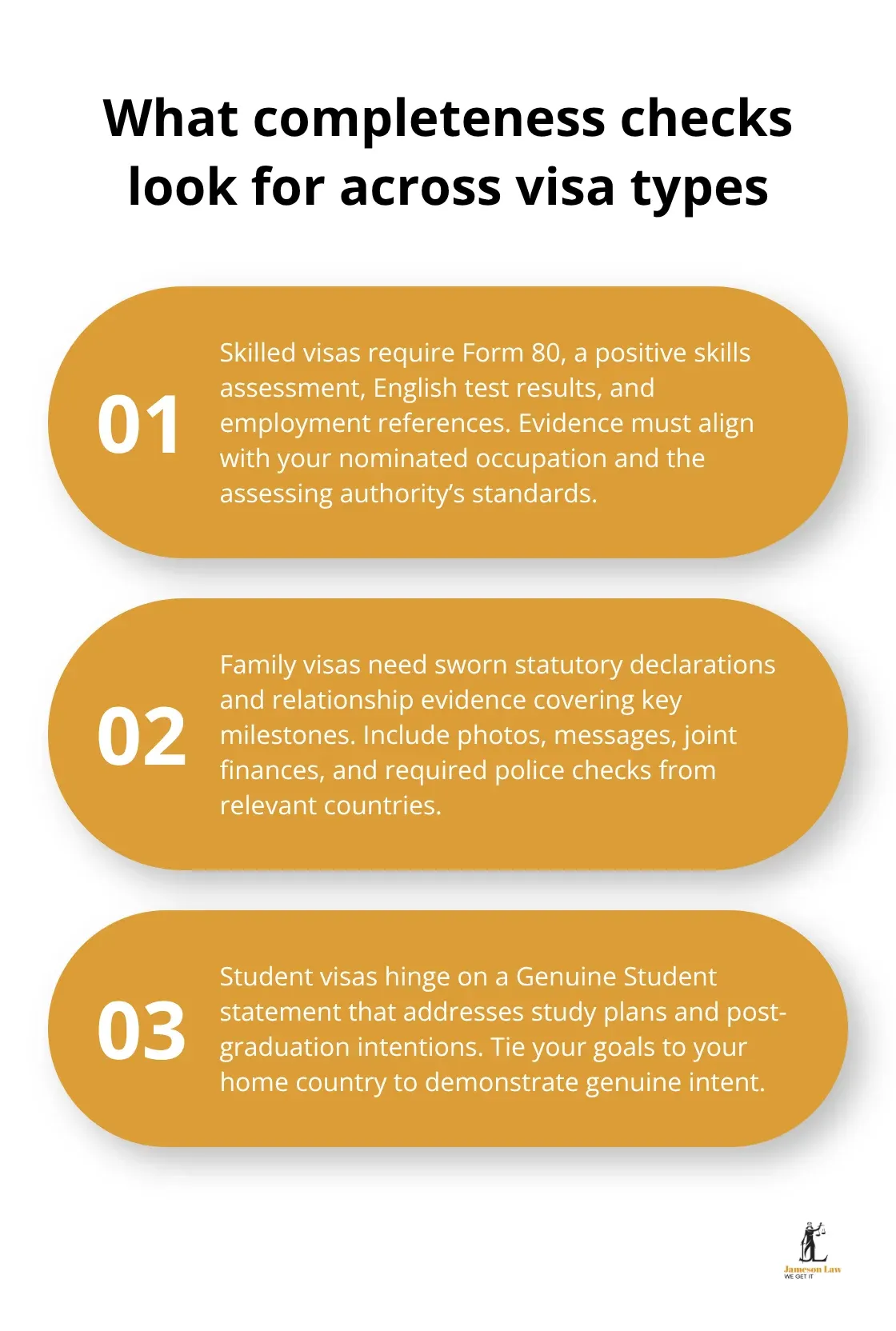
Many applications fail at this point because applicants miss required documents listed on the Department’s visa-specific checklists. For skilled visas, you must include Form 80 (personal particulars for assessment), skills assessment certificates from recognised assessing authorities, English language test results, and employment references.

For family visas, statutory declarations must be sworn before an an authorised witness and include specific relationship milestones. For student visas, your Genuine Student statement must explicitly address your study plans, post-graduation intentions, and ties to your home country. The Department rejects incomplete applications outright, sending them back without assessment. This creates unnecessary delays of 4 to 8 weeks while you gather missing documents and resubmit.
Health Checks and Police Clearances Create Bottlenecks
Once your application passes completeness checks, the substantive assessment phase begins, which is where processing times stretch significantly. Health examinations and police clearances frequently become bottlenecks, particularly if you’ve lived in multiple countries. Police checks must cover every nation where you’ve resided for 12 months or more in the past 10 years, and obtaining these from overseas authorities can take 8 to 12 weeks.
You should schedule health examinations and request police clearances immediately after lodging your application rather than waiting for the Department to request them. This approach compresses your overall timeline by 6 to 10 weeks. Non-English documents require accredited translators and certified copies, adding 2 to 3 weeks to processing if completed after submission.
Processing Timelines and Requests for Further Information
Processing times for most visa categories now range from 10 to 15 months, though skilled visas sometimes extend to 18 months depending on verification requirements. Applications stall most often when the Department requests additional information, a process called a Request for Further Information (RFI). You typically have 28 days to respond, and missing this deadline results in automatic refusal.
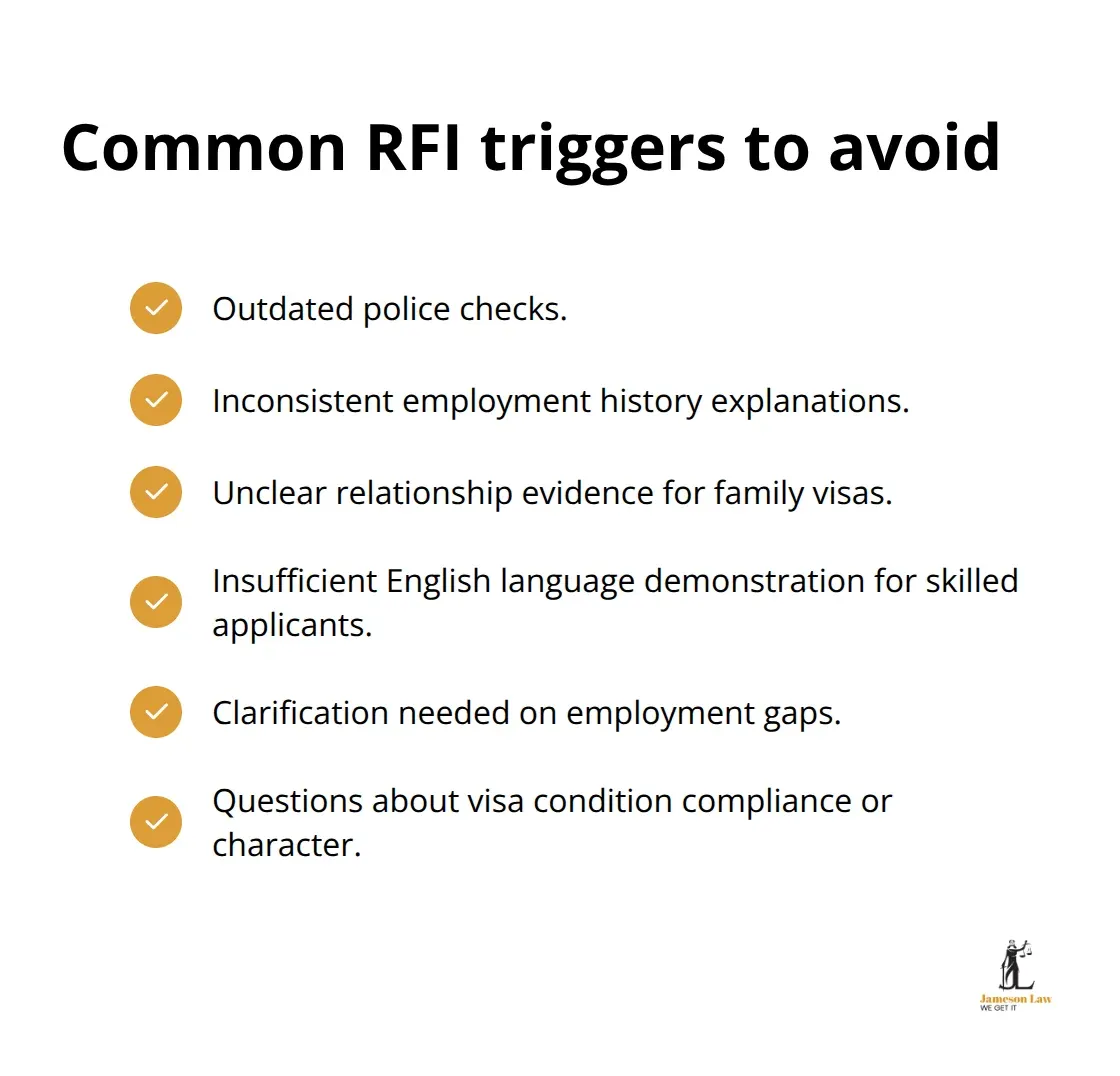
Common RFI triggers include outdated police checks, inconsistent employment history explanations, unclear relationship evidence for family visas, or insufficient English language demonstration for skilled applicants. The Department may also request clarification on employment gaps, visa condition compliance, or character assessments if your background raises questions.

Rejections and Misrepresentation Consequences
Rejections happen when evidence fails to support your claims, documents contain false information, or you don’t meet the visa criteria despite meeting the checklist requirements. Misrepresentation or providing false documents results in permanent visa refusal and potential criminal charges, making accuracy non-negotiable throughout your application. Understanding these assessment stages helps you prepare stronger documentation and avoid the mistakes that derail most applications-and reveals when professional legal assistance becomes necessary to navigate complex circumstances or respond effectively to RFI requests.
Why You Need Legal Help With Your Visa Application
Stopping Applications From Failing at the Completeness Stage
Immigration lawyers prevent applications from failing at the completeness stage, which is where most rejections originate. When the Department requests further information, you have 28 days to respond, and a poorly constructed reply transforms a fixable problem into permanent refusal. Legal professionals review your documentation against the Department’s actual assessment criteria, not just the checklist. This distinction matters because checklists show what documents you must submit, but they don’t reveal how assessors evaluate those documents or what gaps trigger requests for further information. Legal assistance identifies missing evidence before submission, ensuring your application advances past initial assessment without delays.
Strengthening Evidence for Different Visa Categories
For skilled visas, legal review verifies that your skills assessment matches your nominated occupation, your employment history supports your claims, and your English language evidence meets the specific threshold for your visa category. For family visas, legal professionals construct relationship narratives using your evidence, ensuring statutory declarations address the relationship milestones that assessors scrutinise. Applications fail because relationship evidence showed a timeline but didn’t explain how the couple maintained genuine commitment during separation periods. These details separate approved applications from rejected ones. Legal assistance also manages the health examination and police clearance process strategically, coordinating timing so these critical items don’t create bottlenecks later.
Navigating Administrative Review and Tribunal Proceedings
Tribunal appeals and administrative review proceedings require you to demonstrate that the Department’s decision was unreasonable or based on factual error, a legal standard that differs fundamentally from the original assessment. When the Department issues a refusal, most applicants attempt review without understanding that the review officer assesses the same evidence under the same criteria, making success unlikely without identifying the specific error in the original assessment. Legal professionals construct review applications that pinpoint where the Department misinterpreted your evidence, failed to consider material facts, or applied policy incorrectly. If administrative review fails, Migration and Refugee Review Tribunal proceedings demand detailed submissions explaining why the Department’s reasoning was flawed.
Managing Complex Circumstances and Character Concerns
Complex circumstances including character concerns, visa condition breaches, previous refusals, or gaps in employment history require strategic legal navigation because the Department applies heightened scrutiny to these applications. Cases involving previous visa refusals create barriers to future applications, and character assessments triggered by overseas convictions or traffic matters demand careful handling. These situations require more than documentation; they require legal strategy that reframes your circumstances within the legislative framework.
Final Thoughts
Visa applications in NSW succeed when you treat them as legal matters rather than administrative tasks. The Department of Home Affairs assesses your case against specific criteria for your visa category, and missing strategic evidence creates delays or rejections that professional guidance prevents. An immigration lawyer Sydney-based identifies gaps in your documentation before submission, constructs stronger evidence narratives tailored to your circumstances, and navigates administrative review if the Department refuses your application.
Your circumstances determine whether you need professional assistance. Character concerns, previous visa refusals, employment gaps, or complex family situations require legal strategy that extends beyond completing checklists. The Department’s processing timelines now stretch to 10 to 15 months for most visas, making early preparation essential-schedule health examinations and police clearances immediately after lodging your application rather than waiting for requests.
We at Jameson Law understand that visa applications involve significant personal and financial stakes. Contact Jameson Law to discuss your immigration matter with our team and receive practical legal assistance tailored to your circumstances.