Partner visas offer a pathway for couples to build their lives together in Australia, but the application process demands careful attention to specific requirements. At Jameson Law, we’ve guided countless clients through partner visa eligibility assessments, and we know the rules can feel overwhelming.
This guide breaks down what you need to know about meeting partner visa eligibility in Australia, from relationship evidence to financial capacity and health checks. We’ll also walk you through the different visa pathways available and tackle the common obstacles applicants face.
What Makes You Eligible for a Partner Visa
The Four Core Requirements
To qualify for a partner visa in Australia, you must meet four core requirements that the Department of Home Affairs assesses rigorously. First, you need to be in a genuine and continuing relationship with an Australian citizen, permanent resident, or eligible New Zealand citizen who will sponsor you. Second, both you and your sponsor must be at least 18 years old. Third, you must pass mandatory health and character checks. Fourth, your sponsor must demonstrate financial capacity to support you without government welfare.
Proving Your Relationship Is Genuine
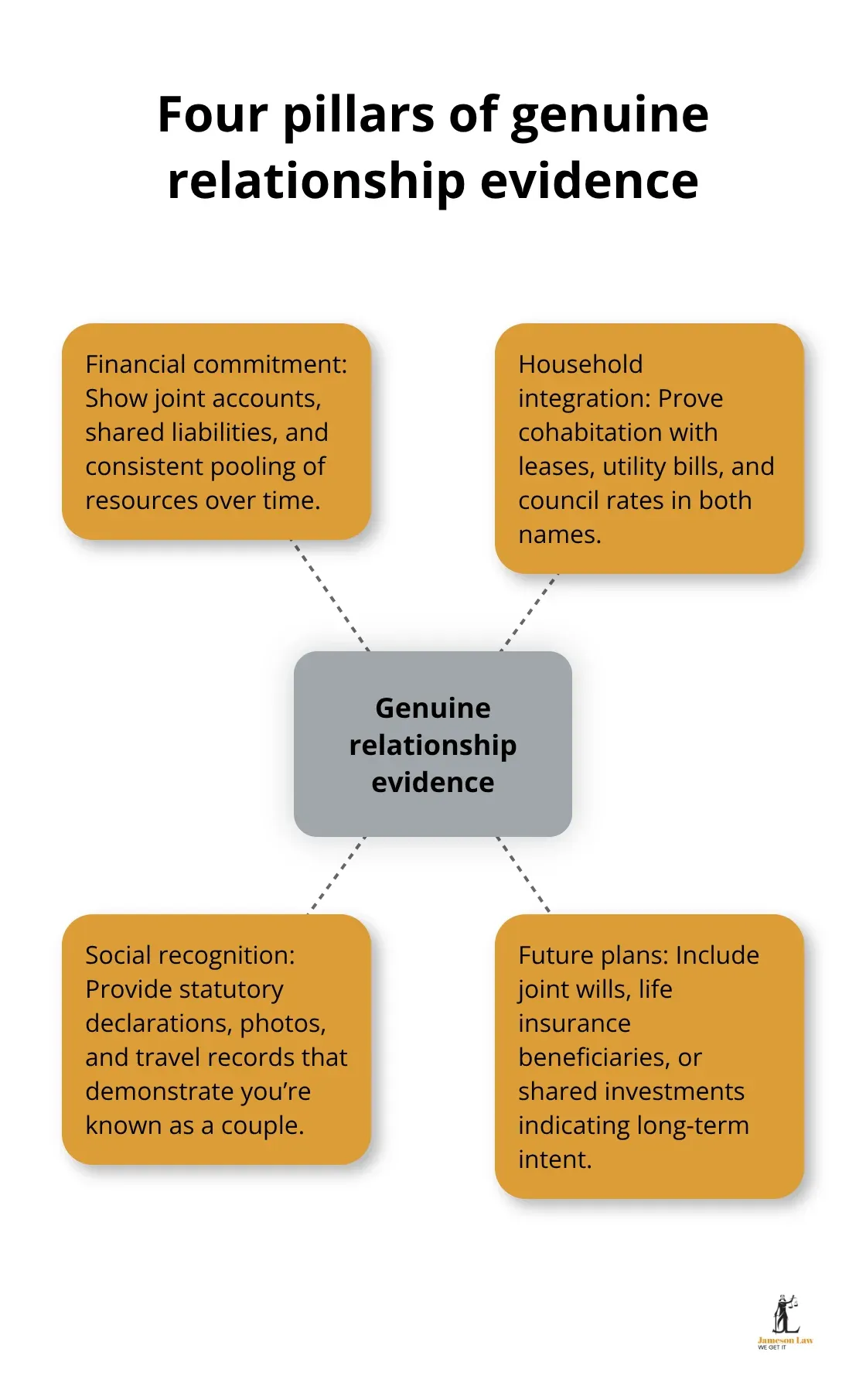
The relationship requirement receives the most scrutiny, and this is where most applications face problems. The Department of Home Affairs requires evidence across four distinct areas: financial commitment, household integration, social recognition, and future plans together.
Financial commitment means joint bank accounts, shared loans, or evidence of pooled resources. Household integration requires proof you live together-utility bills, lease agreements, and council rates in both names all strengthen your case. Social recognition involves statutory declarations from family and friends confirming they know you as a couple, plus photos and travel records showing your life together. Future plans might include joint wills, life insurance naming each other as beneficiaries, or shared property investments.
Most applicants underestimate how much evidence the Department needs. A thin file with just a few documents almost guarantees delays or refusal. You should gather everything methodically from the start.
De Facto Relationships and the 12-Month Rule
De facto couples face a specific hurdle: you must prove 12 months of continuous cohabitation unless your relationship is registered with a state or territory government. Many applicants conflate time spent together with continuous living arrangements. The Department looks for evidence that you shared a home for the full 12 months, not that you saw each other regularly or took holidays together.
If you lived apart for work, study, or visa reasons during that period, you may not meet the threshold. Compelling circumstances can sometimes override this requirement, but you cannot rely on this exception.
Health, Character, and Financial Capacity
Health and character assessments demand medical examinations approved by the Department and police clearances from every country where you lived for 12 months or more since turning 16. Medical checks cost extra and take time; you should budget for this upfront rather than face surprises mid-application. Police clearances from overseas can take months to arrive, particularly from countries with slower bureaucracies.
Character issues-including minor traffic offences, bankruptcy, or spent convictions-do not automatically disqualify you. However, failing to disclose them will. The Department has access to criminal databases and will find undisclosed matters; dishonesty in your application causes far more damage than the original issue.
Your sponsor must prove they can support you without relying on government welfare, typically shown through recent tax returns, payslips, and bank statements. If your sponsor’s income is borderline, they may need a co-sponsor (usually a family member) to guarantee support. This adds another layer of documentation but can make a marginal application viable. Understanding these financial expectations upfront helps you assess whether your sponsorship arrangement will withstand Department scrutiny, which brings us to the different visa pathways available and how processing timelines vary depending on your circumstances.
Choosing Your Partner Visa Pathway
Three Routes to Australian Residency
Australia offers three distinct partner visa pathways, and your choice depends entirely on your relationship status and current location. The onshore route uses subclasses 820 and 801 for couples already living together in Australia. You lodge a single combined application, receive a temporary visa that permits work and study while the Department assesses your permanent residency, then transition to permanent status around two years after lodgement.
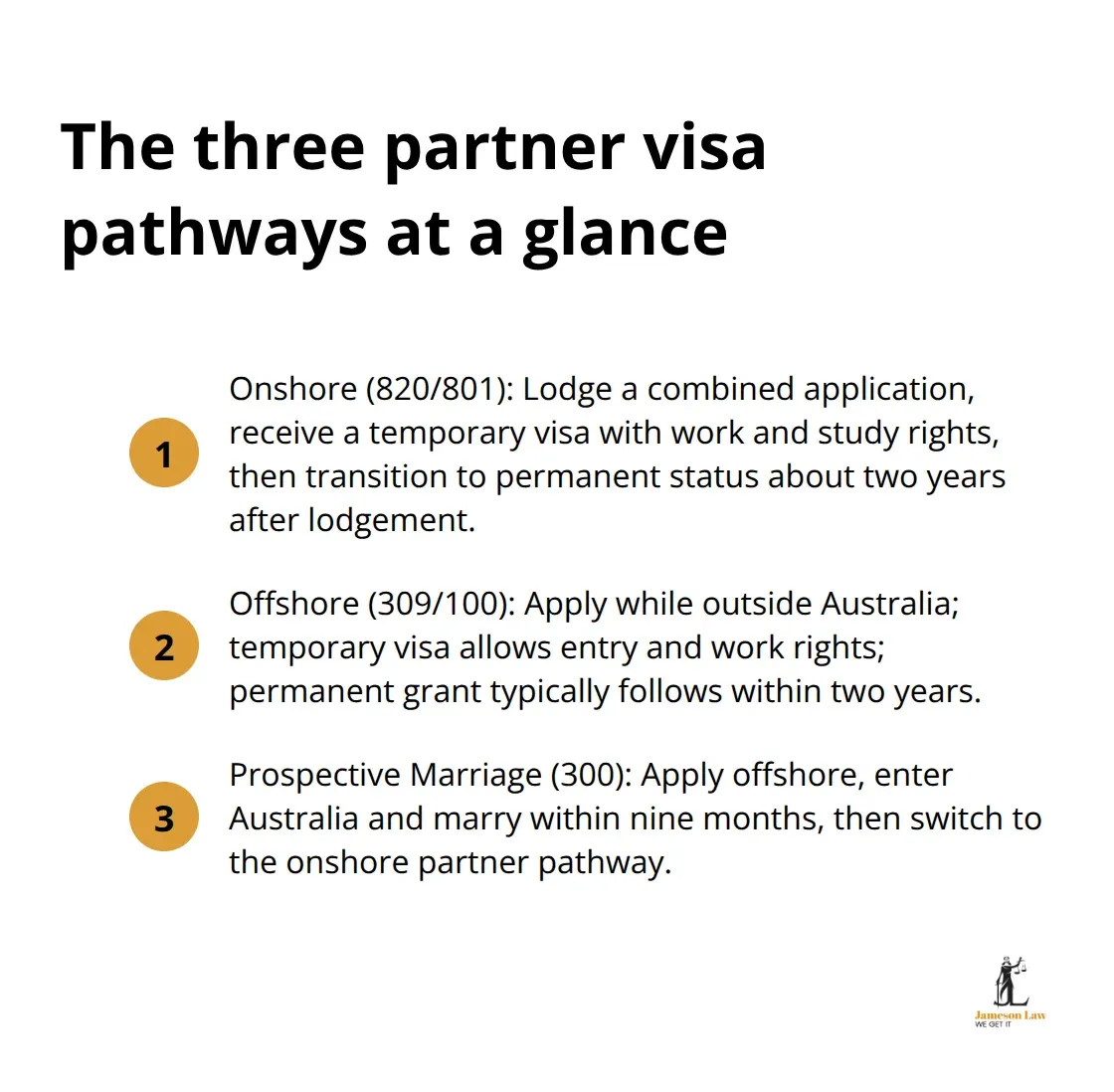
The offshore pathway uses subclasses 309 and 100 if you live outside Australia. Both visas are lodged together, your temporary visa allows entry and work rights, and the permanent grant typically follows within two years. The prospective marriage visa (subclass 300) targets engaged couples not yet married. You apply offshore, travel to Australia within nine months to marry, then switch to the onshore partner visa pathway once married.
Processing Timelines Vary Significantly Between Routes
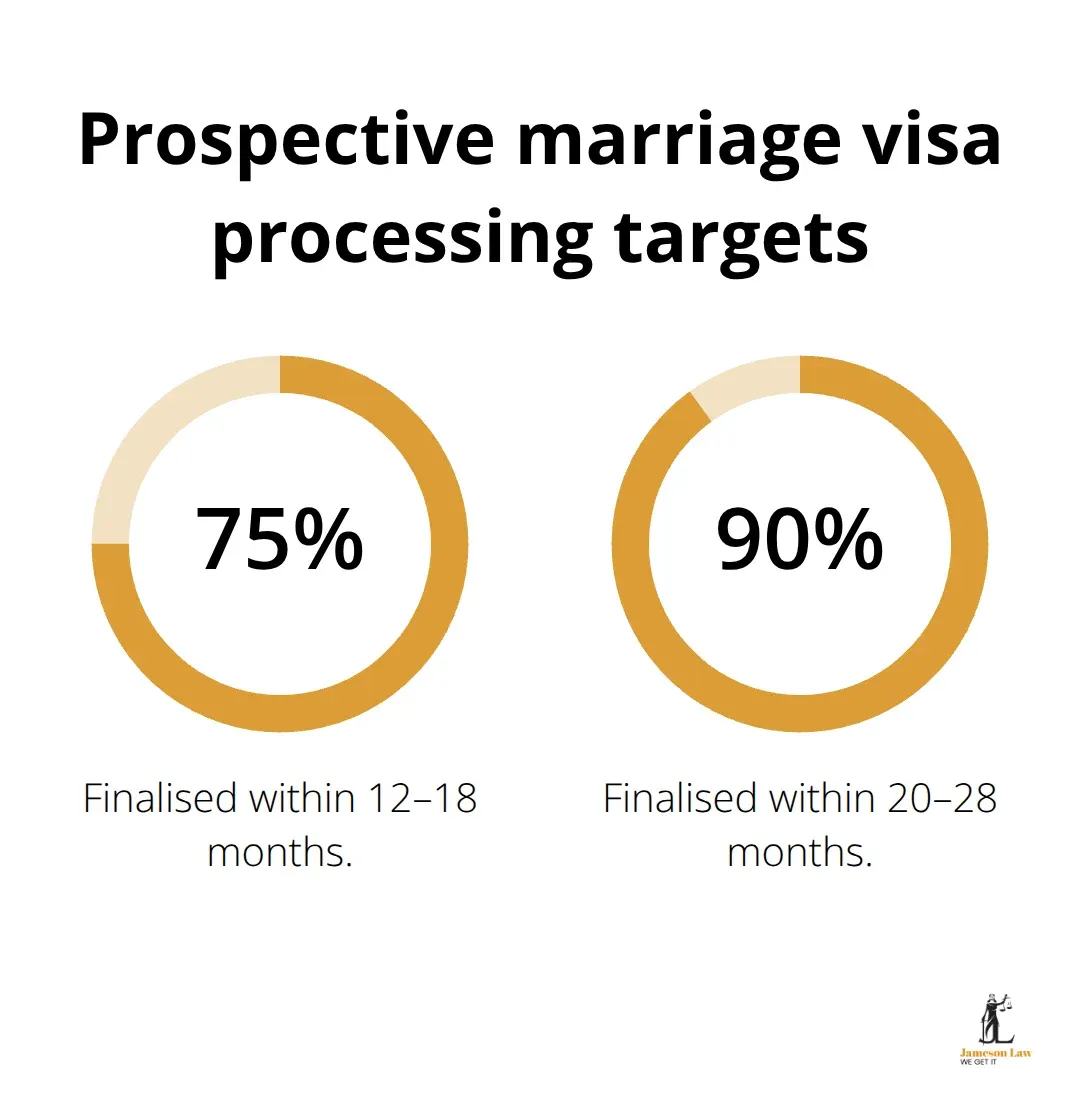
Most applicants underestimate how processing timelines differ between these routes. Onshore applications generally see the temporary 820 processed within six to eighteen months, while offshore 309s follow a similar timeframe. However, the permanent stage matters more to your actual timeline. The Department processes 801 and 100 permanent visas approximately two years after your initial lodgement, not two years after the temporary grant. This distinction matters because many applicants fixate on the temporary visa grant date and feel blindsided when permanent processing stretches longer than expected. The prospective marriage visa sits outside this pattern entirely. The Department aims to finalise 75 per cent of these applications within twelve to eighteen months and 90 per cent within twenty to twenty-eight months, making it genuinely faster if you’re not yet married but ready to commit to the process.
Offshore Versus Onshore: Practical Consequences
The offshore versus onshore choice carries practical consequences beyond processing speed. Offshore applicants must remain outside Australia when the permanent visa is granted, which creates logistical headaches if you’ve already built a life in Australia on a tourist or student visa. You’ll need to depart Australia, have your 100 visa granted, then re-enter as a permanent resident. Onshore applicants avoid this complication entirely because the 801 permanent visa is granted while you remain in Australia on your 820 temporary visa.
Financial Capacity Requirements Across Pathways
Financial capacity requirements also vary subtly between pathways. Your sponsor’s income threshold depends on whether dependents are included, but the Department of Home Affairs expects recent tax returns, payslips, and bank statements regardless of pathway. If your sponsor’s income sits below the threshold, adding a co-sponsor (typically a parent or sibling) works equally well across all pathways, though co-sponsorship adds documentation complexity that shouldn’t be underestimated.
The Prospective Marriage Route and Its Constraints
The prospective marriage pathway involves unique considerations because you must actually marry within nine months of arrival. If your relationship or circumstances change, you forfeit the visa and cannot simply transition to another partner visa category. This makes the prospective marriage route unsuitable for couples with any uncertainty about their commitment or timeline to marriage. Understanding which pathway suits your circumstances helps you prepare the right documentation and set realistic expectations for processing. The next section addresses the documentation and evidence gathering that determines whether your application succeeds, regardless of which pathway you select.
What Derails Partner Visa Applications Most Often
Relationship Evidence That Tells a Coherent Story
The gap between a strong application and a rejected one rarely comes down to eligibility itself. Most applicants meet the core requirements but stumble on execution. The Department of Home Affairs processes partner visas with strict assessment criteria, and small mistakes compound quickly. Your relationship evidence must tell a coherent story across four distinct areas: financial, household, social, and future commitment. Weak evidence in any single area triggers requests for further information, which delays processing by months.
Joint bank statements demonstrate genuine pooling of resources over time, not just occasional transfers. Utility bills and lease agreements must show both names consistently; a lease in only one partner’s name, even with a statutory declaration from the other, creates doubt. Statutory declarations from friends and family carry weight only when those people can clearly explain how they know you as a couple and what they’ve observed over the 12-month period. Vague declarations stating you’re a lovely couple without specific examples of your time together weaken your application.
Documentation That Proves Your Life Together
Photographs matter, but only if they span the full relationship period and show you genuinely integrated into each other’s lives. Fifty photos spread across 12 months showing everyday moments, family gatherings, and shared activities prove everything; a hundred photos from a two-week holiday prove nothing. Communication records including messages, emails, and social media interactions demonstrate ongoing connection, especially if you lived apart at any point. Travel records showing joint trips or visits between locations reinforce your case. Many applicants skip this documentation entirely, assuming the relationship is self-evident. It isn’t.
Financial Documentation and Co-Sponsorship
Financial capacity requirements demand precision that most sponsors overlook. The Department requires recent tax returns typically from the last two financial years, current payslips covering at least the last three months, and bank statements from the last three months showing regular deposits and account stability. If your sponsor’s income sits below the threshold for your family composition, a co-sponsor becomes necessary, and that co-sponsor must provide identical documentation plus a statutory declaration committing to support for two years.
Character Disclosure and Health Assessments
Character issues require honest disclosure rather than silence. Minor traffic offences, old bankruptcy, or spent convictions don’t automatically disqualify you, but failing to declare them guarantees refusal. The Department accesses criminal databases across multiple countries and will find undisclosed matters. Dishonesty in your application damages your credibility far more than the original issue ever would.
Health assessments must be conducted by approved panel physicians, and you cannot simply submit your own medical records. These appointments take time to schedule, particularly in regional areas, so budget four to eight weeks for completion. Police clearances from overseas countries require even longer, sometimes three to six months depending on the country’s processing speed. Starting health and character checks immediately after lodging your application rather than waiting for a request from the Department accelerates your timeline significantly. Many applicants delay these checks, then panic when the Department requests them and face months of waiting. Overseas police clearances from countries like India, the Philippines, or South Africa frequently take four to six months, and delays in these clearances hold up your entire application because the Department won’t assess your permanent visa until all character requirements are satisfied.
Final Thoughts
Partner visa eligibility Australia requires you to meet four core requirements: a genuine and continuing relationship, both partners aged 18 or over, mandatory health and character clearances, and your sponsor’s financial capacity to support you without government assistance. Most applications that fail do so because of incomplete evidence or poor execution rather than ineligibility itself. The pathway you choose-onshore, offshore, or prospective marriage-shapes your processing timeline and logistical considerations, but the underlying eligibility standards remain consistent across all routes.
You should gather comprehensive relationship evidence immediately, starting with joint financial records, utility bills, lease agreements, and statutory declarations from people who know you as a couple. Simultaneously, arrange health assessments through approved panel physicians and request police clearances from every country where you’ve lived for 12 months or more since turning 16 (these checks take time, particularly overseas clearances, so starting them early prevents delays later). Ensure your sponsor’s financial documentation is current and complete, including recent tax returns, payslips, and bank statements.
Partner visa applications demand precision and honesty throughout the process. If you’re uncertain about any requirement or your circumstances are complex-such as previous visa history, character concerns, or borderline financial capacity-Jameson Law can clarify your position and strengthen your application before lodgement. The cost of professional guidance upfront is far less than the cost of delays, requests for further information, or refusal.