

Working in Australia requires navigating highly specific visa pathways and meeting strict statutory eligibility standards. At Jameson Law, we understand that decoding work visa Australia requirements can feel overwhelming, especially when weighing permanent residency options against temporary employer-sponsored visas.
This comprehensive 2026 guide breaks down the primary visa types available, the critical legislative requirements you will face, and exactly what to expect during the Department of Home Affairs processing stages.
Your Main Work Visa Options in Australia
Australia offers several distinct work visa pathways, each designed for different employment situations and long-term career goals. The visa you pursue depends entirely on your occupation, verifiable qualifications, and whether you seek permanent settlement or a temporary career transfer.
For the 2026–27 Migration Program, the Australian Government has set a planning level of 185,000 places, with a massive strategic focus on onshore applicants (allocating 129,590 places to those already living and working in Australia) to help stabilise Net Overseas Migration. Health, education, ICT, and infrastructure remain the strongest sectors.
Permanent Residency Through Skilled Migration
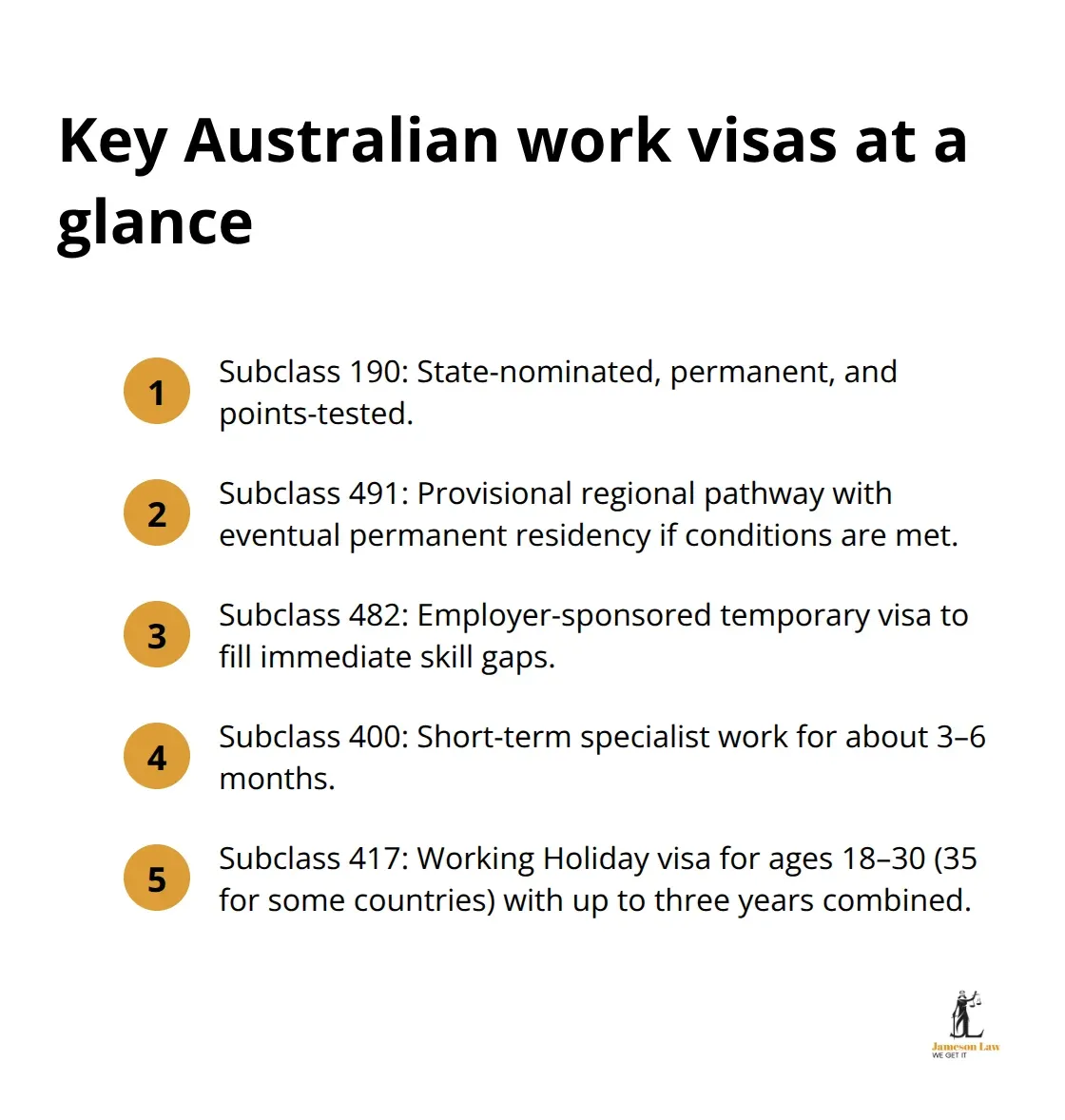
The Subclass 190 Skilled Nominated visa and Subclass 491 Skilled Work Regional visa form your primary permanent pathways.
- Subclass 190: A points-tested, state-nominated visa. NSW assesses your application against its economic priorities before the federal government grants permanent residency. This visa carries no time limit. In the 2026–27 program year, the Subclass 190 quota has seen a slight increase to 35,000 places nationally, cementing its status as a flagship pathway.
- Subclass 491: A provisional state-nominated visa allowing you to live and work in regional NSW. It offers a massive 15-point boost to your profile and provides a clear transition to permanent residency via the Subclass 191 visa after three years of regional compliance.
Temporary Skilled Work: The Skills in Demand Visa
The landscape for employer-sponsored visas has shifted. The Skills in Demand (SID) visa (Subclass 482) has officially replaced the older TSS framework. This visa suits professionals who fill critical skill gaps within an Australian business. Two massive legislative updates apply in 2026:
- The required prior work experience has been drastically reduced from two years to just one year.
- Minimum salary thresholds have been indexed sharply upward to protect local wage markets.
| SID Visa Stream | Target Occupations | Minimum Salary (From 1 July 2026) |
|---|---|---|
| Core Skills Stream | Roles listed on the Core Skills Occupation List (CSOL). | CSIT: AUD $79,499 |
| Specialist Skills Stream | Highly specialized, high-income professionals. | SSIT: AUD $146,717 |
Other short-term options include the Subclass 400 Temporary Short Stay Specialist visa for highly specialised project roles (up to six months), and the Subclass 417 Working Holiday visa for young adults combining work and travel.
What You Actually Need to Meet Australian Work Visa Standards
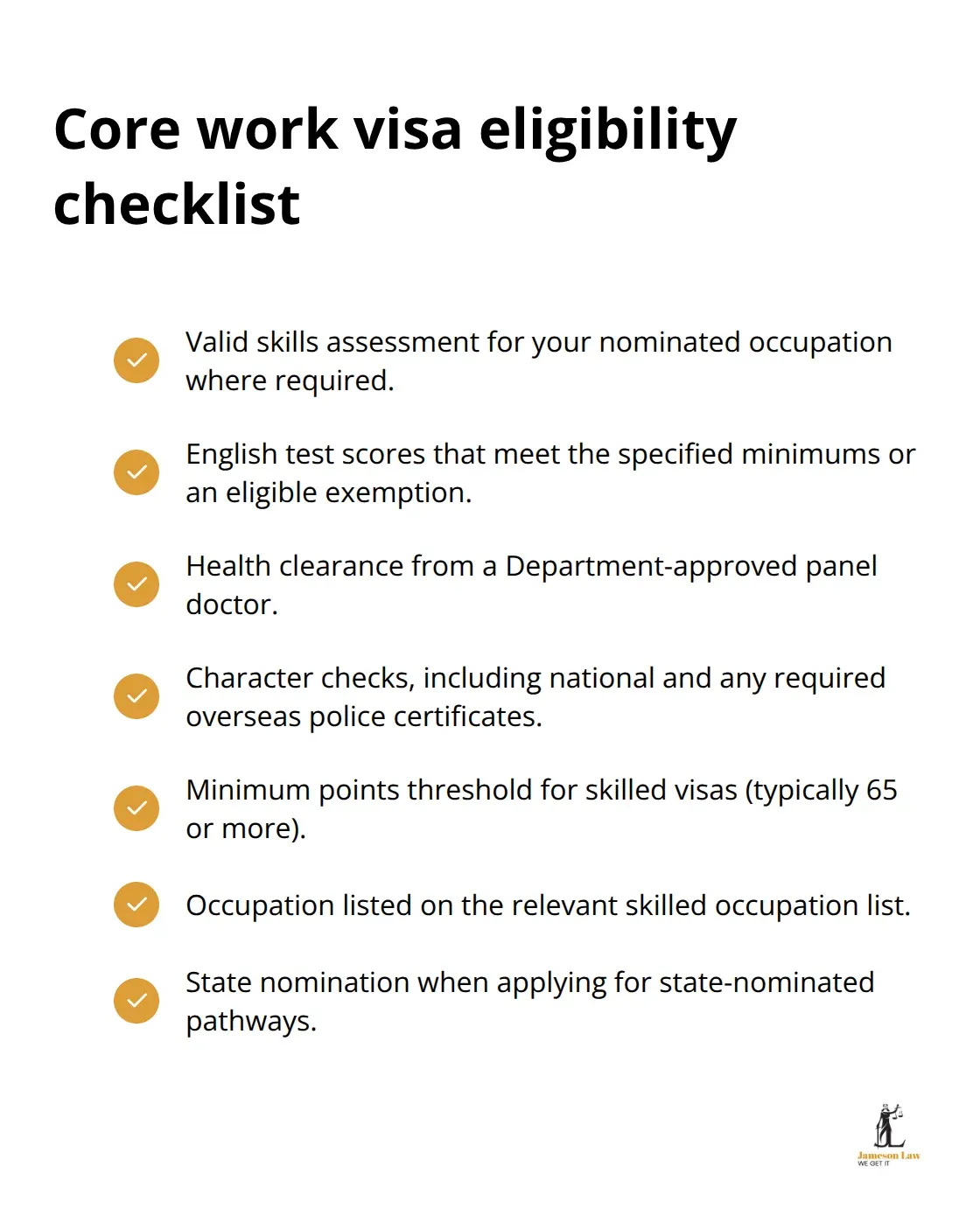
Meeting Australian work visa requirements means satisfying multiple criteria simultaneously. The Department of Home Affairs does not assess these requirements in isolation—your skills assessment, English proficiency, health clearance, and points score all feed into a single eligibility decision.
1. Skills Assessment and Qualification Recognition
For permanent skilled visas (190/491), you need a positive skills assessment confirming your overseas qualifications match Australian standards. This recognition takes 4–8 weeks through bodies like Engineers Australia or VETASSESS. Initiating this before lodging an Expression of Interest (EOI) is legally mandatory.
2. English Language Requirements
English proficiency is non-negotiable. The baseline requirement is generally an IELTS score of 6.0 in each band (or PTE 50). However, because the points test is fiercely competitive, securing “Superior English” (IELTS 8.0 or PTE 79) gives you a massive 20-point advantage, often making the difference between an invitation and a rejection.
3. Health and Character Clearances
Health and character requirements are absolute. Health checks involve chest X-rays and blood tests by a Department-approved panel doctor. Character assessments require national and international police checks. If you have any criminal conviction—even historical traffic matters—disclose it immediately to your legal representative, as non-disclosure constitutes migration fraud and triggers automatic cancellation.
4. The Points Calculation Strategy
The points system awards marks for age, English proficiency, work experience, and state nomination. You need at least 65 points to lodge an EOI, but realistically, most competitive occupations require scores well above 80. Timing your application is critical; if you delay too long, you risk losing valuable age points once you pass 32 or 39 years of age.
From Application to Approval: What to Expect
Setting Up ImmiAccount and Gathering Documents
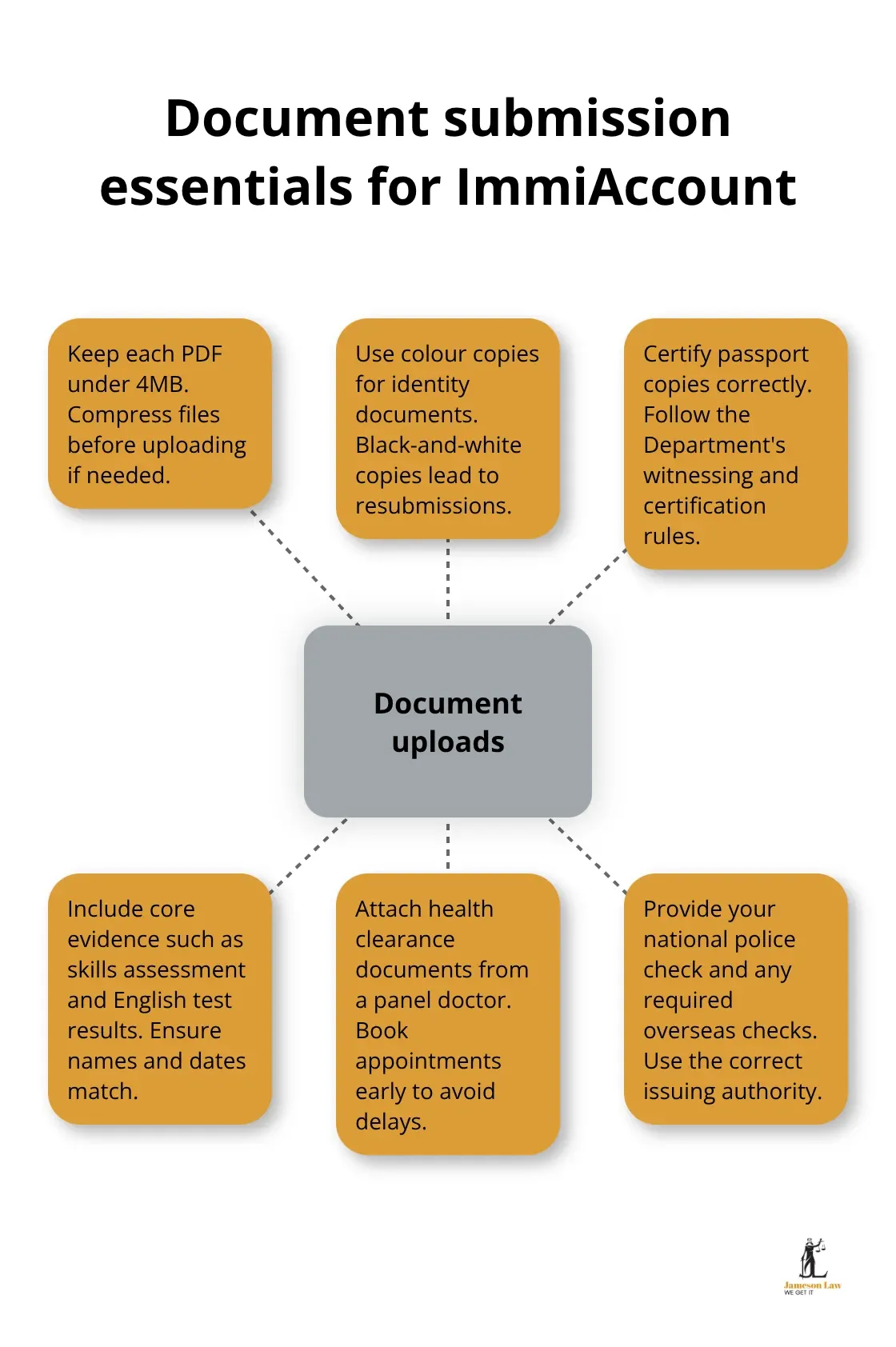
The Department of Home Affairs processes applications strictly through the ImmiAccount portal. You must provide certified, high-resolution colour copies of your passport, skills assessment, English test results, and police checks. Submitting a “decision-ready” application upfront prevents crippling delays caused by Requests for Further Information (RFIs).
Understanding Your Visa Conditions
Once granted, specific conditions attach to your visa. The 482 and 491 visas impose strict work restrictions—you can only work for your nominated employer or within your designated region. Furthermore, Condition 8501 legally requires you to maintain Overseas Visitor Health Cover (OVHC) for the entire duration of your stay. You can verify your live visa conditions securely using the VEVO (Visa Entitlement Verification Online) system.
Final Thoughts
Work visa Australia requirements demand impeccable planning, accurate points calculations, and strict attention to shifting legislative thresholds. The choice between permanent and temporary visas depends heavily on your occupation, your employer’s sponsorship capacity, and whether you meet the newly increased 2026 salary minimums.
The most common mistake applicants make is underestimating the timeline and complexity of the process. Skills assessments, English tests, and police clearances must harmonise perfectly—missing or expiring documents will stop your application dead in its tracks.
If your circumstances are complex, or if you need to strategise your transition from a temporary Subclass 482 to permanent residency, seeking expert legal advice makes absolute financial sense. At Jameson Law, our highly experienced Sydney immigration team provides comprehensive legal assistance to help you navigate these stringent requirements with confidence. Contact us today to map out a legally secure pathway for your Australian career.