A workplace injury can turn your life upside down, leaving you uncertain about your rights and next steps. Workers compensation NSW claims exist to protect you during this difficult time, but understanding the process isn’t always straightforward.
At Jameson Law, we’ve helped countless injured workers navigate their claims and secure the benefits they deserve. This guide walks you through how the scheme works, what you need to do, and what you’re entitled to receive.
The NSW Workers Compensation Scheme Explained
icare manages workers compensation insurance, the NSW government agency that oversees the scheme through authorised providers who assess and manage individual claims. The scheme covers all workers in NSW, including those on temporary or permanent visas, and residency isn’t required. This means if you’re injured at work in NSW, you’re protected regardless of your visa status. The scheme operates on a no-fault basis, so you don’t need to prove your employer was negligent to receive benefits. However, not everyone qualifies. Sole traders and self-employed workers face exclusion unless they’ve opted into the scheme, and workers employed by the Commonwealth government fall under different arrangements. Your employer must notify the insurer within 7 days of becoming aware of the injury according to icare guidelines, so timing matters significantly. If your employer delays this notification, it can complicate your claim process and delay your access to benefits.
What You’re Actually Entitled To Receive
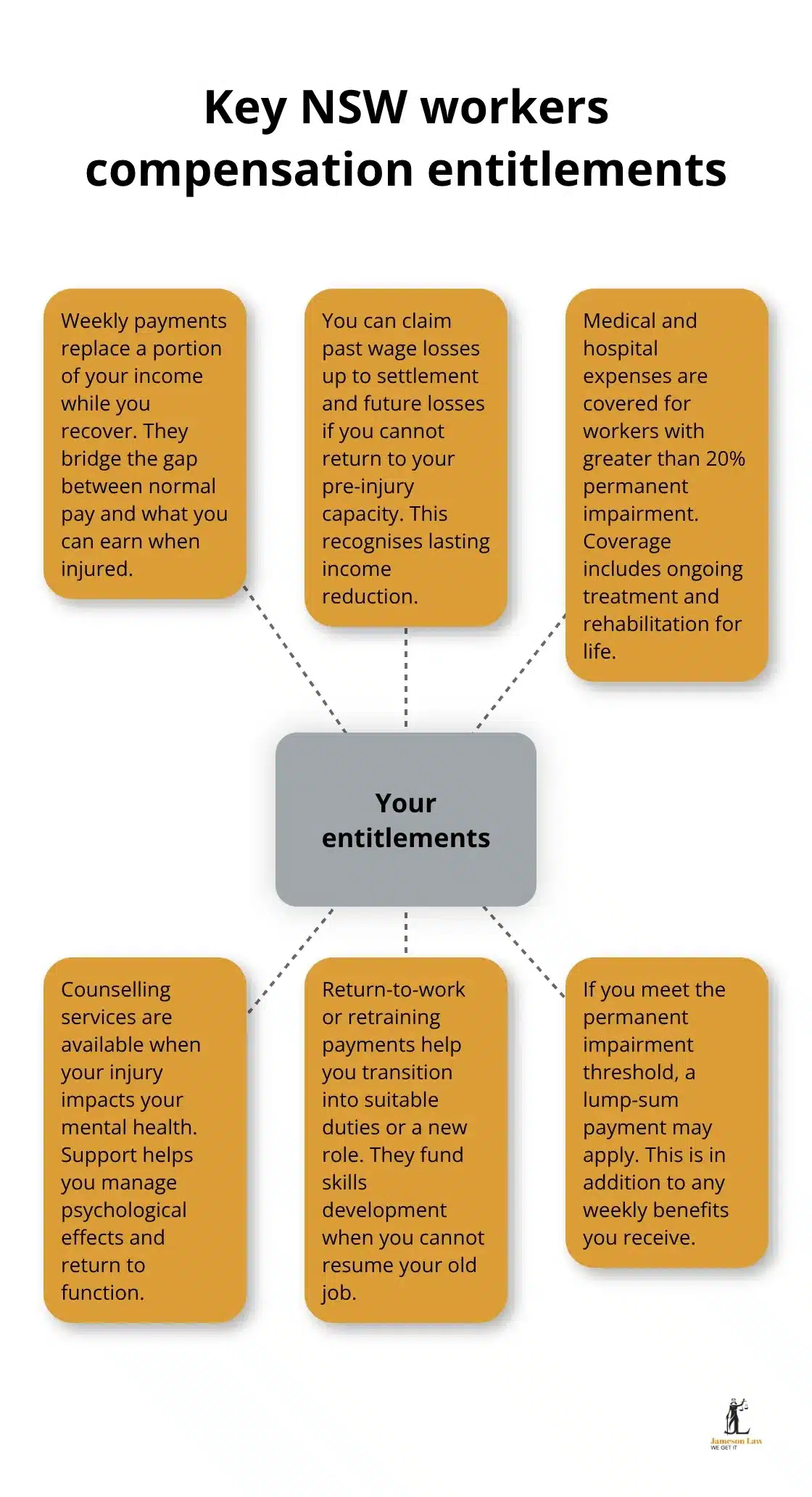
The benefits available under NSW workers compensation are far more generous than most injured workers realise. You can claim weekly payments for lost wages, covering the gap between your normal pay and what you earn while injured. The scheme also covers past and future wage losses if your injury causes permanent income reduction. Medical and hospital expenses are covered for workers with greater than 20% permanent impairment, including ongoing treatment and rehabilitation for life. Counselling services become available if your injury affects your mental health. Return-to-work or retraining payments help you transition back to work or develop new skills if you can’t return to your previous role. Most importantly, if your injury reaches the medical threshold for permanent impairment, you can access a lump-sum payment.
The Medical Assessment Process
Your doctor must provide a Certificate of Capacity that outlines your injury and work capacity, as this document forms the foundation of your claim. This certificate establishes what work you can and cannot perform, which directly influences your entitlements. The insurer uses this medical evidence to assess your claim and determine your benefits. Without proper medical documentation early in the process, you risk losing access to payments you’re entitled to receive.
Timeline and Settlement Expectations
The entire claims process typically takes 6 months to 2 years to resolve according to icare timelines. Insurers often aim for quicker, lower settlements rather than full entitlements, which means many injured workers accept the first settlement offer without realising what they’ve actually entitled to. Early legal involvement makes a real difference in securing your full benefits. Understanding what you can claim (weekly payments, medical expenses, rehabilitation, and potential lump-sum payments) positions you to negotiate from a position of knowledge rather than accepting whatever the insurer initially offers.
Getting Your Claim Started
Reporting your injury quickly is non-negotiable. NSW law requires you to notify your employer as soon as possible, and written notification creates an essential paper trail. Many injured workers mention their injury casually to a manager or supervisor, assuming that counts as formal notification. It does not. Send an email or written notice to your employer detailing the date of injury, what happened, the body part affected, and any immediate symptoms. Keep a copy for your records. Your employer then has 48 hours to notify the insurer.
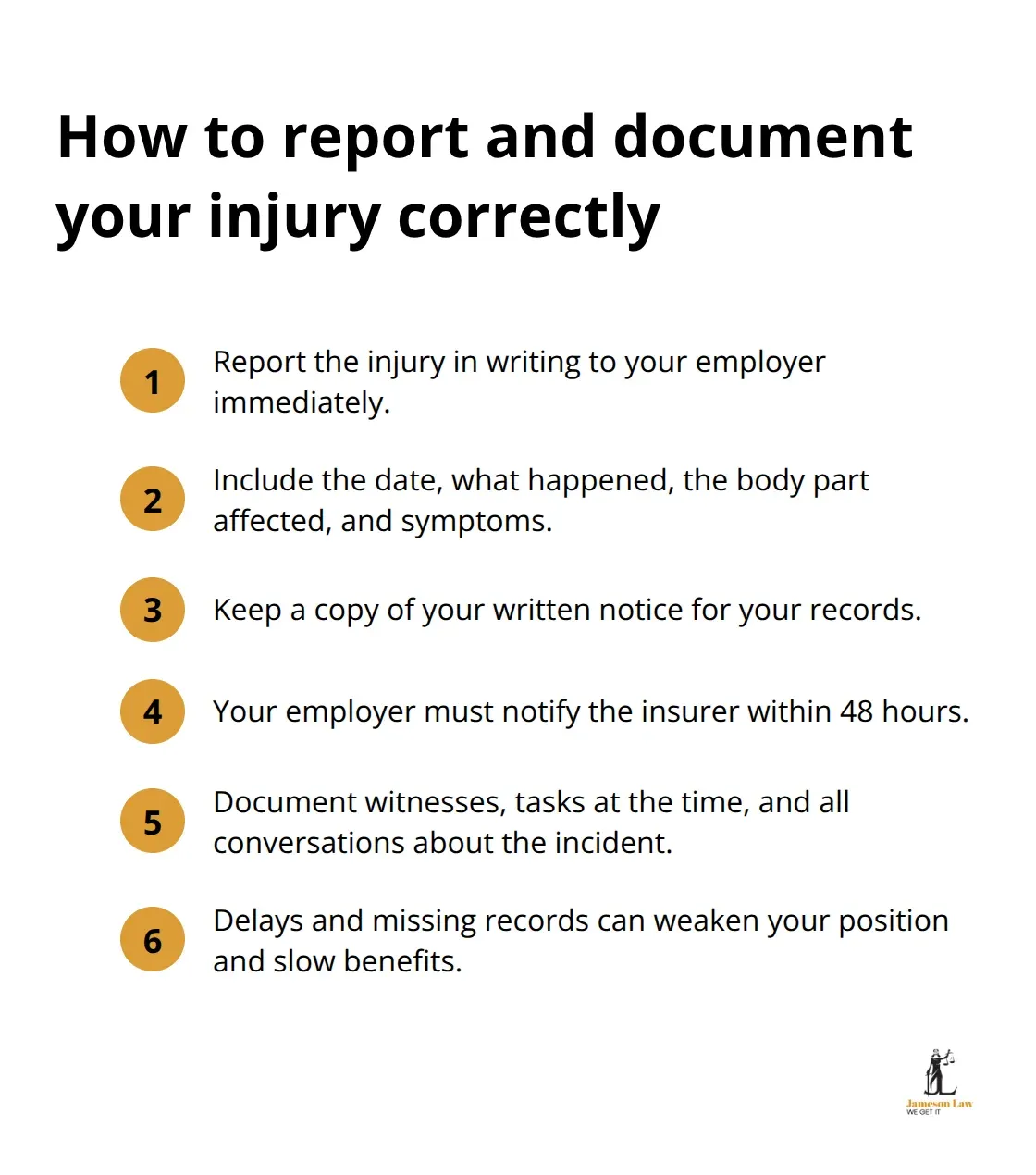
If your employer delays this notification, it weakens your position and can delay your access to benefits. Document everything from day one: the names of witnesses, what you were doing when injured, and any conversations with your employer about the incident. This documentation becomes critical if disputes arise later.
Medical Evidence Determines Your Entitlements
Your doctor’s Certificate of Capacity forms the foundation of your entire claim. Without it, the insurer has no medical basis to assess your injuries or approve payments. Book a medical appointment immediately after reporting your injury. When you see your doctor, be specific about your symptoms, limitations, and how the injury affects your ability to work. The doctor needs enough detail to accurately outline what work you can and cannot perform. Request the Certificate of Capacity explicitly and ask the doctor to be thorough about your work capacity restrictions. Many injured workers receive vague certificates that limit their entitlements unnecessarily. If your doctor provides insufficient detail, ask for clarification or seek a second opinion. Keep copies of all medical reports, test results, and specialist assessments. The insurer will request these documents, and having them organised saves time and prevents delays. If you develop complications or your condition worsens, obtain updated medical assessments promptly. The insurer uses the most recent medical evidence to determine your current entitlements, so staying on top of medical appointments protects your benefits.
Submitting Your Claim Correctly Matters
Complete the Worker’s Injury Claim Form with accuracy and submit it to the insurer without delay. The standard time limit to lodge a workers compensation claim is 6 months from the injury date, so timing is critical. Submit your form with your Certificate of Capacity and supporting medical documentation attached. Send everything via email or post with tracking so you have proof of submission. Within days of lodging, the insurer will contact you to discuss entitlements. This is where most injured workers make costly mistakes. Insurers often offer statutory minimums rather than full entitlements, hoping workers accept without question. You have no obligation to accept their first offer. Request a detailed breakdown of what they’re offering and ask why they’ve calculated benefits at that level. If you disagree with their assessment, seek legal advice before responding.
What Happens After You Submit
Once the insurer receives your claim, they assess your medical evidence and determine what benefits apply to your situation. The insurer may contact you to clarify details about your injury or work capacity. Answer their questions honestly and provide any additional documentation they request promptly. Keep records of all communications (emails, letters, phone call notes) with the insurer. If the insurer approves your claim, they’ll outline your entitlements and begin processing payments. If they reject your claim or offer less than you believe you’re entitled to, you have options to challenge their decision. Understanding your rights at this stage positions you to take action if the insurer’s assessment doesn’t reflect your actual entitlements and medical condition.
What You Can Claim and How to Protect It
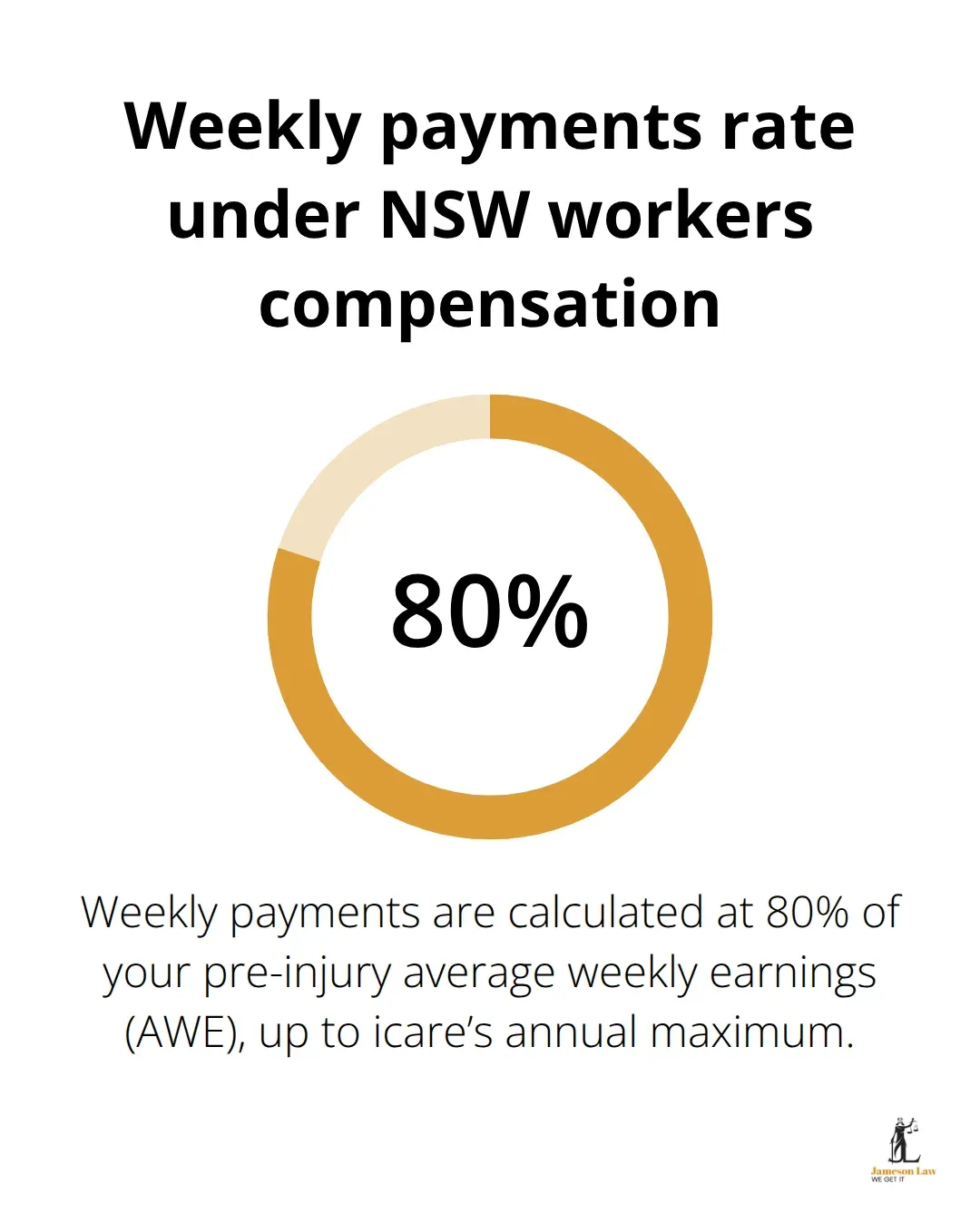
The entitlements available to you under NSW workers compensation law are specific and quantifiable, yet most injured workers never access their full benefits because they don’t understand what they’re entitled to claim. Weekly payments for lost wages continue while you’re unable to work, calculated at 80% of your pre-injury average weekly earnings up to a maximum amount set by icare each year. If your injury causes permanent income reduction, you can claim for both past wage losses from the injury date until settlement and future wage losses if you can’t earn at your pre-injury capacity.
Medical expenses including hospital treatment, surgery, physiotherapy, and specialist consultations are covered for workers with greater than 20% permanent impairment, and this coverage extends for life. Rehabilitation and counselling services become available if your injury affects your ability to work or your mental health. Return-to-work or retraining payments assist you if you transition to different employment due to your injury. If your injury meets the medical threshold for permanent impairment, you’re entitled to a lump-sum payment in addition to weekly benefits.
The insurer’s first offer rarely reflects your actual entitlements because they’re motivated to settle quickly and cheaply rather than pay what you’re legally owed. Request a detailed breakdown of how they’ve calculated each component of their offer and ask specific questions about why they’ve excluded any entitlements you believe apply to your situation. Many injured workers accept initial offers that fall thousands of dollars short of their actual entitlements simply because they don’t know what to ask for. Seeking legal advice before accepting any settlement offer is the single most effective way to maximise your benefits.
Disputing a Rejected Claim or Inadequate Offer
If the insurer rejects your claim entirely or offers entitlements you believe don’t match your medical condition and work capacity, you have formal dispute mechanisms available. Request an internal review from the Independent Review Office if you disagree with the insurer’s decision, and the IRO can assist with funding grants for legal help through approved lawyers if your financial circumstances qualify. If the internal review doesn’t resolve the dispute, you can lodge a formal dispute with the Personal Injury Commission, which is the independent tribunal that hears workers compensation disputes in NSW. Most disputes take several months to resolve, which is why early legal involvement matters significantly.
The insurer knows many injured workers won’t pursue disputes because they’re exhausted, in pain, or unaware of their options, so they bank on acceptance of inadequate offers. If you’re rejected outright, don’t assume the decision is final. Rejections often occur because the insurer questions whether your injury is work-related or disputes the severity based on limited medical evidence. Obtaining comprehensive medical assessments that clearly establish the connection between your work and your injury strengthens your position substantially. Document every conversation with the insurer, including dates, times, names of representatives, and what was discussed, because this record becomes critical if disputes escalate to the Personal Injury Commission.
Your Obligations During the Claim Process
The insurer’s obligations to you come with corresponding obligations you must meet to keep your claim valid and benefits flowing. You must attend all medical appointments the insurer arranges and cooperate with medical assessments, as refusing to participate gives the insurer grounds to suspend or reject your claim. Notify the insurer immediately if your circumstances change, including return to work, changes in your medical condition, or changes in your address or contact details. Provide all documents the insurer requests within the timeframe they specify, as delays can complicate your claim.
If you’re receiving weekly payments, you must report any earnings you receive from work, as your payments adjust based on your actual income. The insurer can conduct surveillance to verify you’re not working beyond your stated capacity, so your actions outside work hours must align with your stated work limitations. This doesn’t mean you can’t leave your house or have a normal life, but if you claim you can’t lift heavy objects and you’re filmed carrying heavy items, the insurer will use that footage to dispute your entitlements. Keep your employer informed of your medical restrictions and return-to-work timeline, as your employer’s records and the insurer’s records should align. If you’re offered modified duties that match your current work capacity, accepting that offer demonstrates good faith and protects your ongoing benefits. Ignoring the insurer’s requests or failing to cooperate gives them legitimate reasons to deny or suspend your claim, regardless of whether your injury is legitimate.
Final Thoughts
NSW workers compensation claims protect your income and cover your medical expenses when work injures you, but only if you understand your rights and act decisively. The scheme covers all workers regardless of visa status, provides weekly payments for lost wages, funds medical treatment and rehabilitation, and offers lump-sum payments for permanent impairment. Most injured workers never access their full entitlements because they accept the insurer’s first offer without questioning whether it reflects their actual situation.
The timeline from injury to settlement typically spans 6 months to 2 years, and early action determines whether you receive statutory minimums or your full benefits. Report your injury in writing immediately, obtain a detailed Certificate of Capacity from your doctor, and submit your claim within 6 months of the injury date. Keep thorough records of all communications with your employer and insurer, as documentation becomes critical if disputes arise.
If the insurer rejects your claim or offers inadequate benefits, you can request an internal review through the Independent Review Office or lodge a dispute with the Personal Injury Commission. At Jameson Law, we help injured workers understand their entitlements and negotiate fair settlements on a No Win No Fee basis, meaning you pay nothing if your claim doesn’t succeed. Contact Jameson Law to discuss your workers compensation NSW claims and understand what you’re actually entitled to receive.