PUBLICATION

Defending Criminal Charges NSW: Steps In NSW Courts

"Understand the court process for defending criminal charges NSW. Learn key steps, your rights, and how to build a strong defence strategy."
Defending Criminal Charges NSW: Steps In NSW Courts

Facing criminal charges in NSW can feel overwhelming, but understanding the court process gives you a real advantage. We at Jameson Law have guided countless clients through every stage, from first appearance through to final outcomes.

This guide walks you through the key steps in defending criminal charges NSW, the decisions you’ll face, and how to build an effective defence strategy. Knowing what happens at each stage helps you make informed choices about your case.

What Happens When You’re Charged With a Crime in NSW

Types of Criminal Offences

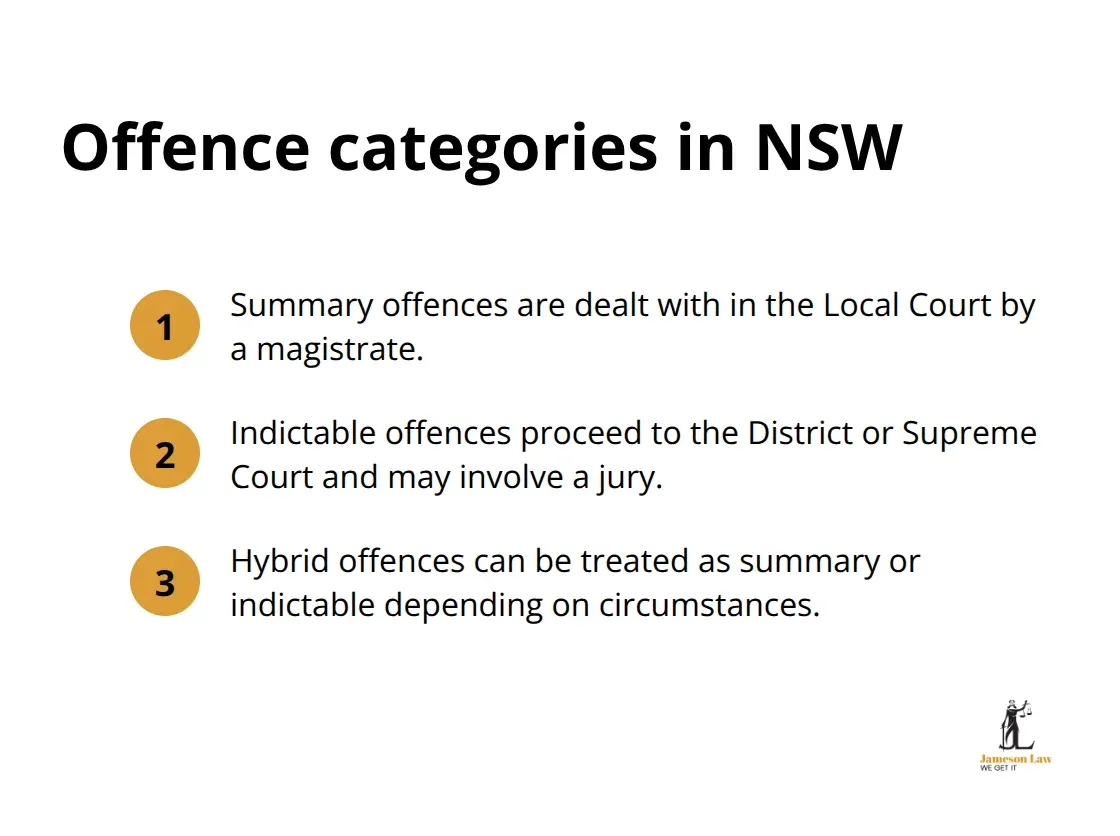
Criminal charges in NSW fall into distinct categories that determine where your case will be heard and how serious the potential consequences are. Summary offences are the least serious and the Local Court handles them entirely, with a magistrate making the decision and no jury involved. Indictable offences are far more serious and can proceed in the District or Supreme Court with a jury, giving you the right to trial by jury but also extending the process considerably. Hybrid offences sit between these two and prosecutors can treat them as either summary or indictable depending on the circumstances. Understanding which category applies to your charges matters enormously because it shapes everything from the court venue to the length of proceedings and the maximum penalties you face.

For example, a common assault charge might be summary, while assault occasioning bodily harm could be indictable, resulting in vastly different court processes and potential outcomes. The distinction also affects whether you’ll encounter committal proceedings, which are preliminary hearings used to determine if sufficient evidence exists to proceed to a higher court for indictable matters.

Summary vs indictable vs hybrid offences in NSW courts - defending criminal charges NSW

Your Rights When Police Arrest You

Once NSW Police charge you, they must follow strict procedures that protect your rights from the moment of arrest. You have the right to remain silent and should not answer police questions without legal representation present-a principle that’s absolutely fundamental to defending yourself effectively. Police must inform you of your rights when they arrest you, and they’re required to provide you with access to a lawyer before any interview takes place.

If you cannot afford a lawyer, contact LawAccess NSW on 1300 888 529 to assess your eligibility for legal aid immediately, even before your first court appearance. This early step can make a significant difference to how your case develops.

The Police Brief of Evidence

The police brief of evidence-the collection of statements, witness accounts, exhibits and forensic results-becomes critical to your defence strategy once you plead not guilty in the Local Court. Most offences require this brief to be served within four weeks of your not guilty plea, though minor driving offences and some drug possession charges don’t require one at all.

Getting legal advice early allows you to review the brief thoroughly, identify gaps or weaknesses in the prosecution’s case, and determine whether the evidence actually supports the charges. This early stage is where many defences are built, not later in court proceedings, making your first consultation with a lawyer one of the most important decisions you’ll make. The strength of the prosecution’s evidence at this point often shapes what options become available to you as your case progresses through the court system.

Moving Through Your First Court Appearances

Bail Decisions at First Appearance

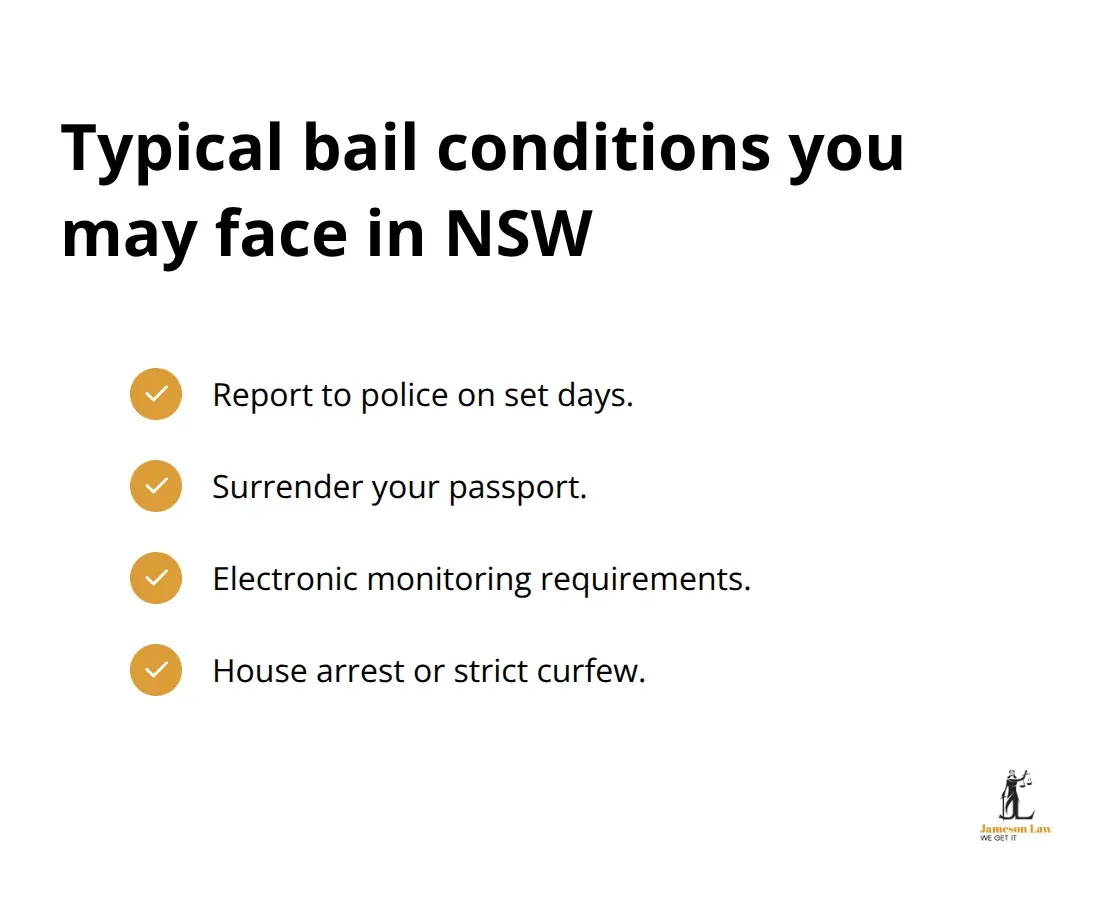
Your first appearance in the Local Court happens within days of being charged, and bail becomes your immediate priority. The magistrate will consider whether you should be released on bail, held in custody, or released with conditions such as reporting to police or surrendering your passport. Courts in NSW treat bail seriously, and the prosecution must prove you’re a flight risk or danger to the community before detention is ordered. If you’re in custody, request bail urgently at that first appearance-having a lawyer present makes a substantial difference to the outcome.

Common NSW bail conditions explained - defending criminal charges NSW

LawAccess NSW on 1300 888 529 can connect you with legal representation before this hearing, which is critical because bail decisions made at first appearance often stick for the entire case. If bail is refused, you have 28 days to appeal that decision, but preventing a bad bail outcome first time around is far better than fighting it later. Conditions attached to bail can range from simple (reporting weekly) to restrictive (electronic monitoring, house arrest), so understanding what the court proposes matters enormously for your daily life during the case.

Confirming Your Court Details

Court Services on 1300 679 272 can confirm your exact court date and location on the Court Attendance Notice, and failing to appear creates an automatic warrant for your arrest. Double-check these details immediately. The NSW Online Registry allows you to track court lists and confirm hearing dates, so checking this regularly prevents nasty surprises about when you’re actually due in court.

Reviewing the Brief of Evidence

Once bail is sorted, the case moves into evidence review. If you plead not guilty, the prosecution must serve the brief of evidence within four weeks, giving you time to assess whether their case is actually solid. This is where most defences are won or lost, not in the courtroom later. Gaps in witness statements, missing exhibits, or inconsistencies in police records become your ammunition for either negotiating a better outcome or preparing for hearing.

If documents are missing from the brief, contact the investigating officer directly and keep written records of those requests. The magistrate can order missing documents be produced if the prosecution fails to serve them by the reply date, which is typically six weeks after your initial plea. Some minor offences like many traffic matters and simple drug possession charges don’t require a brief at all, so your lawyer will advise whether you’re dealing with a full brief scenario or a streamlined process.

Committal Hearings for Serious Matters

For more serious indictable matters, this preliminary stage in the Local Court becomes a committal hearing where the magistrate decides whether sufficient evidence exists to send your case to the District or Supreme Court for trial. This committal decision is not a final verdict on guilt, merely whether the case is strong enough to proceed, but it shapes everything about what comes next. The strength of the prosecution’s evidence at this point often determines what options become available to you as your case progresses through the court system.

Building Your Defence Strategy

Start With Your Personal Timeline

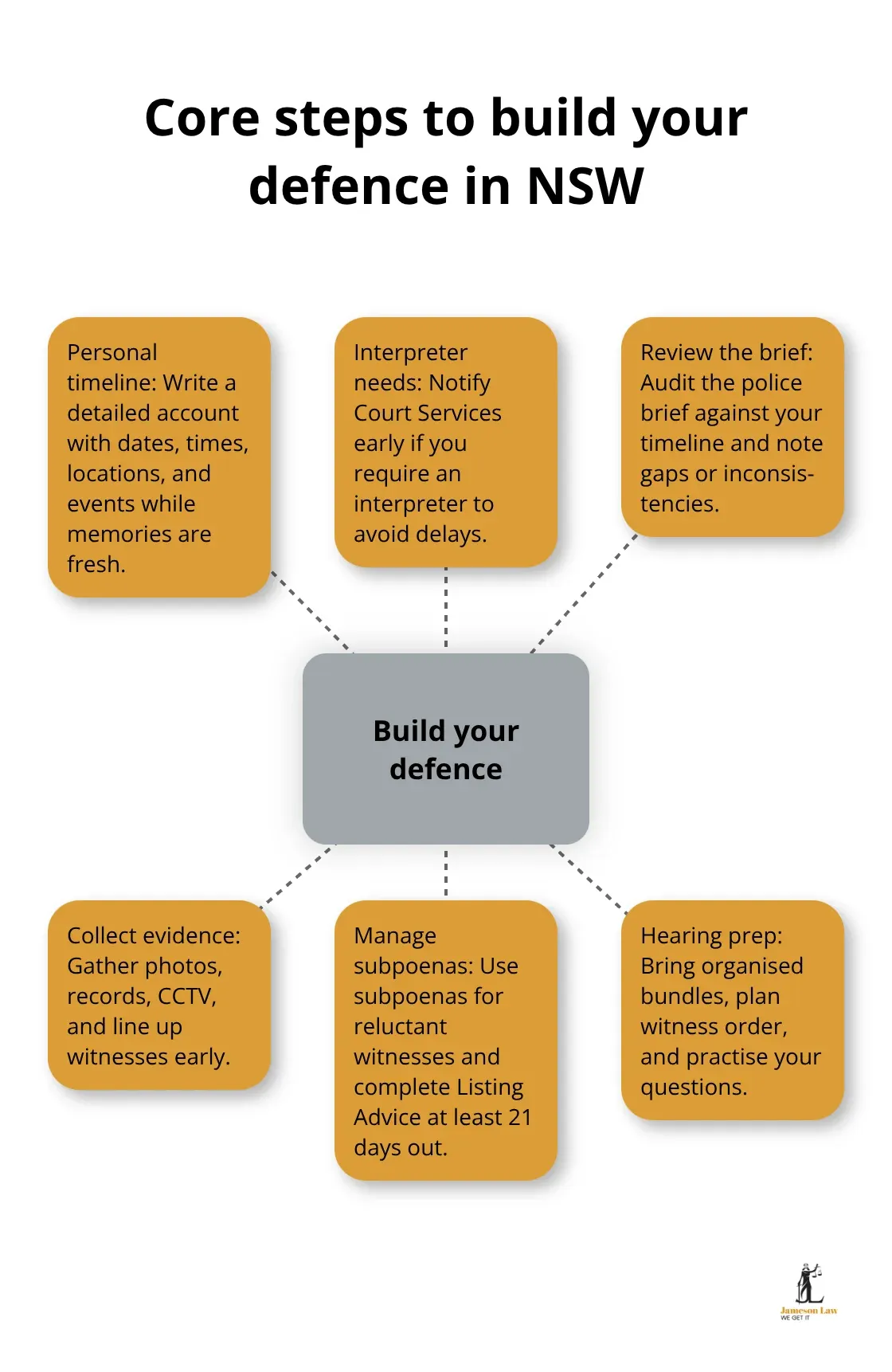
The moment you plead not guilty, your defence shifts from reactive to active. You now have real work to do, and the next four to six weeks before the reply date become the most critical period in your entire case. Most defences succeed or fail during this evidence gathering phase, not in the courtroom. Write down a detailed personal timeline of events while your memory is fresh, noting specific dates, times, locations, and exactly what happened. This written account becomes your foundation for everything that follows.

Confirm Your Interpreter Needs

Contact Court Services on 1300 679 272 to confirm you need an interpreter if English is not your first language, as this affects how you’ll present your defence and how witnesses will be heard. This early notification prevents delays and ensures the court arranges appropriate support before your hearing date.

Review the Brief of Evidence Methodically

Once the brief of evidence arrives, review it methodically against your timeline. Look for missing statements, exhibits that don’t match the police narrative, or witness accounts that contradict each other. If documents are missing, contact the investigating officer in writing and keep copies of every email or letter you send.

Hub-and-spoke of key defence preparation actions

The prosecution must serve all documents by the reply date, typically six weeks after your initial plea. If they fail to do so, the magistrate can issue orders to compel service and may even delay the hearing. Write down exactly which documents are missing and when you requested them, because this record protects you if the prosecution tries to introduce evidence late or claims they served everything.

Collect Evidence and Identify Witnesses

Collect photographs, diagrams, maps, receipts, bank statements, mobile phone records, CCTV footage, and in-car video if relevant to your case. Start this process immediately, not weeks before the hearing. Identify witnesses who can support your version of events and contact them early, giving them plenty of notice so they can arrange time off work or other commitments. If a witness is reluctant or might not attend voluntarily, you can issue a subpoena to compel their attendance, which Court Services can help you obtain. At least 21 days before the hearing, complete the Local Court Listing Advice form specifying how many witnesses you plan to call, whether witness statements can be handed up rather than read aloud, and whether you need an interpreter.

Prepare Your Case for the Hearing

On the hearing date itself, bring the brief of evidence if served, your Court Attendance Notice, copies of all key evidence you plan to use, and your own detailed notes. Carry the original and three copies of each document so the magistrate, prosecutor, and court staff all have copies. Plan your defence strategy in advance, listing the witnesses you’ll call and the evidence you’ll present, then practise it beforehand so you’re not fumbling through your case on the day. If you don’t have a lawyer, you can still cross-examine prosecution witnesses by asking clear questions about inconsistencies or gaps in their accounts. Try to focus your questions on the strongest evidence that supports your not guilty position, not on minor details that distract from your main defence.

Final Thoughts

Defending criminal charges NSW requires you to act strategically at each stage of the court process, starting the moment you face charges. The evidence gathering phase determines most case outcomes, not the courtroom hearing itself, which is why you must contact LawAccess NSW on 1300 888 529 immediately to assess your legal options. Early intervention shapes everything from bail outcomes to how you build your defence strategy and what opportunities emerge as your case progresses.

You have real protections under NSW law-the right to remain silent, the right to review prosecution evidence before trial, and the right to cross-examine witnesses-but these protections only work if you use them actively from the start. Stay organised throughout your case, meet all court deadlines, and prepare thoroughly before each hearing by gathering evidence, identifying witnesses, and documenting everything in writing. The difference between a strong defence and a weak one comes down to preparation and timing.

If you’re facing criminal charges and need experienced guidance, Jameson Law provides practical legal advice tailored to your situation. Taking action now rather than waiting until your hearing date gives you the best chance of a favourable outcome.

Speak to an Expert Lawyer today

Laywers-Jameson-Law-The-best-law-firm-in-Sydney- Sydney Lawyers - Sydney
BOOK NOW

WE'RE IN IT TO WIN IT

Book your consultation

Book Now
Book Now Mobile 06 02 2025

This form submission is encrypted and secured to ensure your information remains confidential.

What our Clients

Related Publications:

What our clients say

.

Jameson Law - Voted the Best Law firm in Sydney Award

Legal Answers ... In Short

We're here to help

Our mission is to ensure our client matters are resolved successfully every time. Success to us does not simply involve winning, but moreover ensuring we take the most feasible, economic and stress-free path to help our clients achieve their goals. We fight hard for our clients, and always go by the motto: we’re in it to win it.

Jameson Law - Best Law Firm in Sydney

WE'RE IN IT TO WIN IT

Book your consultation

Call us now on (02) 8806 0866 or fill out the form below

Book Now Mobile

This form submission is encrypted and secured to ensure your information remains confidential.

WE'RE IN IT TO WIN IT

Book your consultation

Book Now Mobile 06 02 2025
lock

This form submission is encrypted and secured to ensure your information remains confidential.

Our Sydney Offices

Offices Parramatta and Sydney Jameson Law
Parramatta CBD - Head Office
jameson Law - Blacktown
jameson Law - Liverpool Office
Jameson Law - Bankstown
Court Houses We Frequent Jameson Law

Court Houses We Frequent

Balmain Local Court

Registry: Monday to Friday, 9:00am to 4:30pm

Bankstown Local Court

Court Operating Hours: 9:30am-4:30pm

Blacktown Local Court

Registry Hours: 9:00 – 4:30
Telephone Hours: 8:30 -4:30
Days open: Mon-Fri

Burwood Local Court

Registry Hours: 9:00 – 4:30
Telephone Hours: 8:30 – 4:30
Days open: Mon – Fri

Campbell Local Court

Registry Hours: 9:00 – 4:30
Telephone Hours: 8:30 – 4:30
Days open: Mon – Fri

Central Local Court

Registry Hours: 9:00 – 1:00 and 2:00 – 4:30
Telephone Hours: 8:30 – 4:30

Downing Local Court

Registry Hours: 9:00 – 1:00 and 2:00 – 4:30
Telephone Hours: 8:30 – 4:30

Wollongong Local Court

Registry Hours: 9:00 – 1:00 and 2:00 – 4:30
Telephone Hours: 8:30 – 4:30

Fairfield Local Court

Registry Hours: 9:00 – 1:00 and 2:00 – 4:30
Telephone Hours: 8:30 – 4:30

Hornsby Local Court

Registry Hours: 9:00 – 1:00 and 2:00 – 4:30
Telephone Hours: 8:30 – 4:30

Liverpool Local Court

Registry Hours: 9:00 – 1:00 and 2:00 – 4:30
Telephone Hours: 8:30 – 4:30

Manly Local Court

Registry Hours: 9:00 – 1:00 and 2:00 – 4:30
Telephone Hours: 8:30 – 4:30

Newtown Local Court

Registry Hours: 9:00 – 1:00 and 2:00 – 4:30
Telephone Hours: 8:30 – 4:30

Parramatta Local Court

Registry Hours: 9:00 – 1:00 and 2:00 – 4:30
Telephone Hours: 8:30 – 4:30

Penrith Local Court

Registry Hours: 9:00 – 1:00 and 2:00 – 4:30
Telephone Hours: 8:30 – 4:30

Sutherland Local Court

Registry Hours: 9:00 – 1:00 and 2:00 – 4:30
Telephone Hours: 8:30 – 4:30

Waverley Local Court

Registry Hours: 9:00 – 1:00 and 2:00 – 4:30
Telephone Hours: 8:30 – 4:30

Windsor Local Court

Registry Hours: 9:00 – 1:00 and 2:00 – 4:30
Telephone Hours: 8:30 – 4:30

Wollongong Local Court

Registry Hours: 9:00 – 1:00 and 2:00 – 4:30
Telephone Hours: 8:30 – 4:30

Downing Centre District Court

Registry Hours: 9:00 – 4:30
Telephone Hours: 8:30 – 4:30
Days open: Mon – Fri

Parramatta District Court

Registry Hours: 9:00 – 4:30
Days open: Mon-Fri

Penrith District Court

Registry Hours: 9:00 – 4:30
Days open: Mon-Fri

Campbelltown District Court

Registry Hours: 9:00 – 4:30
Days open: Mon – Fri

Liverpool District Court

Registry Hours: 9:00 – 4:30
Days open: Mon – Fri

Wollongong District Court

Registry Hours: 9:00 – 1:00 and 2:00 – 4:30
Telephone Hours: 8:30 – 4:30

Supreme Court New South Wales

Registry Hours: 9:00 AM – 4:30 PM
Telephone Hours: 8:30 AM – 4:30 PM
Days Open: Monday to Friday

Federal Circuit and Family Court of Australia

Registry Hours: 9:00 AM – 4:30 PM
Telephone Hours: 8:30 AM – 5:00 PM
Days Open: Monday to Friday

Federal Court

Monday to Friday, 8:30 AM – 4:30 PM

High Court

Monday to Friday, 8:30 AM – 5:00 PM

Children’s Court of New South Wales

Registry Hours: 9:00 AM – 4:30 PM
Telephone Hours: 8:30 AM – 4:30 PM
Days Open: Monday to Friday

Coroner’s Court New South Wales

Registry Hours: 9:00 AM – 4:30 PM
Telephone Hours: 8:30 AM – 4:30 PM
Days Open: Monday to Friday

Industrial Relations Commission of New South Wales

Registry Hours: 9:00 AM – 4:30 PM
Telephone Hours: 8:30 AM – 4:30 PM
Days Open: Monday to Friday

Land and Environment Court of New South Wales

Registry Hours: 9:00 AM – 4:30 PM
Telephone Hours: 8:30 AM – 4:30 PM
Days Open: Monday to Friday

WE'RE IN IT TO WIN IT

Book your consultation

Book Now
Book Now Mobile 06 02 2025
lock

This form submission is encrypted and secured to ensure your information remains confidential.