


Drug possession NSW carries serious legal consequences, and understanding how sentencing works is essential if you’re facing charges. Mandatory minimum sentences can significantly impact your future, which is why knowing your rights from the start matters.
At Jameson Law, we’ve helped countless clients navigate these complex charges and explore every available option. This guide breaks down how the courts approach drug offences and what you can do to protect yourself.
What Constitutes a Drug Offence Under Australian Law
Drug offences in Australia fall under federal and state legislation, with the Drugs Misuse and Trafficking Act 1985 (NSW) governing most charges you’ll face in New South Wales. The Act categorises offences based on the type of substance, quantity possessed, and your intent-whether you face charges for possession, supply, or manufacturing. Simple possession of a small amount for personal use sits at the lower end, while trafficking large quantities attracts far harsher penalties. The distinction matters because it directly determines whether mandatory minimums apply to your case. Federal charges under the Criminal Code apply to larger commercial operations, border importations, or offences involving controlled precursors. Understanding which legislation applies to your situation is your first step, and early legal advice becomes invaluable because the difference between state and federal charges can mean years of additional prison time.
How Mandatory Minimums Apply in NSW Courts
NSW courts must apply mandatory minimum sentences for certain drug offences, particularly trafficking charges involving large commercial quantities. For example, trafficking in a large commercial quantity of cocaine, heroin, methamphetamine, or MDMA carries a mandatory minimum of 10 years imprisonment under section 33 of the Drugs Misuse and Trafficking Act. These minimums are not negotiable-judges cannot impose a sentence below the threshold regardless of mitigating circumstances. However, the courts have consistently held that offences must meet the definition of large commercial quantity before these minimums apply, and this is where evidence and legal argument become critical. Possession for personal use, even of substantial amounts, generally does not attract mandatory minimums, which opens the door to more flexible sentencing outcomes. The Crimes (Sentencing Procedure) Act 1999 (NSW) sets out additional factors judges must consider, but mandatory minimums override discretion in specific cases.
State Versus Federal Drug Charges
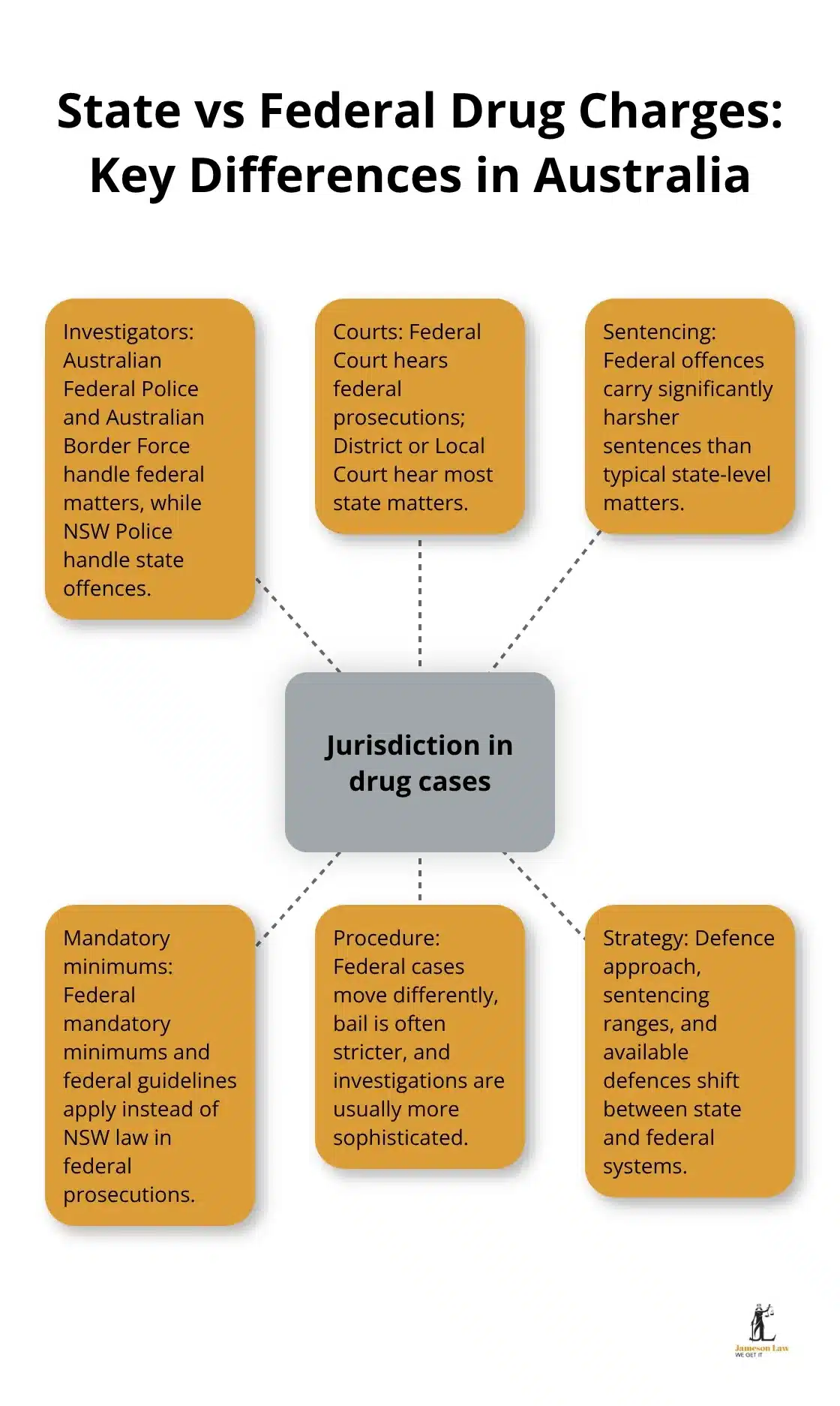
State charges prosecuted in the District or Local Court typically involve smaller quantities or lower-level offences, while federal charges prosecuted in the Federal Court involve international trafficking, large-scale operations, or conspiracy matters. Federal offences carry significantly harsher sentences. The Australian Federal Police and Australian Border Force investigate federal matters, whereas NSW Police handle state-level offences. If your case involves a border seizure, importation, or organised crime connections, expect federal prosecution, which means federal mandatory minimums and federal sentencing guidelines apply instead of NSW law. The procedural differences also matter: federal cases move differently through courts, bail conditions are typically stricter, and the investigation quality is usually more sophisticated. Your legal representation must understand which system you operate within because the strategy, sentencing ranges, and available defences shift dramatically between state and and federal jurisdiction.
Why Quantity and Intent Matter
The quantity of drugs you possessed and your stated intent form the foundation of how prosecutors charge you and what penalties apply. A small amount of cannabis for personal use attracts different treatment than the same substance held with intent to supply. Courts examine possession circumstances closely-location, packaging, scales, cash, and communications all indicate whether you intended personal consumption or commercial activity. The Drugs Misuse and Trafficking Act defines specific thresholds for “large commercial quantity,” “commercial quantity,” and “indictable quantity,” and crossing these thresholds triggers mandatory minimums or significantly increased sentencing ranges. Your criminal history, age, and personal circumstances then influence where within that range the judge sentences you. Understanding these distinctions helps you and your legal team identify which charges prosecutors can realistically prove and where negotiation or challenge becomes possible.
Moving Forward With Your Defence
The complexity of drug offence law means that the charges you face depend on multiple technical and factual elements that require careful analysis. Your next step involves obtaining legal advice that examines the specific evidence against you, the applicable legislation, and the sentencing framework that applies to your circumstances.
What Judges Actually Look At When Sentencing Drug Offenders
Quantity and Packaging as Sentencing Foundations
Courts don’t apply a one-size-fits-all approach to drug sentencing, and understanding what judges examine gives you a realistic picture of where your case might land. Quantity sits at the foundation of sentencing, but not in the way many people assume. A person caught with 2 grams of methamphetamine faces vastly different consequences than someone with 200 grams, yet both might face possession charges. The Drugs Misuse and Trafficking Act 1985 (NSW) defines specific thresholds: indictable quantity, commercial quantity, and large commercial quantity. Crossing into commercial quantity territory means prosecutors can argue for trafficking charges rather than simple possession, which shifts sentencing ranges dramatically.
The way drugs are packaged matters enormously. If police find your drugs in individual plastic bags with scales and cash nearby, a judge sees evidence of distribution. If drugs sit in a single container in your home, the narrative changes. NSW District Court cases show judges consistently treat packaging, location, and accompanying items as indicators of intent.
Criminal History and Age as Sentencing Factors
Your criminal history carries substantial weight in sentencing calculations. A first-time offender with no prior convictions receives markedly different treatment than someone with previous drug convictions. The Crimes (Sentencing Procedure) Act 1999 (NSW) requires judges to consider your record, and repeat offenders face longer sentences because courts view them as higher risk. Age matters too. Young offenders, particularly those under 21, sometimes attract more lenient sentences if judges see rehabilitation potential, though this varies significantly between individual cases and judicial officers.
Aggravating and Mitigating Circumstances
Aggravating factors push sentences upward, while mitigating factors work in your favour. Aggravating circumstances include trafficking near schools, supplying to minors, involvement in organised crime, or violence connected to the offence. Judges must consider these elements explicitly in their reasoning. Mitigating factors include genuine remorse, cooperation with authorities, mental health issues affecting your conduct, difficult personal circumstances, and time already served in custody awaiting trial.
Guilty Pleas and Sentencing Reductions
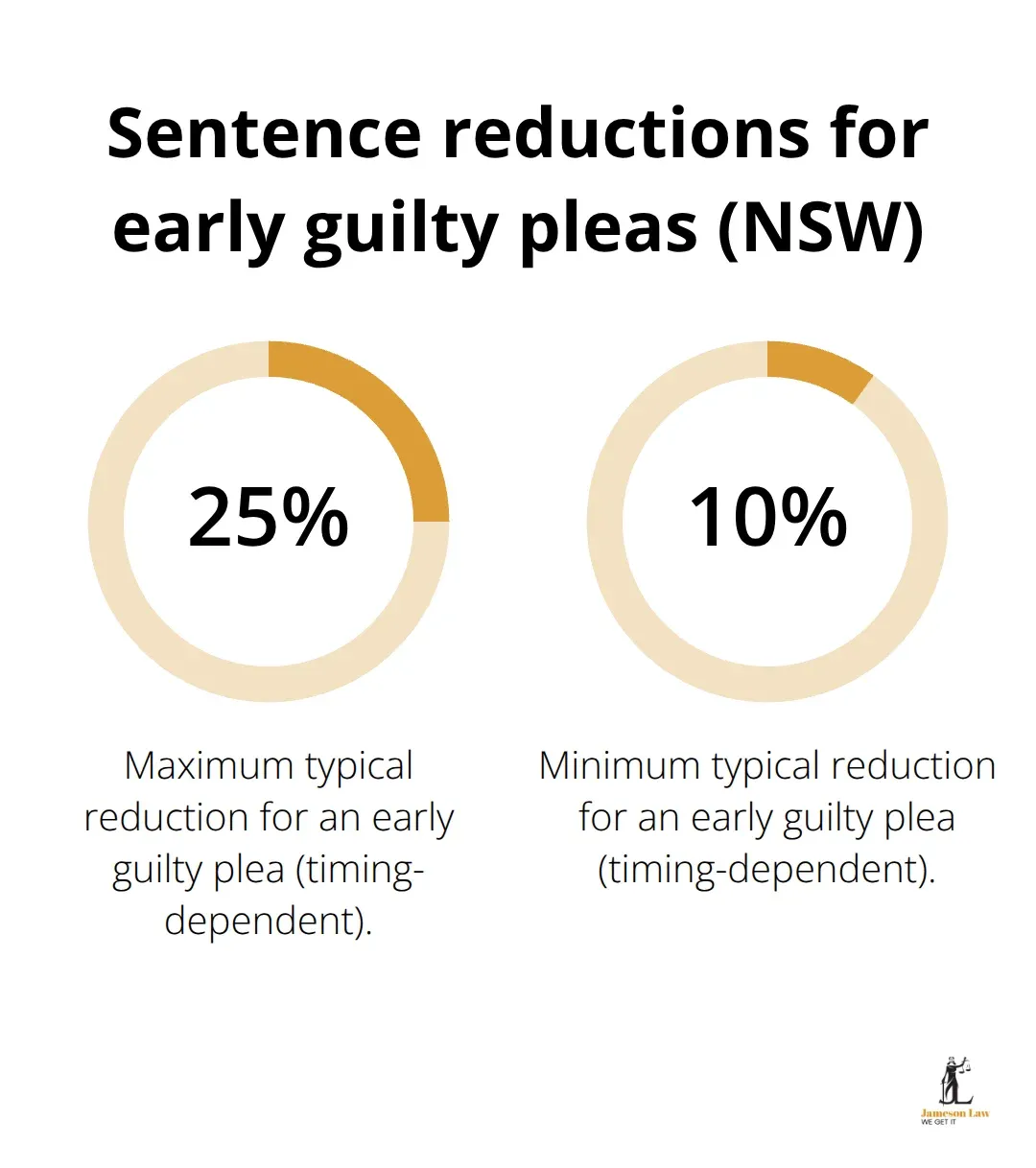
Judges also examine whether you pleaded guilty early or fought charges through trial. Early guilty pleas typically attract sentence reductions of 10 to 25 per cent depending on how early you enter the plea. This matters practically because it means your decision to contest or accept charges has financial and sentencing implications you should discuss with your legal representative before proceeding.
Personal Circumstances and Sentencing Submissions
Your employment status, family responsibilities, and health conditions all feature in sentencing submissions. A parent with dependent children, a person with diagnosed mental illness, or someone with stable employment might receive consideration that others don’t. The key involves presenting this information through proper legal channels during sentencing submissions, not hoping judges discover it independently. Personal circumstances alone won’t override mandatory minimums for large commercial quantity trafficking, but they can influence sentences within applicable ranges and affect whether alternative sentencing options become available. Understanding how judges weigh these factors helps you and your legal team identify which elements of your case deserve emphasis during court proceedings.
Protecting Your Rights When Facing Drug Charges
Act Immediately After Arrest or Notification
Acting fast when you face drug charges fundamentally changes your case outcome. The moment police arrest you or notify you of charges, your legal position becomes time-sensitive. Within the first 24 to 72 hours, decisions made without proper advice create problems that become expensive or impossible to fix later. A criminal law representative examines the evidence against you before you speak to police, reviews whether proper procedures were followed during your arrest and search, and identifies weaknesses in the prosecution case while they remain fresh. Early legal representation also means understanding your bail conditions, knowing what you can and cannot say to authorities, and preparing for your first court appearance with a strategy rather than confusion.
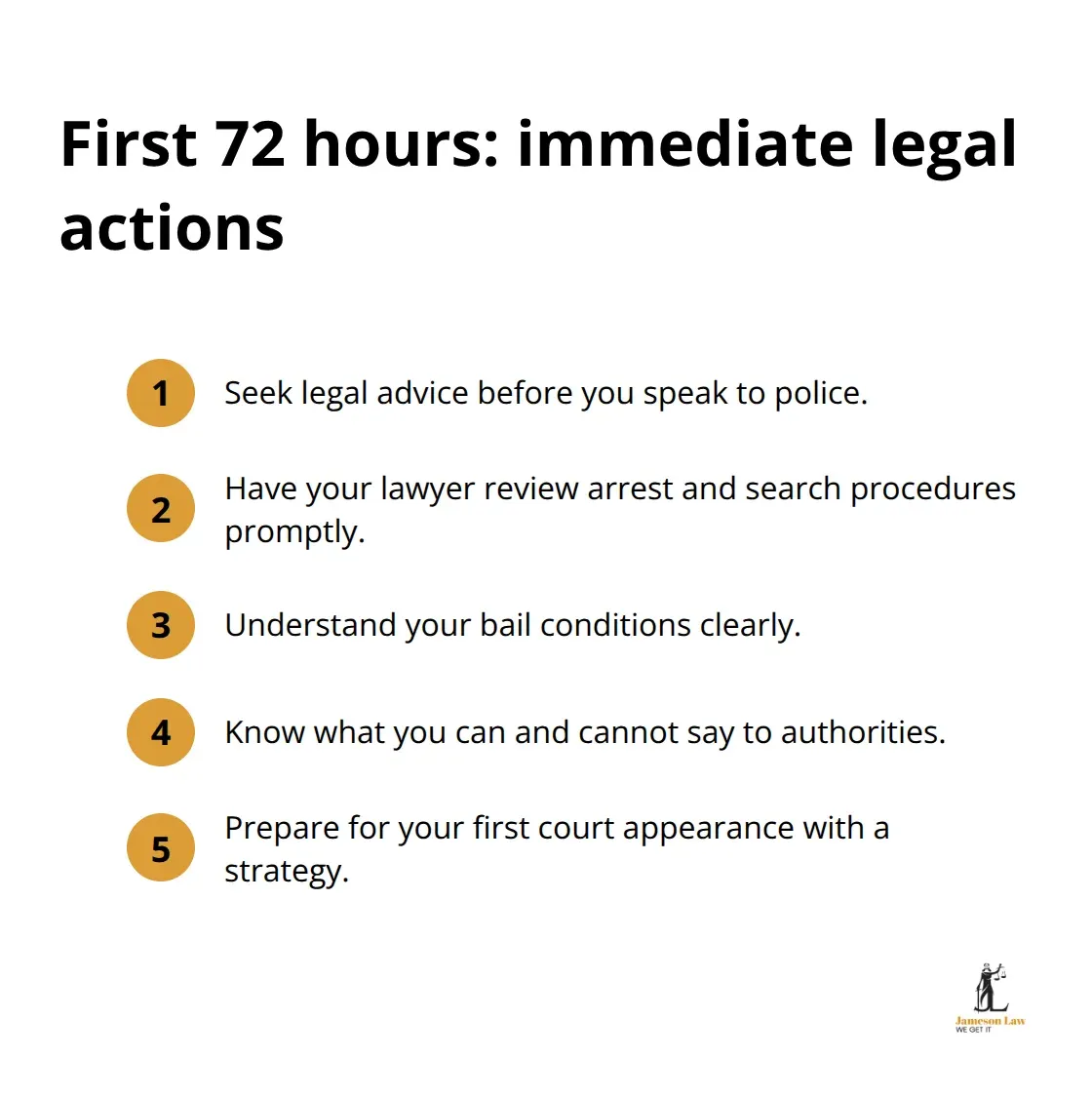
Police questioning without legal representation present ranks among the most common mistakes people make, and it frequently results in statements that prosecutors use against you later. The difference between having advice before questioning and facing interrogation alone often determines whether your case settles favourably or proceeds to trial with unnecessary complications.
Understand Your Plea Options
Your options once charged depend heavily on the strength of evidence against you and the specific circumstances of your case. Plea negotiations happen throughout the court process, but early negotiations typically yield better outcomes because prosecutors haven’t invested months preparing trial evidence. If the prosecution’s case rests on weak evidence, challenging it through legal submissions or cross-examination at trial becomes viable, and your legal representative identifies these weaknesses during case analysis.
Early guilty pleas attract sentence reductions of 10 to 25 per cent depending on how early you enter the plea. This matters practically because your decision to contest or accept charges carries financial and sentencing implications you should discuss with your legal representative before proceeding.
Negotiate Sentences Through Detailed Submissions
Sentence negotiation works differently from guilt negotiation. Even if the evidence against you is strong, your legal team argues for lower sentences through detailed submissions about your circumstances, the packing and quantity details that prosecutors must prove, and mitigating factors judges must consider under the Crimes Sentencing Procedure Act 1999 NSW. Your employment status, family responsibilities, and health conditions all feature in sentencing submissions. A parent with dependent children, a person with diagnosed mental illness, or someone with stable employment might receive consideration that others don’t (though personal circumstances alone won’t override mandatory minimums for large commercial quantity trafficking).
Identify Technical Defences in the Legislation
The Drugs Misuse and Trafficking Act 1985 NSW contains technical definitions and thresholds that prosecutors must prove, and gaps in their proof create opportunities your legal team can exploit during negotiations or trial. Prosecutors must establish whether drugs crossed into commercial quantity or large commercial quantity territory, and failure to prove these elements precisely can result in lower charges or acquittal. Your legal representative examines the specific evidence against you, not generic advice about drug offences generally, to identify which strategy suits your situation. Understanding which approach works for your case requires someone who analyses your actual evidence and the prosecution’s burden of proof under NSW legislation.
Final Thoughts
Mandatory minimum sentences for drug charges in NSW create a rigid sentencing framework that removes judicial discretion in specific cases, particularly for large commercial quantity trafficking. Understanding how these minimums operate, what factors judges consider, and where your case might fit within sentencing ranges gives you realistic expectations about potential outcomes. Drug possession NSW charges range from simple possession for personal use through to trafficking offences, and the distinction between these categories determines whether mandatory minimums apply to your situation at all.
The practical reality is that early legal advice changes everything. Within the first hours after arrest or notification of charges, decisions made without proper representation create lasting problems. A criminal law representative examines the evidence against you, identifies weaknesses in the prosecution case, and advises whether challenging charges through technical defences or negotiating outcomes serves your interests better (this analysis happens while evidence remains fresh and prosecutors haven’t invested months preparing trial materials).
If you or someone you know faces drug charges, contact Jameson Law to access experienced criminal law representation that examines your specific evidence and circumstances rather than offering generic advice. The difference between acting immediately and waiting weeks often determines whether your case settles favourably or proceeds to trial with unnecessary complications. Your next step involves obtaining legal advice that protects your rights from the moment charges arise.