

Getting your visa application right the first time matters. A visa application checklist Australia helps you avoid costly delays and rejections that could set back your plans by months.
At Jameson Law, we’ve seen how small oversights-missing documents, outdated information, or incomplete forms-derail otherwise strong applications. This guide walks you through exactly what you need, what NSW requires, and the mistakes that trip up most applicants.
What Documents You Actually Need for Your Australian Visa
Your visa application succeeds or fails based on documentation. The Department of Home Affairs receives over 2 million visa applications annually, and incomplete document submissions rank among the top reasons for refusal. Missing even one required document forces you to resubmit everything, adding weeks or months to your timeline. Australian immigration authorities expect specific, current, and verified documents before they’ll assess your application properly.
Identity and Personal Information
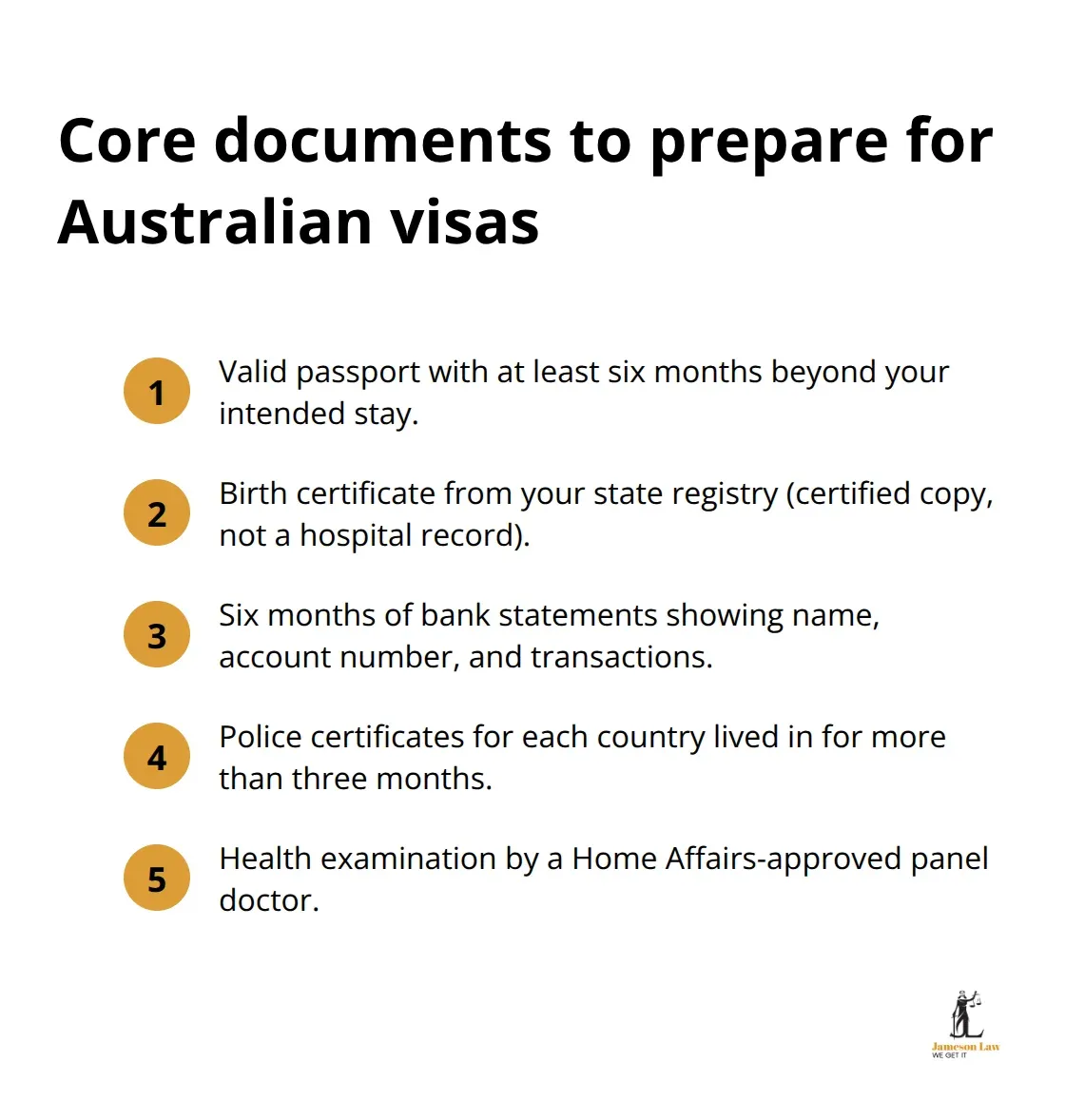
Start with your passport. It must remain valid for the entire duration of your intended stay, plus ideally six months beyond that date. Many applicants submit passports expiring within months, which forces them to renew mid-application. You’ll also need a birth certificate issued by your state’s registry office, not a hospital birth record.
If you’ve changed your name through marriage, divorce, or deed poll, provide the official change-of-name certificate from your state registry. For Australian citizens applying for sponsorship visas, your birth certificate must come from an official extract from the Births, Deaths and Marriages Registry, not a photocopy from a hospital. Provide certified copies, not originals, and have them certified by a notary public, lawyer, or Justice of the Peace.
Financial Documentation That Actually Matters
Home Affairs wants to see genuine, traceable funds. Bank statements covering the last six months demonstrate your financial capacity and prove the money isn’t borrowed. You need statements showing your account holder name, account number, and transaction history. If you’re relying on a sponsor’s funds, they must provide statutory declarations confirming their willingness to support you, along with their own financial statements. Many applicants fail this section because they show lump sums deposited just before application-Home Affairs interprets this as borrowed money. If someone gifts you funds, obtain a statutory declaration from them explaining the gift, plus proof they have the capacity to gift that amount. For employment-based visas, provide payslips covering the last two years, tax returns, and an employment letter on company letterhead stating your position, salary, and employment duration.
Health and Character Requirements
You must obtain a health examination from a panel doctor approved by Home Affairs. These doctors conduct specific tests relevant to your visa type and destination. Character assessment requires police certificates from every country where you’ve lived for more than three months. Australia’s National Police Clearance takes 2–4 weeks, so start this early. If you have any criminal history, even minor offences, declare them fully. Undisclosed convictions result in visa cancellation even after approval. For work involving children or vulnerable people, additional character checks apply. Some states require Working With Children Checks through their own registries.
What Comes Next in Your Application
These documents form the foundation of your visa application. Once you’ve gathered everything, NSW-specific requirements add another layer to your submission-and that’s where many applicants stumble.
What NSW Actually Requires for Your Visa
NSW State Sponsorship Operates Independently
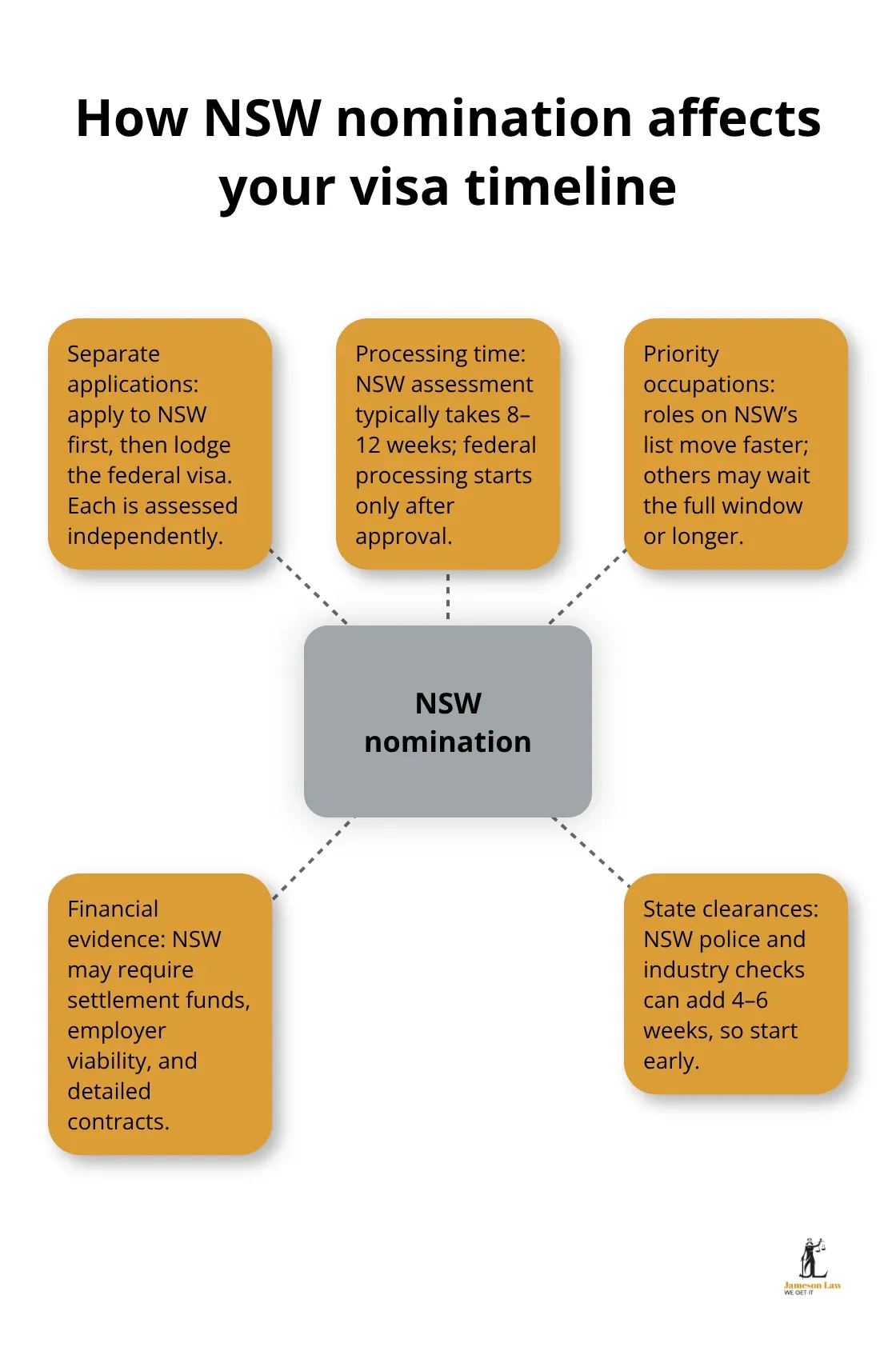
NSW state sponsorship functions separately from federal requirements, and this distinction confuses most applicants. The state does not simply rubber-stamp federal approvals-it conducts its own assessment, adds its own documentation requirements, and operates on its own timeline. When you apply for a skilled migration visa with NSW nomination, you submit applications twice: once to NSW and once to the Department of Home Affairs. NSW processes your state nomination first, typically taking 8–12 weeks depending on occupational demand. Only after NSW approves your nomination can you proceed with your federal visa application. This sequential process means your total timeline stretches considerably longer than applicants nominated by other states or those applying without state sponsorship.
Priority Occupations Determine Your Processing Speed
NSW prioritises occupations listed on its skilled occupation list, which differs from the national skilled occupation list. Currently, NSW prioritises occupations in healthcare, engineering, construction, and information technology, though this shifts quarterly based on labour market needs. If your occupation appears on NSW’s priority list, your nomination processes faster-sometimes within 6–8 weeks. If your occupation sits outside priority categories, you should expect the full 12-week window or longer. Home Affairs publishes NSW’s current priority occupations on its website, and you should verify your occupation’s status before investing time and money into your application.
Financial Evidence NSW Demands
The financial documentation NSW requires goes beyond what the federal government asks for. NSW wants proof you can financially settle in the state, not just survive during your visa period. You must provide bank statements covering six months, proof of employment income for the past two years, and evidence of any assets held in NSW or Australia. If an employer sponsors you, NSW requires that employer to provide audited financial statements proving business viability, tax returns for the past two years, and a detailed employment contract showing your salary, role, and employment duration. Many applicants underestimate this requirement and submit minimal financial evidence, which forces NSW to request additional documentation and causes delays.
State-Specific Clearances Add Time to Your Timeline
NSW requires state-specific police certificates if you have lived in NSW previously, not just national police clearance. Additionally, if you have worked in regulated industries in NSW (healthcare, education, finance), you need industry-specific clearances obtained through NSW regulatory bodies. These clearances take 4–6 weeks to obtain, so you should start this process immediately after confirming your occupation qualifies for NSW nomination. Starting these clearances early prevents them from becoming your application’s bottleneck later.
What Mistakes Cost You Most
Common errors at the NSW stage include submitting incomplete employment contracts, providing financial statements older than two years, or failing to obtain industry-specific clearances before lodging your nomination. Each of these oversights triggers requests for further information, extending your processing time by weeks. The mistakes you make during NSW nomination directly impact your federal application timeline, so accuracy at this stage matters significantly.
What Trips Up Most Visa Applications
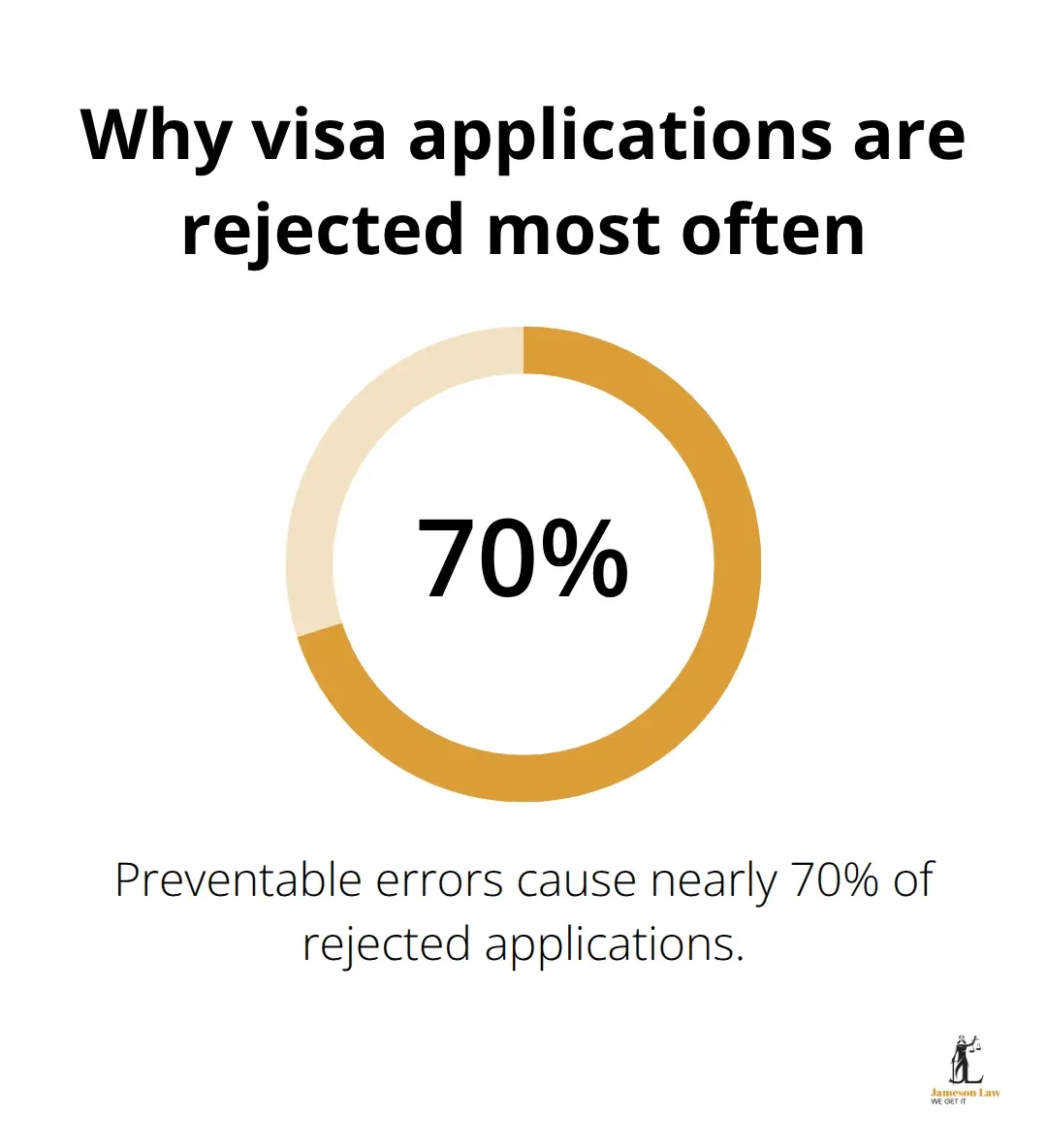
Incomplete submissions remain the leading cause of visa refusal, with nearly 70 percent of rejected applications failing due to preventable errors rather than genuine ineligibility. Personal information mismatches between documents, outdated financial statements, and missing character declarations represent the most common culprits. Your application faces rejection the moment Home Affairs identifies inconsistencies or gaps, forcing you to restart the entire process and lose months in the process. The cost of resubmission extends far beyond the visa fees themselves-delayed start dates for employment, postponed study commencement, and extended separation from family members create real consequences that most applicants underestimate until they experience rejection firsthand.
Mismatched Personal Information Creates Immediate Problems
Home Affairs cross-references every document you submit, and even minor inconsistencies trigger manual review and requests for clarification. If your birth certificate lists your name as Michael James Smith but your passport shows Michael J. Smith, Home Affairs will request evidence of why the names differ. If your employment letter states you worked from January 2022 to December 2024 but your tax return shows income only through November 2024, Home Affairs questions the discrepancy. These inconsistencies do not result in automatic rejection, but they add processing time as officers investigate the variations.
Address inconsistencies prove particularly problematic. If you list different residential addresses across documents, Home Affairs may question your residency history or character. Verify every document matches exactly before submission, including spelling of your name, dates of employment, address formatting, and employment titles. Print each document and cross-check names, dates, and addresses line by line rather than relying on memory or assumptions about consistency.
Financial Documentation Requires Recent, Verifiable Evidence
Home Affairs rejects numerous applications with financial statements older than six months as insufficient. Your bank statements must cover the precise period Home Affairs specifies for your visa type, typically the six months immediately preceding your application. Statements dated more than eight weeks before your application submission face rejection for being outdated.
Lump sum deposits appearing days or weeks before your application raise red flags about borrowed funds, and Home Affairs will request statutory declarations explaining the source. If you received a gift of money, that declaration must come from the gift provider and include their own financial statements proving they possess the capacity to gift that amount. Employment income documentation must cover a continuous two-year period without gaps. If you changed jobs mid-year, provide payslips from both employers for that year to demonstrate continuous employment. Relying on employment contracts alone without supporting payslips or tax returns leaves your application vulnerable to rejection based on insufficient income verification.
Character and Health Declarations Cannot Be Omitted or Minimised
Undisclosed criminal convictions, even minor traffic offences or spent convictions, result in visa cancellation after approval if discovered later. Home Affairs conducts extensive background checks across multiple countries. If you have lived in multiple countries, you must obtain police certificates from each jurisdiction where you resided for more than three months (some countries take 8–12 weeks to issue these certificates, which means starting this process early prevents delays at the final stage).
Health examinations must be conducted by Home Affairs-approved panel doctors, and submitting medical reports from non-approved providers results in automatic rejection. These panel doctors conduct specific tests relevant to your visa type and destination country requirements, and using standard medical examinations instead of visa-specific assessments wastes time and money on resubmission.
Final Thoughts
Your visa application checklist Australia succeeds when you verify every document before submission, confirm NSW-specific requirements match your occupation and circumstances, and start character and health clearances immediately. Missing documents, outdated financial statements, and inconsistent personal information cost you weeks or months, not just application fees. The applications that progress smoothly share one common trait: applicants completed their documentation thoroughly rather than rushing through submission.
Start by gathering your passport, birth certificate, and six months of bank statements, then verify every name, date, and address matches across all documents. Obtain your police certificates and health examination from approved providers without delay, as these typically take 4–6 weeks. If NSW nomination applies to your visa type, confirm your occupation appears on the current priority list and understand that NSW processes your nomination independently from your federal application.
Professional legal guidance matters when your situation involves complexity-particularly if you have criminal history requiring disclosure, worked in regulated industries requiring state-specific clearances, or face inconsistencies between your documents. We at Jameson Law provide immigration law services to help you navigate these requirements and submit applications that meet Home Affairs and NSW standards. Contact Jameson Law to discuss your visa application and confirm you’re on track before lodging.