An AVO breach NSW can have serious legal consequences that affect your freedom, finances, and future. At Jameson Law, we’ve seen how quickly a breach can escalate from a warning to criminal charges and jail time.
Understanding what happens when you violate an apprehended violence order is essential if you’re facing accusations or want to stay compliant. This guide walks you through the penalties, the legal process, and how to protect your rights.
What Breaching an AVO Actually Costs You
Criminal penalties escalate quickly
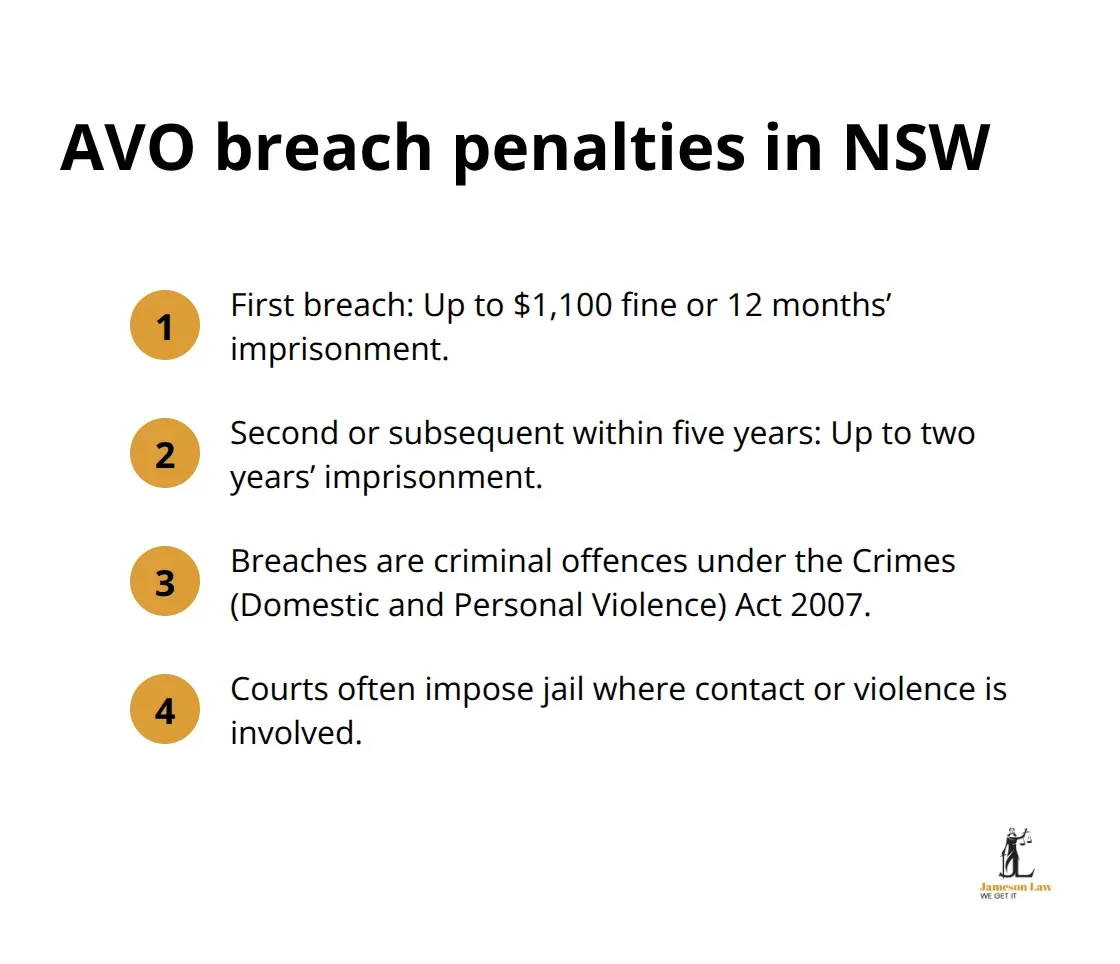
Breaching an apprehended violence order in NSW triggers criminal charges under the Crimes (Domestic and Personal Violence) Act 2007. A first breach attracts a maximum penalty of $1,100 or imprisonment for up to 12 months. A second or subsequent breach within five years carries a maximum penalty of imprisonment for up to two years. NSW courts treat AVO breaches seriously, and magistrates regularly impose jail sentences, particularly when the breach involves contact with the protected person or violence.
NSW Police investigate breaches immediately, and you’ll face formal criminal proceedings rather than a simple administrative process.
Your employment and professional credentials face real danger
A conviction for breaching an AVO creates a permanent criminal record that affects employment, professional licences, and your ability to work in certain industries. If you hold a security licence, working with children clearance, or any professional credential requiring a good character assessment, a breach conviction can result in cancellation or refusal of renewal. Employers in healthcare, education, finance, and government sectors conduct background checks, and a domestic violence conviction will likely disqualify you from employment. Many employers maintain zero-tolerance policies for violence-related convictions.
Financial damage extends beyond court penalties
Even if you avoid jail time, a fine of $2,200 plus legal costs can reach $5,000 to $10,000 depending on court complexity. The financial and career damage often exceeds the immediate court penalty, making compliance with your AVO substantially more cost-effective than risking breach. Lost income from employment termination or suspension compounds these costs significantly.
Understanding these consequences matters because the legal process following a breach moves quickly, and your response during that critical window shapes your entire outcome.
What Happens After Police Arrest You for Breaching an AVO
Police response and arrest procedures
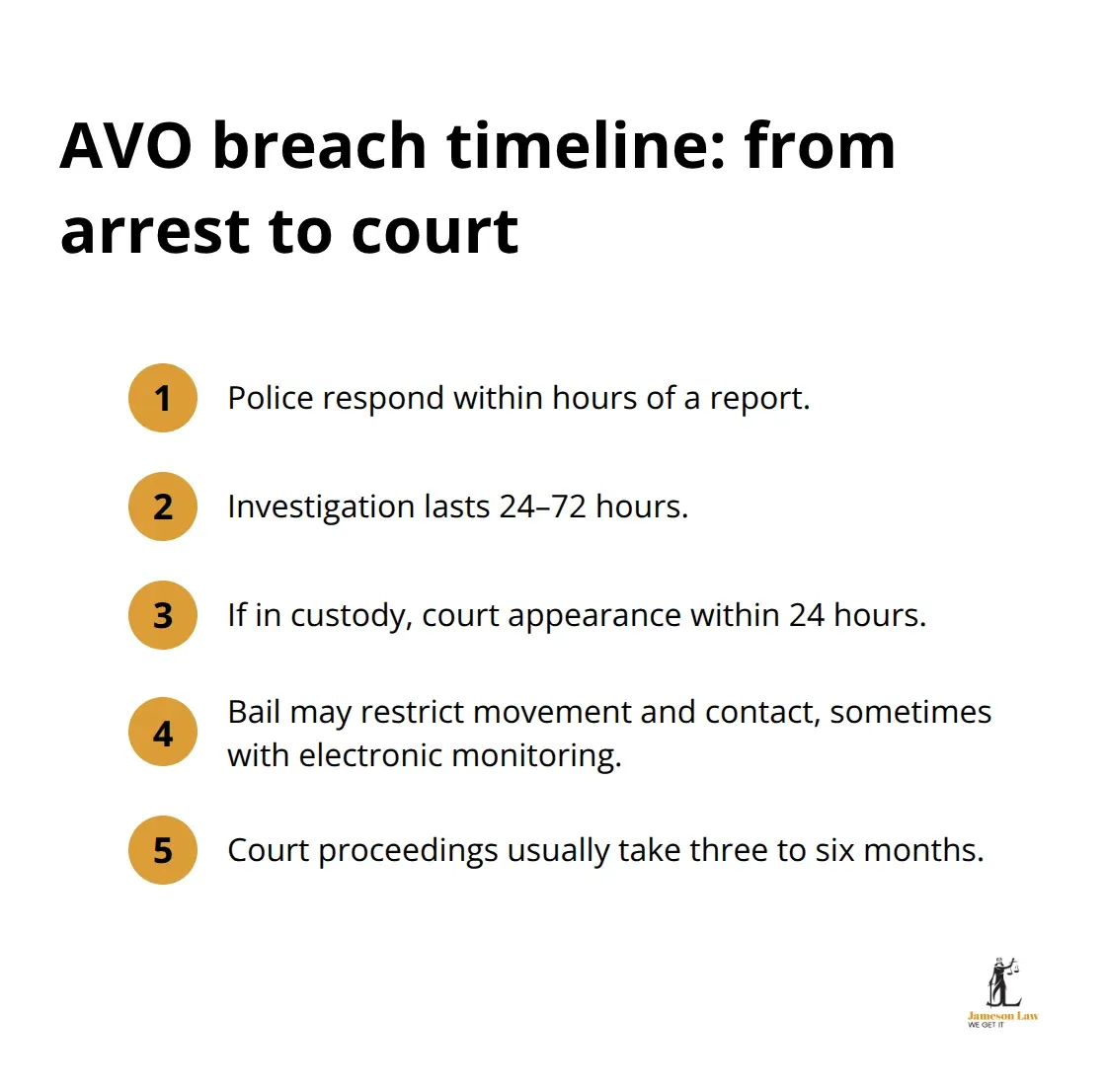
NSW Police respond to AVO breaches immediately, often within hours of a report. Officers take you to a police station where they interview you and document the alleged breach. You have the right to remain silent and the right to legal representation during this interview. Many people make critical mistakes by explaining themselves without a lawyer present-those statements later become evidence against them in court. Police will gather statements from the protected person, any witnesses, and evidence like phone records, messages, or CCTV footage. This investigation phase typically takes 24 to 72 hours, and you’ll either be released with conditions or held in custody pending a court appearance. If held in custody, you must appear before a magistrate within 24 hours.
Your critical first action
Contact a lawyer immediately after arrest, before any police interview. Anything you say can and will be used against you in court proceedings. This single action protects your legal position more effectively than any other step you can take at this stage.
Court proceedings and the burden of proof
Once your case reaches court, the prosecution must prove the breach beyond reasonable doubt. The magistrate will consider whether you intentionally or recklessly breached the order, what the nature of the breach was, and whether you had a reasonable excuse. Common defences include proving you didn’t know about the order, the order was invalid, or you had lawful authority to breach it-but these defences require solid evidence and legal argument. Breaching an AVO is a criminal offence carrying a maximum penalty of up to two years imprisonment and/or a fine of up to 50 penalty units. Court proceedings typically take three to six months from arrest to final hearing, depending on case complexity and court schedules.
Bail conditions and their impact
Bail conditions imposed after arrest often restrict your movements, prevent contact with the protected person, and may include electronic monitoring. If you breach bail conditions while awaiting trial, you’ll face additional criminal charges and longer jail time. Your lawyer will negotiate with the prosecution, gather evidence in your favour, and prepare your defence strategy during this period. The outcome depends heavily on the strength of evidence, witness credibility, and how your lawyer presents your case to the magistrate.
Understanding what happens during arrest and court proceedings shapes how you respond-and your response during these critical early stages determines whether you can mount an effective defence or face compounding legal problems.
Defending Yourself Against an AVO Breach Accusation
Act immediately after arrest
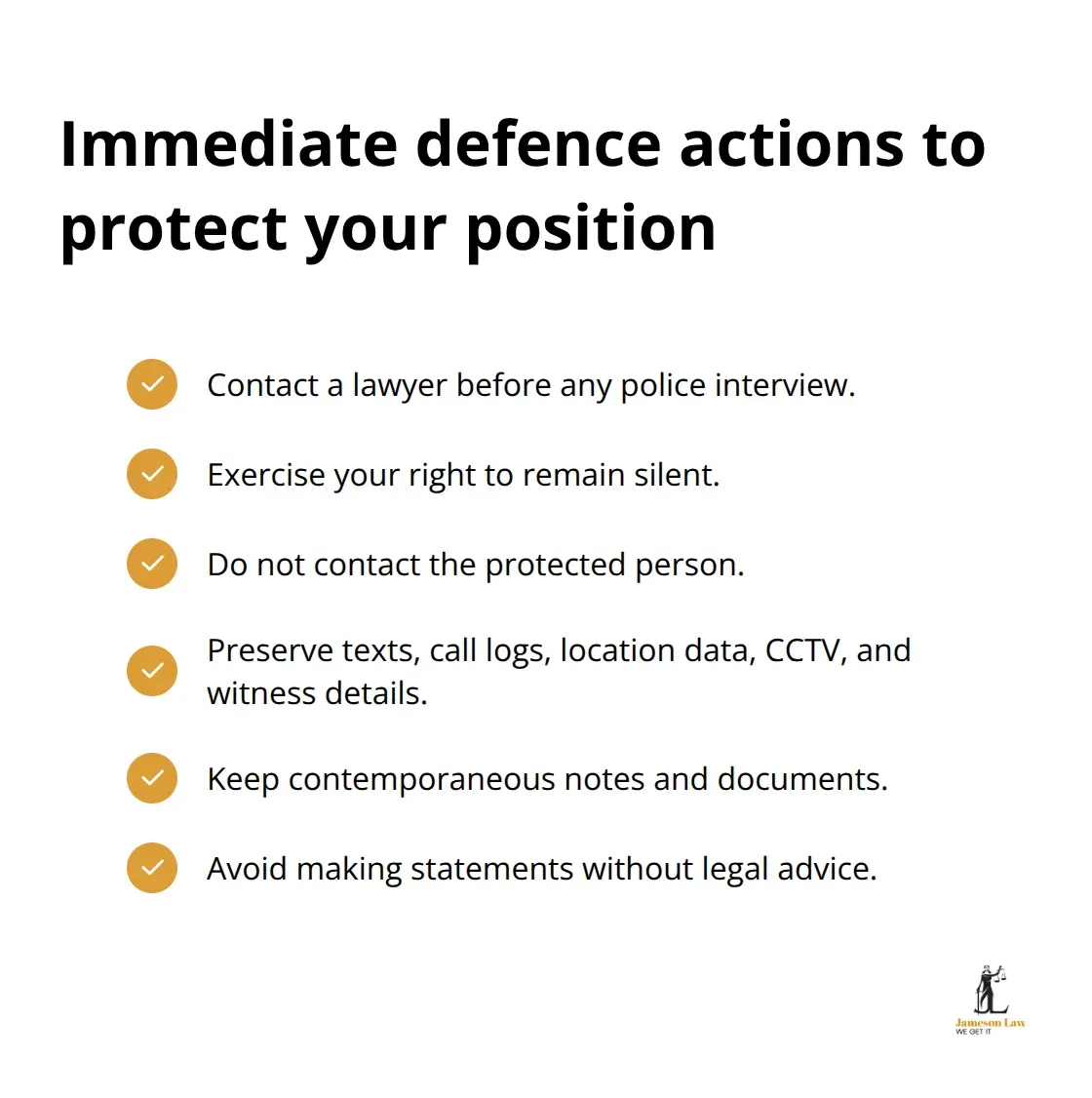
The moment police arrest you for breaching an AVO, your legal position depends entirely on the decisions you make in the first 24 to 48 hours. Most people accused of breach make irreversible mistakes during police interviews, in conversations with the protected person, or by failing to document evidence that could prove their innocence. Your first action must be contacting a lawyer before any police interview. Anything you say during questioning can and will be used against you in court, and police are trained to extract admissions that seem minor to you but devastating in a courtroom. Don’t attempt to explain yourself, apologise, or clarify your actions without legal representation present.
Preserve evidence that supports your defence
The second critical action is gathering documentation that proves your version of events. If the breach allegation involves contact with the protected person, preserve all evidence showing you didn’t initiate contact-text message timestamps, location data from your phone, CCTV footage from your home or workplace, or witness statements from people who can confirm your whereabouts. If the breach involved an alleged threat or violent behaviour, written records of what actually happened matter far more than your verbal explanation. Court records show that defendants who present contemporaneous documentation successfully challenge prosecution claims in magistrate courts.
Work with your lawyer to identify weaknesses in the prosecution case
Your lawyer will advise you on what documentation strengthens your defence and what statements to avoid making. They’ll identify whether the AVO itself contains legal defects that could result in its dismissal, whether you had reasonable excuse for the breach, or whether the prosecution’s evidence is too weak to secure conviction. The law places the burden of proof on the prosecution, meaning they must prove beyond reasonable doubt that you intentionally or recklessly breached the order. This doesn’t mean you’re helpless-it means you have concrete ways to build a defence, but only if you act strategically from the moment of arrest.
Negotiate during the critical pre-trial period
The legal process from arrest to trial typically spans three to six months, and your lawyer negotiates with the prosecution during this period to potentially reduce charges or secure a more favourable outcome. Don’t waste this time. Gather evidence systematically, keep detailed records of your communications with your lawyer, and prepare thoroughly for court. The difference between conviction and acquittal often comes down to preparation during these months before trial.
Final Thoughts
An AVO breach NSW carries consequences that extend far beyond the courtroom-a criminal conviction damages your employment prospects, professional credentials, and financial stability for years. The penalties escalate quickly, with first breaches attracting up to 12 months imprisonment and subsequent breaches carrying up to two years. Court proceedings move fast, and the decisions you make in the first 24 hours after arrest determine whether you can mount an effective defence.
Compliance with your AVO proves substantially more cost-effective than facing criminal charges, fines reaching thousands of dollars, and permanent damage to your career and reputation. If you struggle with specific conditions, contact the court about modifying the order rather than risking breach. If you face accusations of breaching an AVO, act immediately by contacting a lawyer before any police interview and gathering documentation that supports your version of events.
We at Jameson Law provide practical criminal law advice to Australians facing AVO breach accusations and understand how quickly these matters escalate. Contact us for a confidential discussion about your situation and your legal options.