A workers injury claim should provide financial support when you’re hurt at work. Yet many claims get rejected for preventable reasons.
We at Jameson Law see this happen regularly, and it’s frustrating for workers who need help. The good news is that understanding why denials occur puts you in a stronger position to protect your claim.
Why Claims Get Rejected
Timing and Documentation Failures
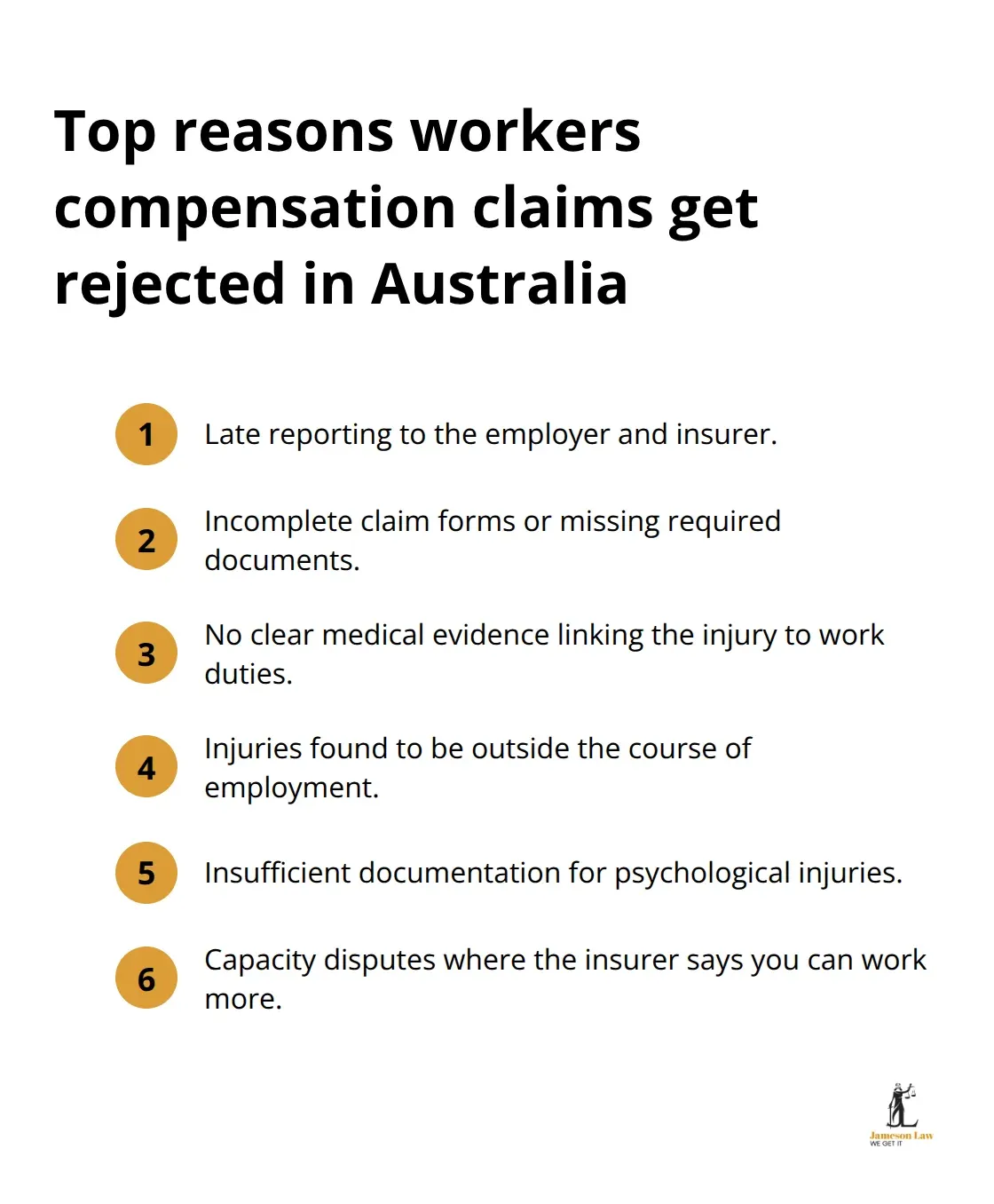
Timing and documentation are where most workers compensation claims fail in Australia. WorkCover Queensland and other state schemes investigate every claim thoroughly, and missing deadlines or incomplete information often results in a Section 78 notice-the formal denial letter. Late reporting stands as one of the most common reasons for rejection. Workers must notify their employer of an injury as soon as it occurs, and the claim itself must be lodged within strict timeframes set by your state’s workers compensation scheme. A delay of even a few weeks can give the insurer grounds to deny your claim, particularly if they argue they couldn’t investigate the incident properly or that you delayed treatment. This isn’t a technicality-it’s a hard requirement. Contact your employer immediately after an injury and obtain medical attention without delay.
Medical Evidence and Documentation
Your doctor must document the injury and its connection to your work. Without clear medical evidence linking your injury directly to your employment, the insurer will reject the claim. The insurer needs objective proof: medical reports stating the injury occurred at work, witness statements, incident reports, and treatment records showing ongoing care. Vague or generic medical notes won’t cut it. Tell your doctor exactly how the injury happened and that it occurred during work activities. Ask them to be specific in their report about the mechanism of injury and why it’s work-related. An Independent Medical Examiner’s assessment can also factor into denials-if the examiner concludes your injury doesn’t prevent you from working, the insurer may reject ongoing payments even if the injury is genuine.
Work-Related Injury Requirements
The insurer will also deny claims where the injury falls outside the course of employment. This doesn’t just mean injuries that happen outside work hours; it includes injuries from horseplay, misconduct, or activities unrelated to your job duties. If you were injured while taking an unauthorised break or doing something your employer didn’t ask you to do, the insurer may argue it wasn’t work-related. However, injuries during authorised breaks, lunch periods, or while performing duties reasonably incidental to your job are covered.
Psychological Injuries and Capacity Disputes
Psychological injuries face particular scrutiny and the insurer denies them more frequently than physical injuries. These injuries can be more complex than physical injuries because personal circumstances or stressful life events may contribute to the injury. The insurer may argue that workplace bullying or disciplinary action caused stress rather than recognising it as a legitimate psychological injury. Medical evidence becomes even more critical here-you need a psychologist or psychiatrist to clearly document that the workplace incident caused the psychological condition and that it prevents you from working.
Capacity disputes represent another common denial reason. The insurer may not deny your injury exists; instead, they argue you have capacity to work more than you currently do. This is particularly frustrating because it shifts the burden back onto you to prove your actual work capacity is lower than the insurer’s assessment. Addressing this requires detailed medical evidence about your functional limitations and potentially an independent assessment from a doctor who understands the workers compensation system. Selecting healthcare providers who grasp how workers compensation operates makes a significant difference-they’ll provide assessments that properly support your claim rather than generic reports that the insurer can easily challenge. Understanding these denial patterns positions you to respond effectively when the insurer rejects your claim.
Protect Your Claim From the Start
Act Within the First 48 Hours
The moment you suffer an injury at work, your actions determine whether your claim survives or faces rejection. WorkCover Queensland and other state insurers investigate claims thoroughly, and they use any gap in your documentation as grounds for denial. The first 48 hours after your injury prove critical to your claim’s success.
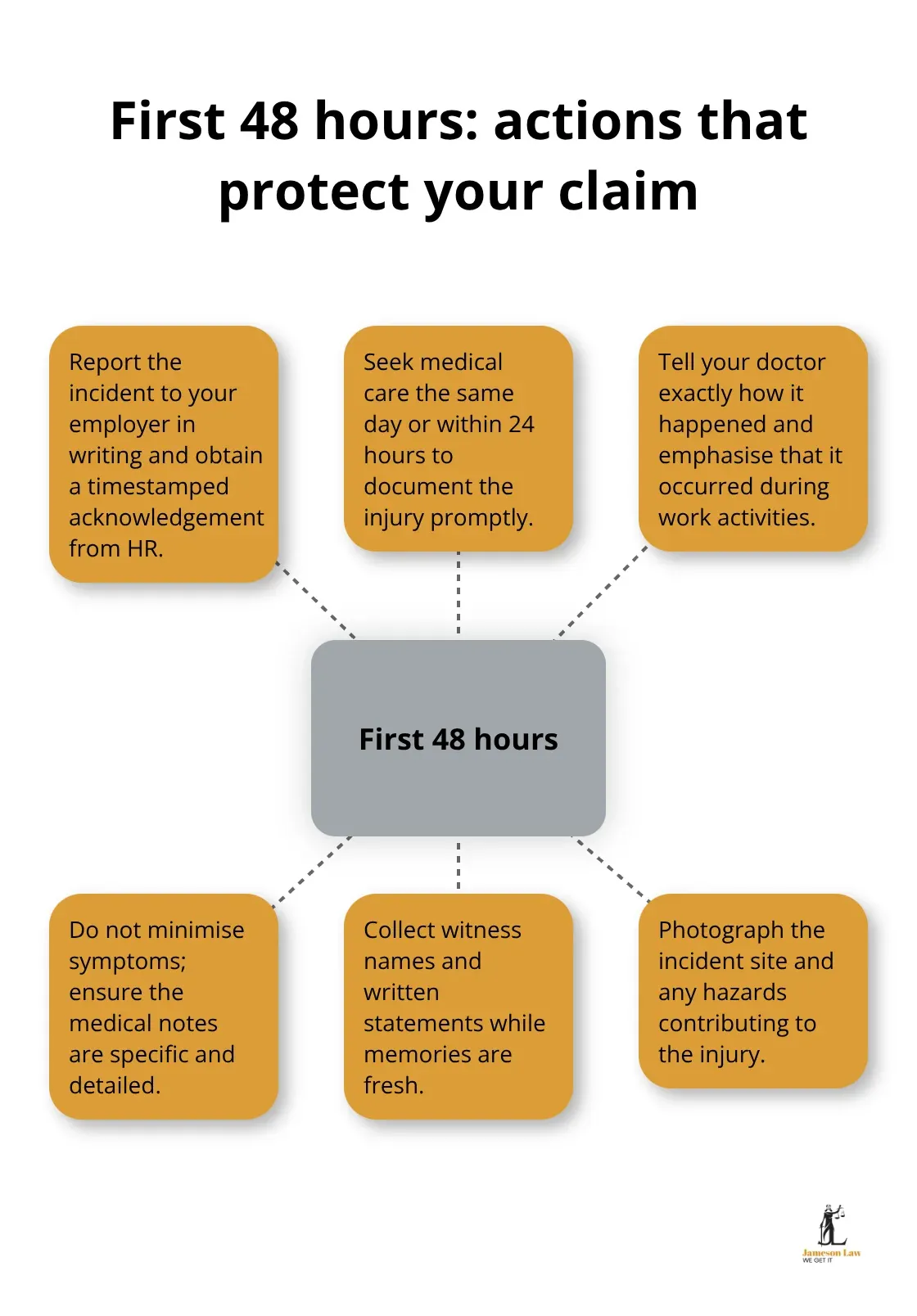
Contact your employer immediately and report the incident in writing, not just verbally. Obtain a written acknowledgment from your employer or HR department that confirms they received your report, including the date and time you notified them. This timestamp matters because late reporting ranks among the most common denial reasons in Australia.
Seek medical attention the same day if possible, or within 24 hours at the latest. When you visit your doctor, explain exactly how the injury occurred and emphasise that it happened during work activities. Avoid minimising your symptoms or assuming your doctor will understand the work context without your explanation.
Secure Detailed Medical Documentation
Your doctor must document the injury and its connection to your work with precision. Ask your doctor to write a detailed report that names your workplace, describes the incident, and explicitly states the injury is work-related. Generic medical notes stating you have back pain will not help your claim. You need documentation showing the direct connection between your work activities and your injury.
An insurer will make this decision based on medical evidence. The insurer requires objective proof: medical reports stating the injury occurred at work, witness statements, incident reports, and treatment records showing ongoing care. An Independent Medical Examiner’s assessment can also factor into denials-if the examiner concludes your injury does not prevent you from working, the insurer may reject ongoing payments even if the injury is genuine.
Select doctors and therapists who have experience with workers compensation claims. They provide assessments that properly support your case rather than generic reports that the insurer can easily challenge.
Build Your Evidence File Systematically
Your evidence file starts immediately after the incident. Write down everything you remember about what happened, including the date, time, location, weather conditions, what you were doing, how the injury occurred, and anyone who witnessed it. Obtain contact details from witnesses and ask them to provide written statements about what they saw.
Take photographs of the injury site, your workplace, and any hazards that contributed to the incident. Collect all medical records, test results, prescriptions, and treatment receipts from day one. If you see multiple healthcare providers, keep copies of all their reports and verify that each one understands the injury is work-related.
Keep a diary that documents your symptoms, treatment, and how the injury affects your work capacity and daily life. This subjective evidence, combined with objective medical documentation, creates a compelling case that addresses the capacity disputes insurers commonly raise.
Lodge Your Claim Without Delay
Do not delay lodging your claim with WorkCover. Each state has specific timeframes, and missing these deadlines gives the insurer grounds for automatic rejection. In Queensland, you must lodge your claim within specified periods depending on your employment status, so check the WorkCover Queensland website for exact deadlines that apply to your situation.
Organise your evidence chronologically so you can present a clear, comprehensive picture of your injury and its work-related nature when you submit your claim. This systematic approach strengthens your position before the insurer even begins their investigation. When the insurer receives your claim, they will examine every document you provide, and a well-organised file demonstrates that you took your claim seriously from the outset.
If your claim faces rejection despite your efforts, understanding the specific reasons for denial becomes your next priority.
What Happens After Your Claim Gets Rejected
Understanding Your Section 78 Notice
A Section 78 notice arrives in your mailbox, and your workers compensation claim is denied. This letter is not the end of the process-it marks the beginning of your opportunity to challenge the decision. The notice must include the reasons for denial and list the documents the insurer relied upon to make their decision. Within 20 days of receiving this letter, request a reasons for decision document if the insurer hasn’t already provided one. This document reveals exactly what information was missing, misrepresented, or overlooked.
Identifying Gaps in Your Original Claim
Common gaps include vague medical evidence, incomplete incident details, or missing witness statements. The insurer’s stated reasons give you a roadmap to build a stronger case. You now know precisely what weakened your claim and what you need to fix. If your claim was rejected because medical evidence was incomplete, obtain a new report from your doctor specifically addressing what the insurer questioned. The reasons for decision document transforms a frustrating rejection into actionable intelligence about your claim’s weaknesses.
Meeting the Three-Month Deadline for Review
You have three months from the date of denial to request a review with the Workers’ Compensation Regulator. This is a hard deadline, so mark your calendar immediately. Many workers miss this window and lose their right to challenge the decision entirely.
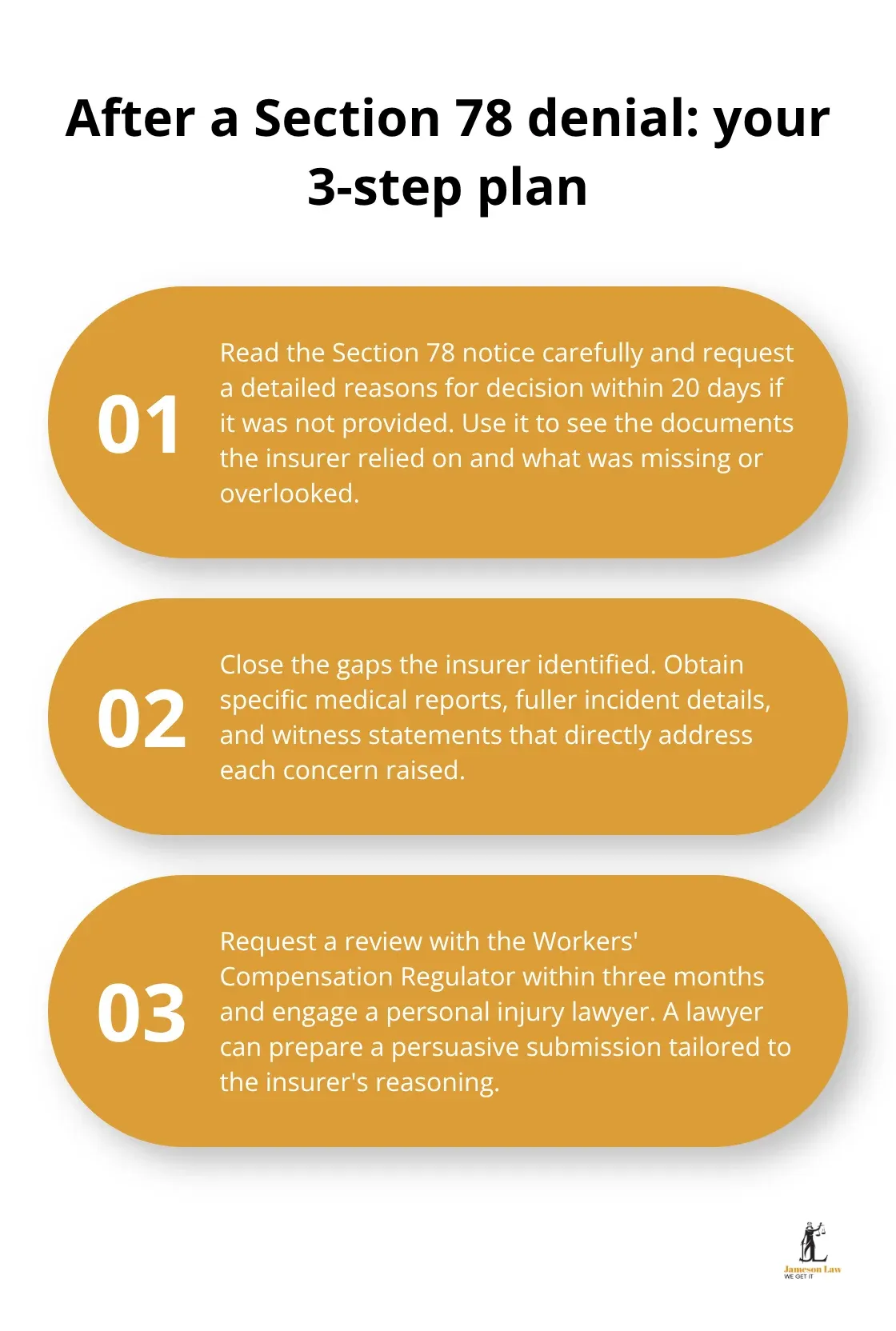
Contact a personal injury lawyer as soon as you receive your denial letter rather than waiting to see if you can handle the review alone. A lawyer reviews the insurer’s reasoning, identifies weaknesses in their position, and prepares a submission that directly addresses each reason for denial with supporting evidence.
The Review Process and Your Right to Appear
The review itself is not a court hearing-a Review Officer from the Workers’ Compensation Regulator assesses your case based on written submissions and the evidence you provide. The officer will not reinvestigate if the insurer already investigated before denying your claim, so your submission must be thorough and persuasive from the outset. You have the right to appear before the Review Officer and speak about your claim, though the officer cannot provide legal or medical advice. Most workers find legal representation invaluable at this stage because a lawyer knows how to present evidence persuasively and anticipate the insurer’s counterarguments.
Possible Outcomes and Next Steps
If the review succeeds, the decision can be overturned entirely, varied to approve partial benefits, or rejected if the officer upholds the original denial. A variation means revised payments may be issued to reflect the actual ongoing impairment. If the review fails, you can request an internal review through the Independent Review Office or pursue further appeal avenues through the Personal Injury Commission, depending on your state and circumstances.
Final Thoughts
Protecting your workers’ injury claim starts the moment you suffer an injury at work. The first 48 hours determine whether your claim survives scrutiny or faces rejection, so you must report your injury to your employer immediately, seek medical attention, and document everything with precision. Your medical records must explicitly link your injury to work activities, not just describe your symptoms, and you should gather witness statements, photograph the incident site, and keep detailed records of your treatment and how the injury affects your capacity to work.
Acting quickly matters because timing deadlines are unforgiving-late reporting, delayed medical treatment, and slow claim lodgement all weaken your position before the insurer even begins their investigation. Each state has specific timeframes, so you should check your state’s workers’ compensation authority website for exact deadlines that apply to your situation. The effort you invest upfront in building a comprehensive evidence file pays dividends if your claim faces rejection.
If your claim is denied, you have three months to request a review with the Workers’ Compensation Regulator, and this deadline is absolute. Contact a personal injury lawyer immediately after receiving your Section 78 notice rather than attempting to navigate the review process alone, as a lawyer identifies weaknesses in the insurer’s reasoning and presents your case persuasively to the Review Officer. We at Jameson Law understand how frustrating claim denials are for workers who need financial support, and our team can review your denial, identify gaps in your original submission, and guide you through the review process.