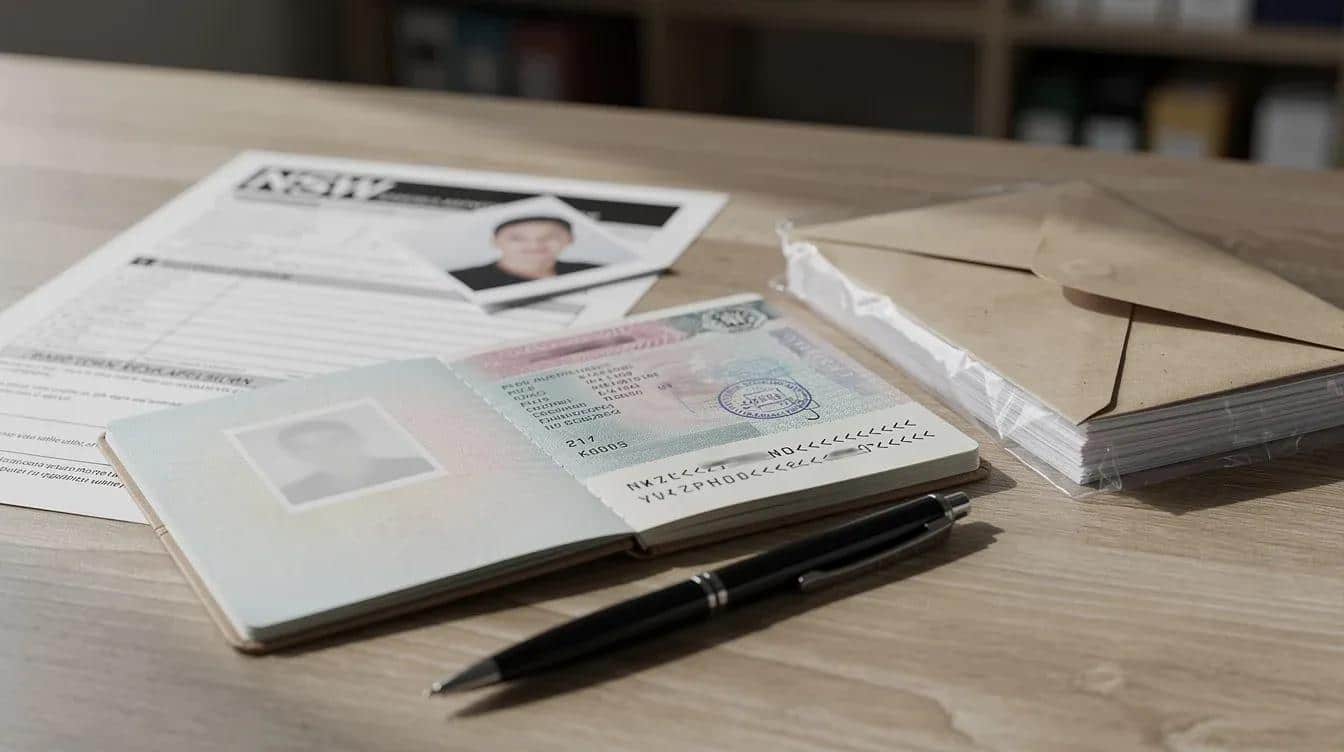
Australian visa applications demand specific paperwork, and missing even one document can delay your application or lead to rejection. At Jameson Law, we’ve helped countless people navigate visa documentation requirements across NSW and beyond.
Getting your documents in order before you apply saves time and stress. This guide walks you through exactly what you’ll need, depending on your visa type.
What Documents Do Different Visa Types Actually Require
Australian visa requirements vary significantly by visa type, and this is where most applicants stumble. The Department of Home Affairs publishes specific document lists for each visa subclass, yet many people waste weeks gathering paperwork that doesn’t apply to their situation. Working visas like the Temporary Skill Shortage visa (subclass 482) require employer sponsorship documents and skills assessments, which take 7 to 9 months or longer to arrange. In contrast, visitor visas focus heavily on proof of financial capacity and genuine intent to return home. Student visas require enrolment letters from registered institutions and proof that you can cover tuition and living costs, typically around AUD 20,000 to 30,000 per year according to Department of Home Affairs guidance.
How visa subclass determines your document list
The variation matters because submitting irrelevant documents clutters your application and signals to case officers that you haven’t read the requirements carefully. Partner visas demand statutory declarations, relationship evidence, and character assessments that working visas don’t require at all. Each visa subclass has its own ImmiAccount checklist, and the Department of Home Affairs updates these requirements regularly, so checking your specific visa code before gathering anything is non-negotiable. Try printing the official checklist for your exact visa subclass and ticking off documents as you collect them, rather than guessing what you might need.
Documents that appear across most visa categories
Certain documents appear across nearly every visa application, though their purpose shifts depending on context. Your passport must remain valid for at least six months beyond your intended stay, and if it expires sooner, visa processing stops until you renew it. Character references become mandatory for anyone who has lived in a country for at least 12 months in the past ten years, and these must be police clearance certificates, not character letters from friends. Health examinations are triggered by visa type and length of stay, with the Department of Home Affairs requesting them upfront for some visas or only after conditional approval for others.
Financial and identity proof across all applications
Financial documentation is almost universal, whether you’re proving you can support yourself as a student or demonstrating funds for a temporary visitor visa. Proof of identity beyond your passport, such as a birth certificate or national identity card, confirms your personal details match your application. These overlapping requirements exist because the Department of Home Affairs assesses character, health, and financial capacity for every applicant, regardless of visa type.
Where applicants go wrong with standard documents
The mistake applicants make is assuming these standard documents are sufficient without reading what else their specific subclass demands. A visitor visa applicant might submit only a passport and bank statement, then face rejection because they didn’t provide health insurance details or a detailed travel itinerary showing genuine intent to leave Australia after their stay. Understanding which documents your visa subclass actually requires (rather than which ones seem logical) separates successful applications from those that stall. The next section covers the specific personal and identity documents you’ll need to gather, and how to prepare them correctly for your application.
Your Passport, Birth Certificate and Character Requirements
Your passport forms the foundation of any visa application, and the Department of Home Affairs rejects applications outright if it fails to meet their validity requirement. Your passport must remain valid for at least six months from the date you will depart Australia. If your passport expires during your stay or within six months after you leave, your application faces refusal before case officers review anything else. Check your passport expiry date now, and if it falls within eight months, apply for a new one immediately because passport processing typically takes four to six weeks in Australia. Many applicants gather all their documents only to discover their passport is invalid, forcing them to restart the entire process.
Birth Certificates and Secondary Identity Documents
Your birth certificate serves as secondary identity proof and confirms personal details that match your application and passport. The Department of Home Affairs accepts birth certificates from your state or territory of birth, and you need the full, long-form version, not the abbreviated short-form certificate. If you were born overseas, obtain your birth certificate from the country where you were born, and have it officially translated into English by an accredited translator if it appears in another language. National identity cards from your home country also satisfy identity requirements, but only if they remain current and issued by your government.
Police Clearance Certificates: Timing and Requirements
Police clearance certificates become mandatory if you have lived in any country for 12 months or more during the past ten years, and this applies to most Australian residents applying for visas. The Department of Home Affairs requires these certificates from each country where you spent that time, not just your home country, so if you lived overseas for two years, you need clearances from that country as well. Police certificates must be official documents issued by the relevant police authority or government agency, and character letters from employers or friends do not satisfy this requirement. Processing times for police clearances vary significantly by country, with Australian police clearances taking two to four weeks and some overseas certificates taking two to three months, so start this process early.
Health Examinations and Panel Doctor Requirements
Health examinations are triggered by visa type and length of stay, with the Department of Home Affairs requesting them upfront for some applicants or only after conditional approval for others. If your visa requires health checks, you must attend an examination with a panel doctor appointed by the Department of Home Affairs, not your GP. Panel doctors conduct chest X-rays, blood tests, and general health assessments, and the entire process costs between AUD 200 and 400 depending on the panel doctor and your location.
Overseas Visitors Health Cover and Coverage Dates
Overseas Visitors Health Cover (OVHC) is mandatory for most temporary visas, and you must obtain coverage for your entire stay with a copy of your OVHC certificate showing your name, policy number, and coverage dates included in your application. These identity, character, and health documents work together to establish your eligibility and trustworthiness as a visa applicant. Once you have gathered these personal documents, your next step involves assembling the financial and employment documentation that demonstrates your capacity to support yourself throughout your Australian stay.
Proving Your Financial Capacity
The Department of Home Affairs treats financial capacity as one of the three pillars of visa assessment alongside character and health, yet many applicants underestimate how thoroughly case officers examine this documentation. You must demonstrate that you can support yourself throughout your stay without relying on government assistance, and vague statements about having funds will not succeed.
Bank Statements and Proof of Genuine Savings
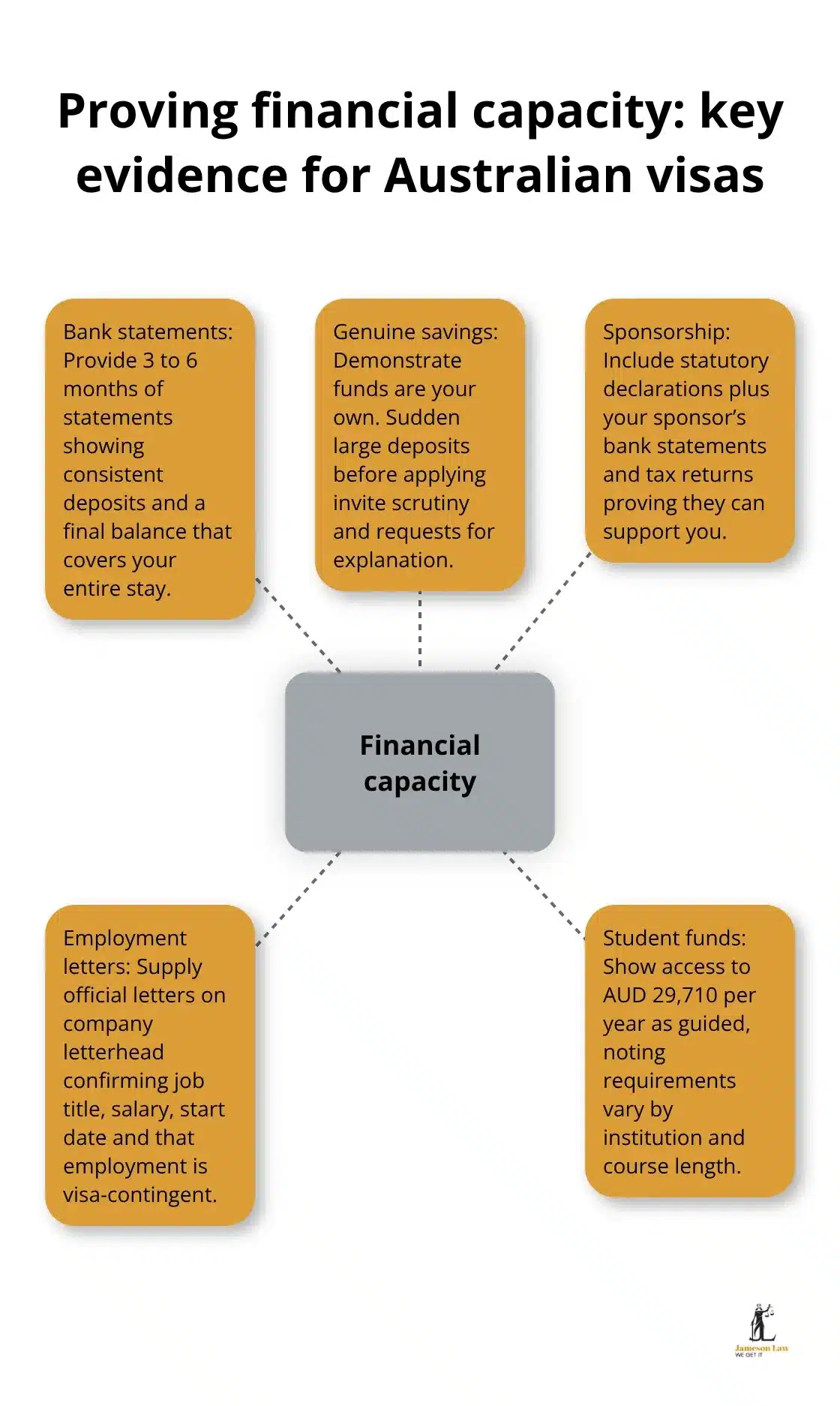
Bank statements form the backbone of this evidence, and you should provide statements covering the last three to six months showing consistent deposits and a final balance that exceeds what you’ll need for your entire visa period. The Department of Home Affairs expects to see genuine savings, not borrowed money that disappears after your visa receives approval, so accounts with sudden large deposits immediately before application submission raise red flags and invite requests for explanations about the source of those funds.
Sponsorship Documentation and Statutory Declarations
If someone else sponsors your stay, include statutory declarations from that person explaining their relationship to you and their commitment to financial support, alongside their own bank statements and tax returns proving they can actually afford to help you. For student visas, the Department of Home Affairs typically expects you to demonstrate access to AUD 29,710 per year according to their published guidance, though this varies by institution and course length, so check your specific institution’s financial requirements before deciding what amount to show.
Employment Letters and Income Verification
Employment letters from your sponsor or future employer carry significant weight because they confirm both your income capacity and genuine work intentions, and these letters must come from official company letterhead, include your job title, salary, employment start date, and confirmation that your employment is contingent on visa approval. Tax returns and financial records spanning the last two years provide the historical context that proves your financial stability is not temporary, and if you’re self-employed, include business financial statements, ABN registration details, and accountant-prepared documents rather than basic income statements.
Common Financial Documentation Mistakes
The critical mistake applicants make is submitting incomplete financial documentation and hoping case officers will overlook gaps. If you claim annual income of AUD 60,000 but provide only one month of bank statements showing deposits of AUD 3,000, case officers will question whether you actually earn that amount consistently. Many applications stall or face refusal because applicants fail to translate non-English documents or provide explanatory letters when their financial situation includes irregular income, redundancy payouts, or support from family members. You must translate every non-English financial document into English through an accredited translator, and if your income is irregular because you work in seasonal industries or freelance arrangements, attach a letter explaining your income pattern and showing how you’ve calculated your total available funds. Keep digital and physical copies of every financial document you upload, including receipts from the ImmiAccount showing what you submitted and when, because if the Department of Home Affairs requests additional information, you need to respond within 28 days and reference your original documents precisely.
Final Thoughts
Australian visa documentation requirements span four core categories: personal and identity documents, financial proof, employment verification, and health records. Each category serves a specific purpose in the Department of Home Affairs assessment process, and gaps in any one area trigger delays or refusal. The passport validity requirement, police clearance certificates, bank statements, and employment letters form the foundation of a successful application, yet applicants often underestimate how thoroughly case officers examine these documents for consistency and authenticity.
Early preparation separates applications that succeed from those that stall. Visa processing timelines extend to 7 to 9 months or longer for working visas, and gathering documents takes considerably longer than most people anticipate. Police clearances from overseas countries require two to three months, passport renewals take four to six weeks, and skills assessments demand additional time depending on your profession. Starting this process immediately removes the pressure of rushed submissions and incomplete documentation.
Verification matters as much as collection, and every non-English document requires official translation by an accredited translator while every financial document must demonstrate genuine, consistent funds rather than borrowed money. Visa documentation NSW requirements follow the same Department of Home Affairs standards as the rest of Australia, though NSW residents should verify state-specific requirements for police clearances through Service NSW. If your visa application involves complexities such as sponsorship arrangements or previous visa refusals, professional immigration advice becomes worthwhile, and we at Jameson Law can review your documentation before submission to identify gaps or inconsistencies.