![Partner Visa Timeline [Guide]](https://jamesonlaw.com.au/wp-content/uploads/emplibot/Partner-Visa-Timeline-_Guide__1786943453.jpeg.avif)
A spouse visa Australia application can take anywhere from several months to over a year, depending on your circumstances. The timeline matters because delays mean time apart from your partner and uncertainty about your future together.
At Jameson Law, we’ve guided hundreds of couples through this process. This guide breaks down exactly what happens at each stage, what can slow things down, and how to prepare your application to avoid unnecessary delays.
Which Partner Visa Path Applies to Your Situation
Three Main Partner Visa Routes
Australia recognises three main partner visa pathways, and understanding which one fits your circumstances is the first step toward realistic timeline planning. The Department of Home Affairs distinguishes between spouse visas for married couples, de facto partner visas for couples in genuine long-term relationships without marriage, and prospective marriage visas for couples planning to marry. Your choice between onshore (applying while in Australia) and offshore (applying from outside Australia) routes matters significantly for processing speed.
Onshore Versus Offshore: Processing Times
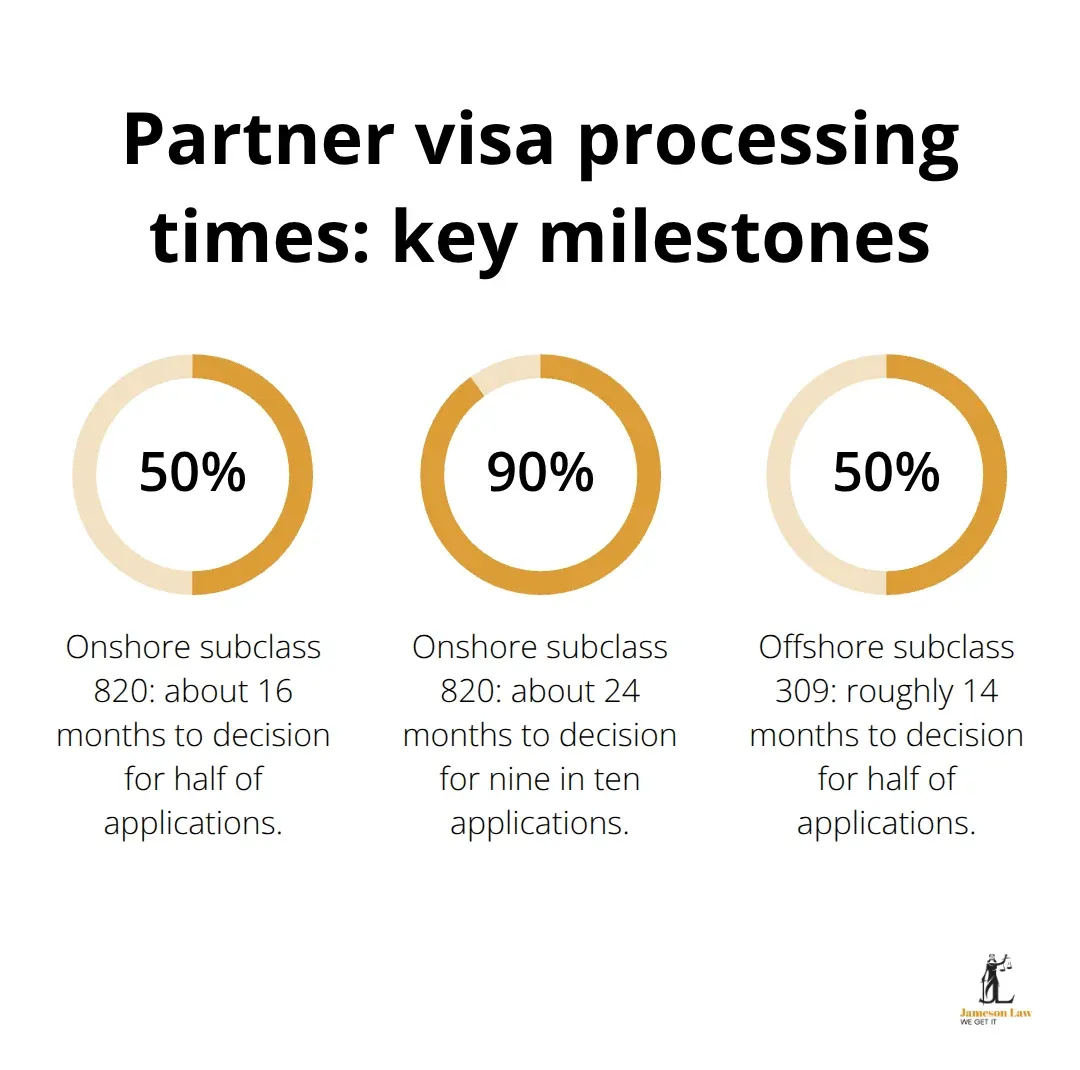
Onshore subclass 820 visas take about 16 months for 50% of applications and 24 months for 90%, according to Department of Home Affairs data, while offshore subclass 309 visas sit at roughly 14 months for the midpoint and 24–26 months for the slower end. The offshore subclass 100 (permanent) typically processes in about 10 months at the midpoint and 21 months for the slower tier. This two-stage framework means you receive a temporary visa first, then apply for permanent residency roughly two years later-the onshore 820 becomes 801, and the offshore 309 becomes 100.
De Facto Relationship Recognition
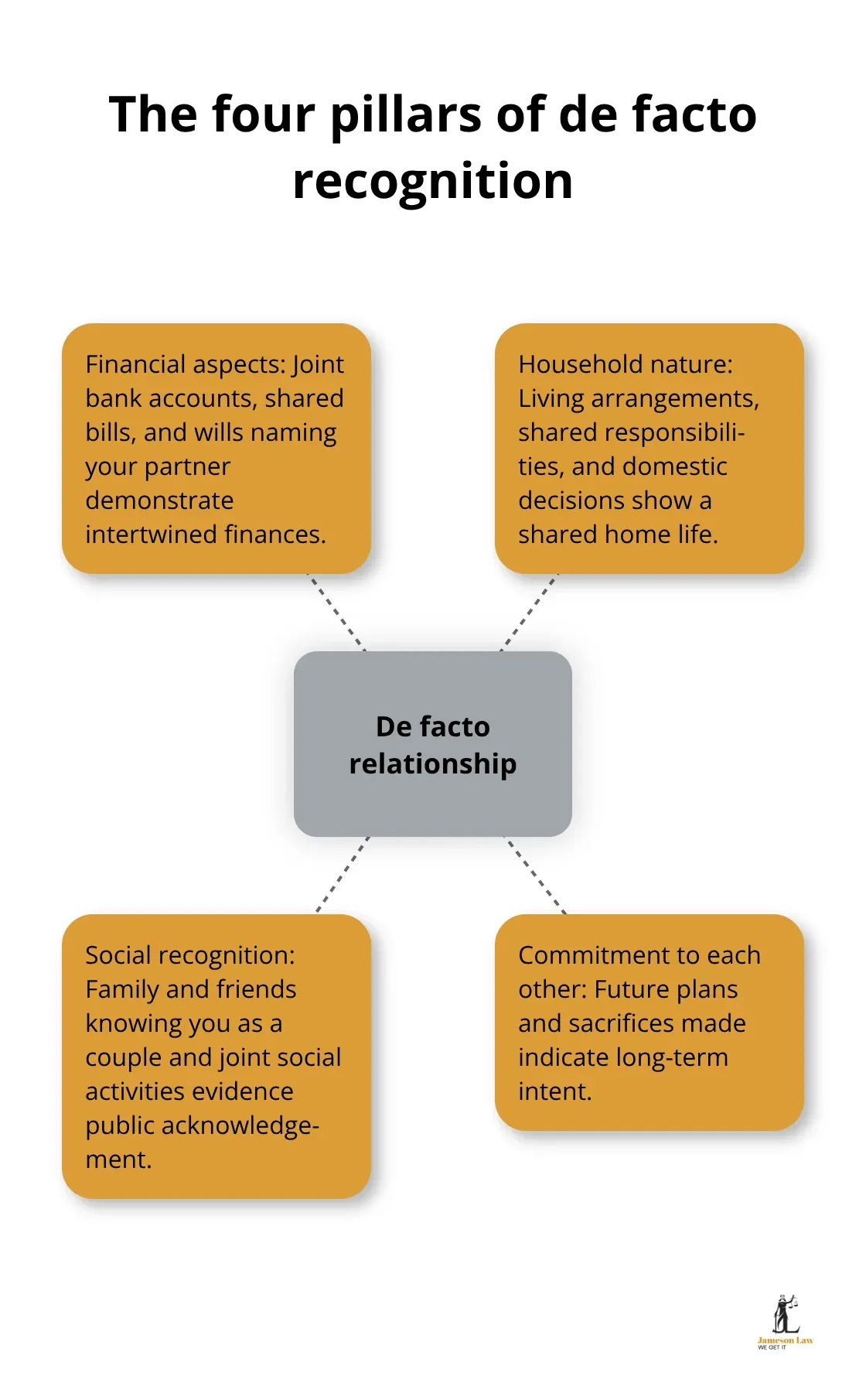
De facto recognition in Australia requires you to demonstrate a genuine relationship of at least 12 months, though the Department assesses this flexibly if you can show substantial commitment despite shorter duration. The four pillars the Department examines are financial aspects (joint bank accounts, shared bills, wills naming your partner), household nature (living arrangements, shared responsibilities, domestic decisions), social recognition (family and friends knowing you as a couple, joint social activities), and commitment to each other (future plans, sacrifices made).
Prospective Marriage Visas and When to Avoid Them
Prospective marriage visas are rarely used now because most couples either marry before applying or proceed via de facto recognition. The processing is slow and the visa validity is limited. If you’re already married or in a long-term de facto relationship, skip the prospective route entirely.
Making Your Onshore or Offshore Decision
The critical decision is onshore versus offshore. Try onshore if you’re already in Australia and want work rights and Medicare access during processing, or offshore if you’re outside Australia or prefer a cleaner separation between your current and visa-based life. Both routes lead to permanent residency within roughly 24–36 months total, but onshore suits couples needing immediate stability while offshore suits those with flexibility on location. Once you’ve identified your pathway, the next stage involves understanding what documentation the Department requires and how to structure your application to avoid common delays.
How Your Partner Visa Application Moves Through the System
Lodging Your Application and Initial Processing
Submitting your partner visa application through ImmiAccount marks the start of a structured but lengthy process. The Department of Home Affairs assigns a case officer to your file, who requests specific documentation and conducts health and character checks. The initial phase involves verification of your identity, relationship evidence, and sponsor eligibility, typically taking several weeks. You must check your ImmiAccount inbox regularly because missing a response deadline can add months to your timeline. The Department expects you to provide all required forms, police checks, medical assessments, and relationship evidence upfront-missing documents trigger a section 56 information request, which typically results in a deadline of around 28 days to respond. Front-loading your health and character checks before lodgement matters enormously because if your medical assessment and police clearance are already submitted, you eliminate one of the most common delay reasons.
Health and Character Assessment Procedures
Health and character assessments run parallel to your application review. The Department uses designated panel doctors for medical assessments under panel codes PIC 4005 or 4007, and results remain valid for 12 months from the examination date. A health undertaking, if required, stays valid for 6 months, so timing your medical strategically prevents expiry during processing. Police checks must cover all countries where you lived for more than 6 months in the last 10 years, and some countries take months to issue certificates-ordering these early prevents bottlenecks later.
The Genuine Relationship Test and Documentation Standards
The Department’s final decision depends on whether you satisfy the genuine relationship test across four pillars: financial commitment (joint accounts, shared bills, wills), nature of the household (living arrangements, domestic decisions), social aspects of the relationship (family acknowledgement, joint activities), and future commitment (plans together, sacrifices made). Small inconsistencies in dates or addresses across your relationship statement and supporting documents can trigger Public Interest Criterion 4020 scrutiny, which extends processing significantly. Consistency across all documents reduces the risk of intensified scrutiny and strengthens your credibility with the case officer.
Processing Timelines by Visa Subclass
The Department prioritises clearing older or more complex cases, so newer applications sometimes wait longer than published median times suggest. For onshore 820 visas, about 50% of applications receive a decision within 16 months and 90% within 24 months; for offshore 309 visas, roughly 50% within 14 months and 90% within 24–26 months. Once your temporary visa is granted, you face reassessment for permanent residency around the two-year mark, with the onshore 801 stage typically taking 8 months at the 50th percentile and 26 months at the 90th percentile.
What Happens After Your Temporary Visa Grant
The temporary visa grant is not the end of your journey-it marks the transition to the permanent residency stage. Your case officer will contact you around the two-year anniversary to begin the assessment for your permanent visa (801 onshore or 100 offshore). This reassessment examines whether your relationship has continued to be genuine and whether any changes in your circumstances affect your eligibility. Understanding these distinct stages helps you prepare mentally and practically for the full 24–36 month pathway to permanent residency. The next section examines the specific factors that can accelerate or delay your application at any of these stages.
What Actually Delays Partner Visa Decisions
Incomplete Applications and Missing Documentation
Incomplete applications represent the single biggest cause of processing delays, and Department of Home Affairs data confirms this pattern. When you submit missing documents, police checks, or medical assessments, the Department issues a section 56 information request, which gives you 28 days to respond. Missing that deadline or submitting partial information adds months to your timeline because your case sits in a queue until the response arrives. A medical assessment takes 2–4 weeks to schedule and complete, and police certificates from certain countries take 8–12 weeks to arrive, so you must order these early to avoid delays. The Department prioritises clearing older and more complex cases, which means newer applications sometimes wait longer than the published median times suggest.
Front-Loading Health and Character Checks
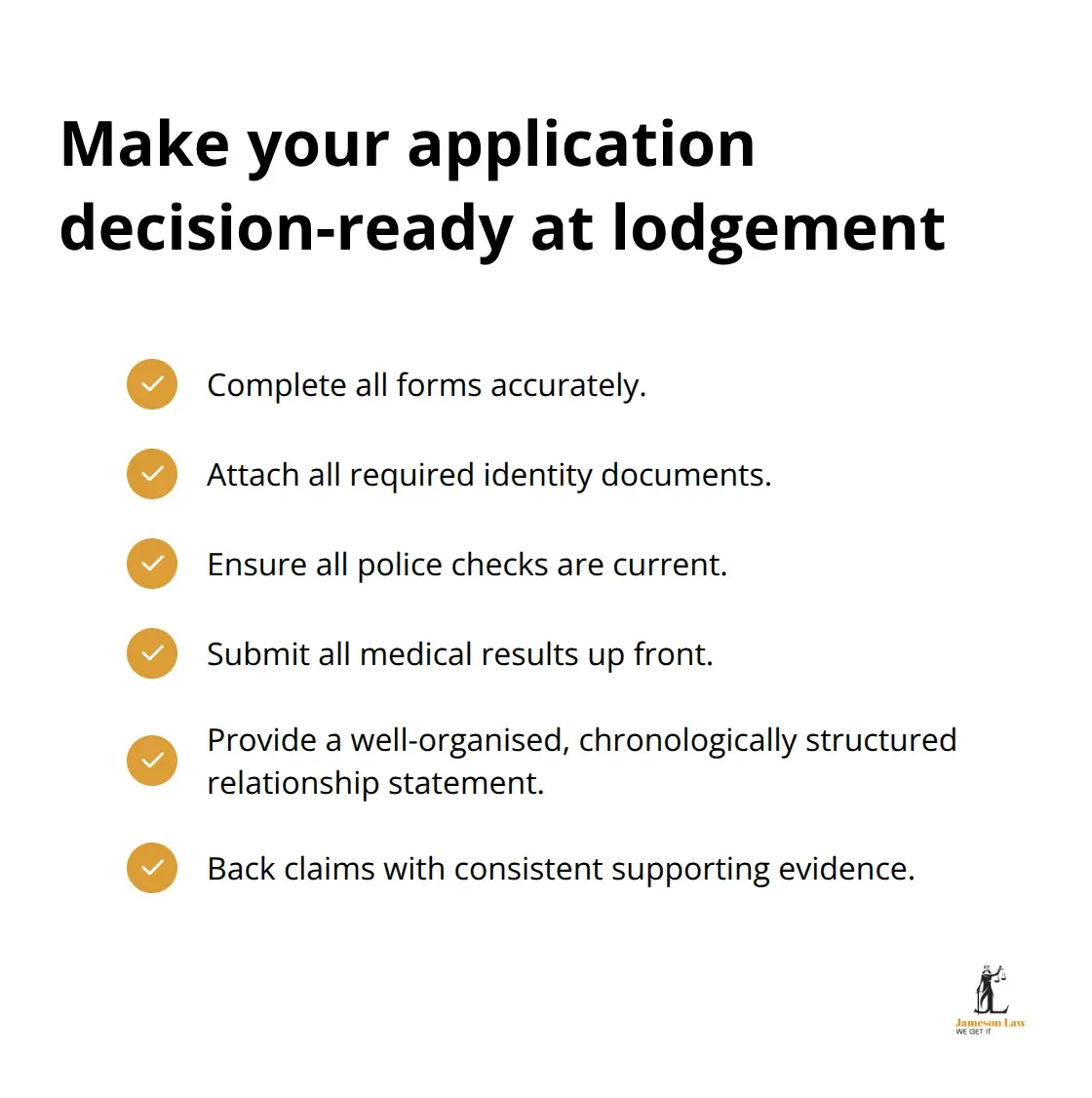
You eliminate one of the most common bottlenecks when you front-load your health assessments and police checks before lodgement. If your application is decision-ready at lodgement, with all forms completed accurately, all identity documents attached, all police checks current, and all medical results submitted, you signal to your case officer that your file requires minimal back-and-forth. A well-organised, chronologically structured relationship statement with clear milestones, backed by consistent supporting evidence, processes faster than a disorganised file requiring multiple information requests.
Relationship History Complexity and Consistency
Small inconsistencies in dates, addresses, or relationship timelines across your relationship statement and supporting documents trigger deeper scrutiny, extending processing significantly. If you lived separately, changed jobs frequently, or experienced prior relationship breakdowns, your case officer needs more time to assess the genuineness of your current relationship across the four pillars (financial commitment, household nature, social recognition, and future commitment). Consistency across every document reduces scrutiny risk and strengthens credibility with your case officer.
Application Volume and Processing Queues
Application volume at the Department fluctuates seasonally and depends on ministerial directions, but you cannot influence this factor. What you control is the quality and completeness of your submission. The Department’s focus on clearing older cases means your application moves at the pace of the queue ahead of you, but a decision-ready submission minimises the number of times your case officer must pause and request additional information.
Final Thoughts
A spouse visa Australia application demands patience, but it does not demand guesswork. The timeline you face depends largely on decisions you control: whether you submit a complete application, whether you front-load your health and character checks, and whether you present consistent, well-organised relationship evidence from day one. Most couples should plan for 12 to 24 months for the temporary visa stage, then another 8 to 26 months for permanent residency, depending on which subclass you hold and how quickly you respond to any information requests.
The Department of Home Affairs processes partner visas in order of complexity and case age, not strictly by receipt date. This means your application speed depends on the queue ahead of you, but your application quality determines how many times your case officer pauses to request additional information. Order your police certificates early because some countries take 8 to 12 weeks to issue them, and schedule your medical assessment well before lodgement so results arrive before your application does.
If your circumstances are complex, if you have experienced prior relationship breakdowns, or if you are unsure whether your relationship evidence meets the Department’s standard, professional guidance matters. We at Jameson Law provide immigration law services to help you compile a decision-ready file and navigate the sponsorship, evidence, and scheduling complexities that slow many applications.