A visa rejection can feel like a setback, but it’s not the end of your immigration journey. We at Jameson Law know that understanding why your application was denied is the first step toward a successful outcome.
Whether you’re considering an immigration visa appeal or exploring reapplication options, this guide walks you through what happens next and how to strengthen your case.
Why Most Visa Rejections Happen
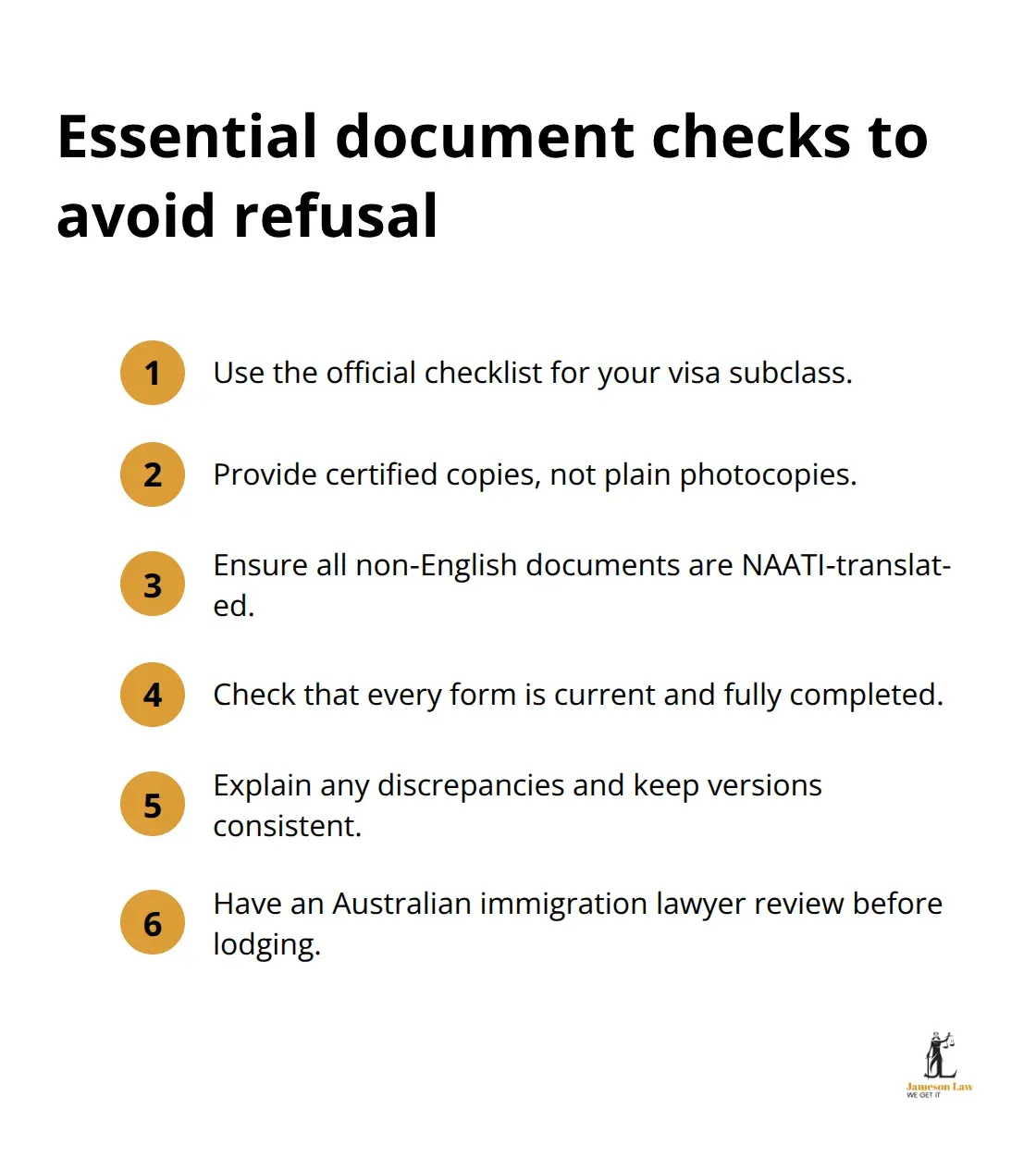
Documentation errors dominate visa rejections across Australia. Visa refusals happen for concrete, preventable reasons, with incomplete or incorrect paperwork remaining the leading cause of refusals. Most applicants fail to use the official document checklist for their specific visa subclass, submitting outdated statements or missing evidence that directly addresses the visa criteria. Non-English documents must receive translation by NAATI-accredited translators-unofficial translations face automatic rejection. We at Jameson Law observe this pattern repeatedly: applicants invest months in preparation only to have their application returned because they overlooked a single required form or included a photocopy instead of a certified copy. The fix is straightforward but demands precision. Before you lodge your application, cross-reference every single document against the official checklist, verify all translations meet NAATI standards, and have a qualified Australian immigration lawyer review your application for consistency and compliance. This step alone eliminates the majority of preventable rejections.
Health and Character Requirements
Health and character checks are mandatory for most visas, and failures here carry serious weight. You must complete health examinations through approved panel doctors and obtain police clearance certificates for every country you have lived in for more than six months. The Medical Officer of the Commonwealth assesses your medical suitability based on your condition itself-private insurance or your ability to pay out-of-pocket cannot offset a health concern. Character refusals often stem from incomplete declarations. If you have had any criminal history, associations with sanctioned groups, or past visa breaches like overstays or condition violations, you must disclose these honestly. Hiding or minimising past issues triggers automatic refusals under Public Interest Criterion 4020.
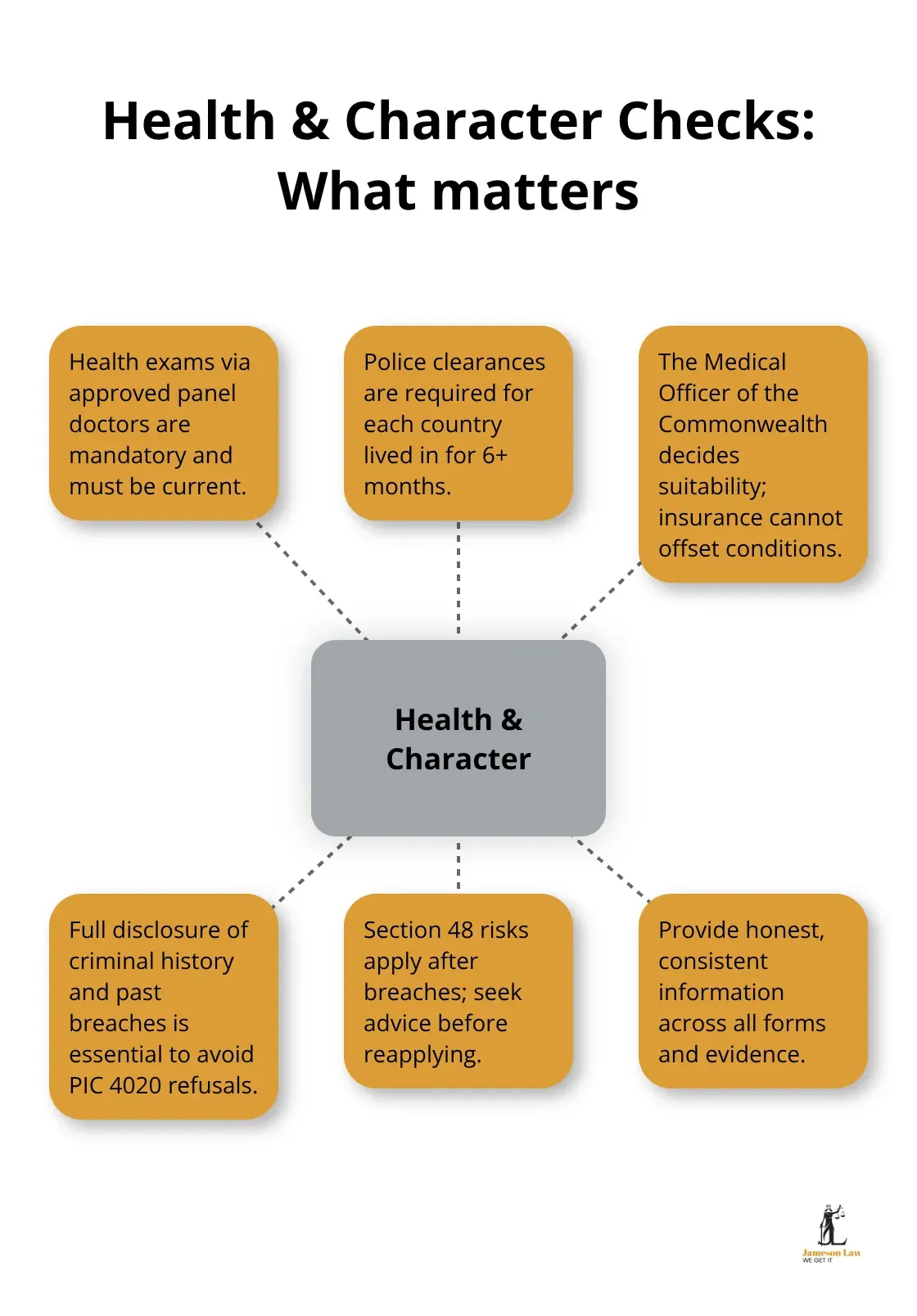
Past visa breaches create particular risk: overstaying even briefly or breaching visa conditions can bar you from future applications under section 48 restrictions. Transparency here is non-negotiable-if you have previous immigration issues, seek advice before you reapply to understand whether you remain eligible and what evidence might address those concerns.
Financial Evidence That Passes Scrutiny
Insufficient financial evidence accounts for countless rejections. Applicants submit bank statements without explaining where the money came from, fail to show they can support their stay and return home, or provide outdated documents. The Department of Home Affairs requires diverse, verifiable evidence: current bank statements, pay slips, audited accounts, tax records, and clear credit card limits that demonstrate genuine financial capacity. More importantly, your funds must show a clear and consistent trail across documents. A sudden deposit days before application submission raises immediate red flags. If you have a sponsor, the sponsor’s finances must receive full documentation-missing or outdated sponsor information alone triggers refusals. For skilled visa applicants, you must meet income thresholds; for student visas, you need to cover tuition and living costs. The threshold varies by visa type, but the principle remains constant: provide current evidence, explain fund sources, and demonstrate you can genuinely afford your intended stay without becoming a burden on Australian services. Vague or incomplete financial documentation signals either inability to pay or deliberate concealment, both fatal to your application.
What Happens When You Receive a Rejection
Once the Department of Home Affairs issues a rejection letter, your next actions depend on understanding exactly why your application failed. The letter will specify the reasons for refusal and outline whether the Administrative Appeals Tribunal can review your decision. Some refusals are not reviewable, while others offer a clear pathway to challenge the outcome. Your decision letter also states strict time limits for any appeal-these deadlines cannot be extended, so you must act quickly. If your refusal involves character grounds under section 501 or related provisions, the implications extend beyond the current application: any undecided visa applications or visas you already hold may also face refusal or cancellation as a consequence. Understanding these ripple effects helps you plan your next move strategically, whether that involves appealing the decision or preparing a stronger reapplication.
What to Do Immediately After Rejection
Read Your Rejection Letter Carefully
Your rejection letter is not just a notice of failure-it is a roadmap for your next move. The Department of Home Affairs must specify the exact reasons for refusal, and this detail determines whether you can appeal or must reapply. Read the letter carefully and identify which criteria you failed to meet. The letter will also state whether the Administrative Appeals Tribunal can review your decision. Some refusals are not reviewable at all, particularly those involving ministerial discretion or certain character grounds.
Understand Your Appeal Deadline
If the AAT can review your case, you typically have 28 days from the date of the decision to lodge an application. This deadline is absolute-the Tribunal cannot extend it under any circumstances. Many applicants miss this window while gathering documents or arranging legal advice. Write down the exact date of your decision letter, photograph or scan it, and keep multiple copies. You will need this letter to apply for any review or to lodge a new application.
Assess the Ripple Effects of Your Refusal
If your rejection involved character grounds under section 501 of the Migration Act 1958, the consequences ripple beyond the current application. Any visas you already hold may face automatic cancellation, and pending applications may be refused as a consequence. Your decision letter will confirm this. If you received a Request for Further Information before the refusal, check whether you responded within the 28-day response period. Failing to provide requested information typically triggers automatic refusal, and this detail affects how you approach reapplication.
Collect Evidence That Addresses Your Specific Reasons for Refusal
Do not simply resubmit identical documents. If your rejection cited insufficient financial evidence, collect current bank statements from the past three months, recent pay slips, and tax returns for the past two years. If health was the issue, obtain a fresh medical examination from an approved panel doctor and provide the full report. If character was the problem and you have past criminal history, obtain an updated police clearance certificate for every country where you have lived for more than six months. Prepare a statutory declaration explaining the circumstances and any rehabilitation efforts.
Verify Your Documents Meet Current Standards
The Department of Home Affairs publishes official document checklists for each visa subclass on its website, and these checklists are updated regularly. Cross-reference the current checklist against what you submitted previously. Visa requirements can change, and documents that were acceptable twelve months ago may no longer meet current standards. If your documents included non-English materials, verify that translations were completed by NAATI-accredited translators (unofficial translations cause automatic rejection). Before you lodge anything new, have a qualified Australian immigration lawyer review your proposed submission for consistency, compliance, and completeness. This step prevents you from repeating the same mistakes and positions you to understand whether an appeal or a fresh application offers the stronger path forward.
Your Appeal and Reapplication Paths
After a visa rejection, you face two distinct pathways: appealing the Department’s decision through the Administrative Appeals Tribunal, or lodging a fresh application with strengthened evidence. The choice depends entirely on the specific reasons for your refusal and whether the AAT has jurisdiction to review your case. Not all refusals are reviewable-character decisions under section 501 of the Migration Act 1958, ministerial actions, and certain protection visa outcomes fall outside AAT review. Your rejection letter explicitly states whether review is available.
Understanding Your Appeal Timeline and Costs
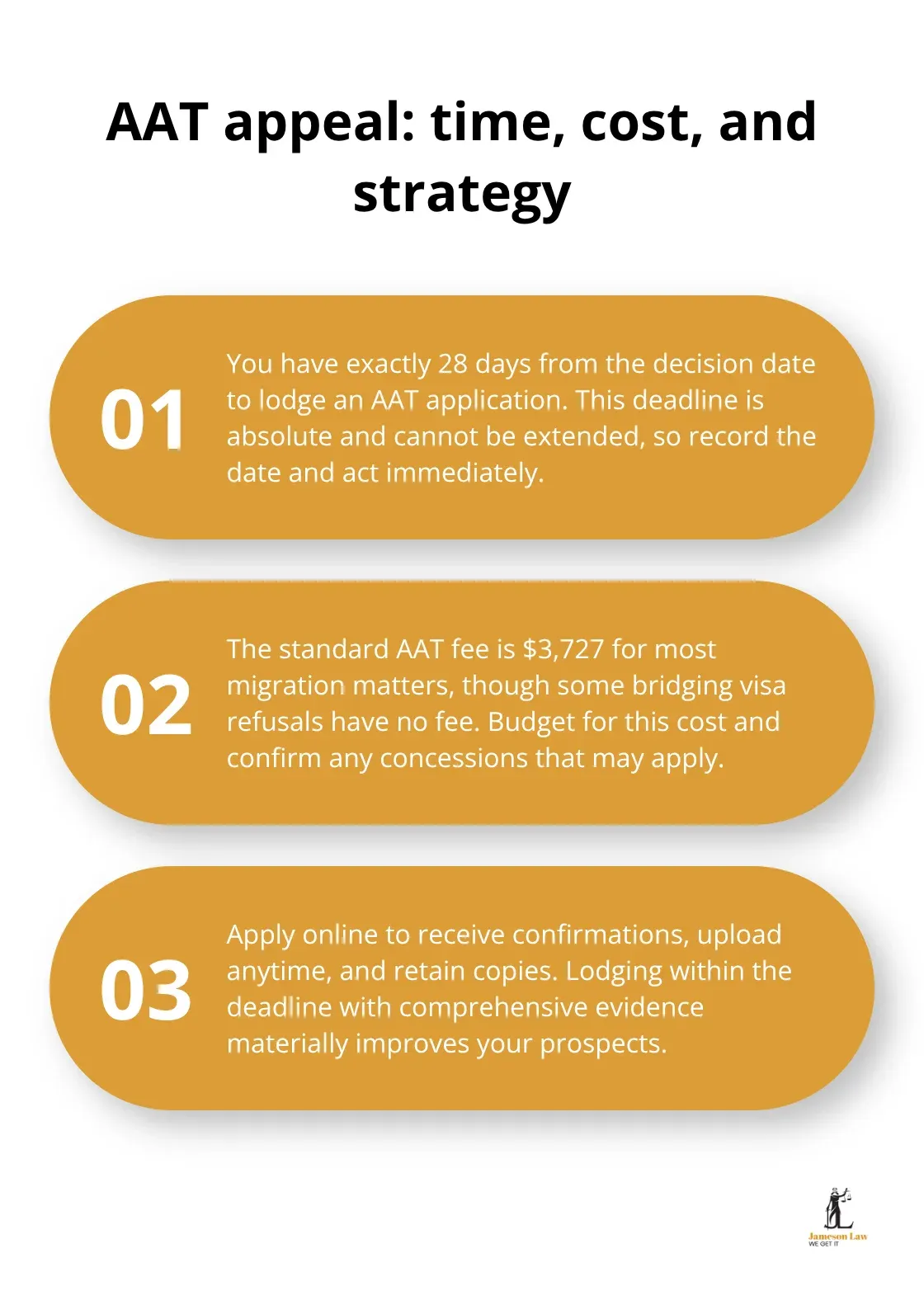
If the AAT can review your decision, you have exactly 28 days from the date of the letter to lodge an application. This deadline is absolute and cannot be extended under any circumstances. The standard application fee is $3,727 for most migration decisions, though some bridging visa refusals attract no fee. Online applications prove strongly preferable to paper forms because you receive automatic confirmations, can upload documents at any time, and retain copies of all previously submitted materials. The AAT processed thousands of migration cases in 2025, and applicants who lodge within the deadline and provide comprehensive supporting evidence significantly improve their prospects. If you miss the 28-day window, the AAT cannot extend it, so this deadline demands immediate action.
Strengthening Your Financial Evidence
The strength of your next move depends on addressing the exact reasons for the original refusal. If your rejection cited incomplete financial documentation, do not resubmit the same bank statements. Instead, provide current statements from the past three months, recent payslips, audited accounts if self-employed, tax returns covering the past two years, and written explanations for any unusual deposits or fund transfers. The Department requires a clear funds trail across all documents. A sudden deposit days before application submission raises immediate red flags and suggests either concealment or inability to demonstrate genuine financial capacity.
Addressing Health and Character Issues
If health was your barrier, obtain a fresh medical examination from an approved panel doctor and submit the complete report rather than a summary. If character issues caused the refusal and you have a criminal history, obtain an updated police clearance certificate for every country where you have lived for more than six months. Prepare a statutory declaration detailing the circumstances, any rehabilitation efforts, and your current conduct. For student visas rejected on Genuine Temporary Entrant grounds, rewrite your statement entirely rather than copying internet templates. Your GTE must demonstrate genuine study intentions, clear career progression, and strong ties to your home country (employment, property ownership, or immediate family relationships).
Preparing Your Reapplication
Reapplication succeeds only when you systematically address each reason the Department cited for refusal. Submitting identical documents or making minor tweaks guarantees another rejection. Before you lodge anything, have a qualified Australian immigration lawyer review your proposed submission to confirm it meets current standards and directly addresses each ground of refusal. This step prevents you from repeating the same mistakes and positions you to understand whether an appeal or a fresh application offers the stronger path forward.
Final Thoughts
A visa rejection is not permanent. The Department of Home Affairs issues refusals for specific, identifiable reasons, and most of these reasons can be addressed through either an immigration visa appeal or a carefully prepared reapplication. Read your rejection letter thoroughly, note the specific grounds for refusal, and verify whether the Administrative Appeals Tribunal can review your decision.
If review is available, you have 28 days to lodge an application-this deadline cannot be extended. If appeal is not an option, reapplication with strengthened evidence becomes your path forward. Either way, do not simply resubmit identical documents; address each reason for refusal directly with current, verifiable evidence that demonstrates you now meet the criteria the Department cited.
A qualified Australian immigration lawyer can review your rejection letter, assess whether appeal or reapplication offers the stronger option, and guide you through gathering evidence that directly addresses the Department’s concerns. We at Jameson Law specialise in immigration law and understand the specific requirements for each visa subclass. Contact us to discuss your situation and explore your options moving forward.