NSW workers compensation limits determine how much you can receive if you’re injured at work. Many workers don’t understand these caps, which can lead to unrealistic expectations about their entitlements.
At Jameson Law, we’ve seen firsthand how confusion about compensation limits affects injured workers. This guide breaks down the actual amounts you’re entitled to, how they’re calculated, and when you might be able to claim beyond the standard limits.
NSW Weekly Compensation Rates and Payment Duration
Maximum Weekly Compensation Amounts
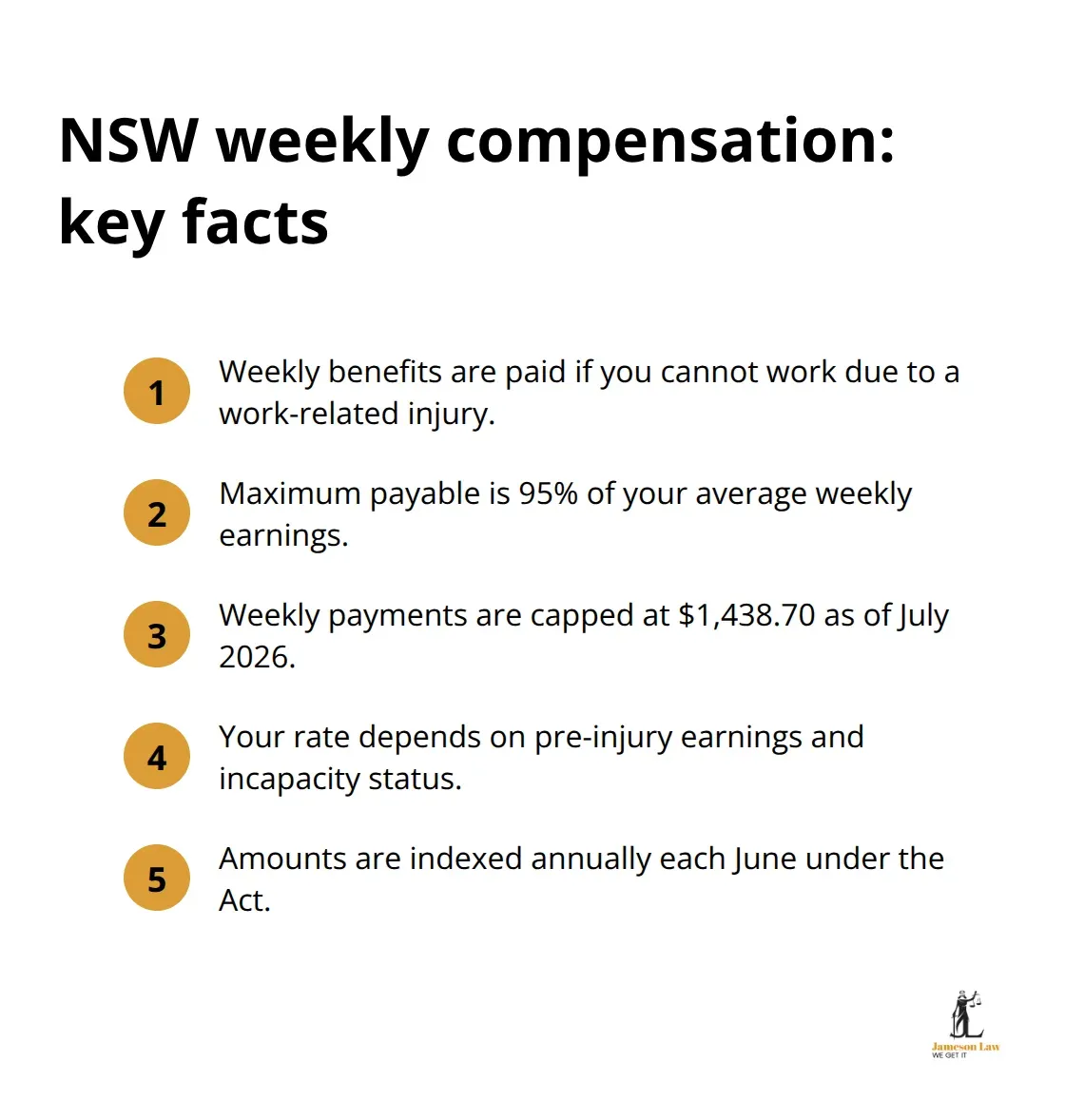
NSW workers compensation provides weekly benefits when you’re unable to work due to a work-related injury. The maximum weekly compensation amount in NSW is currently set at 95% of your average weekly earnings, up to a maximum of $1,438.70 per week as of July 2026. This cap applies to most workers, though the actual rate you receive depends on your pre-injury earnings and whether you’re classified as fully or partially incapacitated. The Workers Compensation Act 1987 (NSW) sets these limits, and indexation occurs annually each June to account for wage growth.
How Your Weekly Rate Gets Calculated
The calculation itself is straightforward once you know your average weekly earnings. If you earned $1,500 per week before injury, you’d receive 95% of that amount ($1,425), which stays below the cap. However, if you earned $2,000 weekly, your entitlement would be capped at the maximum $1,438.70 rather than the full 95% of your earnings. This matters because many workers assume they’ll receive their full pre-injury wage, which isn’t how the scheme operates.
Duration of Weekly Benefit Payments
Your weekly benefits continue for different periods depending on your injury type and whether you recover or remain partially incapacitated. If you’re totally incapacitated, you receive weekly payments for up to 130 weeks, after which you may transition to permanent impairment benefits or other entitlements. Partial incapacity benefits run for a shorter period, typically up to 52 weeks, though this can extend if your condition doesn’t improve.
Beyond the Standard Scheme
The scheme covers lost wages during your recovery, but it’s not designed to replicate your full income indefinitely. Many injured workers at some point consider whether they have grounds for a negligence claim against a third party, which can provide additional compensation beyond the workers compensation scheme limits. This distinction between workers compensation entitlements and third-party negligence claims becomes particularly important when your weekly payments approach their end date.
Lump Sum Payments After Work Injury
Permanent Impairment Lump Sums
When your weekly benefits end, NSW workers compensation may provide lump sum payments depending on your injury outcome. The scheme distinguishes between two main types of lump sums, and understanding which applies to you makes a significant difference to your total entitlement.
Permanent impairment lump sums apply when you’ve recovered as much as possible but retain lasting effects from your injury. These payments acknowledge that your earning capacity has been reduced permanently, even if you return to work. WorkCover assesses your impairment level and expresses it as a percentage-this assessment determines your lump sum amount.
Under the Workers Compensation Act 1987 (NSW), the maximum lump sum for permanent impairment is $220,000 as of 1 July 2026, with indexation occurring annually. You’ll only reach this maximum if you’re assessed at the highest impairment levels, typically 20% whole person impairment or above. Most workers receive substantially less because their assessed impairment falls below these thresholds.
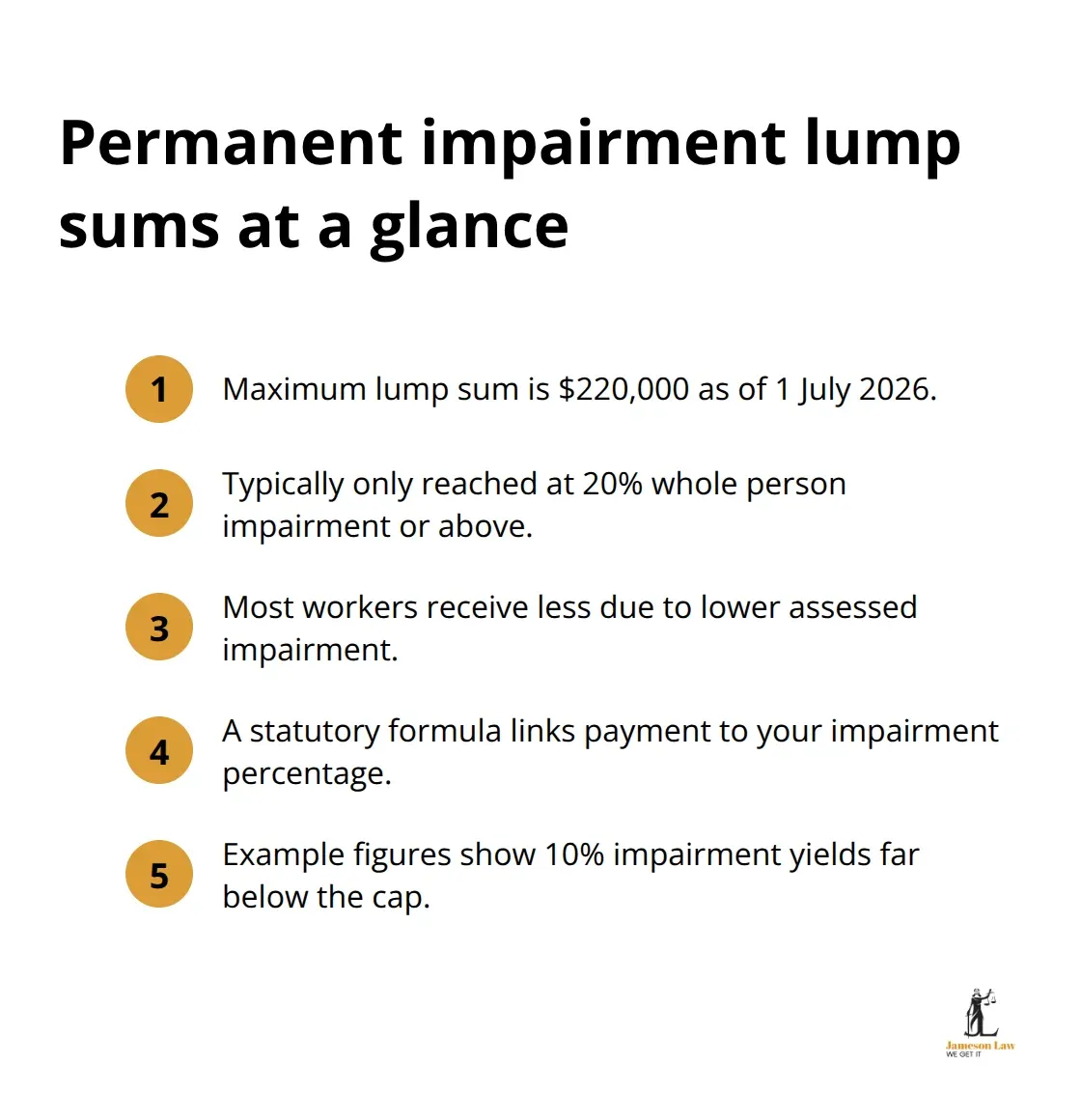
The calculation uses a statutory formula that multiplies your pre-injury weekly earnings by a factor determined by your impairment percentage. If you earned $1,400 weekly and received a 10% impairment rating, your lump sum would be significantly lower than the maximum cap. This is where many injured workers feel shortchanged, because they expect compensation that reflects their lost earning potential over their remaining working life, not a fixed formula-based amount.
Death Benefits and Dependant Entitlements
Death benefits operate on a completely different basis and apply only when a work-related injury causes death. Dependants receive weekly payments and lump sum entitlements, with the total compensation structured to support the deceased worker’s family.
Death benefits and dependant entitlements include a lump sum payment and weekly payments for each dependent child up to age 16, or age 21 if they are in full-time education. A surviving spouse receives 40% of the deceased worker’s average weekly earnings, capped at $1,438.70 per week, plus a lump sum of $48,000. The scheme also provides a funeral benefit of up to $15,000 to cover burial or cremation costs, which goes to whoever arranged the funeral.
These payments continue for the duration specified under the legislation, meaning a surviving spouse may receive weekly payments for life, while children’s payments cease once they reach the age limit.
Taking Action on Death Claims
If you’ve lost a family member in a work-related incident, you need to lodge a claim immediately because time limits apply. Notifying the employer and WorkCover within the prescribed timeframes protects your family’s entitlements. The complexity of death benefit claims-particularly when dependants have different eligibility periods and payment structures-makes early professional guidance valuable as you navigate what comes next.
Common Misconceptions About Compensation Limits
What the Scheme Actually Covers
Many injured workers overestimate what the NSW workers compensation scheme will pay them, largely because they misunderstand which injuries and situations fall within the system. The scheme covers work-related injuries and illnesses that arise out of or in the course of employment, but this doesn’t mean every injury at work qualifies. If you’re injured while committing a serious crime, you lose your entitlement entirely under section 11A of the Workers Compensation Act 1987 (NSW). Similarly, injuries caused solely by your serious and wilful misconduct can bar your claim.
You must prove the injury genuinely arose from your employment, not simply that it happened to occur at your workplace. A worker who suffers a heart attack during their shift might struggle to establish a workers compensation claim unless they can demonstrate the work itself contributed to the medical event. This distinction matters enormously because it determines whether you receive any compensation at all, not just whether you hit the weekly or lump sum caps.
How Limits Apply to Different Injury Types
Different injury types trigger different compensation limits, and permanent impairment lump sums vary depending on the nature and severity of your injury. A psychological injury from workplace bullying operates under different timeframes and assessment criteria than a physical injury from machinery. Understanding these distinctions prevents you from accepting inadequate settlements or missing deadlines that could have opened more valuable claims.
The Role of Negligence in Exceeding Standard Limits
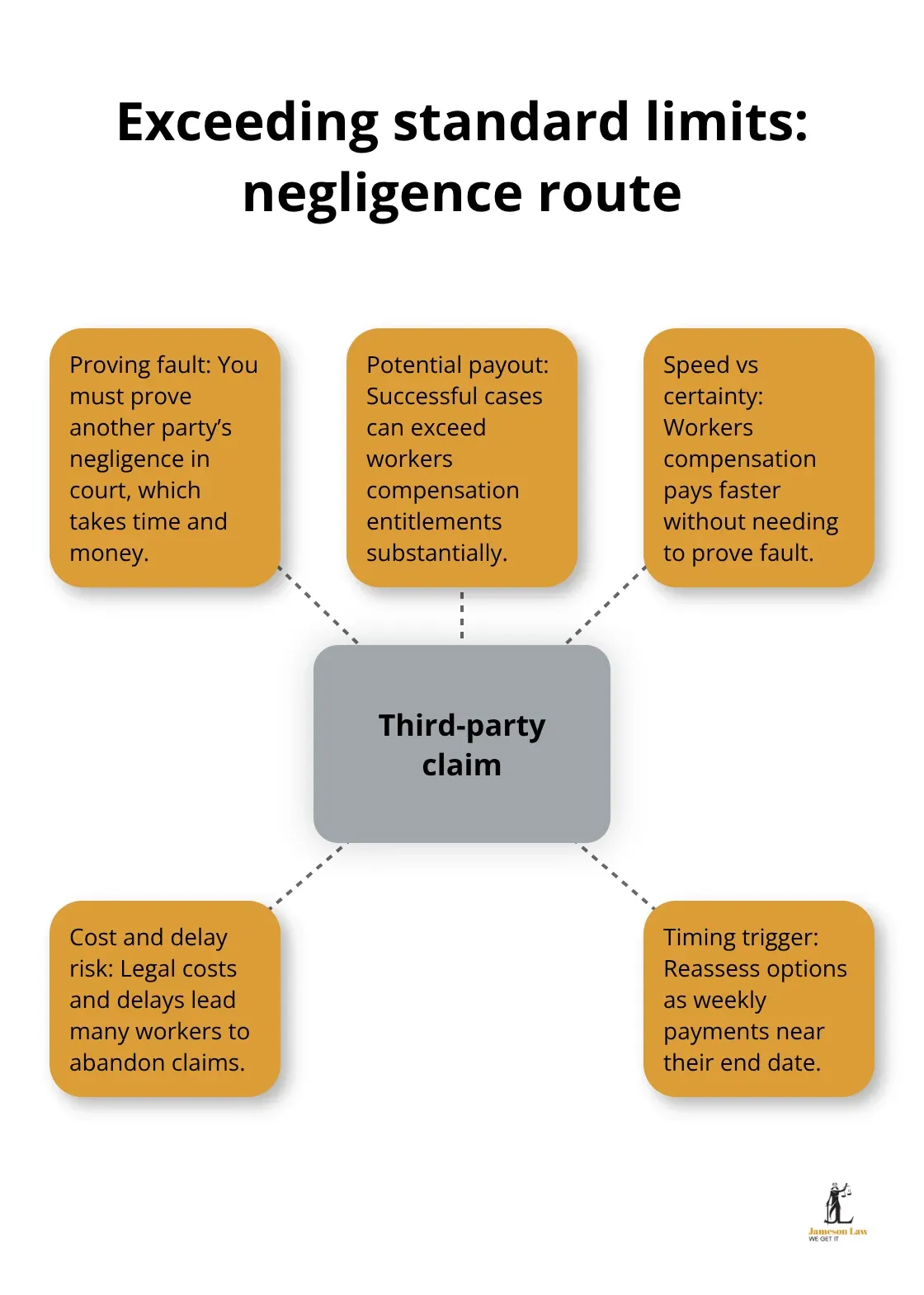
You can actually pursue a third-party negligence claim against someone other than your employer if another party’s negligence caused your injury, and this claim sits entirely outside the workers compensation limits. If a defective product manufactured by a supplier causes your workplace injury, you might claim against that manufacturer for damages that far exceed your workers compensation entitlements.
The challenge is that third-party claims require proving negligence in court, which takes time and money, whereas workers compensation provides faster payments without needing to prove fault. Many workers abandon third-party claims because the legal costs and delays seem overwhelming, yet settling prematurely means accepting workers compensation when a successful negligence case could yield substantially more. The distinction between workers compensation entitlements and third-party negligence claims becomes particularly important when your weekly payments approach their end date, as you may still have grounds to pursue additional recovery.
Final Thoughts
NSW workers compensation limits provide a safety net when you’re injured at work, but they don’t fully replace your income or compensate for all your losses. The weekly caps, lump sum maximums, and eligibility rules create a structured system that works for straightforward injuries yet leaves gaps for workers with complex situations or severe long-term impacts. Understanding these limits shapes realistic expectations about your entitlements and helps you identify whether additional claims might apply to your situation.
Third-party negligence claims sit entirely outside NSW workers compensation limits, meaning you might pursue additional compensation if someone other than your employer caused your injury. This distinction becomes critical when your weekly payments run out or when your lump sum feels inadequate for your actual losses. The complexity of calculating entitlements, meeting deadlines, and identifying whether third-party claims apply makes professional guidance valuable as you navigate your options.
We at Jameson Law help injured workers understand their full range of options and pursue the compensation they’re entitled to. Contact us to discuss your situation and explore what comes next for your claim.