A workplace injury can turn your life upside down, leaving you uncertain about your rights and next steps. Workers compensation NSW claims exist to protect you, but navigating the process requires understanding eligibility, deadlines, and proper documentation.
At Jameson Law, we’ve guided countless workers through successful claims. This guide walks you through each stage, from notifying your employer to avoiding costly mistakes that could jeopardise your entitlements.
Who Qualifies and What Counts as a Workplace Injury
Not every injury that occurs at work qualifies for workers compensation in NSW. The key distinction is whether your injury or illness arose out of or in the course of your employment. This means the injury must have a direct connection to your work duties, workplace environment, or work-related activities. If you suffered an injury while performing something completely unrelated to your job, even if it happened at your workplace, the claim will likely fail. icare, the NSW government workers compensation insurer, assesses this connection carefully.
Who the Scheme Covers
Most employees in NSW are covered by the workers compensation scheme, including full-time, part-time, and casual workers. The main exceptions are independent contractors, self-employed people, and workers earning below the minimum threshold. If you’re unsure about your employment status, this distinction matters enormously because it determines whether you can claim at all. Your employer’s insurer will verify your coverage status when you lodge your claim.
Types of Injuries That Qualify
Physical injuries are the obvious cases: fractures, lacerations, burns, and sprains sustained during work activities all qualify. NSW workers compensation also covers repetitive strain injuries, occupational deafness, and work-related stress conditions if medical evidence supports the work connection. Mental health conditions triggered by workplace incidents or ongoing workplace factors can qualify, though these require stronger medical documentation. Occupational diseases-conditions caused by exposure to workplace hazards over time-also qualify, such as asbestos-related illnesses or chemical exposures.
The critical point is that you need medical evidence linking your condition to your work. Without this documentation, insurers will reject your claim regardless of how genuine your injury is. You must obtain proper medical assessment immediately after an incident or when symptoms appear.
The Six-Month Deadline
You have six months from the date of your injury to lodge a claim with your insurer. This is a hard deadline under NSW law, and missing it typically means losing your entitlements entirely. Many workers miss this window because they delay reporting to their employer or assume they can claim later if their condition worsens.
The clock starts on the injury date, not when you first feel pain or when symptoms become severe. If you suffered a workplace injury today and don’t lodge a claim within six months, your insurer will reject your claim. Report your injury to your employer immediately, preferably in writing, and keep a copy.
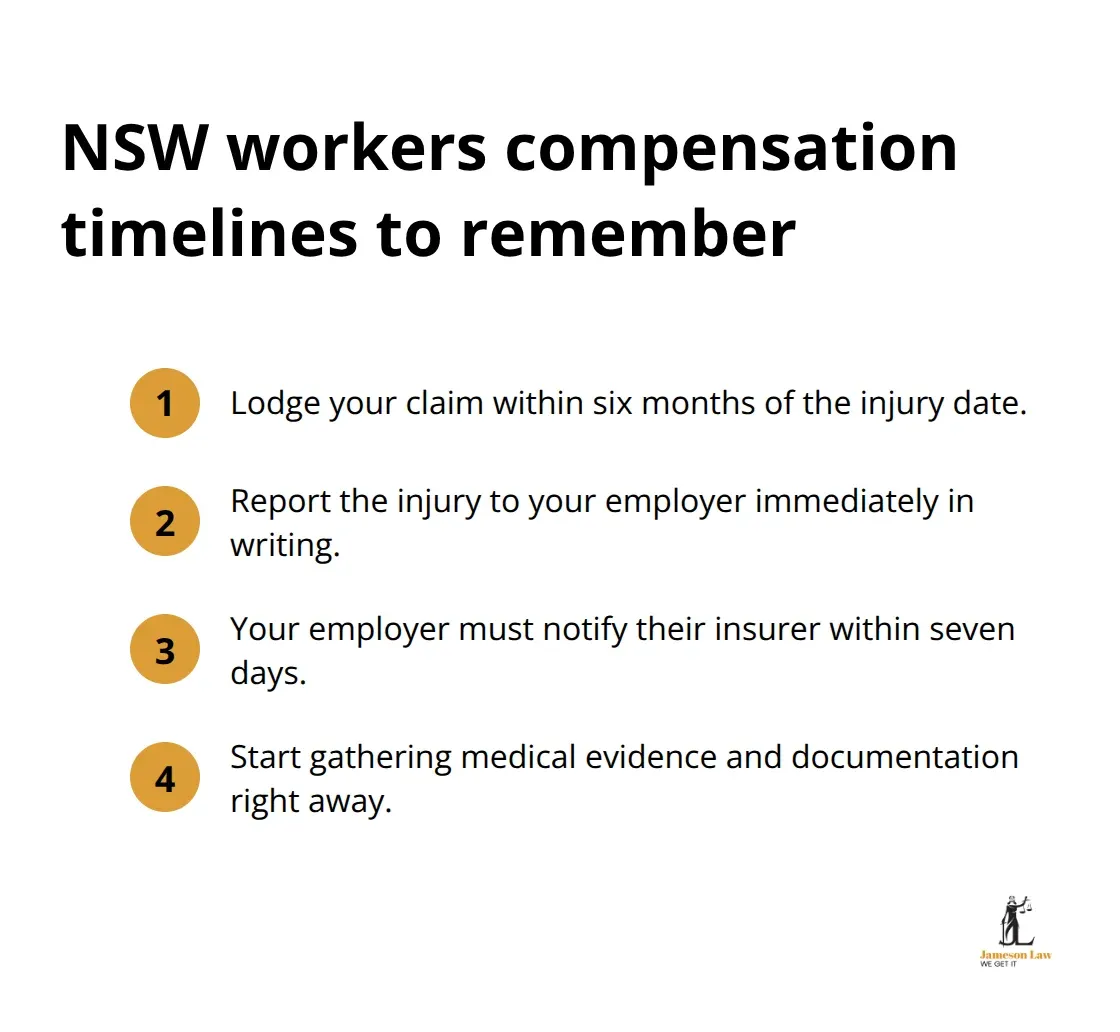
Your employer must then notify their insurer within seven days. This notification triggers the formal claims process, but it doesn’t stop your six-month countdown. You should start gathering medical evidence and documentation now, not later.
Understanding your eligibility and the types of injuries that qualify sets the foundation for a successful claim. The next step involves taking action immediately after your injury occurs-starting with how you notify your employer and what documentation you need to collect.
Taking Action: From Injury Report to Lodging Your Claim
The moment you sustain a workplace injury, your actions determine whether your claim succeeds or fails. Immediate notification to your employer creates a documented record that protects you later.
Report Your Injury in Writing
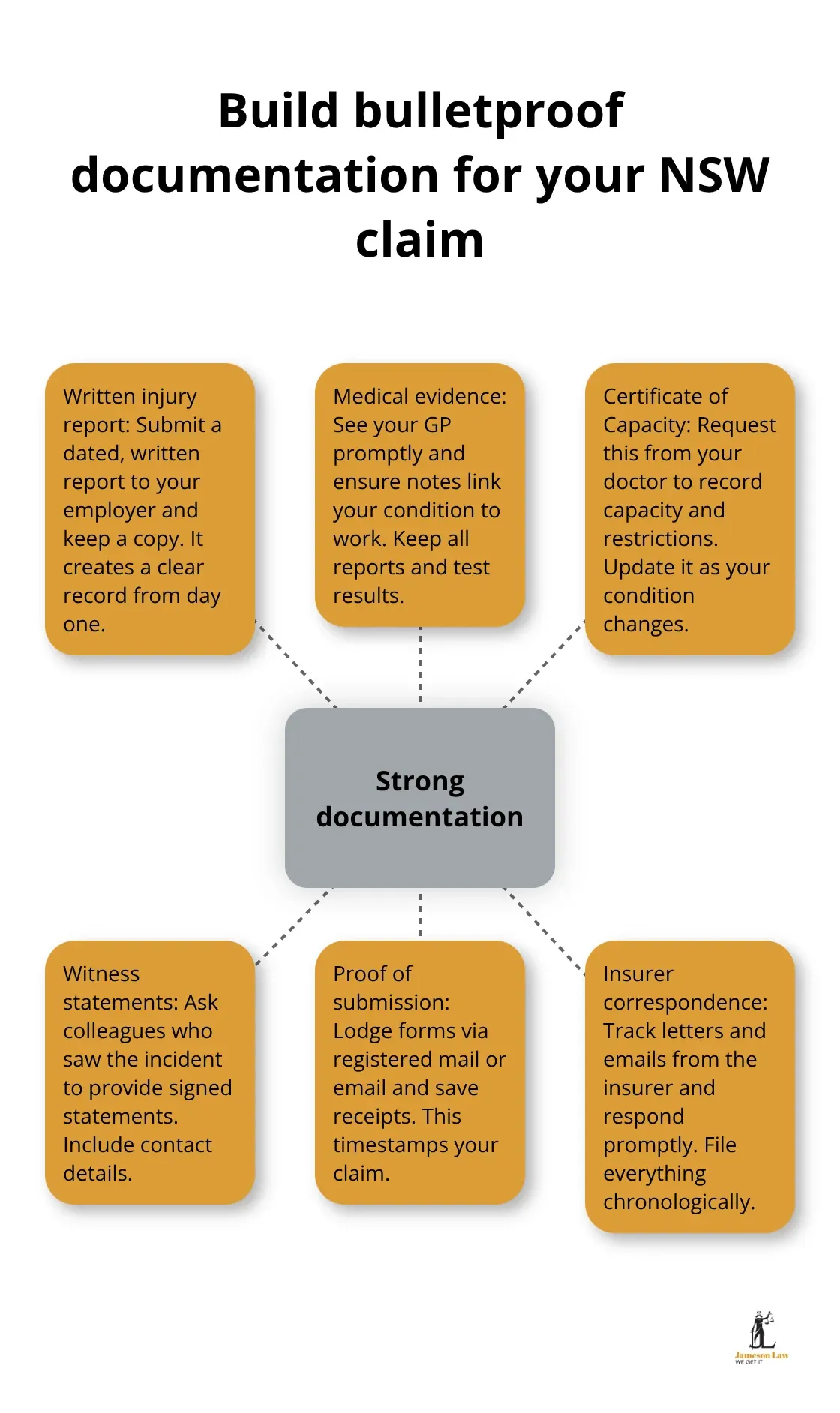
Write a simple email or letter stating the date, time, nature of the injury, and how it occurred. Keep a copy for yourself and ask your employer to sign and date a physical copy if possible. Your employer must then notify their insurer within 48 hours of becoming aware of the injury, which triggers the formal claims process.
This window is tight, so don’t assume your employer will handle it automatically. Follow up in writing if you haven’t received confirmation that notification has occurred. A written record protects you if disputes arise about when your employer notified the insurer.
Obtain Medical Documentation Immediately
Medical documentation is equally critical because without it, your claim dies regardless of how genuine your injury is. See your GP or a specialist immediately after the injury, even if symptoms seem minor. Many workers delay medical treatment thinking they’ll recover naturally, then find their claim rejected because there’s no medical evidence linking their condition to work.
Your treating doctor must document the injury, your symptoms, your work duties, and how the injury affects your ability to work. This information becomes the foundation of your entire claim. Request a Certificate of Capacity from your doctor, which formally documents your current ability to work and any restrictions. Keep copies of all medical reports, test results, imaging scans, and treatment notes in a dedicated folder.
Submit Your Claim Using the Official Form
When you submit your claim to the insurer, use the official Worker’s Injury Claim Form available through icare, and submit it in writing rather than relying on verbal communication. Include your medical evidence, the Certificate of Capacity, and any witness statements from colleagues who saw the incident occur.
Send the claim via registered mail or email so you have proof of submission and the exact date you lodged it. This documentation protects you if the insurer later disputes when you submitted your claim.
Track the Insurer’s Assessment and Response
After you lodge your claim, the insurer has a set timeframe to assess it and notify you of their decision. This assessment period involves the insurer reviewing your medical evidence, contacting your employer, and potentially requesting additional information from you or your doctor.
Track all correspondence from the insurer carefully because they’ll outline what benefits you’re entitled to, including weekly payments for lost wages and coverage of medical expenses. If the insurer requests further information, respond promptly because delays slow your claim resolution. Document everything: keep copies of emails, letters, medical records, and communication with rehabilitation providers. This comprehensive record protects you if disputes arise later and gives you evidence to support your position if you need to challenge the insurer’s decision.
Once your claim moves through the assessment phase, you’ll face critical decisions about settlement offers and whether to accept the insurer’s initial determination. Understanding the common pitfalls at this stage helps you avoid mistakes that cost workers thousands in lost entitlements.
Mistakes That Derail Workers Compensation Claims
Report Your Injury in Writing Immediately
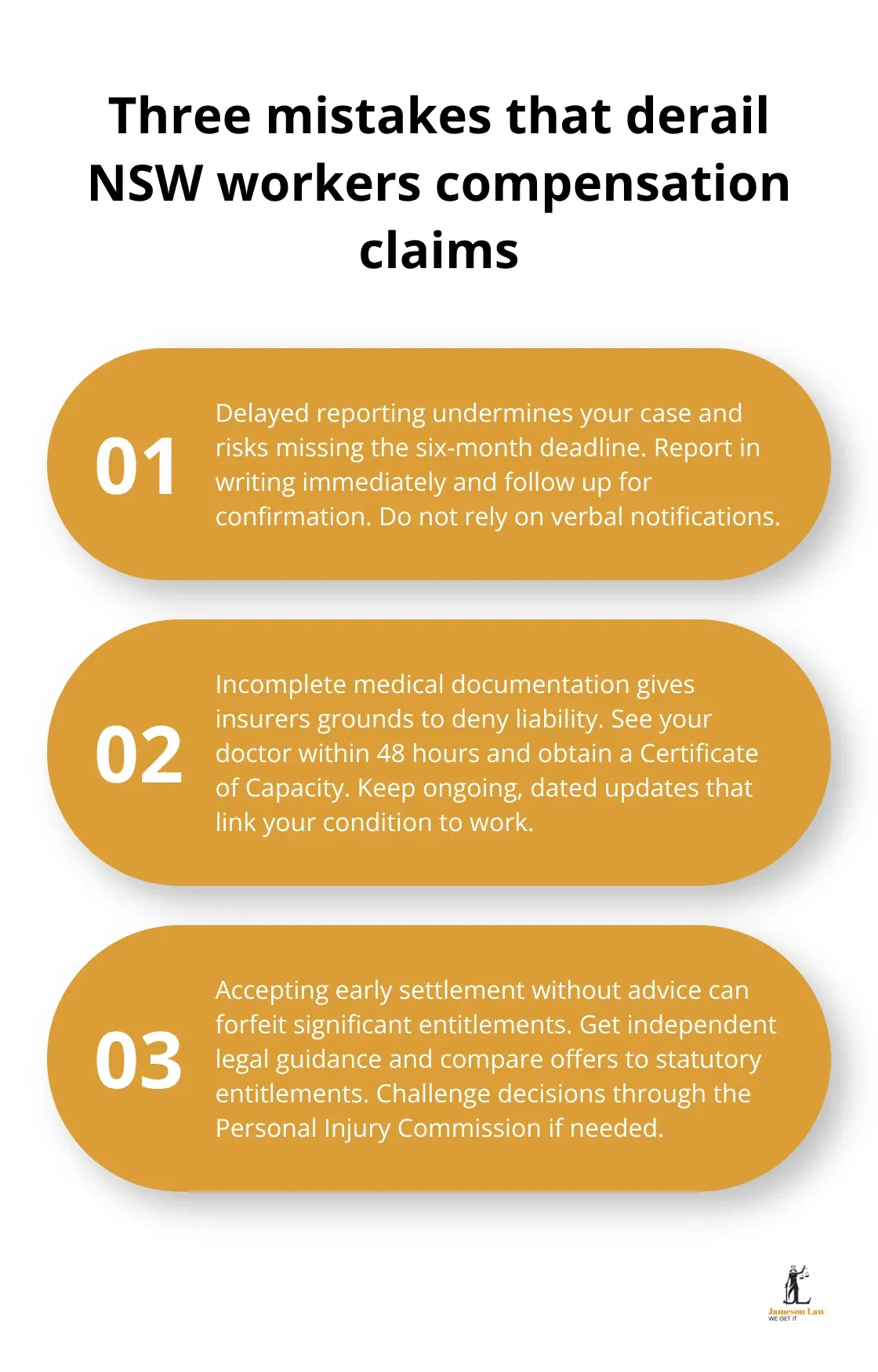
The six-month deadline passes faster than most workers realise, and delays in reporting your injury to your employer can cost you everything. Many workers wait days or weeks after an injury before mentioning it to their supervisor, assuming they’ll recover naturally or that the timing doesn’t matter. This delay creates a critical problem: your employer must notify their insurer within seven days of becoming aware of the injury, so if you wait two weeks to report it, the insurer’s seven-day clock only starts then.
More importantly, if you fail to lodge your formal claim within six months of the injury date, the insurer will reject it regardless of how genuine your condition is.
Workers often lose claims worth tens of thousands of dollars because they reported the injury verbally to their manager but never submitted a written report or formal claim. Report your injury in writing to your employer on the day it occurs, and lodge your claim through the official Worker’s Injury Claim Form well before the six-month deadline expires. Don’t assume your employer will handle the paperwork correctly or on time. Follow up in writing within two days and ask for written confirmation that your injury report has been logged.
Collect Complete Medical Documentation
Medical evidence gaps destroy claims just as effectively as missed deadlines, yet many workers collect insufficient documentation and then wonder why the insurer denies their entitlements. An insurer will reject your claim if you lack a Certificate of Capacity from your treating doctor, or if your medical records don’t clearly link your condition to your work duties. This means seeing your GP once and hoping for the best isn’t enough. Your doctor needs to understand your job responsibilities, the specific incident that caused your injury, and how your condition affects your ability to work.
If you delay seeking medical treatment, gaps appear in your records that insurers exploit to argue your condition wasn’t caused by work. See a doctor within 48 hours of any injury, and if your condition worsens over time, obtain updated medical reports every three to four weeks so the insurer can see your progression. Keep originals of all medical documents because insurers often request them.
Understand Your Full Entitlements Before Accepting Settlement
The third mistake involves accepting settlement offers without understanding your full entitlements under the NSW scheme. Insurers sometimes propose lump-sum settlements that appear generous but actually represent a fraction of what you’re entitled to receive. Under NSW workers compensation law, you’re entitled to weekly payments for lost wages, all medical and rehabilitation expenses, and a lump sum if your injury meets specific medical thresholds.
An insurer’s initial offer might cover only partial medical costs or undervalue your lost earning capacity. Before accepting any settlement, obtain independent legal advice because the difference between a fair settlement and an inadequate one can exceed fifty thousand dollars. Disputing an insurer’s decision through the Personal Injury Commission takes longer but protects your interests far better than rushing into an agreement you don’t fully understand.
Final Thoughts
A successful workers compensation NSW claim rests on three critical actions: you must report your injury in writing immediately, collect complete medical documentation, and understand your full entitlements before accepting any settlement. Missing the six-month deadline costs you everything, so act fast. Insufficient medical evidence gives insurers an excuse to reject your claim, so see a doctor within 48 hours and obtain a Certificate of Capacity.
The process becomes significantly more complex if your insurer disputes your claim or offers a settlement you believe undervalues your entitlements. At this point, seeking legal assistance protects your interests far better than navigating disputes alone. We at Jameson Law specialise in personal injury claims and understand how insurers assess workers compensation NSW claims, helping workers challenge unfair decisions and secure the compensation they deserve.
If your claim has been rejected, if you’re unsure whether an offer is fair, or if you need guidance through the dispute process, contact Jameson Law to discuss your situation. The Independent Review Office can also assist if you need help resolving disputes with your insurer, and SafeWork NSW provides guidance on workplace safety matters.