Buying property in NSW involves a series of legal steps that can feel overwhelming if you’re unfamiliar with the process. Conveyancing NSW steps are designed to protect both buyers and sellers, but understanding them makes the journey smoother.
We at Jameson Law have guided hundreds of property buyers through these transactions. This guide breaks down exactly what happens at each stage, from inspection to settlement.
Understanding Conveyancing in NSW
What Conveyancing Actually Does
Conveyancing is the legal process that transfers property ownership from seller to buyer. It’s not a single event-it’s a series of steps that protect both parties by ensuring the title is clear, all obligations are met, and the transaction complies with NSW law. Without proper conveyancing, you risk inheriting someone else’s debts, discovering undisclosed easements, or facing disputes over ownership. Many buyers skip this step or treat it as a formality, only to face costly problems later.
Who Handles This Work and Why It Matters
A licensed conveyancer or solicitor handles the conveyancing process on your behalf. In NSW, conveyancers must hold a licence with NSW Fair Trading and carry professional indemnity insurance to protect you against negligence. Solicitors must carry the same insurance. The conveyancer examines the contract of sale, arranges building and pest inspections, investigates title issues, arranges finance, exchanges the contract, handles stamp duty, oversees settlement, and registers the new owner with NSW Land Registry Services. This isn’t paperwork shuffling-it’s active protection.
A conveyancer checks for outstanding arrears, investigates whether government authorities have any interest in the land, and uncovers undisclosed issues like fence disputes or illegal building works. They also calculate adjustments for council and water rates at settlement so you don’t overpay. The conveyancer attends settlement in person and performs final checks before the title transfers. If the conveyancer acts negligently, you can claim against their professional indemnity insurance or, in cases of dishonesty, access the Property Services Compensation Fund administered by NSW Fair Trading. Most buyers need a home loan, and your conveyancer coordinates with your lender to ensure all mortgage documentation is correct and timely.
The Legal Framework Protecting You
NSW conveyancing operates under specific legislation and government oversight. The Property and Stock Agents Act 2002 governs how transactions are conducted, and NSW Fair Trading enforces licensing and conduct standards. Settlement now occurs electronically through the PEXA digital platform, which requires your conveyancer or solicitor to be a subscriber.

The eConveyancing system has replaced paper-based settlements, making the process faster and more secure. NSW Land Registry Services registers the new owner on the title after settlement.
Your conveyancer must prepare the contract of sale according to NSW requirements, which include a title search (property certificate), registered plan, drainage diagram, and a current zoning certificate issued by the local council. For properties with swimming or spa pools, a valid certificate of compliance or occupation certificate issued in the past three years must be attached, along with evidence the pool is registered via the NSW Swimming Pool Register. Sellers must disclose specific hazards: if a property contains loose-fill asbestos insulation or combustible cladding, it must be declared or the buyer may terminate within 14 days of exchange.
NSW law mandates a five-business-day cooling-off period for residential purchases, allowing buyers to withdraw by paying 0.25% of the purchase price unless this period is waived with a Section 66W certificate signed by both parties. Stamp duty must be paid within three months after exchange or settlement, whichever comes first. Land tax obligations may apply, and any outstanding land tax must be cleared before settlement. These rules prevent fraud, protect both parties, and ensure transparent transactions.
Moving Forward With Your Transaction
Understanding these protections and requirements sets the foundation for a smooth property transaction. The next stage-the pre-contract phase-is where you take action to inspect the property and prepare for the formal legal steps ahead.
The Key Steps in a NSW Property Transaction
What Happens Before You Exchange Contracts
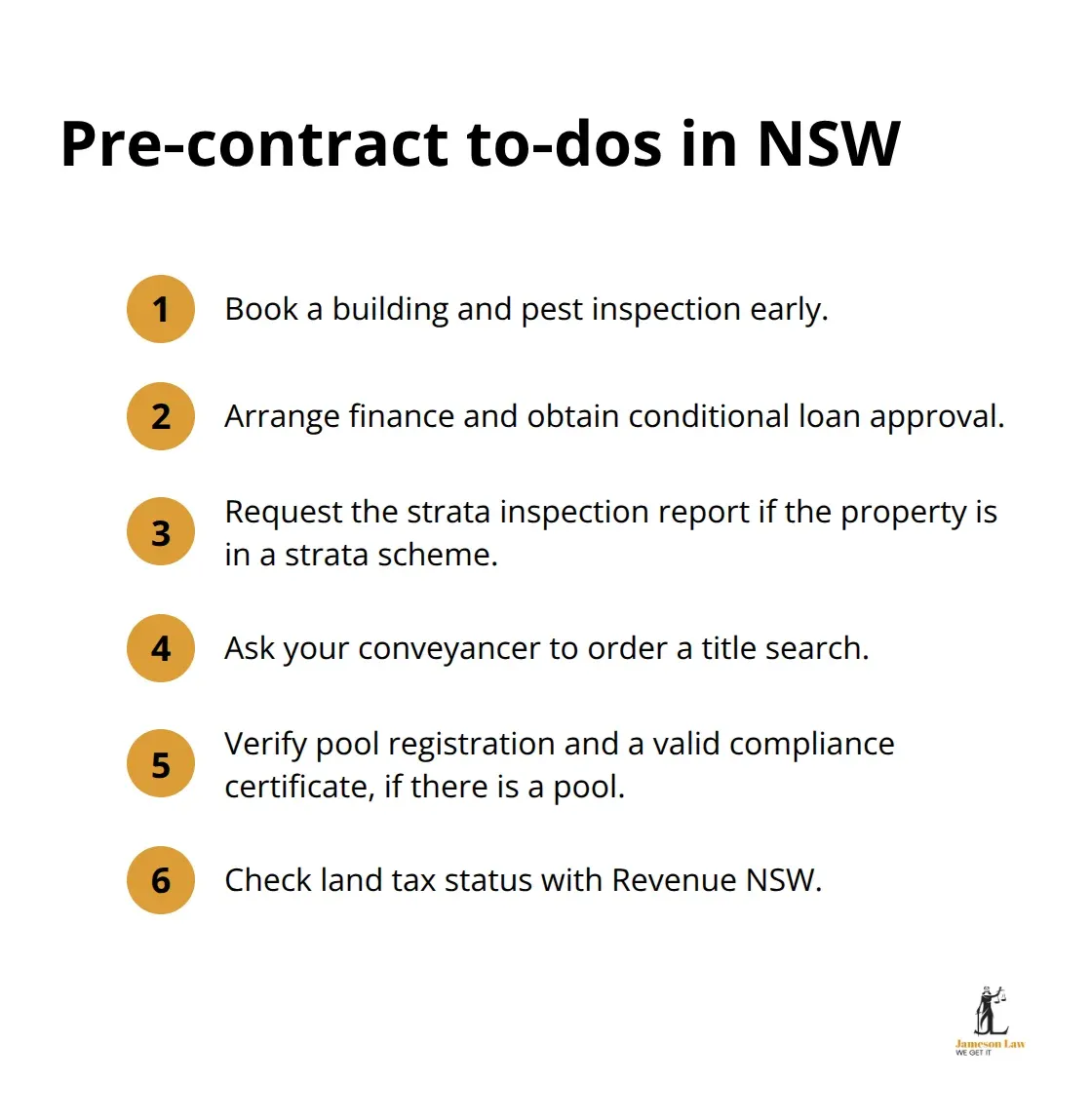
Before you exchange contracts, you need to inspect the property and understand exactly what you’re buying. The pre-contract phase typically spans two to four weeks, depending on how quickly you arrange inspections and finance approval. You must order a building and pest inspection-this step protects you from discovering structural damage or termite infestations after you’ve committed legally. A combined building and pest inspection is priced between $300 and $600.
If the property is in a strata scheme, request the strata inspection report from the seller to check for common property defects and upcoming levy increases. Your conveyancer also obtains a title search to confirm the seller actually owns the property and to identify any easements, mortgages, or caveats registered against it. For properties with pools, verify the pool is registered and holds a valid compliance certificate through the NSW Swimming Pool Register; missing documentation can delay settlement by weeks.
Securing Finance and Gathering Essential Documents
During this phase, contact your lender to confirm conditional loan approval before you make an offer. Most buyers need a home loan, and your lender will require a valuation and mortgage insurance if your deposit is less than 20%. Your conveyancer also orders a zoning certificate from the local council (costs $50 to $150) and a drainage diagram ($30 to $100) to confirm the property’s permitted use and sewer connections.

Check with Revenue NSW whether any land tax applies; land tax thresholds vary by property value and location, so clearing this early prevents settlement delays.
Contract Exchange and Your Cooling-Off Rights
Once you’ve made an offer and the seller accepts, your conveyancer drafts the contract of sale and sends it to the seller’s conveyancer for review. The contract must include the title search, registered plan, drainage diagram, zoning certificate, and a statement of your five-business-day cooling-off rights. Both parties sign the contract, and once signatures are exchanged, the sale becomes legally binding-there’s no backing out without financial penalty unless you’re within the cooling-off period. At exchange, you pay a deposit, typically 10% of the purchase price, though if you’re exercising your cooling-off period, you will have to pay the vendor 0.25% of the purchase price.
The cooling-off period runs for five business days after exchange and allows you to withdraw by paying the 0.25% fee; however, you can waive this period if your conveyancer provides a Section 66W certificate confirming you understand the consequences. Many buyers waive the cooling-off period to appear serious to the seller, especially in competitive markets.
Settlement: The Final Transfer of Ownership
Settlement follows approximately six weeks after exchange, though this can be negotiated in the contract. Your conveyancer coordinates with the buyer’s solicitor, your lender, and NSW Land Registry Services to ensure all documents are prepared and funds are ready. On settlement day, your conveyancer attends the electronic settlement through PEXA, the digital platform used for all NSW property settlements. Your lender transfers the mortgage funds, you pay the balance of the purchase price, and the seller’s conveyancer discharges their mortgage. Your conveyancer adjusts council rates, water charges, and strata levies based on the settlement date so neither party overpays. Once settlement is complete, NSW Land Registry Services updates the title register, and you officially own the property-usually within two to three business days after settlement.
Even with careful planning, unexpected issues can arise during these stages. The next chapter examines the common problems that derail transactions and how to protect yourself from costly delays and disputes.
Common Issues and How to Avoid Them
Title Defects That Stall Your Settlement
Title defects emerge far more often than most buyers realise, and they surface at the worst possible times. Unregistered easements, caveats lodged by third parties, or undisclosed mortgages can halt settlement or force renegotiation. Your conveyancer’s title search identifies registered issues, but unregistered easements present a trickier problem-a neighbour may hold a right of way across your property that doesn’t appear on the official register. This occurred frequently before 1970 when many easements weren’t formally recorded. If your conveyancer uncovers an unregistered easement during the search, you can negotiate with the affected party, obtain indemnity insurance (which costs $300 to $800 depending on the risk), or withdraw from the purchase. The worst outcome happens when you discover this after settlement-you’ve already committed financially and face costly complications. Your conveyancer checks the title thoroughly, but you must act on their findings immediately. Delays in resolving title issues push settlement beyond your contracted date and trigger penalty clauses or renegotiation demands from the seller.
Budget Blowouts and Hidden Costs
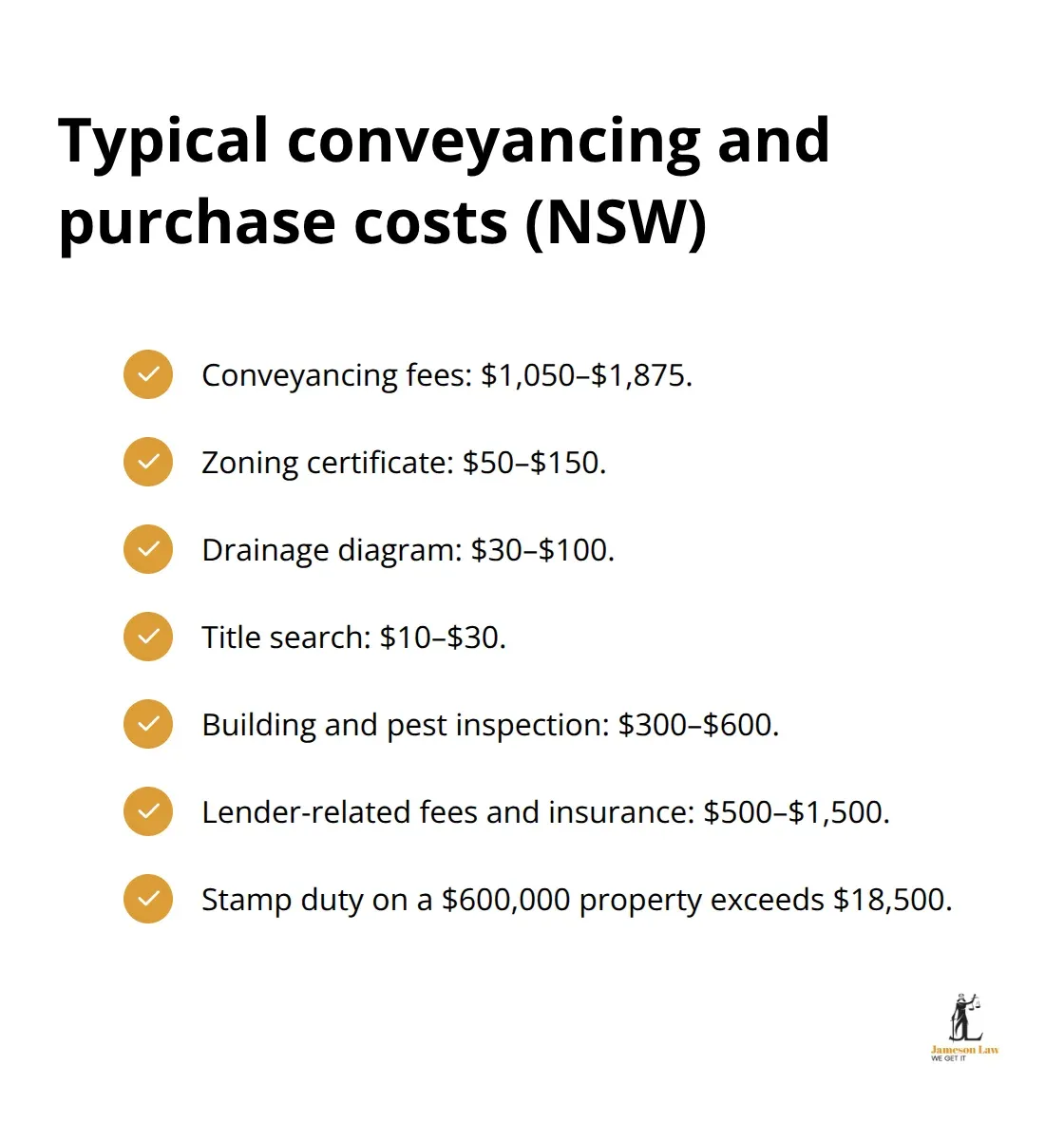
Budget blowouts occur because buyers underestimate the total cost of purchase. Conveyancing fees typically range from $1,050 to $1,875, but this covers only professional services.

Disbursements add significantly: zoning certificates cost $50 to $150, drainage diagrams $30 to $100, title searches $10 to $30, building and pest inspections $300 to $600, and strata searches if applicable. If you finance through a lender, mortgage establishment fees, valuation fees, and mortgage insurance (if your deposit is under 20%) add another $500 to $1,500. Stamp duty rates NSW 2026 are calculated on the purchase price and paid within three months of exchange-for a $600,000 property in NSW, stamp duty alone exceeds $18,500.
Council and water rate adjustments at settlement often surprise buyers because they don’t anticipate the seller’s prorated charges. For strata properties, you inherit liability for any special levies the body corporate has approved, which can reach thousands of dollars. Land tax applies in NSW if the property value exceeds the threshold set by Revenue NSW, and this obligation transfers to you at settlement. Your conveyancer provides an itemised statement of likely costs before work begins, but you must request it and review it carefully. Many buyers overlook this step and face shock at settlement when the final bill arrives.
Missing Documents and Finance Delays
Settlement delays frequently stem from missing disclosure documents. The seller’s conveyancer must provide a zoning certificate and drainage diagram, but councils sometimes delay issuing these certificates, especially for older properties or those with recent development applications. If a property has a swimming pool, the NSW Swimming Pool Register must confirm it’s registered and holds a valid compliance certificate issued within the past three years. Missing pool documentation can delay settlement by four to six weeks. Finance delays present another obstacle-if your lender’s valuation comes in lower than the purchase price, they may reduce the loan amount and demand a larger deposit, forcing renegotiation with the seller. Your conveyancer coordinates the timeline, but you must stay on top of your lender’s requirements and respond immediately to document requests.
Contract Disputes and Rate Adjustments
Contract disputes arise when conditions aren’t clearly stated or when one party interprets them differently. If the contract specifies that chattels (like a dishwasher or curtains) are included but the seller removes them before settlement, this creates a dispute that can delay the transfer of title. Ensure your conveyancer lists all included items explicitly in the contract. Disputes over rates and water adjustments also occur when the settlement date shifts-if settlement is delayed by two weeks, the calculation of who pays which utility bills changes, and disagreement over the adjustment amount can hold up the final transfer. Your conveyancer handles these calculations, but you must confirm the adjustment figures before settlement day.
Acting Fast on Emerging Issues
The most preventable delays occur when buyers don’t arrange inspections early or when they ignore their conveyancer’s advice about outstanding issues. If you wait until three weeks before the contracted settlement date to address a title defect or obtain missing disclosure documents, you’re in crisis mode with no time to resolve problems. Start the due-diligence process immediately after contract exchange-don’t wait passively for your conveyancer to chase documents. Request the strata report, pool certificate, and zoning certificate within the first week of exchange. If your conveyancer identifies a problem, address it within days, not weeks. Settlement delays cost money through penalty interest, loss of finance approval windows, and emotional stress. The difference between a smooth transaction and a costly one often comes down to how quickly you and your conveyancer respond to emerging issues during the pre-settlement phase.
Final Thoughts
Conveyancing NSW steps protect you at every stage of a property transaction, from the initial inspection through to settlement and title registration. Your conveyancer examines the contract, investigates the title, arranges inspections, coordinates finance, handles stamp duty, and attends settlement on your behalf. They identify problems early when you can still negotiate or withdraw, calculate rate adjustments so you don’t overpay, and register your ownership with NSW Land Registry Services.
Professional guidance matters because conveyancing involves legislation, government platforms, and tight deadlines. A licensed conveyancer or solicitor carries professional indemnity insurance to protect you against negligence and knows which councils delay zoning certificates, which lenders demand extra documentation, and how to resolve title defects before they derail your settlement. The cost of hiring a conveyancer-typically $1,050 to $1,875 in fees-is far less than the cost of resolving problems after settlement.
Contact a conveyancer or solicitor as soon as you’re ready to make an offer. We at Jameson Law provide conveyancing services across NSW and can guide you through the entire process with practical, accessible advice. Start early, stay organised, and respond quickly to your conveyancer’s requests so you own your property sooner.