

Understanding NSW workers compensation limits is crucial to setting realistic expectations for your financial recovery after a workplace injury. The statutory scheme imposes strict caps, timeframe restrictions, and impairment thresholds that determine the duration and amount of support you can receive.
At Jameson Law, we help injured workers navigate these complex regulations under the Workers Compensation Act 1987 (NSW). This guide clarifies the correct 2026 weekly payment caps, the recent legislative reforms affecting psychological injuries, and the strict thresholds for lump-sum compensation.
Understanding NSW Workers Compensation Limits for 2026
Weekly compensation provides a financial safety net when a work-related injury limits your capacity to earn. However, these payments are not designed to unconditionally replicate your full pre-injury income for life.
Weekly Payment Caps and Calculation
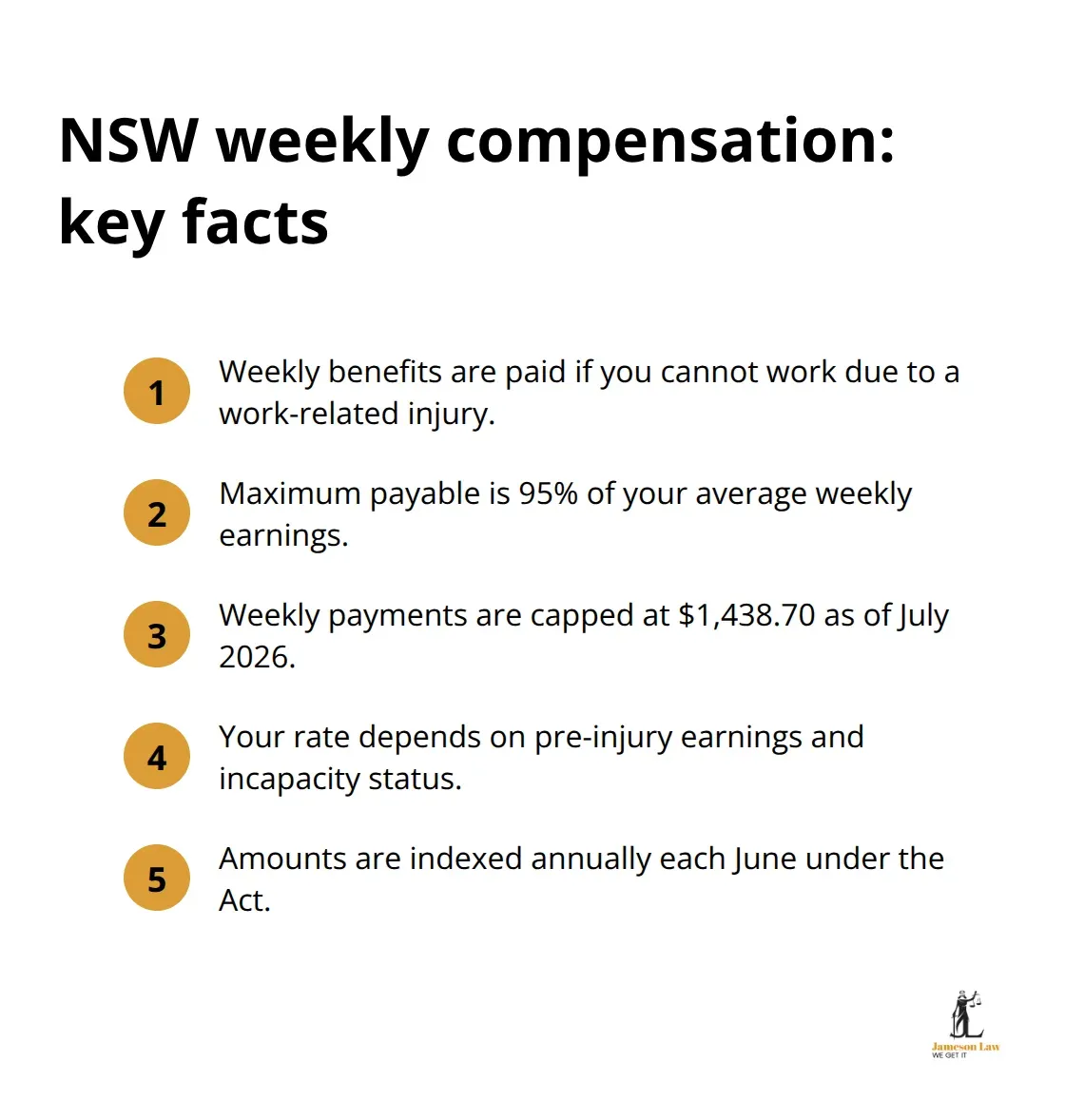
Your weekly entitlements are calculated using your Pre-Injury Average Weekly Earnings (PIAWE). The percentage of PIAWE you receive depends on the statutory period of your claim and your current capacity for work. For instance, you may be entitled to up to 95% of your PIAWE for the first 13 weeks if you have no work capacity, which generally steps down to 80% for weeks 14 to 130.
Regardless of your pre-injury income, the State Insurance Regulatory Authority (SIRA) applies a hard cap on all weekly payments. As of the indexation period spanning 1 April 2026 to 31 March 2027, the maximum weekly compensation amount is $2,662.10. This figure is indexed periodically to account for wage growth.
Statutory Timeframes and the 130-Week Limit
Under the NSW scheme, weekly payments are generally only available for a maximum of 130 weeks. Payments will automatically cease at this point unless your condition meets exceptionally high Whole Person Impairment (WPI) thresholds.
The 1 July 2026 Psychological Injury Reforms
The rules governing entitlements beyond 130 weeks changed significantly for primary psychological injuries notified or claimed from 1 July 2026. While workers with severe physical injuries must still demonstrate a WPI greater than 20% to continue receiving weekly payments past 130 weeks, the new legislation imposes different, progressively increasing WPI thresholds for primary psychological injuries to qualify for extended support.
Lump Sum Compensation Thresholds (WPI)
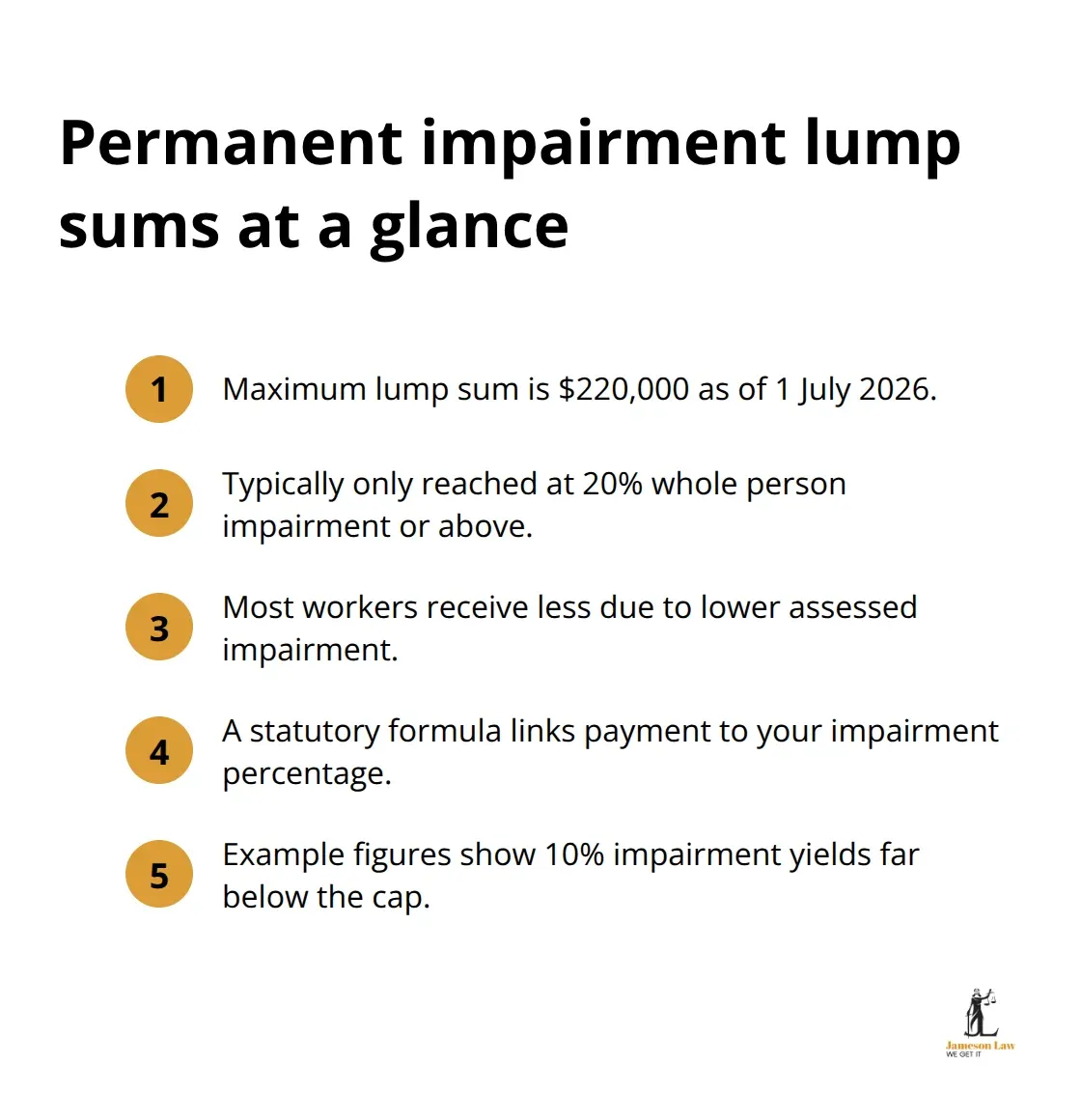
If your injury stabilizes but leaves you with a permanent reduction in function, you may be eligible for a permanent impairment lump-sum payment. Access to these payments is governed by strict medical thresholds based on the SIRA guidelines for evaluating permanent impairment.
| Entitlement / Category | 2026 Statutory Limit / Threshold |
|---|---|
| Maximum Weekly Payment Cap | $2,662.10 (effective 1 April 2026 to 31 March 2027) |
| General Maximum Weekly Payment Duration | 130 weeks (unless high-WPI thresholds are met) |
| Physical Injury Lump Sum Threshold | 11% Whole Person Impairment (WPI) |
| Primary Psychological Lump Sum Threshold | 15% WPI |
| Physical Work Injury Damages (WID) Threshold | At least 15% WPI |
| Primary Psychological WID Threshold | At least 25% WPI (for claims notified from 1 July 2026) |
One Principal Impairment Assessment
It is vital to obtain independent legal advice before agreeing to any WPI evaluation. Effective 1 July 2026, most injured workers are generally restricted to one principal impairment assessment per injury, with extremely limited avenues to seek further assessments later. If your condition is undervalued initially, you may be permanently locked out of receiving fair compensation.
Work Injury Damages (WID) vs. Workers Compensation
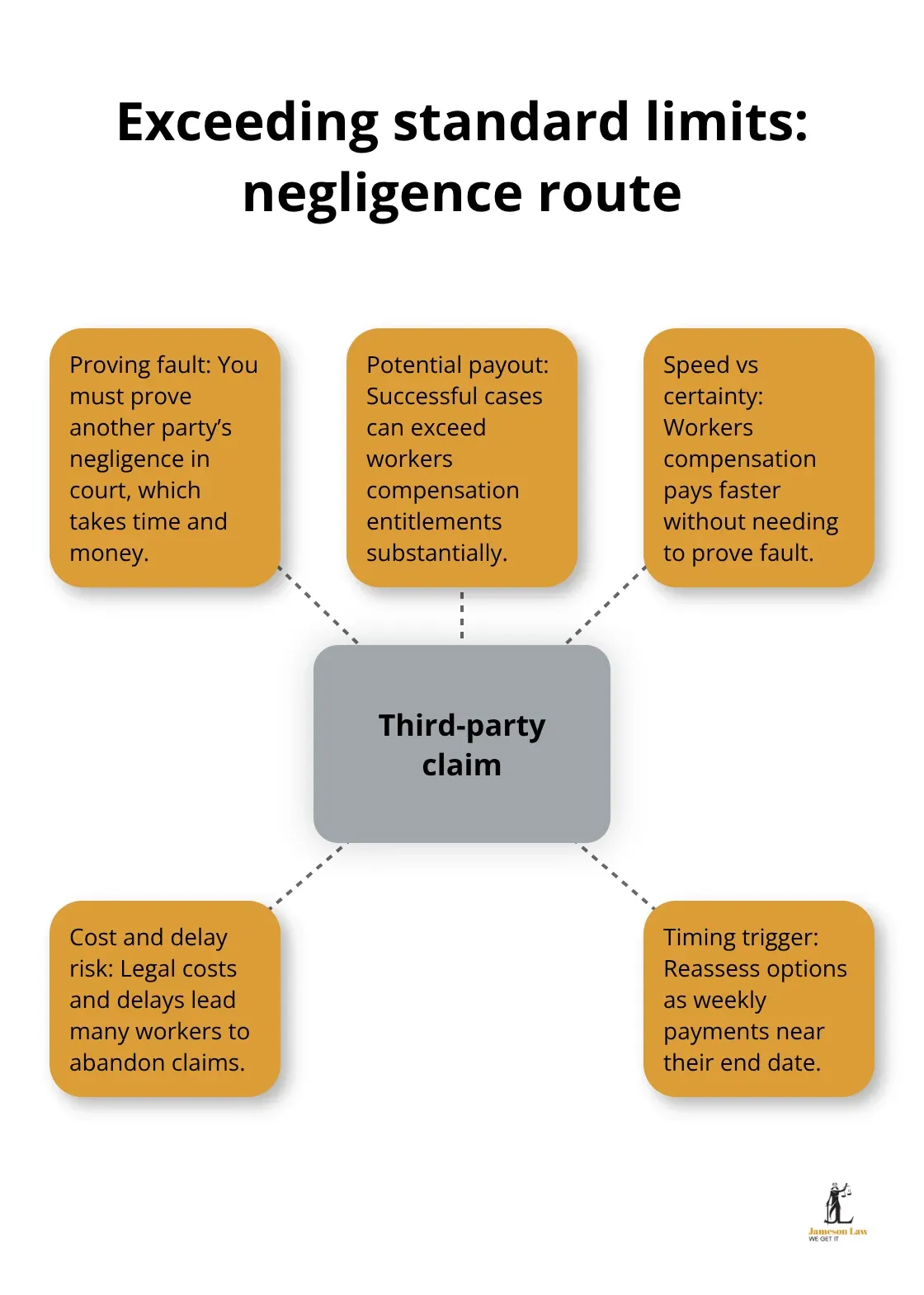
Statutory workers compensation operates on a “no-fault” basis. However, if your injury was directly caused by your employer’s negligence, you may have grounds to sue for a lump sum representing past and future loss of earnings, known as a Work Injury Damages (WID) claim.
A WID claim is a separate modified common-law pathway for economic loss and is subject to negligence, impairment and other statutory requirements. For physical injuries, you must meet an impairment threshold of at least 15% WPI. Following the recent reforms, if you are claiming for a primary psychological injury notified from 1 July 2026, the threshold for a WID claim has been elevated to at least 25% WPI.
Frequently Asked Questions
What is the maximum weekly compensation amount in NSW for 2026?
For the period 1 April 2026 to 31 March 2027, the maximum weekly compensation amount is $2,662.10. Reforms commencing 1 July 2026 move indexed amounts to annual adjustment, with the next adjustment scheduled from 1 April 2027. Your actual payment depends on PIAWE, capacity for work, the claim period and the statutory cap.
How long do weekly workers compensation payments last in NSW?
Under the Workers Compensation Act 1987, weekly payments are generally available for a maximum of 130 weeks. Payments beyond 130 weeks are only available if you meet specific, higher Whole Person Impairment (WPI) thresholds, which differ for physical and psychological injuries.
What is the lump sum threshold for a primary psychological injury from 1 July 2026?
To be eligible for a permanent impairment lump sum for a primary psychological injury, you must still reach a threshold of at least 15% WPI. However, the threshold to pursue a Work Injury Damages (WID) claim for a primary psychological injury notified from 1 July 2026 has increased to at least 25% WPI.
Final Thoughts
Relying on outdated or simplified summaries of the workers compensation system can result in missed entitlements and severe financial hardship. Because the 2026 legislative reforms introduced strict new limitations on psychological injury claims and formalized the “one principal impairment assessment” rule, getting the strategy right from day one is paramount.
Before accepting a liability decision, agreeing to a WPI assessment, or attempting to navigate the complex formulas defining your weekly support, you should secure professional guidance.
If you have suffered an injury and are unsure how your entitlements will be calculated, contact the personal injury team at Jameson Law to ensure your rights are protected.