


If you have been injured in a road traffic accident NSW, you may be entitled to claim compensation through the Compulsory Third Party (CTP) insurance scheme. Navigating the claims process requires a clear understanding of strict statutory deadlines, injury classifications, and the distinction between immediate benefits and long-term damages.
At Jameson Law, our personal injury team helps injured drivers, passengers, pedestrians, and cyclists understand their rights under the Motor Accident Injuries Act 2017 (NSW). This guide outlines the practical steps to secure statutory benefits, pursue common law damages, and protect your legal position.
What Qualifies as a Road Traffic Accident NSW?
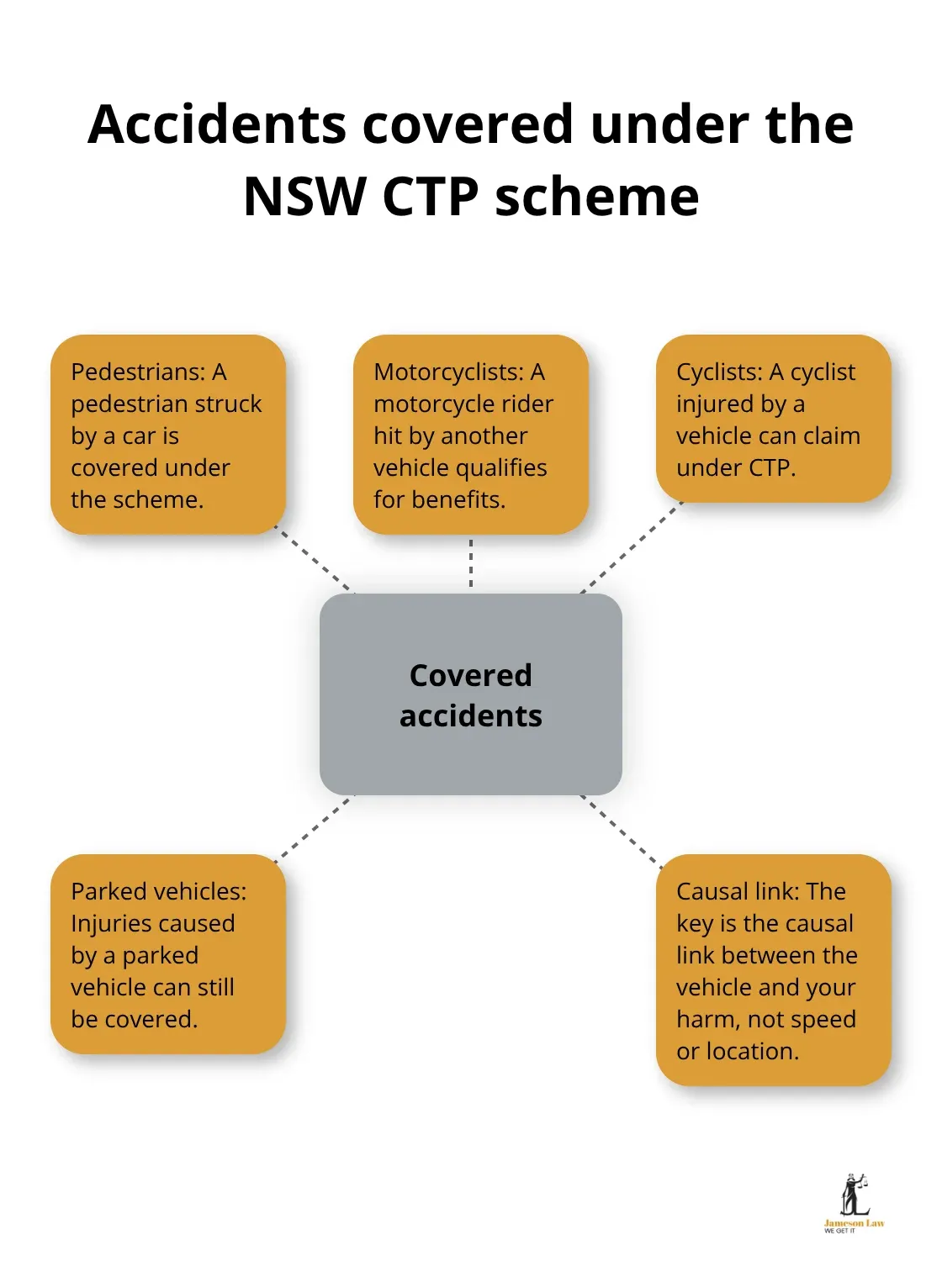
Under NSW law, a compensable road traffic accident is an incident involving a motor vehicle that causes injury or death on a road or road-related area. The scheme is not limited to car-on-car collisions; it broadly covers injured pedestrians, cyclists, motorcyclists, and passengers. Even injuries resulting from a vehicle running off the road or a collision with a stationary vehicle can qualify if the motor vehicle was the primary cause of the harm.
The Importance of Police Reporting
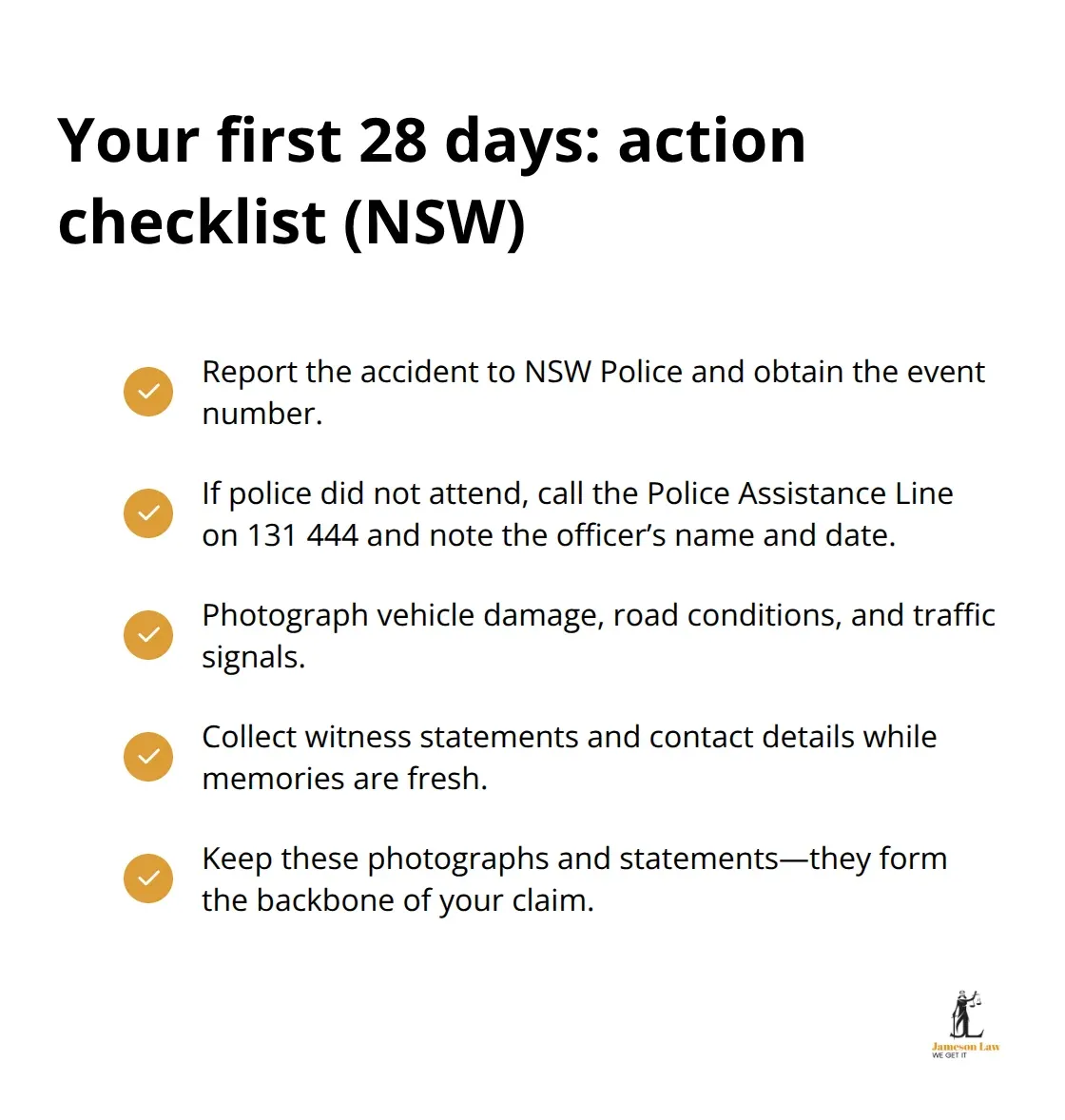
To establish the facts of the incident and validate your claim, the accident must be reported to the NSW Police Force. If police did not attend the scene, you generally must report the crash to the police within 28 days to preserve your right to claim statutory benefits. Obtaining the police event number is a mandatory first step before lodging documentation with a CTP insurer.
Statutory Benefits vs. Common Law Damages
The NSW CTP scheme managed by the State Insurance Regulatory Authority (SIRA) provides two distinct avenues for compensation: statutory benefits and common law damages. Your entitlements depend heavily on your fault status and the medical classification of your injuries.
1. Statutory Benefits (Available Regardless of Fault)
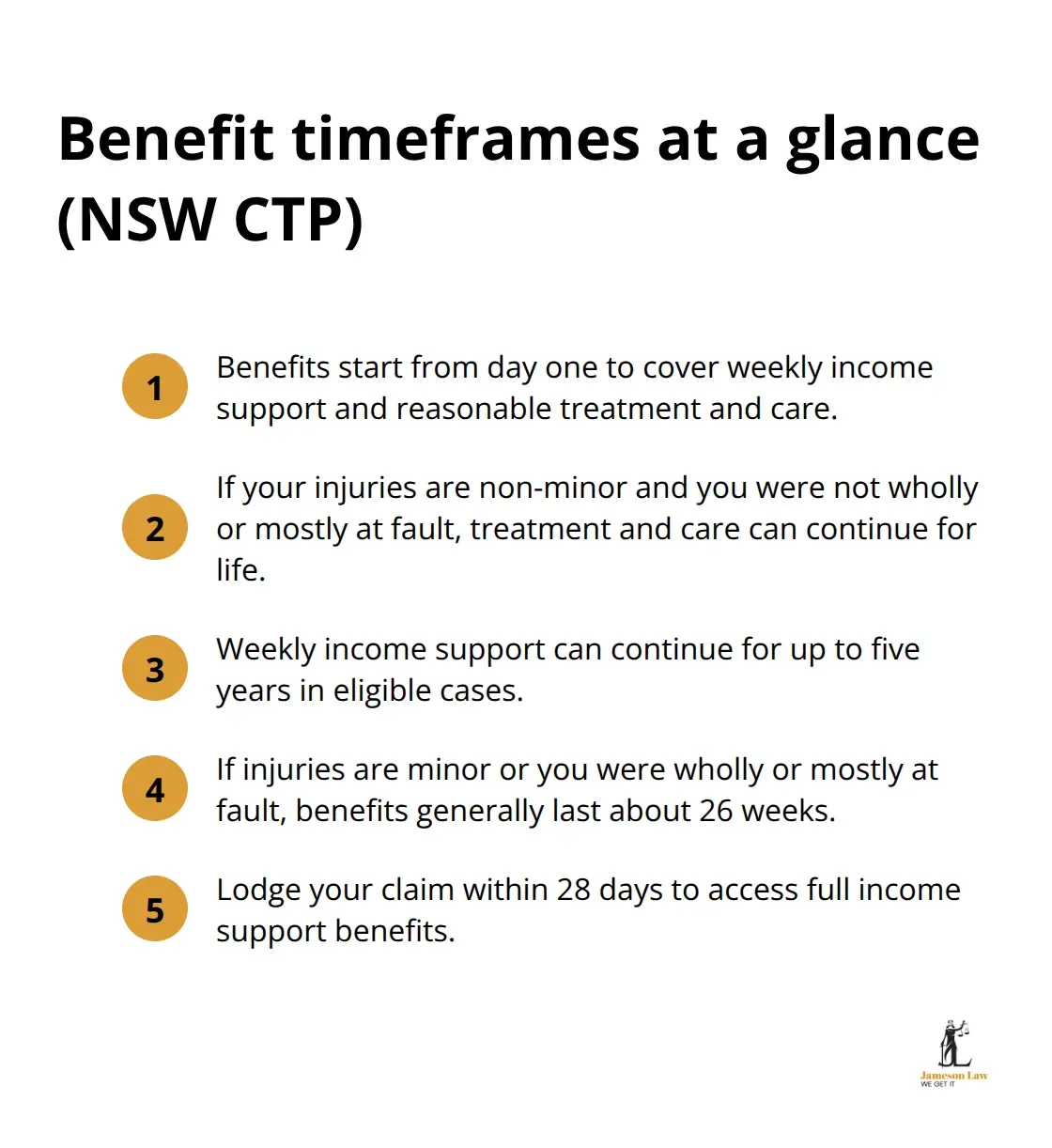
Most injured people—even those who were wholly or mostly at fault—can seek statutory benefits to cover reasonably necessary medical treatment, rehabilitation costs, and a percentage of lost weekly earnings. However, the duration of these benefits is strictly regulated:
- Threshold Injuries: Injuries classified as “threshold injuries” (formerly referred to as “minor injuries,” such as soft tissue strains or whiplash) generally limit your entitlement to statutory benefits to a maximum of 52 weeks.
- Mostly At-Fault Drivers: If you are deemed wholly or mostly at fault for the accident, your statutory benefits are also generally capped at 52 weeks, regardless of how severe your injuries are.
| Statutory Deadline | Action Required | Consequence of Missing Deadline |
|---|---|---|
| 28 Days | Lodge the Application for Personal Injury Benefits. | Weekly income payments will only be paid from the date the claim is eventually lodged, not backdated to the day after the crash. |
| 3 Months | General final deadline to lodge the statutory benefits claim. | Claim may be rejected unless a full and satisfactory explanation for the delay is provided and accepted. |
2. Common Law Damages (Lump Sum Compensation)
If your injuries are severe and continue to impact your life and earning capacity, you may be entitled to pursue a lump-sum common law damages claim. To qualify, you must prove that you sustained a non-threshold injury and that you were not wholly or mostly at fault for the accident.
A damages claim generally covers past and future economic loss. Additionally, if your injuries are assessed by an approved medical specialist as resulting in a permanent impairment greater than 10%, you may also claim damages for non-economic loss (pain and suffering).
Under the Limitation Act 1969 (NSW), common law damages claims must generally be commenced within 3 years of the date of the accident. If you delay filing your claim, you must provide a full and satisfactory explanation to the court; otherwise, your claim may become statute-barred.
The Claims Process and Practical Next Steps
Successfully navigating a CTP claim requires immediate action and robust medical evidence.
Obtain a SIRA Certificate of Fitness
You cannot claim statutory benefits using a standard medical certificate. You must visit your nominated treating doctor (e.g., your GP) and obtain a formal SIRA Certificate of Fitness. This document outlines your diagnosis, confirms the link between the crash and your injuries, and dictates your current capacity for work.
Gather Evidence and Lodge
Ensure you have the at-fault vehicle’s registration plate, the police event number, and your medical documentation. You must identify the relevant CTP insurer of the at-fault vehicle (which can be done via the SIRA website) and submit your Application for Personal Injury Benefits as soon as possible. The general statutory-benefits claim period is 3 months, but lodging within 28 days preserves entitlement to weekly payments from the day after the crash, subject to the Act.
Frequently Asked Questions
How long do I have to lodge a CTP claim in NSW?
To claim statutory benefits, you generally must lodge your application within 3 months of the accident. However, to ensure your weekly income support payments are backdated to the day after the crash, you must lodge the claim within 28 days.
What is a threshold injury in a NSW motor accident?
A ‘threshold injury’ is defined by diagnosis, not symptoms. It includes soft-tissue injuries and threshold psychological or psychiatric injuries; adjustment disorder and acute stress disorder are specified threshold psychiatric injuries. If all crash injuries are threshold injuries, statutory benefits are generally limited to 52 weeks and common-law damages are not available.
Can I claim compensation if I was at fault in a car accident?
Yes, in most cases. Under the NSW CTP scheme, even if you were wholly or mostly at fault, you can generally claim statutory benefits for medical treatment and lost income for up to 52 weeks, subject to specific legal exclusions and restrictions.
Final Thoughts
Experiencing a road traffic accident NSW initiates a strict, timeline-driven legal process. Failing to act within the initial 28 days can lead to a significant loss of backdated income support, and misunderstanding the distinction between a threshold and non-threshold injury can severely impact your long-term common law rights.
Because insurers actively assess fault and the severity of injuries to manage their liability, having independent legal representation is crucial. A lawyer can assist in challenging incorrect “threshold injury” determinations, gathering independent medical evidence, and filing your damages claim before the 3-year limitation period expires.
If you have been injured in a motor vehicle accident and need assistance lodging a claim or disputing an insurer’s decision, contact the personal injury team at Jameson Law for expert advice.