

A workplace injury should be met with prompt medical and financial support. Having a workers compensation claim denied NSW notice issued by an insurer can be distressing, but a formal denial is not necessarily the end of the road.
At Jameson Law, we regularly guide injured workers through the NSW workers compensation dispute process. Understanding why claims are declined under New South Wales legislation allows you to respond effectively and take appropriate steps to protect your statutory entitlements.
Common Reasons a Workers Compensation Claim Denied NSW Notice Is Issued
Under the Workers Compensation Act 1987 (NSW) and the Workplace Injury Management and Workers Compensation Act 1998 (NSW), workers compensation insurers must assess every claim against strict statutory thresholds. When an insurer declines liability, they issue a formal dispute notice under Section 78 of the 1998 Act.
1. Employment Connection and Causation Issues
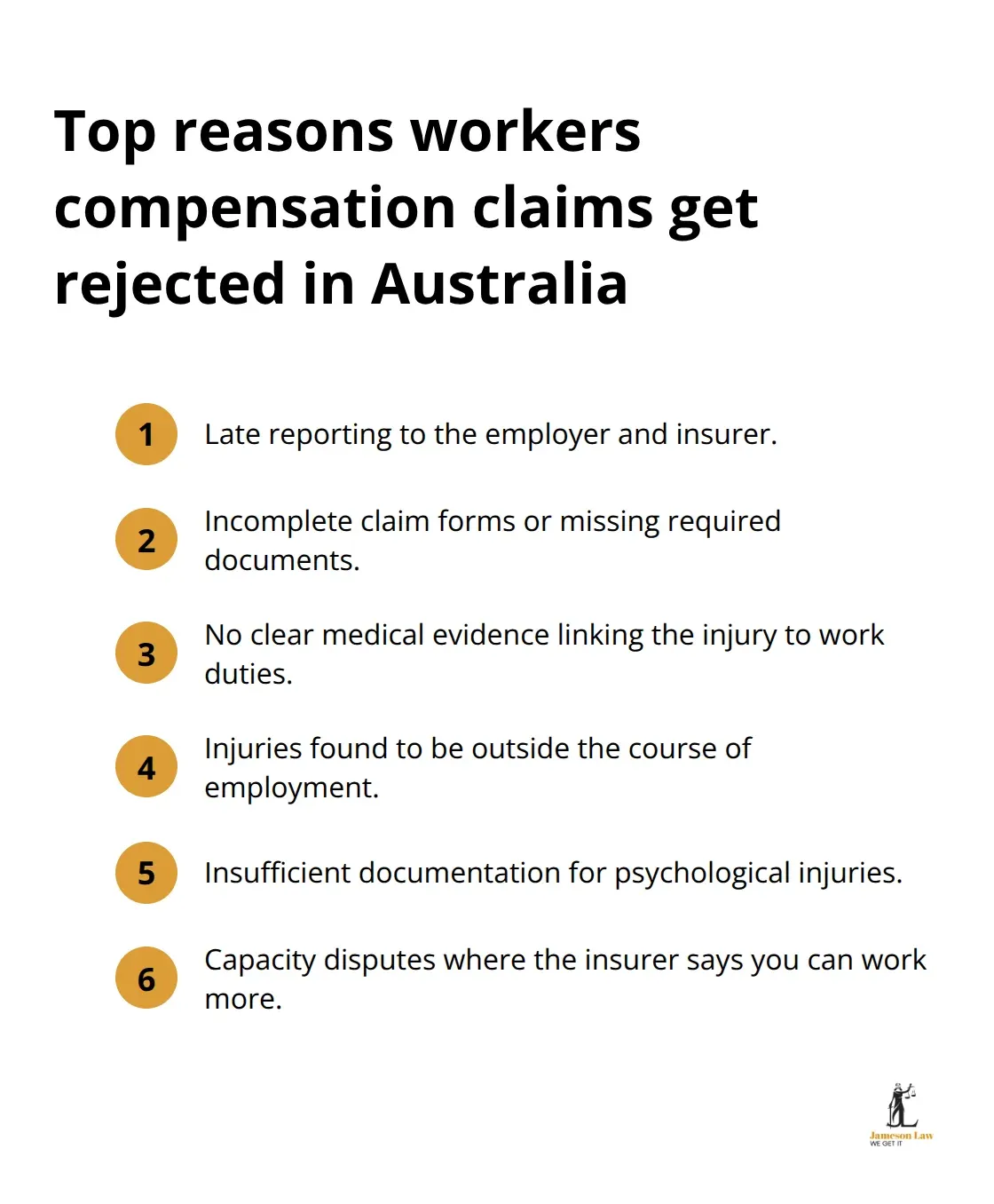
An insurer will dispute a claim if they believe the injury did not arise out of or in the course of employment. In NSW, physical injuries generally require employment to be a substantial contributing factor, whereas primary psychological injuries require employment to be the main contributing factor. If the insurer concludes that an injury occurred outside work duties, during an unauthorised activity, or was entirely attributable to a non-work-related pre-existing condition, liability will be declined.
2. Deficiencies in Medical Evidence
The State Insurance Regulatory Authority (SIRA) mandates specific evidentiary standards. Claims require a compliant SIRA Certificate of Capacity from your nominated treating doctor, establishing a clear diagnosis and articulating how the work incident caused the condition. Vague medical certificates, inconsistent medical histories, or delays in seeking initial clinical care provide grounds for insurers to question causation.
3. Psychological Injuries and the Section 11A Defence
Primary psychological injury claims face heightened scrutiny. Under Section 11A of the Workers Compensation Act 1987, compensation is not payable if the psychological injury was wholly or predominantly caused by reasonable action taken or proposed to be taken by or on behalf of the employer with respect to transfer, demotion, promotion, performance appraisal, discipline, retrenchment, or dismissal. Insurers frequently raise Section 11A as a complete defence to liability.
4. Work Capacity and Treatment Disputes
Insurers may accept liability for an initial injury but later dispute ongoing entitlements. This includes issuing notices arguing that the worker has regained current work capacity, or disputing whether requested surgeries, physiotherapy regimens, or specialist consultations meet the statutory test of being “reasonably necessary” medical treatment.
Protect Your Claim From the Start
Report Promptly and Consult Your Nominated Treating Doctor
Under NSW law, you must notify your employer of a workplace injury as soon as practicable. Your employer is then required to notify their workers compensation insurer within 48 hours. Seeking immediate medical attention ensures clinical records contemporaneous with the incident are established, minimising disputes about whether the injury occurred at work.
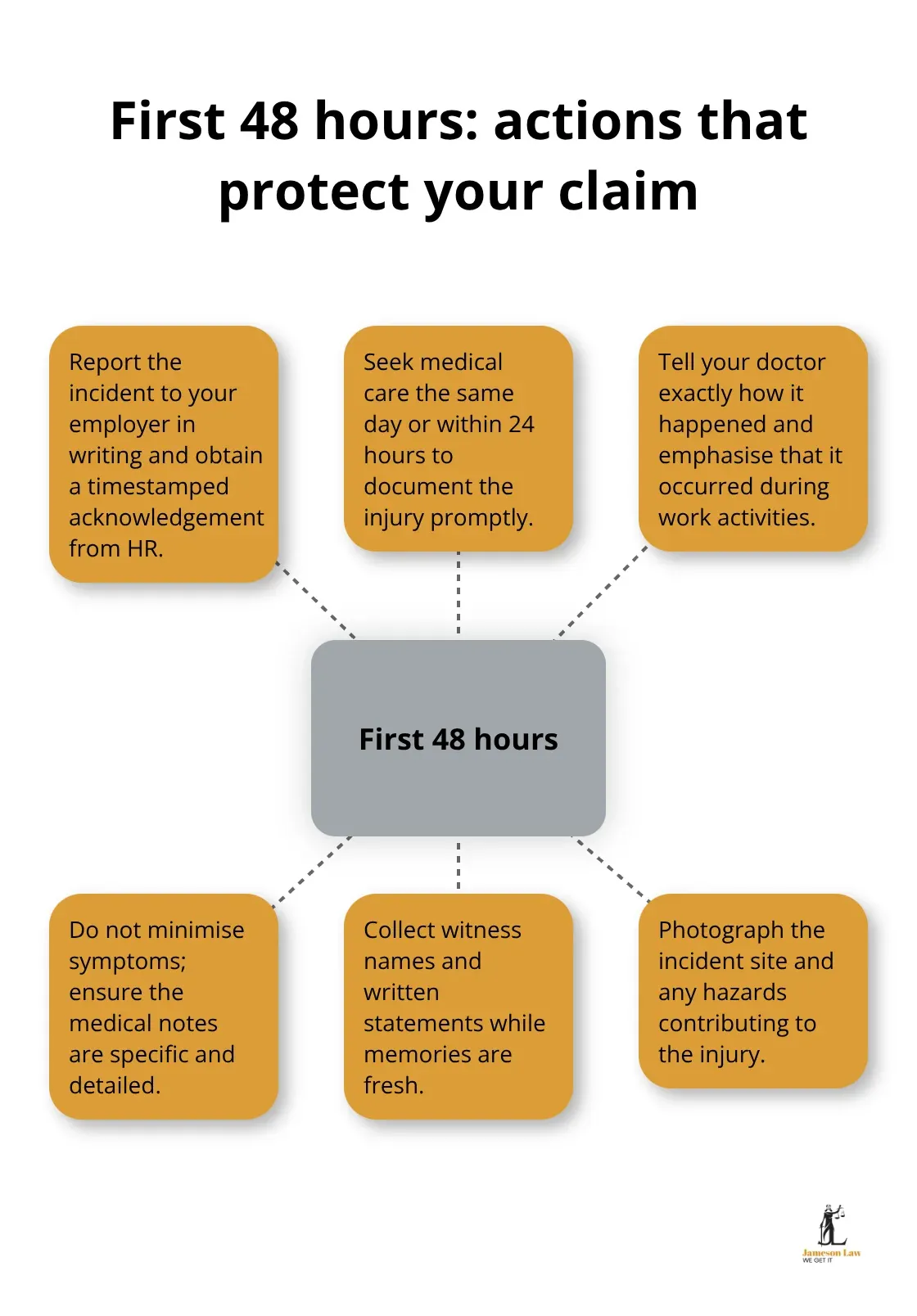
When consulting your doctor, clearly explain the mechanism of injury and request a SIRA Certificate of Capacity. You have the statutory right to choose your own nominated treating doctor rather than attending a medical practitioner mandated by your employer.
Maintain Thorough Contemporaneous Records
Building a coherent evidence file early assists in safeguarding your claim. You should:
- Keep written copies of your incident report and employer notification.
- Retain copies of all SIRA Certificates of Capacity, specialist referrals, and radiology reports.
- Document witness contact details and maintain a diary of symptoms and functional limitations.
- Submit a formal Worker’s Injury Claim Form accompanied by your initial certificate to prompt formal liability determination.
What Happens After Your Claim Gets Rejected
Understanding Your Section 78 Notice
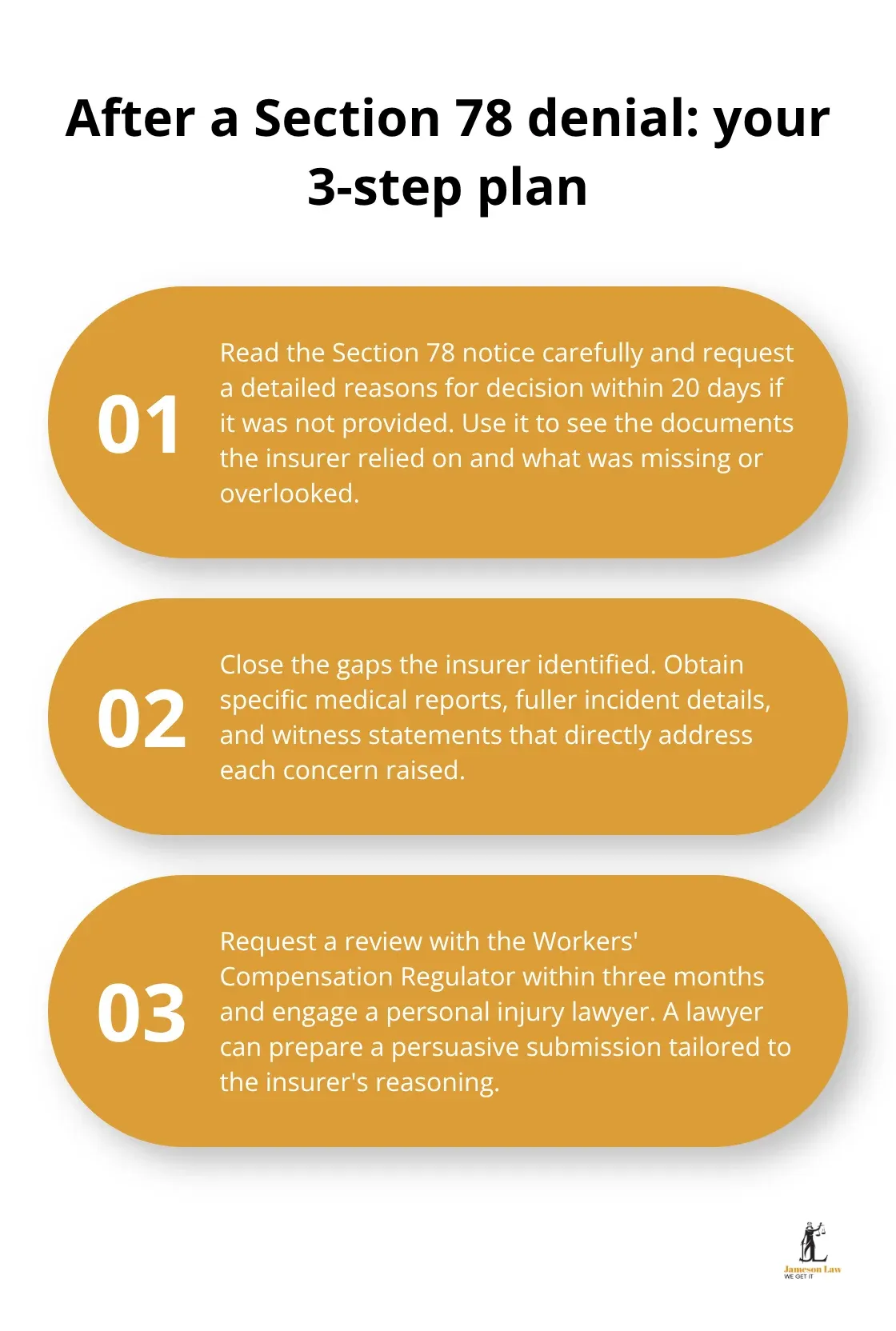
A Section 78 notice is the formal legal document issued by an insurer to decline liability or reduce benefits. The notice must specify the grounds on which the insurer disputes the claim, provide the legal provisions relied upon, and list all medical reports and factual statements used to reach the decision. It must also outline your rights to review.
Requesting an Insurer Internal Review
Upon receiving a Section 78 notice, you can request an internal review by the insurer. This process involves submitting a formal request, ideally supported by fresh clinical evidence, clarifying statements, or updated SIRA Certificates of Capacity that directly address the reasons for denial. The insurer must have another decision-maker conduct the review and provide a written determination.
Accessing IRO-Funded Independent Legal Assistance
Eligible injured workers may be able to access legal assistance without upfront cost through the Independent Review Office (IRO) and its Independent Legal Assistance and Review Service (ILARS). An IRO-approved lawyer must apply for a grant, and funding depends on the applicable eligibility and prospects criteria.
Proceedings in the Personal Injury Commission (PIC)
If an insurer maintains its denial following an internal review, the dispute can be escalated to the Personal Injury Commission (PIC). The PIC is the independent statutory tribunal responsible for resolving workers compensation disputes in NSW. The process generally involves:
- Lodging an Application: Submitting an Application to Resolve a Dispute with comprehensive medical and factual evidence.
- Conciliation: An informal conference facilitated by a PIC Member to encourage the parties to reach an agreed settlement.
- Arbitration or Determination: If conciliation does not resolve the dispute, the Member conducts a formal hearing and issues a legally binding decision.
- Medical Assessment: Disputes strictly concerning permanent impairment or medical necessity may be referred to an independent Medical Assessor.
Frequently Asked Questions
What is a Section 78 notice in NSW workers compensation?
A Section 78 notice is a formal written dispute notice issued by a workers compensation insurer under the Workplace Injury Management and Workers Compensation Act 1998 (NSW). It outlines the insurer’s decision to dispute liability, reduce benefits, or decline specific treatments, detailing the factual and medical reasons for the decision.
What can I do if my workers compensation claim is denied in NSW?
If your claim is disputed, you can request an internal review from the insurer with additional supporting evidence. If the dispute remains unresolved, you can seek legal assistance funded by the Independent Review Office (IRO) and lodge an application with the Personal Injury Commission (PIC).
Who pays for a lawyer to dispute a workers compensation denial in NSW?
In NSW, eligible injured workers can access free independent legal assistance through the Independent Legal Assistance and Review Service (ILARS), administered by the Independent Review Office (IRO). Approved legal costs and medical report disbursements are covered by the grant of funding, not by the worker.
Final Thoughts
Receiving a Section 78 notice can be challenging, but understanding the specific factual and medical reasons for the denial allows you to take structured steps forward. Gathering objective medical evidence, requesting an internal review, and seeking accredited legal assistance through IRO funding provide clear avenues to challenge an insurer’s decision.
If your claim has been declined or disputed, professional guidance ensures your rights are protected throughout the review and Personal Injury Commission pathways. To understand your options and discuss your dispute with an experienced team, contact Jameson Law.