

This workers compensation claim timeline NSW guide explains what can happen after a workplace injury, from initial reporting through to potential dispute resolution, so you can plan your recovery and financial security.
At Jameson Law, we provide clarity on these processes to help injured workers understand their entitlements. The duration of your case depends on several statutory factors, which we will break down in this guide.
Workers Compensation Claim Timeline NSW: Getting Started
Initial Notification and Provisional Liability
The first hours and days after a workplace injury are critical. The State Insurance Regulatory Authority (SIRA) explains that prompt notification protects your rights and accelerates the entire process. You should notify your employer as soon as the injury occurs, ideally in writing to create a clear record. Your employer then has 48 hours to notify their workers compensation insurer.
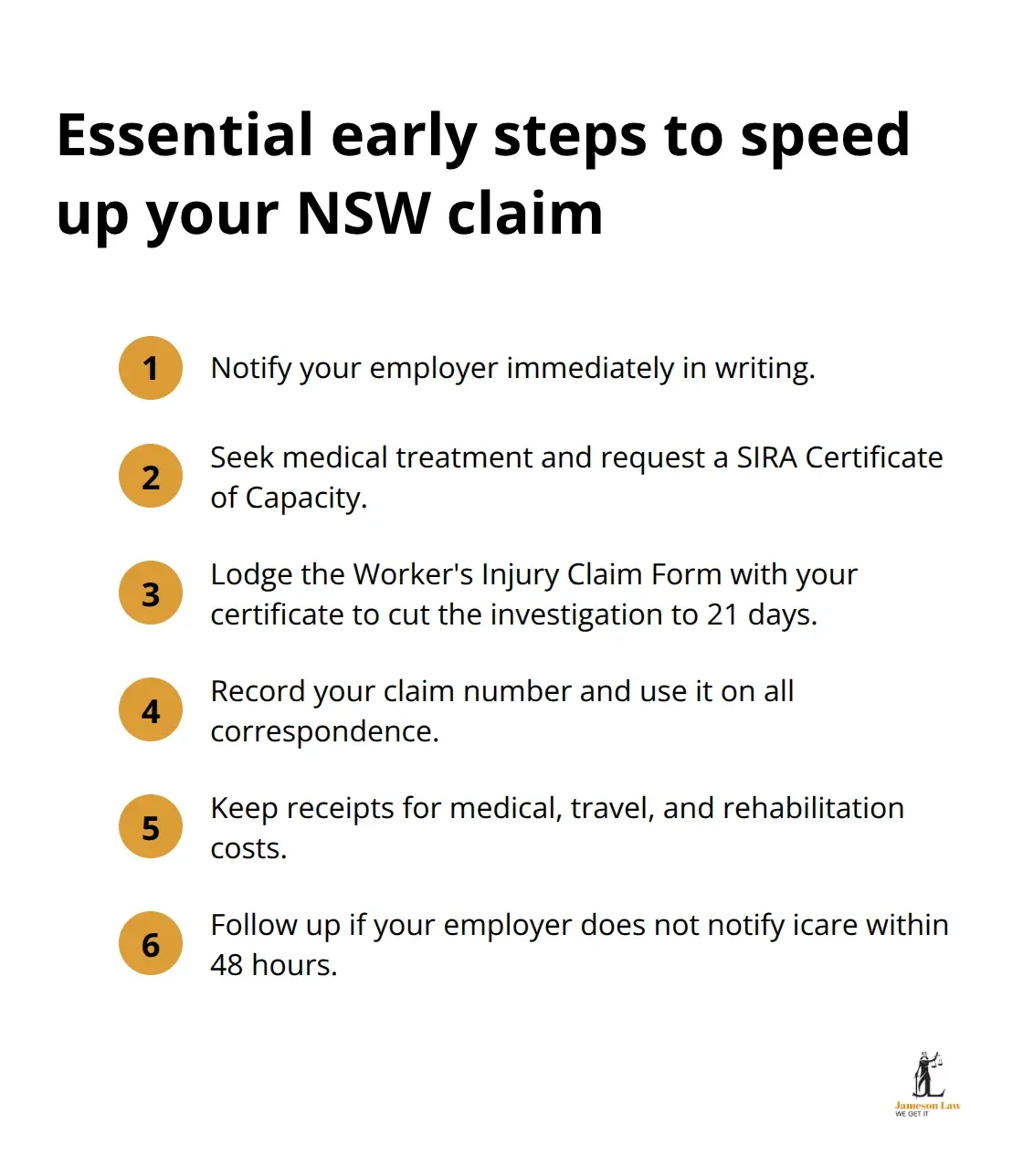
If your employer fails to notify the insurer within this timeframe, you have the right to contact the insurer or SIRA directly. This initial notification is vital because provisional liability—which may include interim weekly payments and coverage for reasonable medical expenses—can commence within 7 days of the insurer being notified.
Obtaining Your Medical Documentation
Your treating medical practitioner plays a critical role in how quickly your claim progresses. After you seek immediate medical treatment, request a SIRA Certificate of Capacity from your nominated doctor. This document details your diagnosis, the treatment required, and your functional work capacity. Without this certificate, the insurer cannot properly assess your entitlements.
While provisional liability provides early support, securing formal acceptance requires you to submit a completed Worker’s Injury Claim Form alongside your Certificate of Capacity. Once the insurer receives these completed documents, they generally have 21 days to formally determine liability. Delays in providing this documentation will inevitably extend your timeline.
When Your Claim Gets Disputed
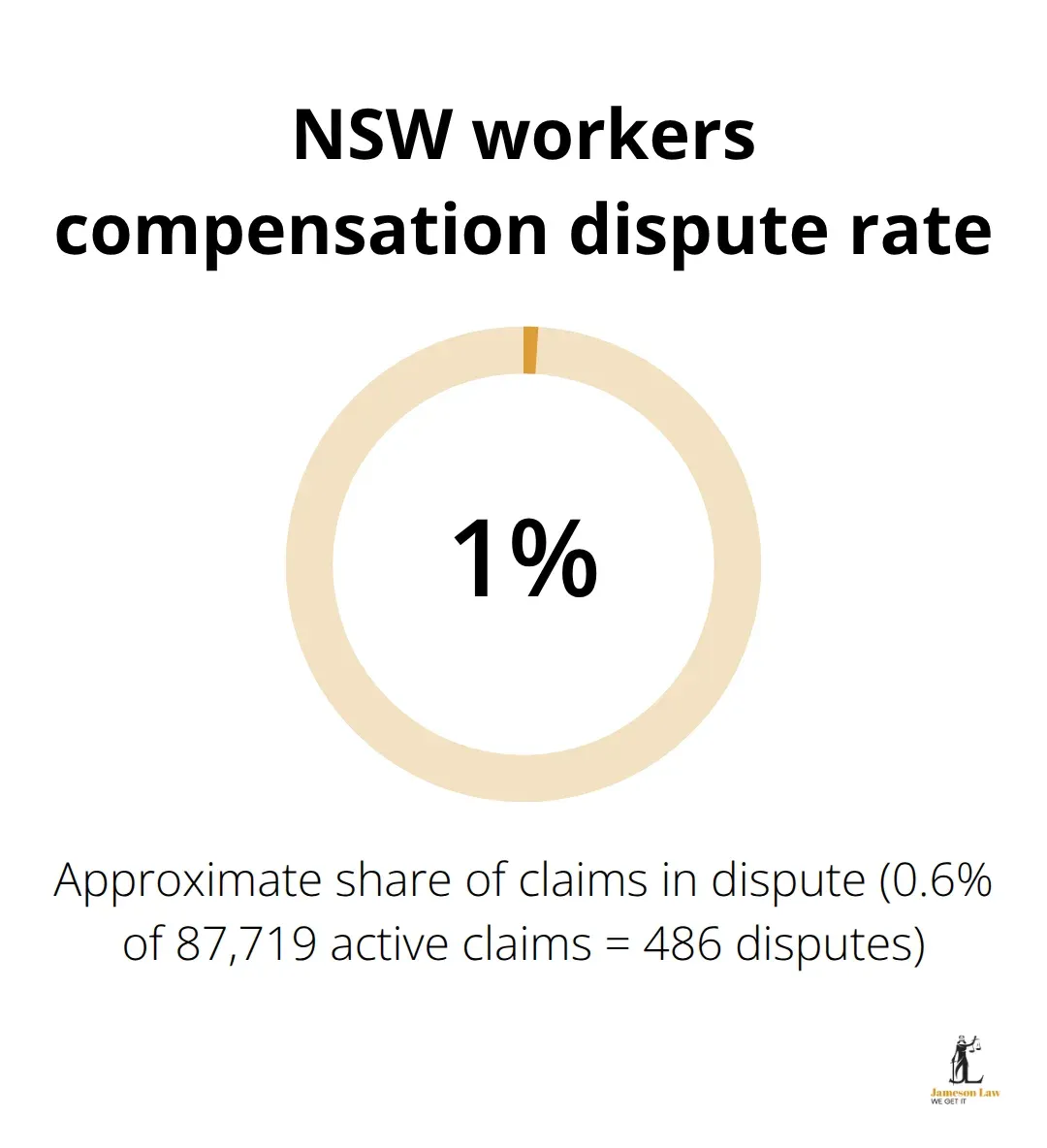
While many claims proceed without major conflict, disputes in NSW workers compensation do occur. Insurers may question whether your injury arose out of your employment, contest the severity of your condition, or argue that pre-existing health issues are the primary cause.
Independent Medical Examinations (IMEs)
If the insurer questions your medical evidence, they may request that you attend an Independent Medical Examination (IME). Scheduling and completing these assessments, followed by the generation of the specialist’s report, can extend the assessment timeline by several weeks. Responding promptly to requests to attend an IME is crucial, though you have the right to seek your own medical opinions if you disagree with the insurer’s findings.
The Personal Injury Commission (PIC)
If liability is formally declined, or if you cannot reach an agreement regarding your entitlements, the dispute may be escalated to the Personal Injury Commission (PIC). The PIC replaced the former Workers Compensation Commission and serves as the independent tribunal for resolving these matters.
The timeframe for resolving a dispute through the PIC process varies significantly. It depends heavily on the complexity of your injury, whether further medical evidence is required, and whether the matter can be resolved during a conciliation conference or if it must proceed to formal arbitration. Obtaining independent legal advice early can help you navigate the PIC procedures and ensure your dispute application is comprehensively prepared.
What Slows Down Your Workers Compensation Claim
How Injury Severity Affects Your Timeline
The complexity and severity of your injury fundamentally dictate the timeline of your claim. A straightforward injury with a clear prognosis resolves administratively faster than a complex condition requiring surgical intervention, multiple specialist reviews, or long-term rehabilitation.
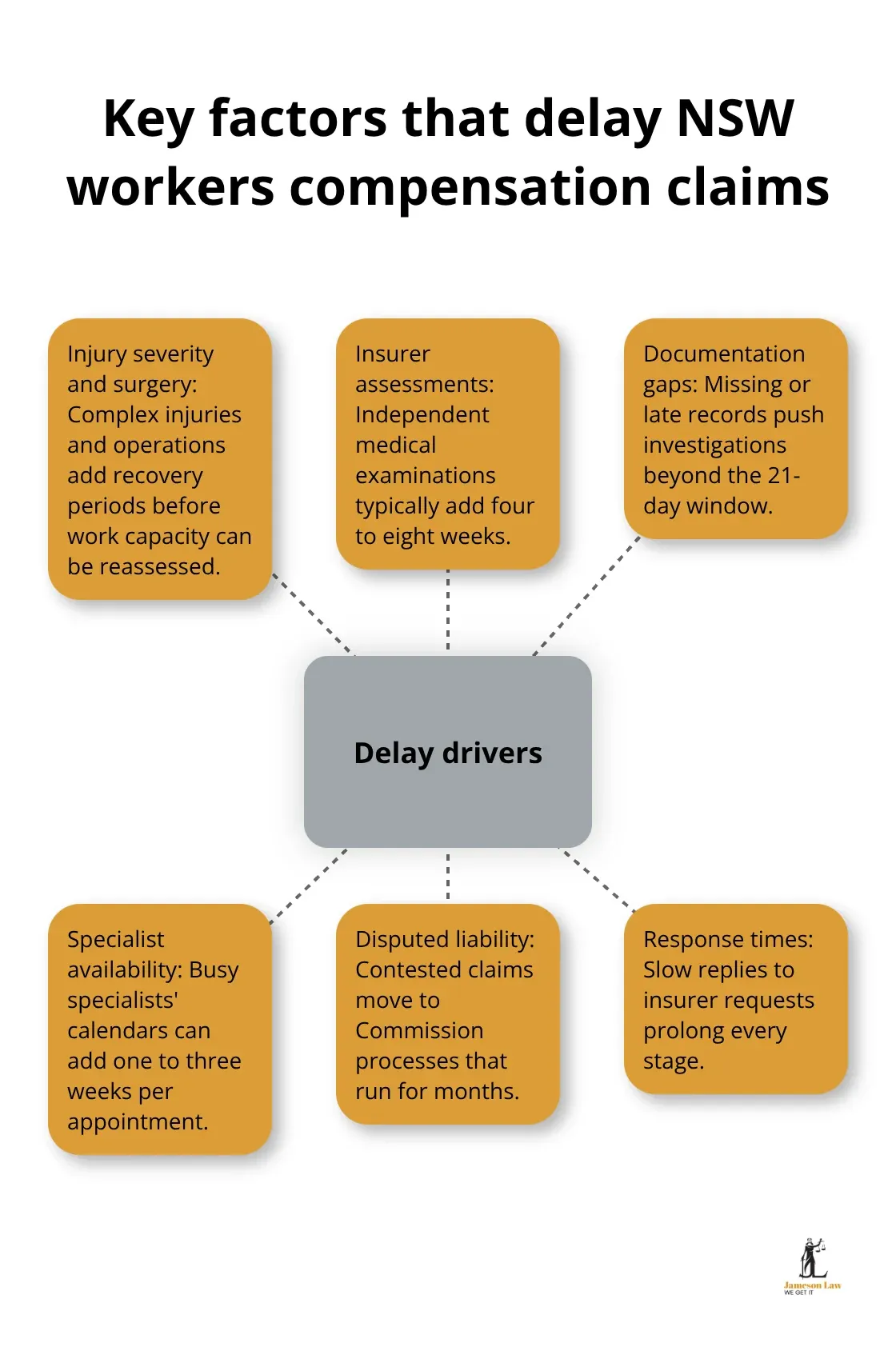
In cases where injuries stabilize slowly, assessing permanent impairment for a potential lump-sum payout cannot occur until a medical specialist deems your condition to have reached Maximum Medical Improvement (MMI). This standard medical waiting period naturally extends the lifecycle of a claim.
Medical Evidence and Documentation Quality
The quality and completeness of your initial medical documentation shape how efficiently the insurer can move forward. If your treating doctor provides comprehensive details about your diagnosis, causation, and functional limitations, the insurer has less reason to delay proceedings by requesting additional independent assessments. Promptly responding to the insurer’s requests with organized, clear records prevents unnecessary administrative stalling.
Frequently Asked Questions (FAQ)
How long does a workers compensation insurer have to accept a claim in NSW?
Provisional liability may start within 7 days of initial notification. Once a completed Worker’s Injury Claim Form and a valid SIRA Certificate of Capacity are submitted, the insurer generally has 21 days to formally determine liability.
What documents are required to start a workers compensation claim?
To formally commence a claim, you must submit a completed Worker’s Injury Claim Form along with a SIRA Certificate of Capacity issued by your nominated treating medical practitioner.
Who decides workers compensation disputes in NSW?
If a claim is disputed by the insurer, the matter can be escalated to the Personal Injury Commission (PIC). The PIC utilizes conciliation and arbitration to resolve disagreements between injured workers and insurers.
Final Thoughts
Navigating a NSW workers compensation claim requires an understanding of statutory timeframes and evidentiary requirements. From the crucial 48-hour employer notification window to the 21-day period for formal liability determination, acting promptly protects your entitlements. The difference between a streamlined claim and a prolonged dispute often comes down to the quality of your initial medical evidence and compliance with SIRA guidelines.
If your claim is disputed or you face delays navigating the Personal Injury Commission, securing professional guidance can clarify your rights. For more information on navigating your entitlements and managing your claim timeline effectively, contact Jameson Law.