

A workplace injury can leave you facing physical recovery, lost income, and uncertainty regarding your legal rights. Workers compensation NSW claims exist to provide statutory financial and medical support to injured employees, but understanding the precise regulatory framework is essential to protecting your entitlements.
At Jameson Law, our personal injury team helps injured workers navigate the statutory scheme. This guide breaks down the 2026 legislative requirements, outlining how to initiate a claim, the benefits you may be entitled to, and the avenues available for dispute resolution.
The NSW Workers Compensation Framework Explained
The NSW workers compensation scheme is regulated by the State Insurance Regulatory Authority (SIRA). While SIRA oversees the scheme’s compliance and performance, individual claims are processed by scheme agents acting for the nominal insurer (icare), or by specialized and self-insurers depending on your employer’s structure.
The scheme operates primarily on a “no-fault” basis, meaning you do not need to prove your employer was negligent to receive statutory benefits—only that your employment was a substantial contributing factor to your injury (or the main contributing factor for a disease/psychological injury).
Initiating Your Claim: Notification and Provisional Liability
Reporting the Injury Promptly
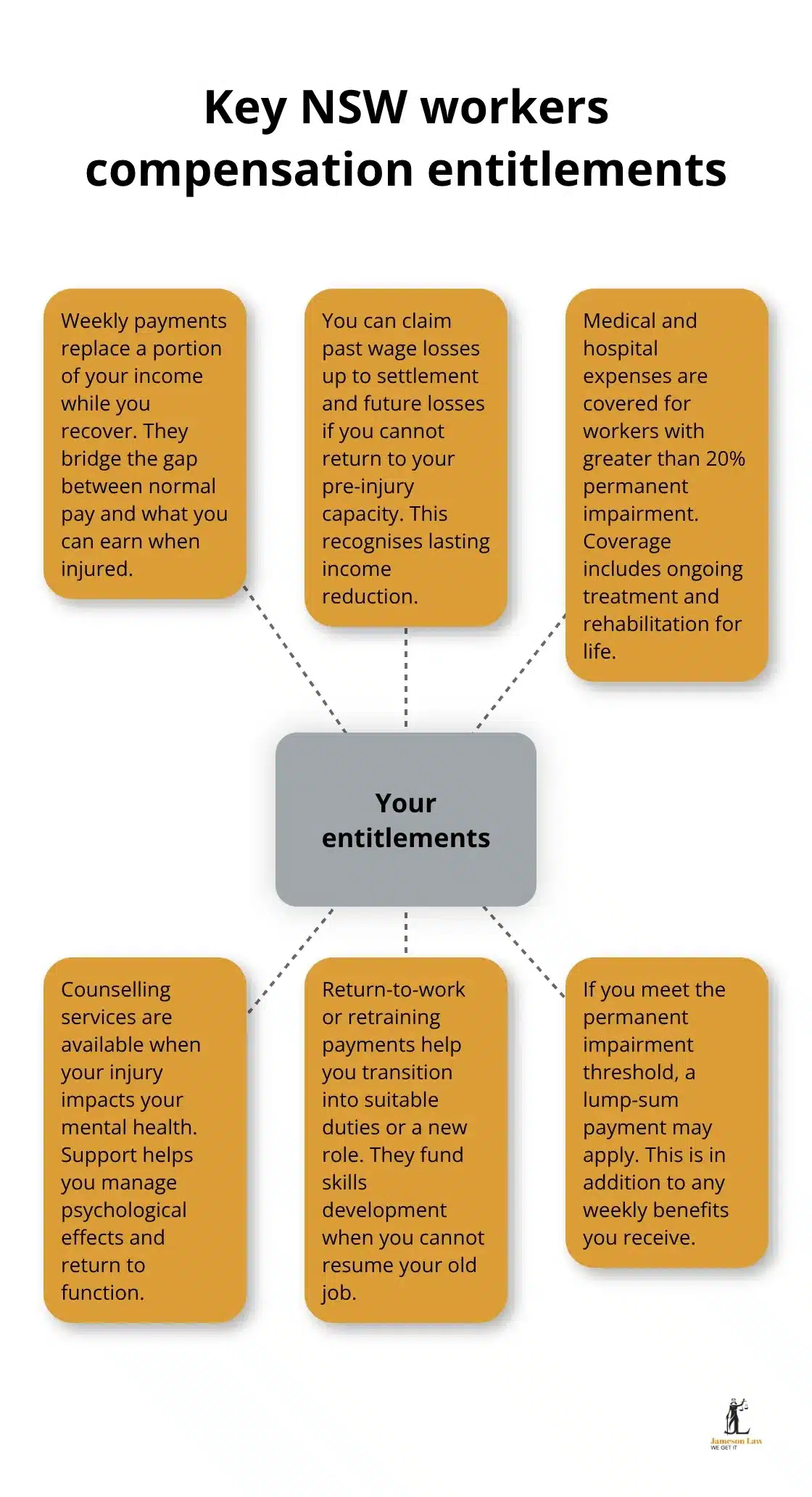
Reporting your injury quickly is a strict statutory requirement. You must notify your employer that you have been injured as soon as possible. Your employer is then legally required to notify their workers compensation insurer within 48 hours of becoming aware of the incident. If your employer fails to report the injury, you have the right to contact the insurer or SIRA directly.
The SIRA Certificate of Capacity
To access benefits, you must consult your nominated treating doctor and obtain a SIRA Certificate of Capacity. This mandatory document outlines your diagnosis, your fitness for pre-injury or suitable duties, and your treatment plan. The insurer relies heavily on this certificate to determine your ongoing work capacity and weekly payment entitlements.
Provisional Liability and Formal Claims
After initial notification, the insurer must generally start provisional weekly payments within seven days unless it has a reasonable excuse. A provisional acceptance allows payments while liability is investigated; it is not a final admission of liability. If the insurer relies on a reasonable excuse, it must give written notice and the worker can make a formal claim.
A claim should generally be made within six months, supported by a SIRA Certificate of Capacity where weekly payments are claimed. Exceptions can apply, so a late claim should not be abandoned without advice. See the related NSW claim-lodgement guide.
What Statutory Benefits Are You Entitled To?
Under the Workers Compensation Act 1987 (NSW), accepted claims may entitle you to a range of structured benefits, depending heavily on your individual work capacity and the severity of your injury.
Weekly Income Payments
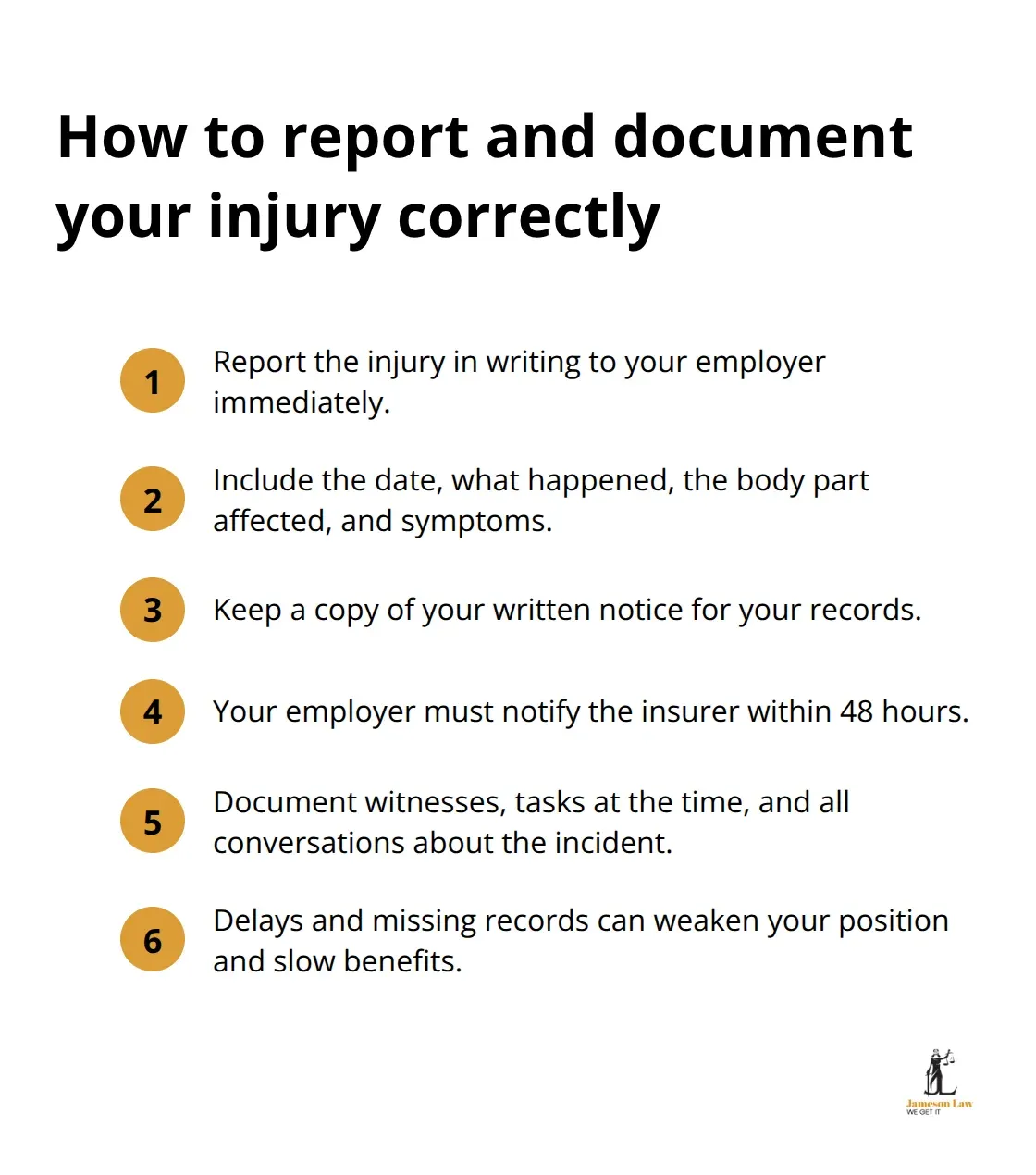
Weekly payments compensate eligible loss of earnings and are calculated from pre-injury average weekly earnings (PIAWE), subject to statutory maximums, work capacity and the applicable entitlement period. Rates usually change after the first 13 weeks and again as the claim progresses.
Do not apply a single “130-week rule” to every worker. For primary psychological injuries notified or claimed on or after 1 July 2026, new staged WPI thresholds govern access beyond 130 weeks, with some workers in an intermediate impairment band potentially receiving a further 52 weeks. Physical injuries, exempt workers and earlier claims can follow different rules. Use SIRA’s current weekly payments guidance for the correct pathway.
Reasonably Necessary Medical Expenses
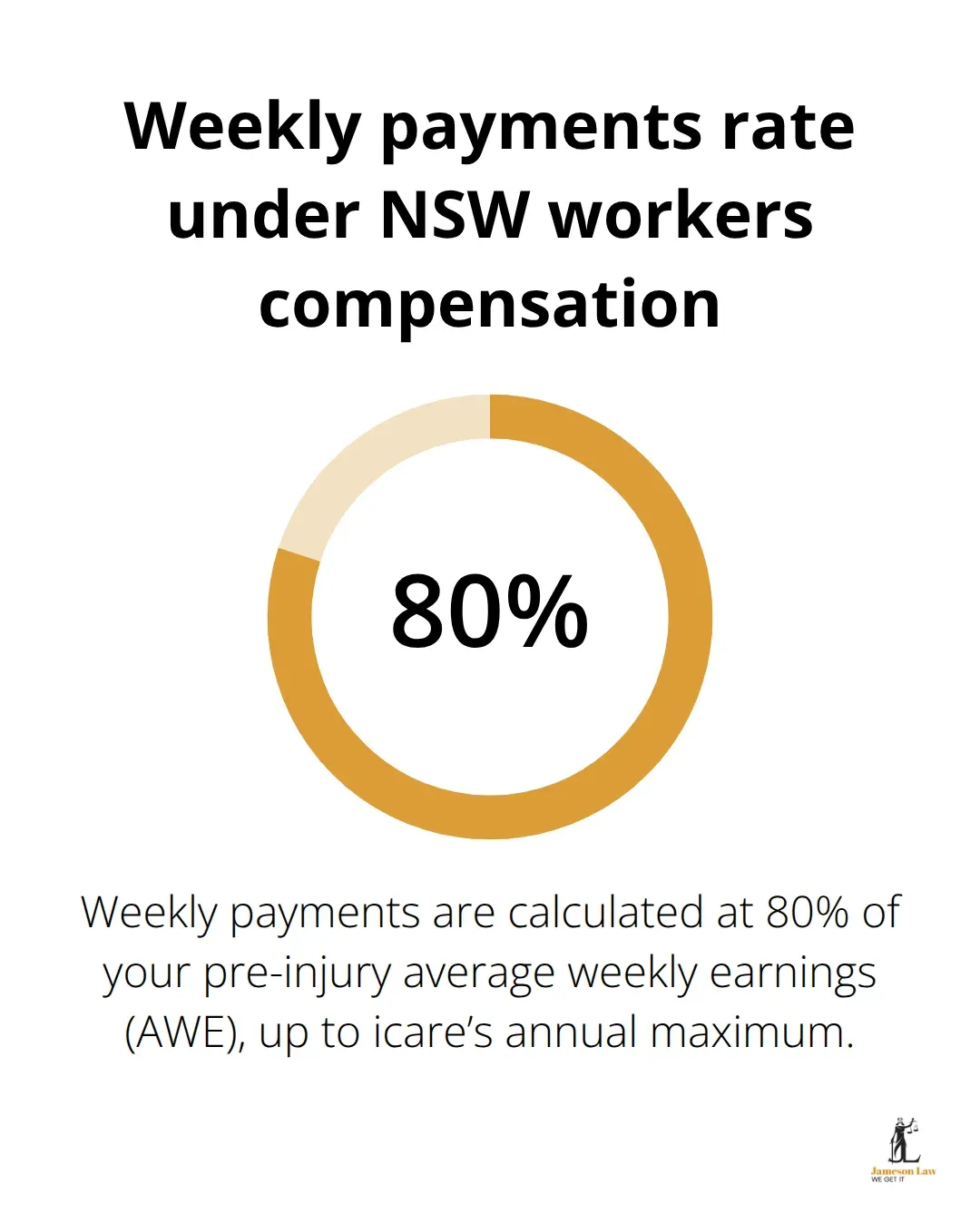
The scheme may cover reasonably necessary medical, hospital and rehabilitation treatment. Duration depends on the injury type, WPI, weekly-payment history and transitional rules. For primary psychological injuries notified or claimed on or after 1 July 2026, treatment is generally limited to one year after weekly payments cease (or one year after the claim if none were paid), while workers with highest needs may have lifetime access. Certain aids, modifications and secondary surgery can fall outside the usual time limits.
Permanent Impairment Lump Sums
For claims made on or after 19 June 2012, SIRA states that section 66 lump-sum compensation generally requires at least 11% WPI for a physical injury or at least 15% WPI for a primary psychological injury. Secondary psychological injuries are not included in that lump-sum entitlement.
From 1 July 2026, most workers generally have one principal permanent impairment assessment per injury, with a further assessment available only in limited circumstances. During the transition to mid-2027, the assessor must be regulated by SIRA and the worker must obtain independent legal advice before the assessment. Earlier assessments and exempt-worker rules may alter the position.
Work Injury Damages (Common Law)
Work injury damages are modified common law damages for economic loss and require employer negligence or another actionable wrong plus the applicable permanent impairment threshold. The familiar 15% threshold should not be applied to every claim: for a primary psychological injury notified or claimed on or after 1 July 2026, the threshold increased to at least 25% WPI and is scheduled to rise in later years. Other conditions, time limits and procedural steps also apply.
Because resolving a work injury damages claim can affect ongoing statutory entitlements, obtain advice based on the injury type, notification date and principal impairment assessment before settling.
Disputing an Insurer Decision
Insurers frequently dispute liability, reduce weekly payments based on work capacity decisions, or decline funding for specific medical procedures. If you disagree with an insurer’s decision, you have formalized legal pathways to challenge it.
Internal Reviews and IRO Assistance
You can request a formal internal review from the insurer. More importantly, injured workers in NSW can access free, independent legal assistance through the Independent Legal Assistance and Review Service (ILARS), administered by the Independent Review Office (IRO). An IRO grant covers your approved legal fees and the cost of independent medical reports.
The Personal Injury Commission (PIC)
If the dispute remains unresolved, your lawyer can file an application with the Personal Injury Commission (PIC). The PIC is the independent statutory tribunal responsible for resolving NSW workers compensation disputes through conciliation, medical assessment, and formal arbitration.
Frequently Asked Questions
How long do I have to make a workers compensation claim in NSW?
A NSW workers compensation claim should generally be made within six months of the injury or the date the worker became aware of it. Exceptions can apply, so notify the employer and insurer promptly and obtain advice before assuming a late claim is barred.
What is the threshold for a permanent impairment lump sum in NSW?
For claims made on or after 19 June 2012, the usual section 66 thresholds are at least 11% WPI for a physical injury and at least 15% WPI for a primary psychological injury. Transitional, exempt-worker and assessment rules can change the result.
Who pays my legal fees for a workers compensation dispute in NSW?
If you have a dispute with a workers compensation insurer, you may be eligible for free legal representation through the Independent Legal Assistance and Review Service (ILARS), which is funded by the Independent Review Office (IRO). If granted, ILARS covers your approved legal and medical report costs.
Final Thoughts
Successfully managing workers compensation NSW claims requires meticulous attention to statutory deadlines, precise medical documentation, and a clear understanding of the SIRA guidelines. From submitting your initial notification within the 48-hour employer window to navigating complex WPI assessments, early and informed action protects your entitlements.
Insurers assess claims rigorously, and disputes over work capacity or reasonably necessary treatment are common. Because NSW law strictly regulates access to lump sums and common law damages, obtaining objective legal guidance is highly recommended to ensure you receive the full scope of benefits you are legally owed.
If your claim has been disputed, or if you need assistance understanding your entitlements or navigating a PIC dispute, contact Jameson Law for professional guidance.