


Engaging an experienced Sydney injury lawyer helps you identify the correct legal pathway and take structured, practical first steps following an accident. In New South Wales, personal injury law is not a single, uniform system; distinct statutory regimes and common law frameworks govern different types of injuries, each with its own procedural thresholds, evidence rules, and notification requirements.
At Jameson Law, our personal injury team assists individuals across Sydney and NSW in navigating complex claims against insurers. This guide outlines how to determine which claim pathway applies to your circumstances, how to protect your evidence, and what to consider when seeking legal advice.
Identifying the Correct NSW Personal Injury Claim Pathway
Before initiating any claim, it is essential to categorize the legal framework that applies to your accident. Different types of incidents are governed by separate pieces of NSW legislation and regulatory bodies, such as the State Insurance Regulatory Authority (SIRA).
| Claim Pathway | Governing Legislation | Key Characteristics & Thresholds |
|---|---|---|
| Workers Compensation | Workers Compensation Act 1987 (NSW) | No-fault statutory benefits for medical expenses and weekly wage support. Permanent impairment lump sums require meeting minimum Whole Person Impairment (WPI) thresholds (e.g. 11% for physical injuries). |
| Motor Vehicle Accidents (CTP) | Motor Accident Injuries Act 2017 (NSW) | Early statutory benefits are available for defined periods regardless of fault. Common law damages for economic loss or non-economic loss require establishing fault and that the injury is not a “threshold injury”. |
| Public Liability | Civil Liability Act 2002 (NSW) | Fault-based claims for injuries occurring in public places, retail premises, or private properties. Requires proof of a duty of care, breach of duty, and causation. |
| Medical Negligence | Civil Liability Act 2002 (NSW) | Requires establishing that treatment fell below the standard expected of a peer professional in Australia and directly caused physical or psychological harm. |
Note on Time Limits: Statutory notification deadlines and limitation periods vary significantly across these pathways. For detailed information regarding discovery rules and court filing deadlines, consult our comprehensive guide on personal injury time limits in NSW.
Practical First Steps: Preserving Evidence and Managing Care
Building a substantiated personal injury claim requires methodical preparation from the outset. Insurers evaluate claims based on contemporaneous medical and factual documentation, not subjective recollection.
1. Immediate Medical Care and Consistent Reporting
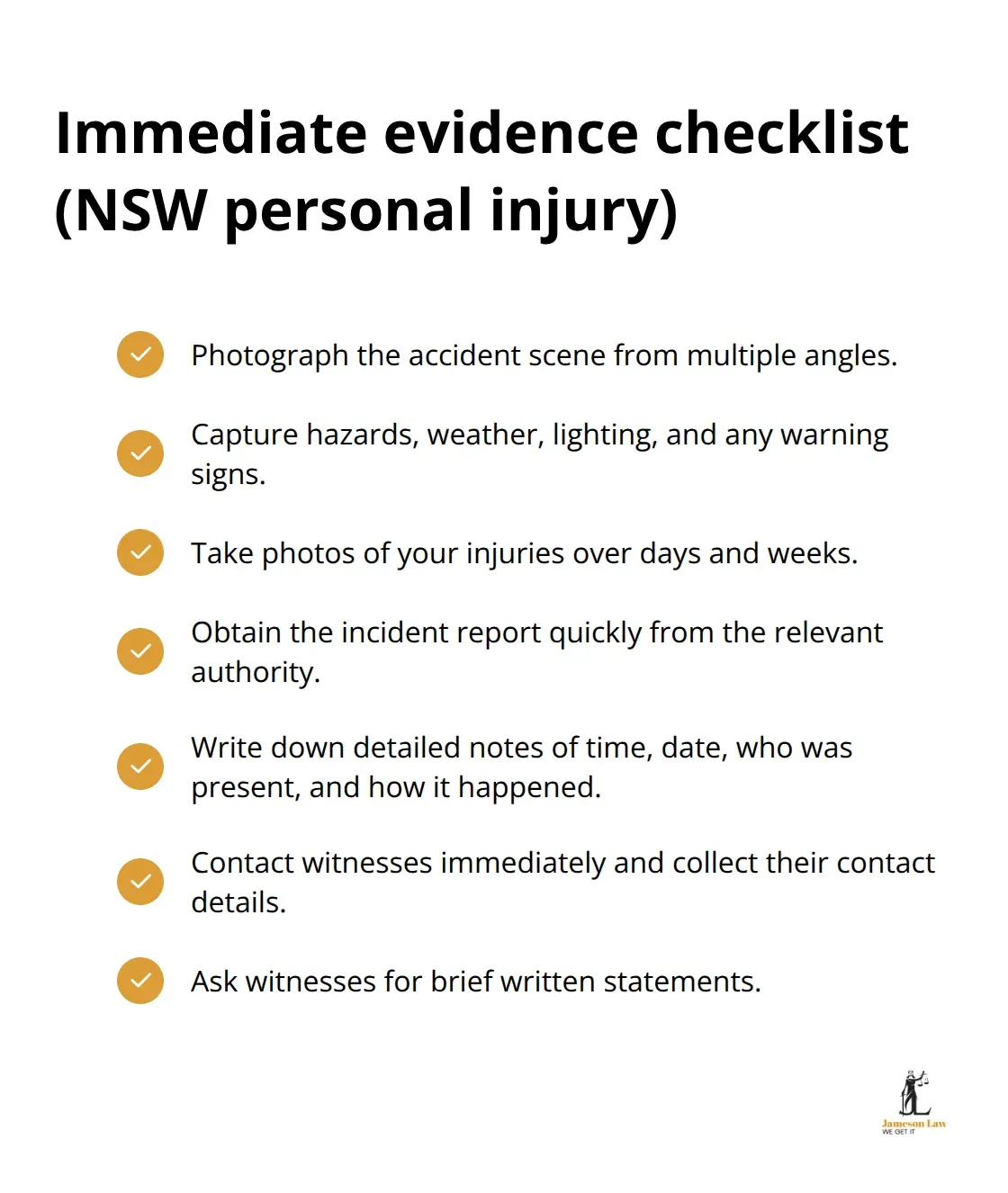
Seeking prompt medical attention from your general practitioner or emergency department is vital. Ensure you describe accurately how the accident occurred, as clinical notes taken during initial consultations serve as primary contemporaneous evidence of causation.
2. Evidence Gathering
Where safe and practicable, preserve objective evidence immediately:
- Photographs and Video: Capture the scene of the incident, any environmental hazards, defective equipment, or visible injuries as they evolve.
- Incident Reports: Request copies of official reports lodged with NSW Police, employers, or venue managers.
- Witness Details: Record the names and contact information of independent witnesses who observed the incident.
- Financial Records: Retain receipts for all treatment expenses, pharmaceutical costs, and proof of lost income (such as payslips or tax records).
3. Managing Insurer Communications
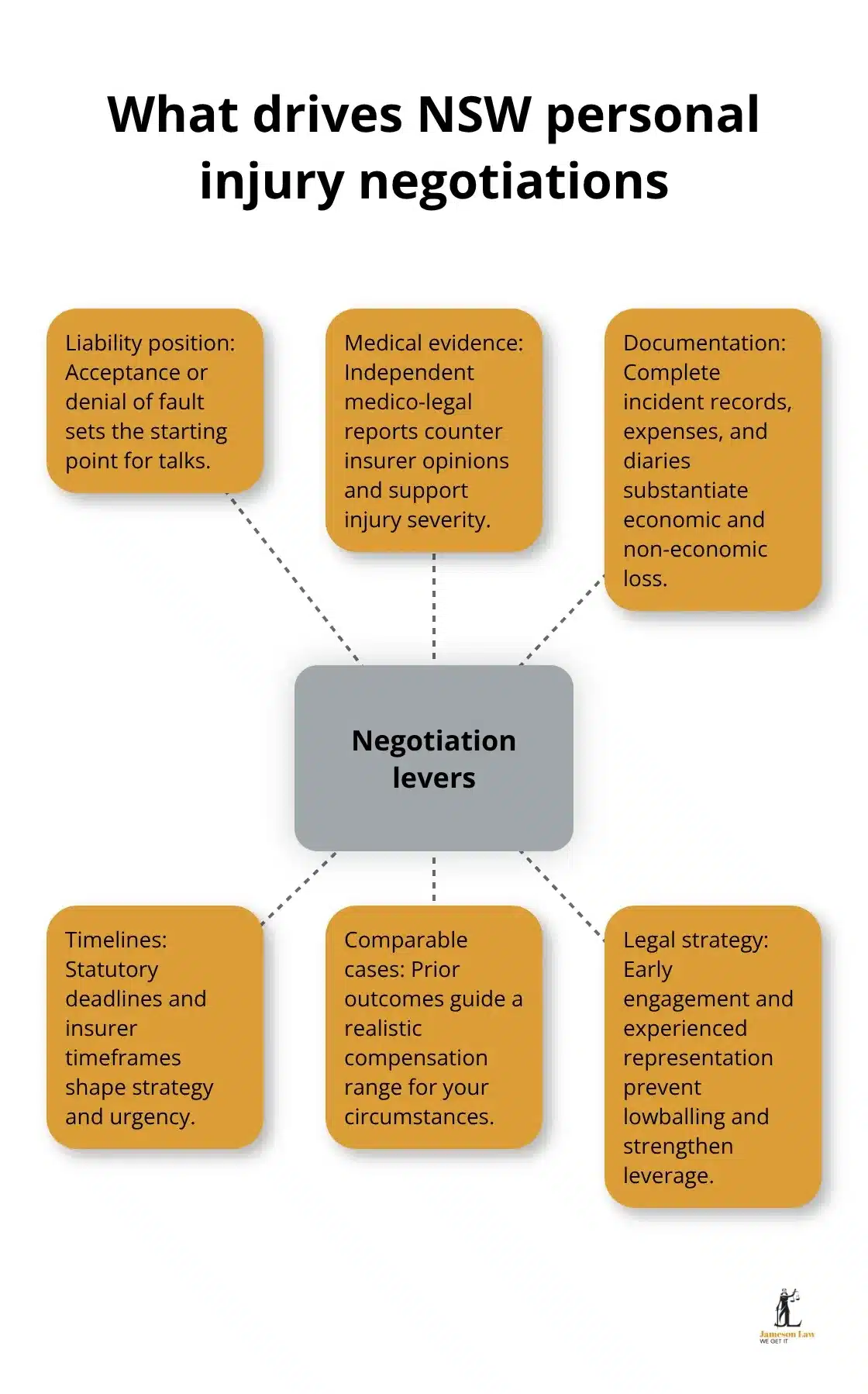
Insurers represent their commercial interests and will rigorously assess liability and medical causation. When communicating with an insurer, provide factual, truthful accounts, but avoid providing speculative opinions or signing settlement releases before obtaining independent legal advice.
Statutory Benefits vs. Common Law Damages
Understanding what relief you can claim under NSW law is critical for setting realistic expectations. The law distinguishes between defined statutory support and common law damages.
Statutory Benefits
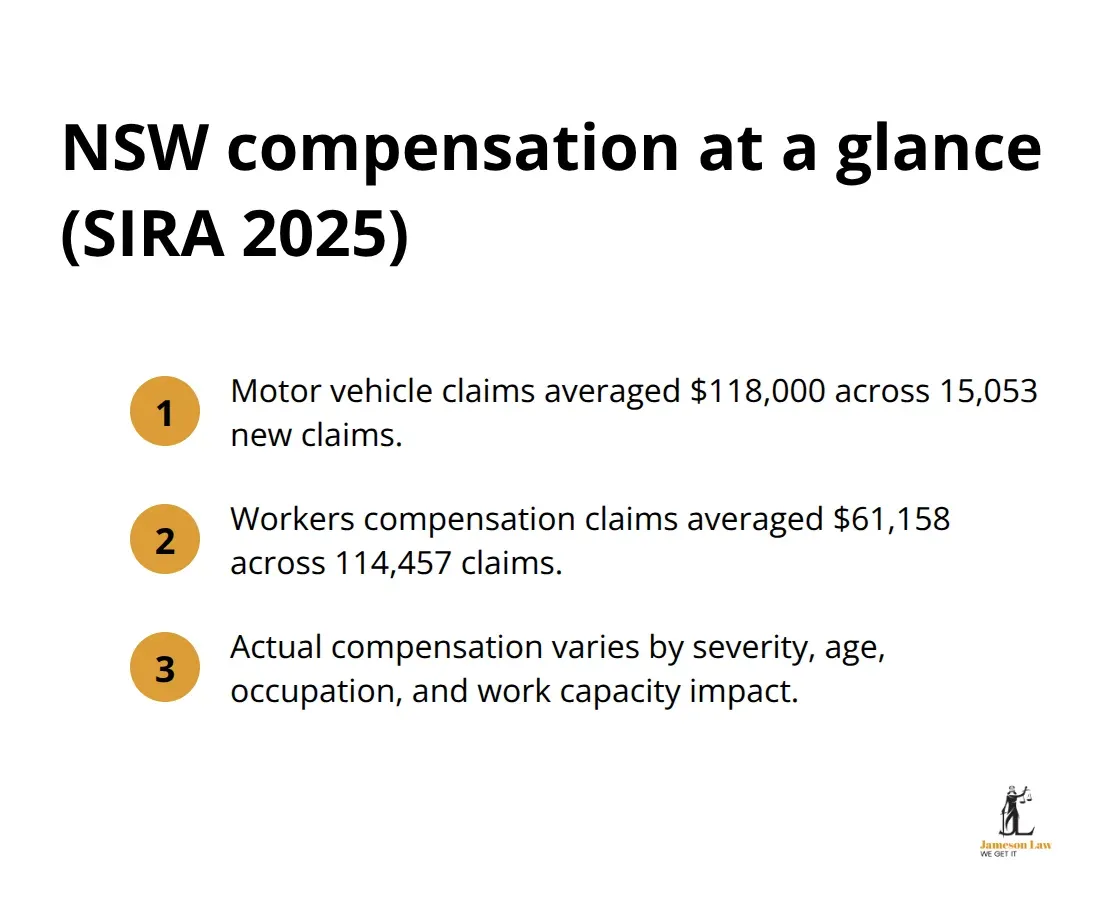
Under schemes like NSW CTP and Workers Compensation, statutory benefits may provide treatment and income support. Depending on the scheme and eligibility, benefits can cover reasonably necessary medical treatments, rehabilitation services, and a statutory percentage of your lost weekly earnings. In many instances, these benefits are accessible early without needing to establish that the other party was negligent.
Common Law Damages
Common law damages (often pursued under the Civil Liability Act 2002 (NSW) or specialized scheme provisions) are lump-sum awards designed to compensate for legally recoverable past and future economic loss (such as loss of earning capacity) and non-economic loss (pain and suffering). To recover common law damages, an injured person generally must prove fault and, where applicable, satisfy strict legislative thresholds regarding the degree of permanent impairment.
Choosing a Sydney Injury Lawyer: Costs and Transparency
When selecting legal representation in NSW, transparency regarding costs, statutory caps, and practice experience is essential. The regulation of legal fees in NSW is governed by the Legal Profession Uniform Law (NSW).
Important Questions to Ask Your Lawyer
- Costs Agreement and Disbursements: How are professional legal fees and external disbursement costs (e.g. medico-legal expert report fees) calculated and billed?
- Conditional Fee (“No-Win, No-Fee”) Terms: If operating under a conditional costs agreement, what exact conditions apply if the claim is unsuccessful, and are disbursements still payable?
- Cost Recovery Caps: Does legislation cap the amount of legal costs that can be recovered from the insurer in your specific claim type?
- Relevant Experience: What direct experience does the lawyer have in managing disputes before the Personal Injury Commission or the NSW Courts?
Frequently Asked Questions
How does a Sydney injury lawyer determine the right claim pathway?
A Sydney injury lawyer evaluates where and how the incident occurred, the nature of your injury, and the parties involved to identify whether your matter falls under workers compensation, compulsory third party (CTP) motor accident law, public liability, or medical negligence.
What is the difference between statutory benefits and common law damages in NSW?
Statutory schemes can provide payments for eligible treatment and income loss under CTP or workers compensation rules, sometimes without first proving negligence. Common law damages may be awarded by a court or agreed in settlement for legally recoverable past and future loss; fault and statutory thresholds may apply.
Are legal fees always recoverable in NSW personal injury claims?
No. Cost recovery in NSW is strictly regulated by legislation (such as the Civil Liability Act 2002, Motor Accident Injuries Act 2017, and Workers Compensation legislation). In some low-threshold or statutory claims, legal costs are capped or cannot be recovered from the insurer, meaning you should discuss costs agreements and fee structures with your lawyer upfront.
Final Thoughts
Navigating a personal injury claim in New South Wales requires an objective analysis of liability, strict compliance with statutory timeframes, and a clear understanding of the difference between ongoing statutory benefits and common law compensation. Taking early, practical steps to document your injuries and preserve physical evidence provides the foundation for any future claim.
Because the statutory thresholds and procedural rules governing NSW claims are complex, seeking qualified legal guidance ensures your rights are protected and that your claim is lodged within the appropriate legal framework.
If you have suffered an injury and need clarity on your legal options, contact the personal injury team at Jameson Law to discuss your matter.