

A workplace injury can profoundly impact your physical health, your finances, and your family’s future. Initiating workers compensation NSW claims correctly is the crucial first step to accessing statutory support, but navigating the legislative requirements demands precision.
At Jameson Law, our personal injury team guides workers through the strict procedures governed by the State Insurance Regulatory Authority (SIRA). This practical guide walks you through eligibility, vital documentation, statutory deadlines, and the significant legislative reforms impacting psychological claims.
Understanding Workers Compensation NSW Claims
Who is Covered by the Scheme?
The NSW workers compensation scheme covers the vast majority of workers, including full-time, part-time, casual employees, and apprentices. While independent contractors are generally excluded, some subcontractors may be “deemed workers” under the legislation depending on their working arrangements. The scheme is “no-fault,” meaning you do not have to prove your employer was negligent to access statutory benefits; you only need to prove that your injury arose out of or in the course of employment, and that employment was a substantial contributing factor (or the main contributing factor for a disease).
What Types of Injuries Qualify?
Compensable injuries include acute physical trauma (such as fractures or lacerations), gradual-onset physical conditions (like repetitive strain injuries), occupational diseases (such as asbestos-related illnesses), and primary psychological injuries.
The 1 July 2026 Psychological Injury Reforms
Recent amendments to the Workers Compensation Act 1987 (NSW) introduced stringent new rules for primary psychological injuries notified on or after 1 July 2026. A primary psychological injury is now only compensable if it was caused by a statutory “relevant event.”
Crucially, if the injury was caused by “relevant conduct”—strictly defined as bullying, sexual harassment, racial harassment, or excessive work demands—you must submit a completed formal claim form before you are eligible for any entitlements. In contrast, claims for physical injuries or psychological injuries caused by other events (like workplace violence or witnessing a traumatic incident) can generally trigger provisional liability based on initial notification and a valid medical certificate.
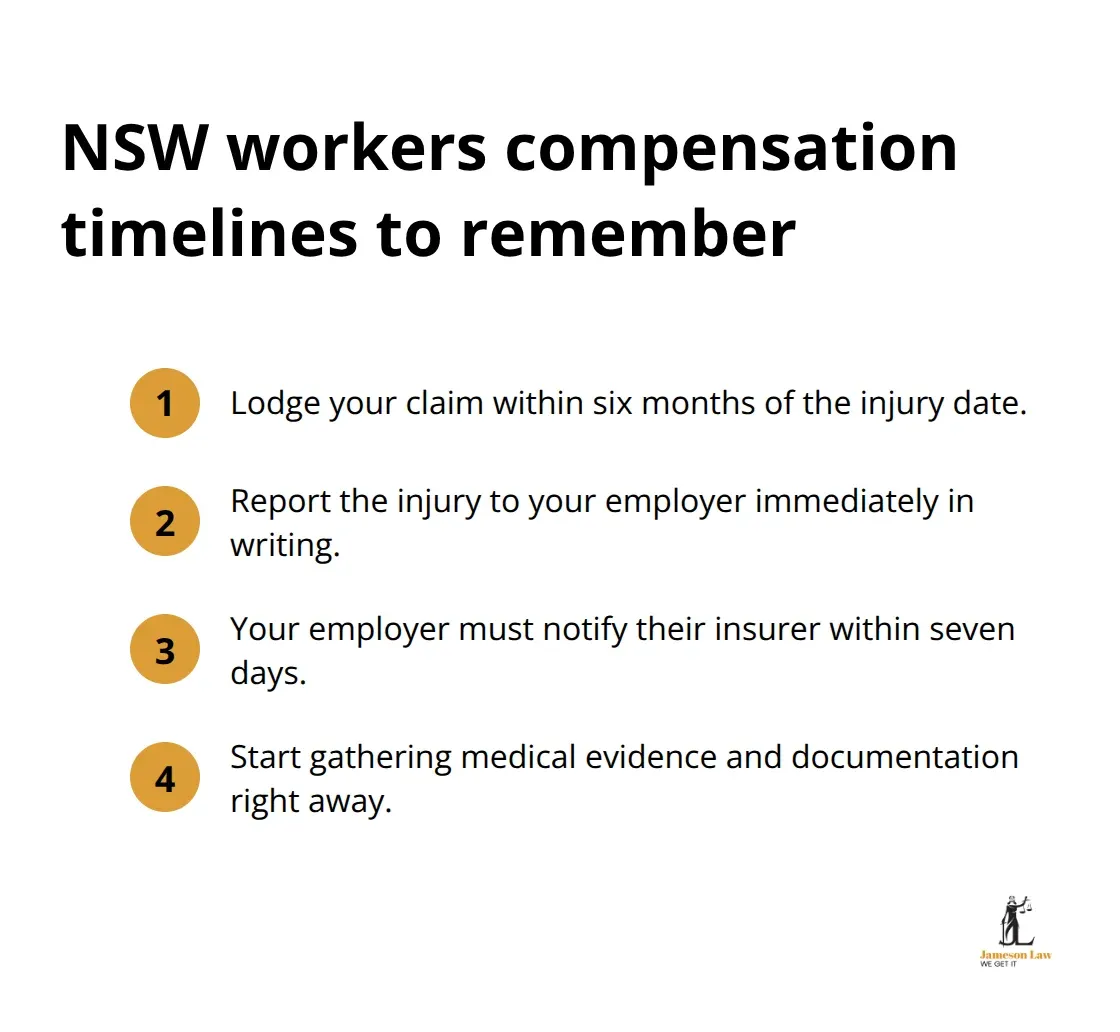
Steps to Lodge a Claim: Your Practical Guide
Failing to follow statutory procedures can delay or jeopardise your entitlements. Here is the step-by-step process for establishing your claim.
| Step | Action Required | Key Detail |
|---|---|---|
| 1. Immediate Notification | Report the injury to your employer verbally and in writing as soon as possible. | Your employer is legally obligated to notify their insurer within 48 hours of becoming aware of the injury. |
| 2. Medical Assessment | Consult your nominated treating doctor to obtain a formal SIRA Certificate of Capacity. | This certificate details your diagnosis, work capacity, and connects the injury to your employment. |
| 3. Provisional Liability | Provide the certificate to your employer/insurer to trigger early support. | For most physical injuries, the insurer has 7 days to commence provisional weekly payments or issue a “reasonable excuse.” |
| 4. Formal Lodgement | Complete and submit the official Worker’s Injury Claim Form if required. | Mandatory upfront for post-2026 “relevant conduct” psychological claims, and required eventually to establish full liability for all claims. |
Statutory Time Limits and Exceptions
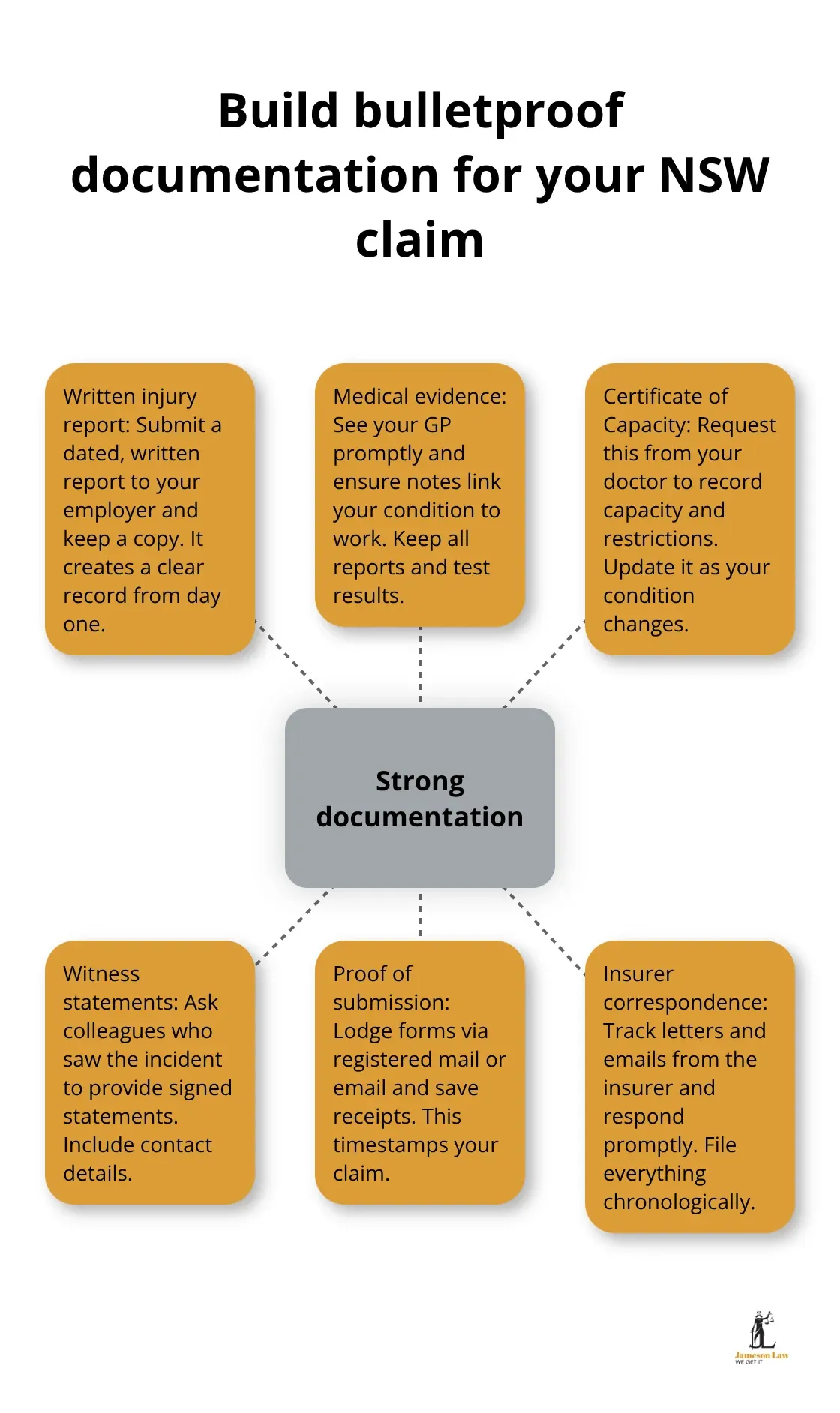
Under Section 261 of the Workplace Injury Management and Workers Compensation Act 1998 (NSW), a claim for compensation must generally be made within six months of the injury or the date you became aware of the injury.
Six months is the general rule, but missing that period does not automatically end every claim. Limited statutory exceptions and extensions can apply, including in some cases involving reasonable cause, delayed awareness, death or serious and permanent disablement. Late claims require careful, fact-specific assessment, so report and claim promptly and obtain advice if time has passed.
Understanding Your Entitlements and Insurer Decisions
The NSW workers compensation scheme provides several potential streams of support, depending on the severity of your injury and your ongoing work capacity.
Types of Compensation Available
- Weekly Payments: Partial wage replacement while you have a total or partial incapacity for work, calculated based on your Pre-Injury Average Weekly Earnings (PIAWE).
- Medical and Related Expenses: Funding for reasonably necessary medical treatment, hospital care, rehabilitation, and travel expenses.
- Return-to-Work Support: Assistance programs to help you safely transition back to appropriate duties.
- Permanent Impairment Lump Sum: If your injury permanently stabilises and meets a minimum Whole Person Impairment (WPI) threshold (e.g., 11% for most physical injuries, or 15% for primary psychological injuries), you may be entitled to a statutory lump-sum payment.
- Work Injury Damages: If employer negligence or other wrongful conduct caused the injury and the applicable WPI threshold is met, you may be eligible to claim past and future economic loss. The usual threshold is at least 15% WPI, but for primary psychological injuries first notified from 1 July 2026 it is at least 25% WPI.
Common Mistakes to Avoid
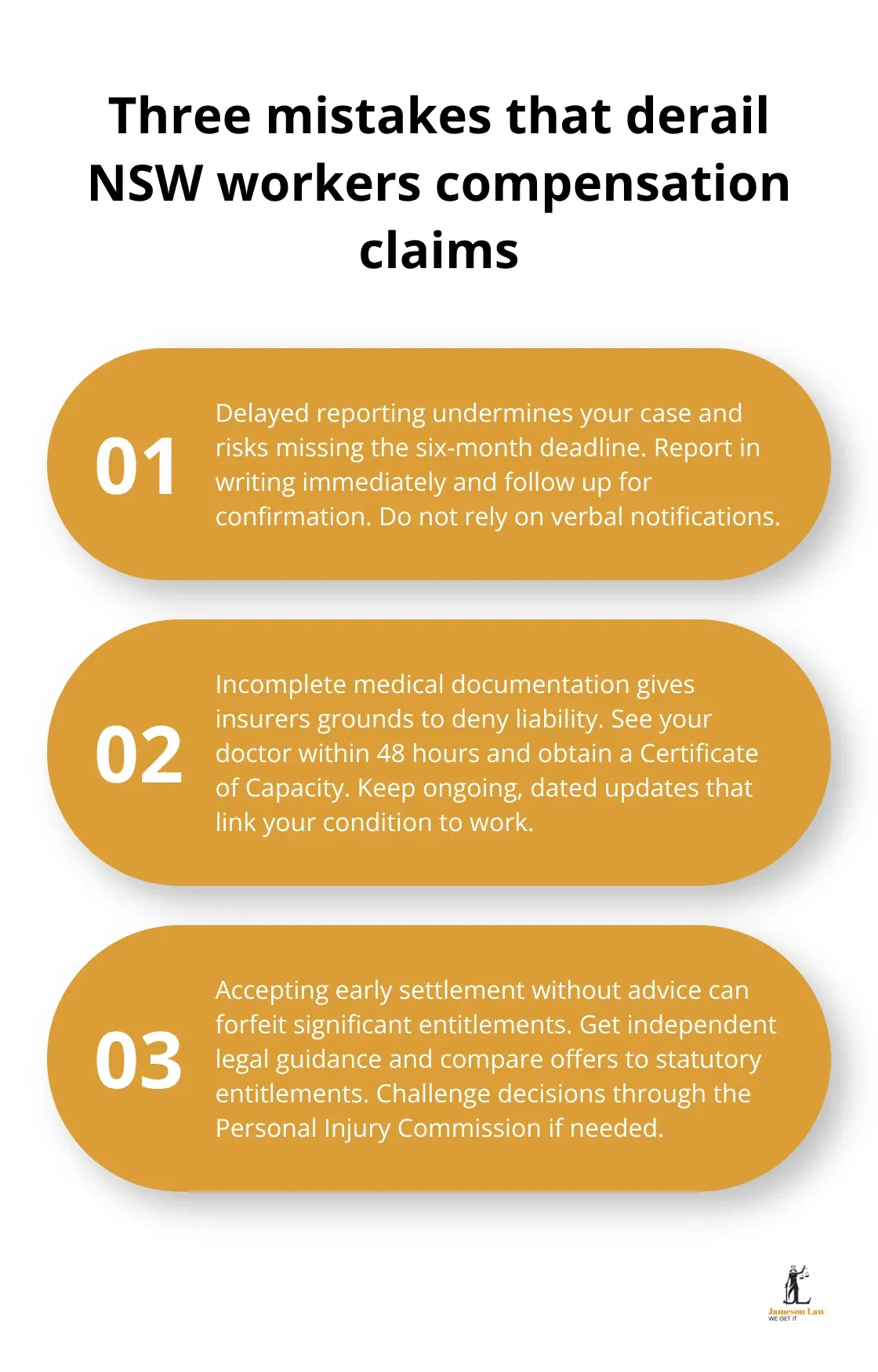
Many claims are complicated by preventable administrative errors. For instance, failing to obtain a properly detailed SIRA Certificate of Capacity from your doctor leaves the insurer without a medical basis to process payments. Similarly, accepting an initial liability decision or a permanent impairment assessment without seeking independent legal advice can result in waiving your rights to dispute the assessment before the Personal Injury Commission.
Frequently Asked Questions
How long do I have to lodge a workers compensation claim in NSW?
A claim should generally be made within six months of the injury date or death. Exceptions and extensions can apply in limited circumstances, including some cases involving delayed awareness, reasonable cause, death or serious and permanent disablement. Notify the employer and insurer promptly and obtain advice if time has passed.
What is the difference for psychological claims from 1 July 2026?
For primary psychological injuries notified from 1 July 2026, the injury must be caused by a statutory “relevant event.” If the cause is “relevant conduct” (like bullying or harassment), you must submit a completed formal claim form before being eligible for entitlements. For other events (like violence or witnessing trauma), provisional liability can commence upon standard notification.
Do I need a formal claim form for a physical injury?
Not necessarily. An initial notification may provide enough information for an insurer to begin assessing a physical injury claim, and the insurer can waive a claim form where it has sufficient information. A form may be requested later. Different rules apply to primary psychological injuries caused by relevant conduct, for which a completed claim form is mandatory from 1 July 2026.
Final Thoughts
Successfully navigating workers compensation NSW claims requires timely action, comprehensive medical evidence, and an understanding of your statutory rights. Whether you are dealing with a straightforward physical injury or the strict new criteria for post-2026 psychological injury claims, adhering to the SIRA guidelines protects your financial stability and your access to medical care.
Insurers are bound by legislation to assess claims fairly, but disputes over PIAWE calculations, work capacity, and permanent impairment thresholds are common. Because the NSW scheme imposes significant statutory caps and procedural hurdles, obtaining professional legal advice ensures you are not navigating a complex dispute alone.
If your claim has been declined, your payments have been reduced, or you need assistance lodging a complex psychological injury claim, contact the personal injury team at Jameson Law for an expert assessment of your circumstances.