


Navigating a road accident compensation NSW claim can be complex. After a collision, you are likely facing medical expenses, rehabilitation needs, and lost wages. In New South Wales, the Compulsory Third Party (CTP) scheme provides a structured framework for financial recovery, but your entitlements depend heavily on the classification of your injuries and the circumstances of the crash.
At Jameson Law, we ensure injured individuals understand their exact legal position under the Motor Accident Injuries Act 2017 (NSW). This guide explains what statutory benefits and common law damages may cover, how threshold injuries restrict claims, and why calculating economic and non-economic loss requires expert legal evaluation rather than generic online estimates.
Understanding Road Accident Compensation NSW Pathways
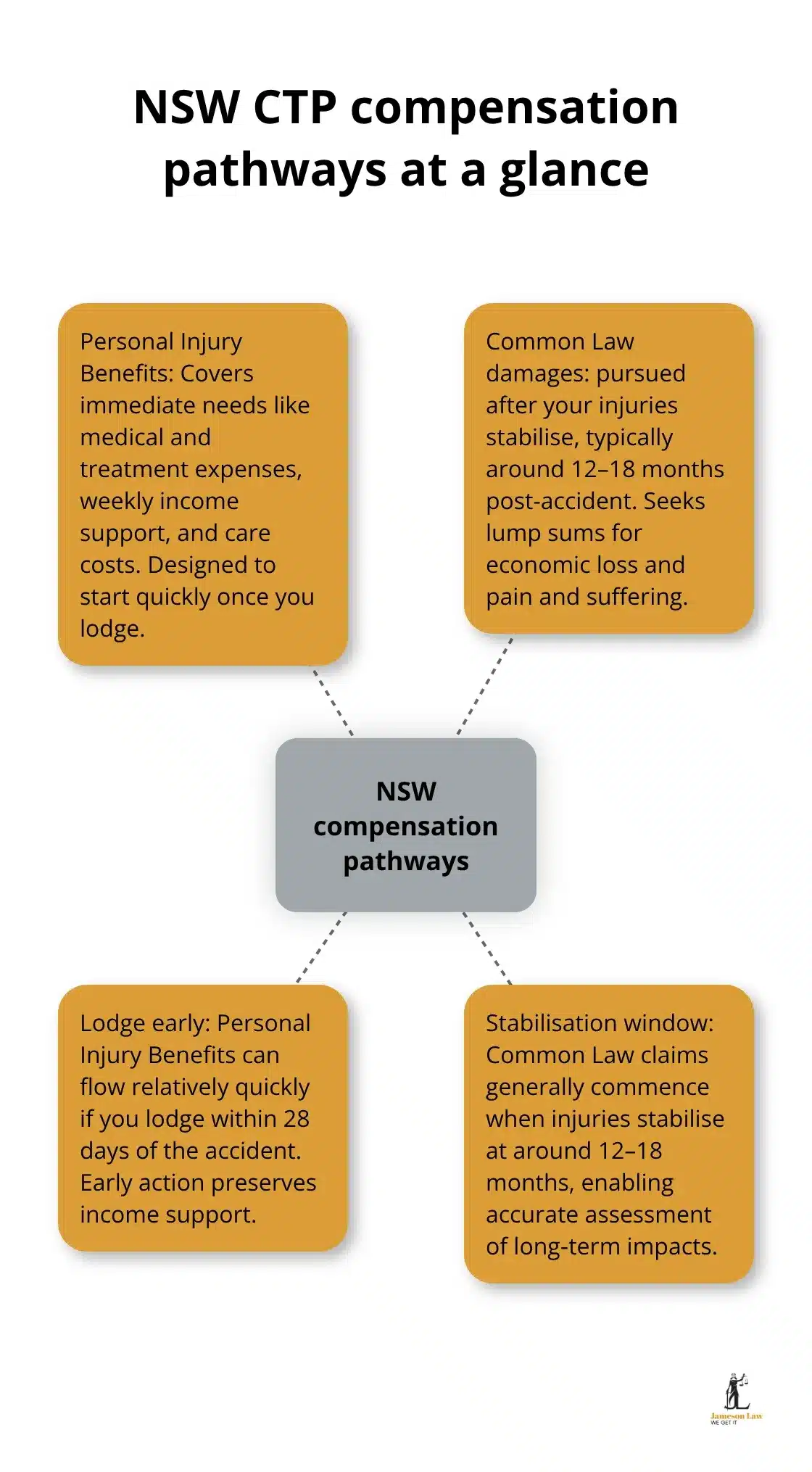
The NSW CTP scheme managed by the State Insurance Regulatory Authority (SIRA) separates compensation into two distinct avenues: Statutory Benefits and Common Law Damages. Your access to these pathways is dictated by who was at fault and the medical classification of your injuries.
| Compensation Type | What It Covers | Eligibility & Limitations |
|---|---|---|
| Statutory Benefits | Reasonable and necessary medical treatment, rehabilitation costs, and partial weekly income support. | Available to most injured people regardless of fault. Generally capped at 52 weeks for mostly at-fault drivers and those with “threshold injuries”. |
| Common Law Damages | A single lump-sum payment compensating for past and future economic loss, and potentially non-economic loss (pain and suffering). | Requires a non-threshold injury. The claimant must not be wholly or mostly at fault. Non-economic loss requires permanent impairment greater than 10%. |
Threshold vs. Non-Threshold Injuries
The severity of your injury fundamentally dictates your entitlements. A “threshold injury” (previously referred to as a “minor injury”) typically encompasses soft tissue injuries (such as whiplash or muscle strains) and minor psychological or psychiatric injuries. If you are assessed as having a threshold injury, your statutory benefits are generally limited to up to 52 weeks, and you are entirely excluded from making a common law damages claim.
Conversely, non-threshold injuries—such as fractures, nerve damage, traumatic brain injuries, or recognized psychiatric illnesses like PTSD—allow for statutory benefits extending beyond 52 weeks and unlock the right to sue for common law damages.
Fault Restrictions
While the NSW scheme allows most injured people to seek initial statutory benefits regardless of fault (subject to certain exclusions like serious driving offences), fault strongly impacts the duration of those benefits. If you are determined to be wholly or mostly at fault for the accident, your statutory benefits will generally cease after 52 weeks, and you cannot pursue a damages claim.
Assessing Economic and Non-Economic Loss
If you are eligible to claim common law damages, your compensation is broken down into economic and non-economic loss.
Economic Loss
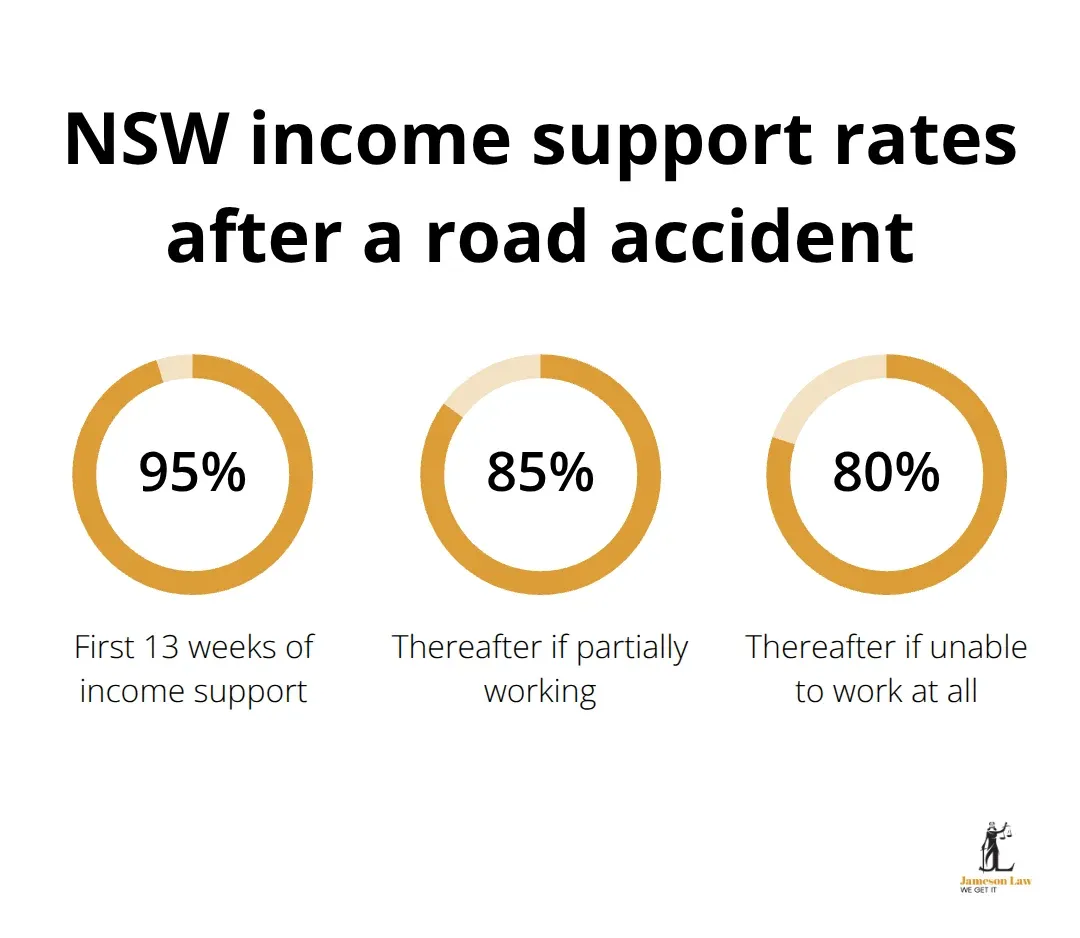
Economic loss is strictly limited to proven past and future loss of earning capacity. This is not a standardized payout; it is a highly individualized calculation based on your pre-accident earnings, your age, your career trajectory, and medical evidence detailing how your injury permanently restricts your ability to work. You must provide robust documentation, including tax returns, payslips, and expert occupational assessments, to substantiate this claim.
Non-Economic Loss (Pain and Suffering)
Non-economic loss compensates you for pain, suffering, and loss of enjoyment of life. However, strict legislative thresholds apply. To be eligible for non-economic loss damages, an approved medical assessor must determine that your injuries have resulted in a permanent impairment greater than 10% Whole Person Impairment (WPI).
Why Online Payout Estimates Are Unreliable
Because common law damages depend on highly individualized factors—such as your precise pre-accident income, the specific medical assessment of your WPI percentage, your exact age, and your contributory negligence (if any)—there is no generic formula or online calculator that can accurately predict your settlement. Every claim requires thorough legal and medical evaluation to calculate a realistic quantum.
Statutory Time Limits and Important Deadlines
Protecting your right to compensation requires strict adherence to statutory deadlines:
- Police Reporting: You must generally report the accident to the NSW Police within 28 days (unless police attended the scene) to obtain an event number.
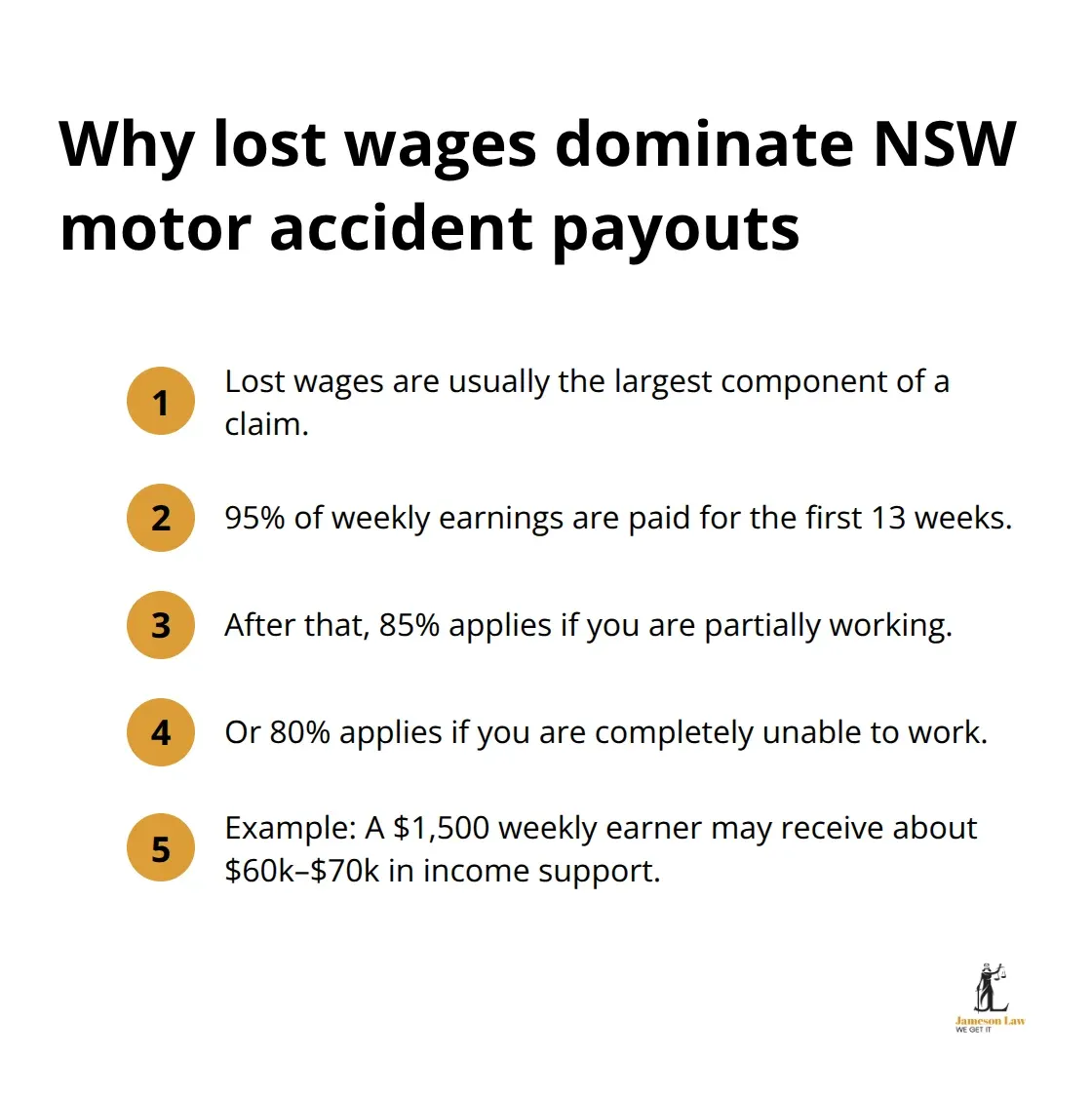
- 28-Day Deadline: To receive backdated weekly income payments starting from the day after the crash, you must lodge your Application for Personal Injury Benefits within 28 days.
- 3-Month Deadline: This is the general statutory deadline to lodge your benefits claim. Late lodgement may be accepted only if you provide a full and satisfactory explanation for the delay.
- 3-Year Limitation Period: A common law damages claim must generally be made within 3 years of the date of the accident. Additional timing rules apply regarding when a damages claim can be lodged (usually not before 20 months unless greater than 10% WPI is established).
Frequently Asked Questions
Can I claim statutory benefits if I was at fault for the road accident in NSW?
Yes, in most cases. Under the NSW CTP scheme, most injured people can claim statutory benefits for medical treatment and a portion of lost income regardless of fault. However, if you are wholly or mostly at fault, your statutory benefits are generally limited to a maximum of 52 weeks.
What is the difference between statutory benefits and common law damages?
Statutory benefits cover immediate, reasonable medical expenses and a percentage of lost weekly income, available to most injured parties. Common law damages are a lump-sum payout for past and future economic loss and, if eligible, pain and suffering. To claim damages, you generally must have a non-threshold injury and not be mostly at fault.
What are the time limits for lodging a road accident compensation claim in NSW?
You should generally lodge your claim for statutory benefits within 3 months of the accident, but to receive backdated weekly income payments, you must lodge within 28 days. A common law damages claim must generally be made within 3 years of the accident.
Final Thoughts
Filing a road accident compensation NSW claim is an exercise in strict statutory compliance and precise evidentiary gathering. Understanding the difference between a threshold and non-threshold injury, and adhering to the 28-day and 3-month deadlines, protects your immediate financial stability while preserving your right to seek long-term damages.
Because insurers rigorously assess fault, medical causation, and economic loss, seeking independent legal advice is the safest way to ensure your claim is classified correctly and your compensation accurately reflects your actual losses.
If you have been injured on NSW roads and require assistance navigating the CTP claims process, contact the personal injury team at Jameson Law to discuss your entitlements.