PUBLICATION

Sydney Criminal Lawyer: Strategies for Defending Your Case in NSW

"Defend your NSW criminal case with proven strategies from a Sydney criminal defence lawyer. Learn essential tactics to protect your rights."
Sydney Criminal Lawyer: Strategies for Defending Your Case in NSW

Facing criminal charges in New South Wales is serious, and the decisions you make now will shape your case’s outcome. A Sydney criminal defence lawyer can guide you through the court system, protect your rights, and build a strategy tailored to your situation.

We at Jameson Law understand that every case is different. This guide walks you through the key strategies, your legal protections, and what to expect as your case moves forward.

How NSW Courts Classify and Handle Different Criminal Charges

NSW courts sort criminal charges into multiple categories, and this distinction determines where your case gets heard and what penalties you face. Summary offences stay in the Local Court, where magistrates handle matters like offensive language, minor drug possession, and common assault. Indictable offences move to the District or Supreme Court, covering serious crimes such as robbery, sexual assault, and murder. The Crimes Act 1900 and the Criminal Procedure Act 1986 define which offences fall into each category, and understanding this split matters because Local Court sentences are capped at two years imprisonment for most offences, while indictable matters in higher courts carry no such limits.

The committal process and what it actually tests

If you’re charged with an indictable offence, the case typically starts in the Local Court through a committal process where the magistrate assesses whether the Crown has enough evidence to proceed. This initial stage is not a trial; the magistrate simply decides if there’s sufficient evidence for the case to move forward. You do not need to prove your innocence at committal, and the Crown bears the burden of showing they have a case worth pursuing. Many defendants treat committal as their only chance to challenge evidence, when in reality it’s an opportunity to identify weaknesses in the prosecution’s case early. A full copy of the brief of evidence at this stage lets you spot procedural errors, inconsistent witness statements, or missing documentation that could strengthen your defence later.

Why preparation after committal determines your outcome

Once the magistrate determines the Crown has sufficient evidence, your case commits to the higher court where the real trial preparation begins. The Crown must prove guilt beyond reasonable doubt, which is a high threshold that requires their evidence to be so strong that a reasonable jury would have no reasonable doubt about your guilt. At this point, you and your legal team need to develop a coherent defence strategy rather than simply poking holes in the prosecution’s case. Many defendants wait until trial to prepare, but that’s a critical mistake because negotiations often happen months before any trial date. Early preparation shows the prosecution that you have a solid defence, which can lead to charge reductions, withdrawn counts, or better plea offers.

The sentencing discount that disappears quickly

If you’re facing indictable charges, the Early Appropriate Guilty Plea reforms introduced in NSW offer a significant advantage: pleading guilty early triggers a sentencing discount of up to 25 per cent applied flexibly by the courts. This discount diminishes as your case progresses through the court system, so timing your plea decision requires careful analysis of your defence strength and sentencing exposure. Mapping both a trial pathway and a negotiation pathway from day one helps you understand your options and shows prosecutors you’re prepared either way.

Chart showing NSW early guilty plea discounts available under EAGP reforms - sydney criminal defence lawyer

The next section examines the specific defence strategies that work across different charge types and court levels.

Building Your Defence: What Actually Works in NSW Criminal Cases

Start Your Defence the Moment You Face Charges

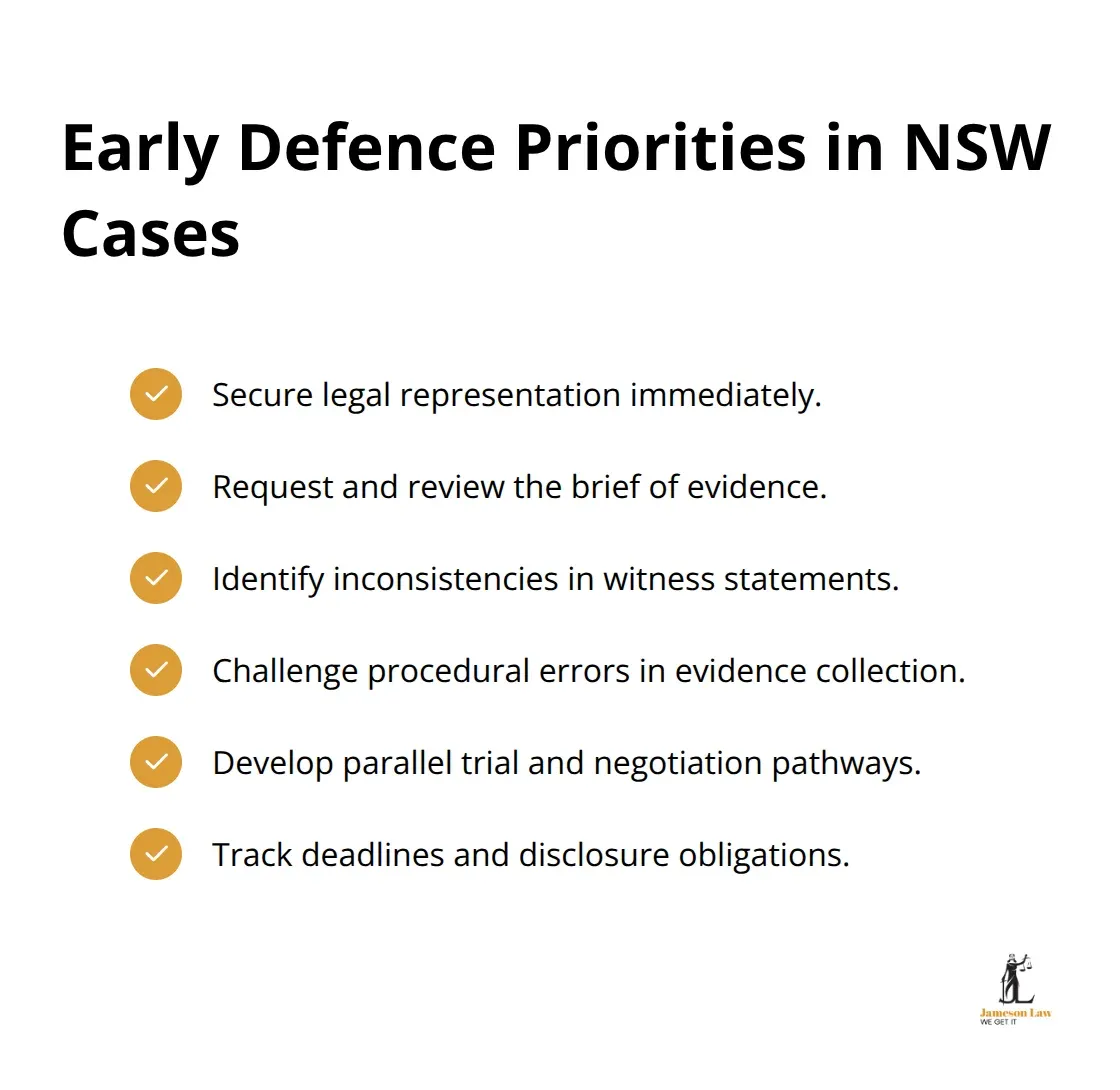
Preparation and strategy separate strong defences from weak ones-not luck or hoping the prosecution stumbles. Defendants often make critical mistakes early by waiting too long to gather evidence, failing to scrutinise the brief of evidence for gaps, or treating negotiation as a last resort rather than a parallel strategy. Your defence needs to start the moment you’re charged, not weeks before trial.

Checklist of immediate defence actions for NSW criminal matters - sydney criminal defence lawyer

The Crown must prove guilt beyond reasonable doubt, which means every weakness in their case matters. Review the brief of evidence carefully and identify inconsistencies in witness statements, procedural errors in how evidence was collected, or missing documentation that the prosecution should have provided.

Identify Evidentiary Weaknesses That Win Cases

Digital evidence requires proper authentication under the NSW Evidence Act 1995; if police obtained data without appropriate warrants or mishandled the chain of custody, that evidence can be excluded entirely. Check whether the investigating officer followed proper procedure during arrest and questioning under the Law Enforcement Powers and Responsibilities Act 2002, because violations at this stage can undermine the entire case. Many defendants overlook the committal phase, but it offers your chance to test the prosecution’s evidence and spot weaknesses before the real trial begins. Once you understand what the Crown has, you can decide whether to push for trial, negotiate a better outcome, or pursue an early guilty plea for the sentencing discount available under NSW reforms.

Negotiate From a Position of Strength

Negotiation happens far more often than trial, and most cases resolve through discussion rather than courtroom battle. Your negotiating position depends entirely on how strong your defence looks to the prosecution, which is why early preparation matters so much. If the Crown sees you’ve identified evidentiary gaps, potential witness credibility problems, or procedural issues, they’re more likely to offer charge reductions or withdrawn counts rather than risk losing at trial. The Australian Bureau of Statistics notes high conviction rates for matters that reach final trial judgment, which tells prosecutors that trial is risky if your defence is solid. Map out both pathways-trial and negotiated plea-from day one so prosecutors understand you’re genuinely prepared either way.

Time Your Plea Decision Strategically

If you’re considering a guilty plea, timing is critical because the Early Appropriate Guilty Plea discount diminishes as your case progresses through the court system. The utilitarian value of a plea to the criminal justice system should generally be assessed in the range of 10–25 per cent discount on sentence. Prepare for cross-examination by developing a list of specific questions that test prosecution witnesses on inconsistencies, motives, and credibility. In assault or domestic violence cases especially, witness credibility often determines the outcome, so focus your questions on contradictions between their statement and what they said in court.

Gather Evidence and Prepare Your Witnesses

Have your own witnesses ready with evidence that supports your defence narrative-gather photographs, receipts, bank statements, mobile records, CCTV footage, or body-worn video if available. Give witnesses ample notice of the hearing date so they can attend. The court will ask how many police witnesses you want to cross-examine and whether you need an interpreter, so have those numbers ready. Bring the original and three copies of every document you plan to rely on, organised clearly with an opening address prepared, a list of witnesses and documents, and your submissions written out. Practice what you’ll say to the court beforehand; watching actual hearings at a Local Court helps you understand the process. Your defence narrative should align the timeline and facts to create reasonable doubt about the prosecution’s theory, not just attack individual pieces of evidence. This strategic focus-targeting the Crown’s weakest points rather than pursuing every possible angle-is what separates effective defences from scattered ones. The next section examines how your legal rights and protections shape your defence strategy from the very beginning.

Protecting Your Rights Before and During Your Defence

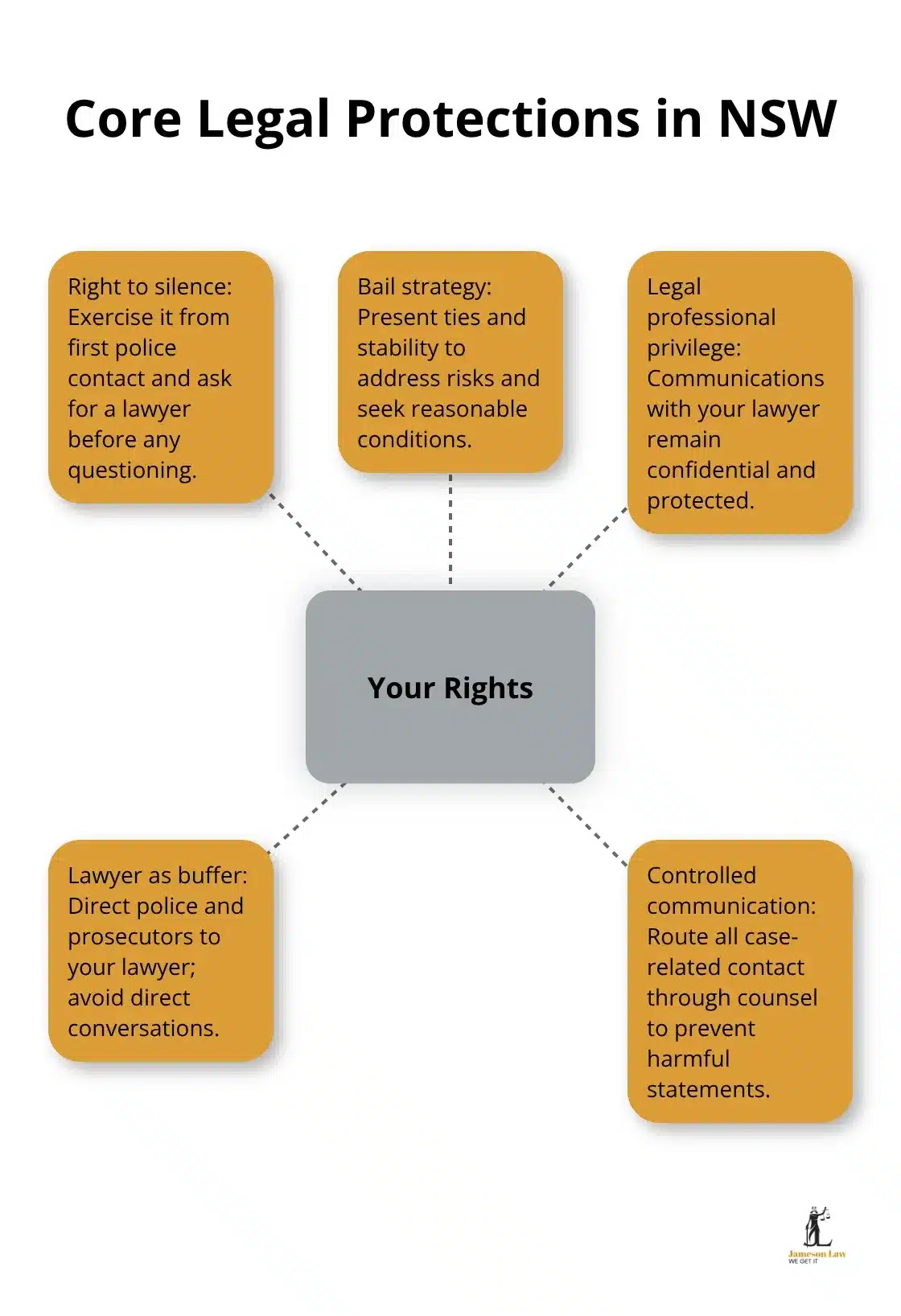
Exercise Your Right to Silence From the Start

All people in this country have a right to silence – that is, to choose not to answer questions put to them by the police. The moment you face arrest or police approach you, exercise this right and ask for a lawyer before any questioning begins. The Law Enforcement Powers and Responsibilities Act 2002 sets strict rules about how police conduct interviews, including when and how they must caution you, but these protections only work if you invoke them early. Countless defendants damage their position by answering questions without legal advice present, so obtaining representation before your first police interview is not optional-it’s the difference between a strong defence and one built on quicksand.

Many people assume they need to explain themselves to police to prove innocence, but that logic is backwards; your job is not to prove anything. The Crown’s job is to prove guilt beyond reasonable doubt. A Sydney criminal lawyer present during police questioning protects you from making admissions that sound innocent in the moment but become devastating evidence later. If police approach you, give your name and address if required, then state clearly: I want a lawyer before I answer any questions. Do not elaborate, do not negotiate, do not try to convince them you’re innocent through conversation.

Secure Your Position With a Strong Bail Strategy

Bail is an agreement that you will attend court if charged with an offence and won’t be held in custody while the matter is in court. Courts consider your ties to the community, your criminal history, the seriousness of the charge, and whether you’re a flight risk when deciding bail, so a strong bail strategy from day one can mean staying free while your case proceeds.

A well-prepared bail application addresses the prosecution’s concerns directly and presents evidence of your stability and community connections. The earlier you develop this strategy, the better your chances of securing release on reasonable conditions. Your lawyer can identify what factors work in your favour and present them persuasively to the court, turning a potential remand into a pathway that keeps you engaged with your defence preparation.

Hub-and-spoke diagram of key rights and protections in NSW criminal cases

Understand Legal Professional Privilege and Confidentiality

Confidential communications passing between a client and a legal adviser need not be given in evidence, which means anything you tell your lawyer cannot be used against you in court and the prosecution cannot force your lawyer to disclose what you’ve said. This protection is foundational to mounting an effective defence because you need to speak openly with your lawyer about the facts, your concerns, and even admissions without fear those conversations will reach the Crown. Once you’ve engaged legal representation, direct all communication through your lawyer rather than speaking to police, prosecutors, or even witnesses directly, because anything you say outside legal privilege can be used as evidence.

The prosecution and police will sometimes try to contact you directly after you’ve engaged a lawyer; your lawyer should have sent a letter stating they represent you, and any further contact should go through them. If police or prosecutors contact you after you’ve instructed a lawyer, tell them to speak to your legal representative and end the conversation immediately. This simple step protects your position and prevents statements made in informal settings from becoming part of the Crown’s case against you.

Protect Yourself From Police Contact After Legal Representation

Once your lawyer is on the record, police and prosecutors must respect that representation and cease direct contact with you. Many defendants feel pressured to cooperate or explain themselves when police call, but that impulse works against your defence. Your lawyer acts as a buffer between you and the authorities, ensuring that any communication happens on your terms and with proper legal advice. If you receive contact from police or prosecutors after instructing a lawyer, do not engage in conversation-simply refer them to your legal representative and hang up.

This approach is not evasive or suspicious; it’s standard legal practice that protects your rights and strengthens your position. Police understand this protocol, and any attempt to contact you directly after you’ve engaged a lawyer is a breach of proper procedure that your lawyer can address. Maintaining this boundary keeps your defence strategy intact and prevents casual statements from undermining your case.

Final Thoughts

A strong criminal defence in NSW rests on preparation, strategy, and early legal advice-the decisions you make in the first days after being charged will shape your entire case. Your Sydney criminal defence lawyer should map out both trial and negotiation pathways from day one, showing prosecutors that you’re genuinely prepared either way, which shifts the balance in your favour because the Crown understands that proceeding to trial carries real risk if your defence is solid. Early preparation also unlocks the sentencing discounts available under NSW reforms, meaning a well-timed guilty plea can reduce your sentence significantly compared to one entered late in the process.

Professional legal representation protects your rights and your future in ways that self-representation cannot match. A lawyer present during police questioning prevents admissions that sound innocent in the moment but become devastating evidence later, and legal privilege protects your confidential communications so you can speak openly about your case without fear those conversations will reach the Crown. Your lawyer also manages the procedural complexities that trip up unrepresented defendants, from bail applications to disclosure obligations to cross-examination strategy.

If you’re facing criminal charges in NSW, contact Jameson Law today for a confidential consultation. We provide practical, accessible legal advice tailored to your situation and your goals, whether that’s securing bail, negotiating a better outcome, or preparing for trial.

Speak to an Expert Lawyer today

Laywers-Jameson-Law-The-best-law-firm-in-Sydney- Sydney Lawyers - Sydney
BOOK NOW

WE'RE IN IT TO WIN IT

Book your consultation

Book Now
Book Now Mobile 06 02 2025

This form submission is encrypted and secured to ensure your information remains confidential.

What our Clients

Related Publications:

What our clients say

.

Jameson Law - Voted the Best Law firm in Sydney Award

Legal Answers ... In Short

We're here to help

Our mission is to ensure our client matters are resolved successfully every time. Success to us does not simply involve winning, but moreover ensuring we take the most feasible, economic and stress-free path to help our clients achieve their goals. We fight hard for our clients, and always go by the motto: we’re in it to win it.

Jameson Law - Best Law Firm in Sydney

WE'RE IN IT TO WIN IT

Book your consultation

Call us now on (02) 8806 0866 or fill out the form below

Book Now Mobile

This form submission is encrypted and secured to ensure your information remains confidential.

WE'RE IN IT TO WIN IT

Book your consultation

Book Now Mobile 06 02 2025
lock

This form submission is encrypted and secured to ensure your information remains confidential.

Our Sydney Offices

Offices Parramatta and Sydney Jameson Law
Parramatta CBD - Head Office
jameson Law - Blacktown
jameson Law - Liverpool Office
Jameson Law - Bankstown
Court Houses We Frequent Jameson Law

Court Houses We Frequent

Balmain Local Court

Registry: Monday to Friday, 9:00am to 4:30pm

Bankstown Local Court

Court Operating Hours: 9:30am-4:30pm

Blacktown Local Court

Registry Hours: 9:00 – 4:30
Telephone Hours: 8:30 -4:30
Days open: Mon-Fri

Burwood Local Court

Registry Hours: 9:00 – 4:30
Telephone Hours: 8:30 – 4:30
Days open: Mon – Fri

Campbell Local Court

Registry Hours: 9:00 – 4:30
Telephone Hours: 8:30 – 4:30
Days open: Mon – Fri

Central Local Court

Registry Hours: 9:00 – 1:00 and 2:00 – 4:30
Telephone Hours: 8:30 – 4:30

Downing Local Court

Registry Hours: 9:00 – 1:00 and 2:00 – 4:30
Telephone Hours: 8:30 – 4:30

Wollongong Local Court

Registry Hours: 9:00 – 1:00 and 2:00 – 4:30
Telephone Hours: 8:30 – 4:30

Fairfield Local Court

Registry Hours: 9:00 – 1:00 and 2:00 – 4:30
Telephone Hours: 8:30 – 4:30

Hornsby Local Court

Registry Hours: 9:00 – 1:00 and 2:00 – 4:30
Telephone Hours: 8:30 – 4:30

Liverpool Local Court

Registry Hours: 9:00 – 1:00 and 2:00 – 4:30
Telephone Hours: 8:30 – 4:30

Manly Local Court

Registry Hours: 9:00 – 1:00 and 2:00 – 4:30
Telephone Hours: 8:30 – 4:30

Newtown Local Court

Registry Hours: 9:00 – 1:00 and 2:00 – 4:30
Telephone Hours: 8:30 – 4:30

Parramatta Local Court

Registry Hours: 9:00 – 1:00 and 2:00 – 4:30
Telephone Hours: 8:30 – 4:30

Penrith Local Court

Registry Hours: 9:00 – 1:00 and 2:00 – 4:30
Telephone Hours: 8:30 – 4:30

Sutherland Local Court

Registry Hours: 9:00 – 1:00 and 2:00 – 4:30
Telephone Hours: 8:30 – 4:30

Waverley Local Court

Registry Hours: 9:00 – 1:00 and 2:00 – 4:30
Telephone Hours: 8:30 – 4:30

Windsor Local Court

Registry Hours: 9:00 – 1:00 and 2:00 – 4:30
Telephone Hours: 8:30 – 4:30

Wollongong Local Court

Registry Hours: 9:00 – 1:00 and 2:00 – 4:30
Telephone Hours: 8:30 – 4:30

Downing Centre District Court

Registry Hours: 9:00 – 4:30
Telephone Hours: 8:30 – 4:30
Days open: Mon – Fri

Parramatta District Court

Registry Hours: 9:00 – 4:30
Days open: Mon-Fri

Penrith District Court

Registry Hours: 9:00 – 4:30
Days open: Mon-Fri

Campbelltown District Court

Registry Hours: 9:00 – 4:30
Days open: Mon – Fri

Liverpool District Court

Registry Hours: 9:00 – 4:30
Days open: Mon – Fri

Wollongong District Court

Registry Hours: 9:00 – 1:00 and 2:00 – 4:30
Telephone Hours: 8:30 – 4:30

Supreme Court New South Wales

Registry Hours: 9:00 AM – 4:30 PM
Telephone Hours: 8:30 AM – 4:30 PM
Days Open: Monday to Friday

Federal Circuit and Family Court of Australia

Registry Hours: 9:00 AM – 4:30 PM
Telephone Hours: 8:30 AM – 5:00 PM
Days Open: Monday to Friday

Federal Court

Monday to Friday, 8:30 AM – 4:30 PM

High Court

Monday to Friday, 8:30 AM – 5:00 PM

Children’s Court of New South Wales

Registry Hours: 9:00 AM – 4:30 PM
Telephone Hours: 8:30 AM – 4:30 PM
Days Open: Monday to Friday

Coroner’s Court New South Wales

Registry Hours: 9:00 AM – 4:30 PM
Telephone Hours: 8:30 AM – 4:30 PM
Days Open: Monday to Friday

Industrial Relations Commission of New South Wales

Registry Hours: 9:00 AM – 4:30 PM
Telephone Hours: 8:30 AM – 4:30 PM
Days Open: Monday to Friday

Land and Environment Court of New South Wales

Registry Hours: 9:00 AM – 4:30 PM
Telephone Hours: 8:30 AM – 4:30 PM
Days Open: Monday to Friday

WE'RE IN IT TO WIN IT

Book your consultation

Book Now
Book Now Mobile 06 02 2025
lock

This form submission is encrypted and secured to ensure your information remains confidential.