


Being accused of theft in a retail environment is a deeply stressful experience. A shoplifting charge NSW carries the stigma of dishonesty and the potential for a permanent criminal record, which can severely impact your employment prospects and travel eligibility.
At Jameson Law, our criminal defence team regularly represents clients in the NSW Local Court facing stealing allegations. This 2026 legal guide breaks down how the police prosecute these matters, the essential legal elements of larceny, and the strategies available to defend or mitigate your case.
How Shoplifting is Prosecuted: The Law of Larceny
In New South Wales, “shoplifting” is not a distinct legal charge. It is prosecuted as the common law offence of larceny, which is codified under Section 117 of the Crimes Act 1900 (NSW).
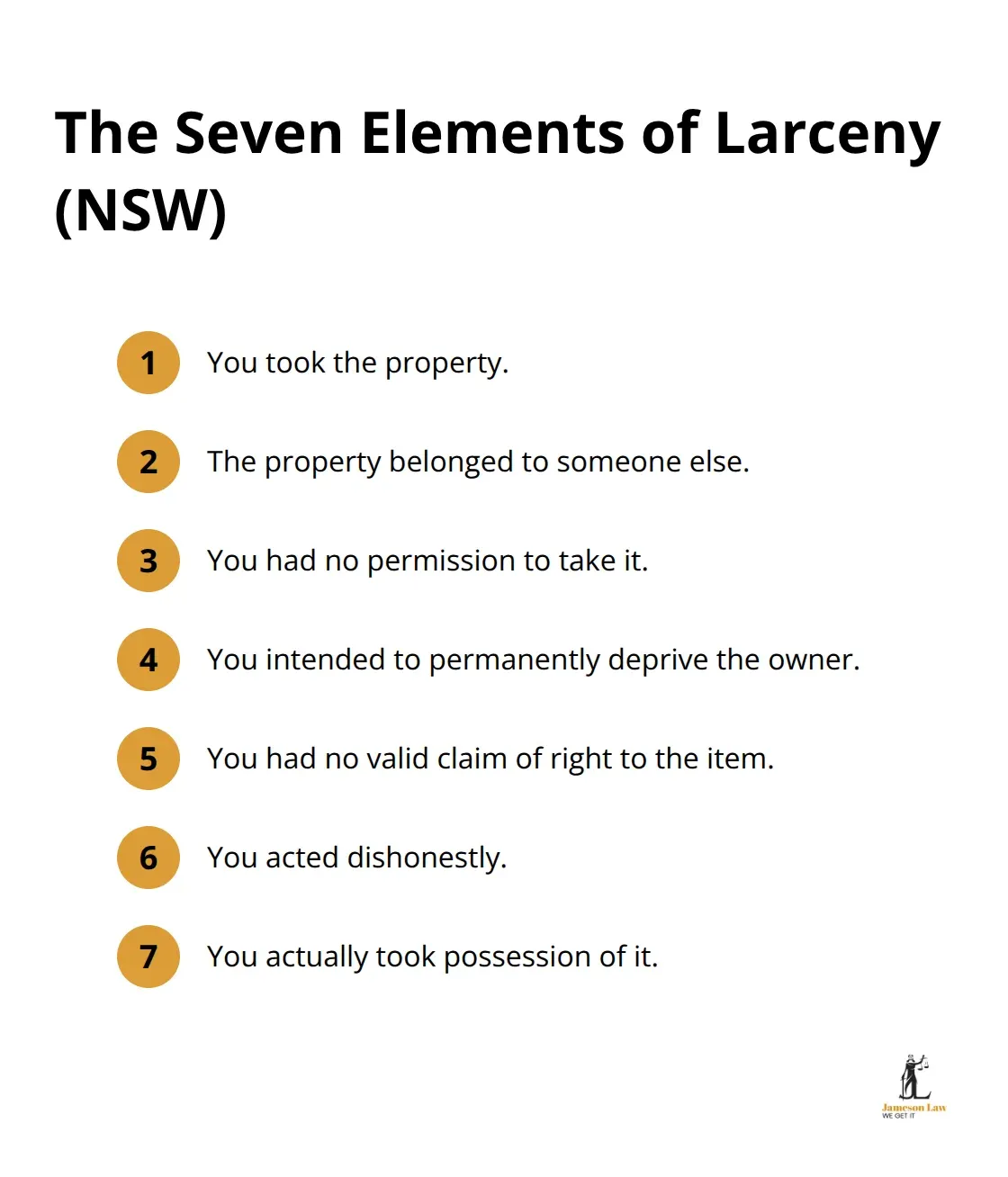
The Essential Elements of Larceny
To secure a conviction for larceny, the police prosecutors carry the burden of proving every element of the offence beyond reasonable doubt. According to the Judicial Commission of NSW, the prosecution must establish that the accused:
- Took and carried away: There must be a physical moving of the property (asportation).
- Property belonging to another: The items were owned or in the possession of the retailer.
- Without consent: The taking occurred without the owner’s permission.
- Intention to permanently deprive: At the time of taking, the accused intended to keep the item or deal with it in a way that deprives the owner of it permanently.
- Without a claim of right made in good faith: The accused did not have a genuine legal belief that they were entitled to the property.
- Dishonestly: The taking was dishonest according to the standards of ordinary people.
Defending a Shoplifting Charge: Legal and Factual Issues
If the prosecution cannot prove every single element beyond reasonable doubt, the charge must be dismissed. Several factual and legal issues frequently arise in retail theft cases.
The Issue of Dishonesty and Mental State
Larceny is an offence that requires a specific state of mind (mens rea). If an individual places an item in their bag absentmindedly while managing children, or walks out of a store genuinely forgetting they were holding an unpaid item, the element of dishonesty is absent.
An honest mistake negates the intention to steal. However, asserting “I forgot to pay” requires a credible assessment of the surrounding circumstances, such as whether the individual had the means to pay, their behaviour in the store, and their reaction when confronted by loss prevention officers.
Identification, CCTV, and Police Admissions
Retail theft prosecutions rely heavily on CCTV footage and statements from store security. However, video evidence can be flawed. Low-resolution cameras, obscured angles, or gaps in the footage can create reasonable doubt regarding what was actually taken or whether the accused was definitively the person on camera.
Crucially, many individuals inadvertently strengthen the prosecution’s case by making admissions to police during an interview. You have a fundamental right to silence. Participating in a police interview without prior legal advice can lead to statements that contradict a valid defence of honest mistake.
Local Court Pathways: Pleading Not Guilty vs Guilty
Pleading Not Guilty
If you dispute the allegations—whether due to an honest mistake, mistaken identity, or a lack of intention to permanently deprive—you will enter a plea of “Not Guilty.” The matter will be set down for a defended hearing in the NSW Local Court. During this hearing, your defence lawyer will cross-examine police and retail witnesses, challenge the admissibility or clarity of CCTV footage, and present evidence that casts reasonable doubt on the prosecution’s case.
Pleading Guilty and Sentencing Options
If the evidence against you is overwhelming, or you accept responsibility for the offence, you will enter a plea of “Guilty.” The Magistrate will then proceed to sentencing under the Crimes (Sentencing Procedure) Act 1999 (NSW).
Section 117 of the Crimes Act 1900 (NSW) sets a maximum of five years’ imprisonment for larceny. That is a statutory ceiling, not a prediction. Where a matter is dealt with summarily in the Local Court, lower jurisdictional and offence-specific limits can apply. The available sentencing orders and the actual outcome depend on the proved facts, value, plea, record and other statutory considerations.
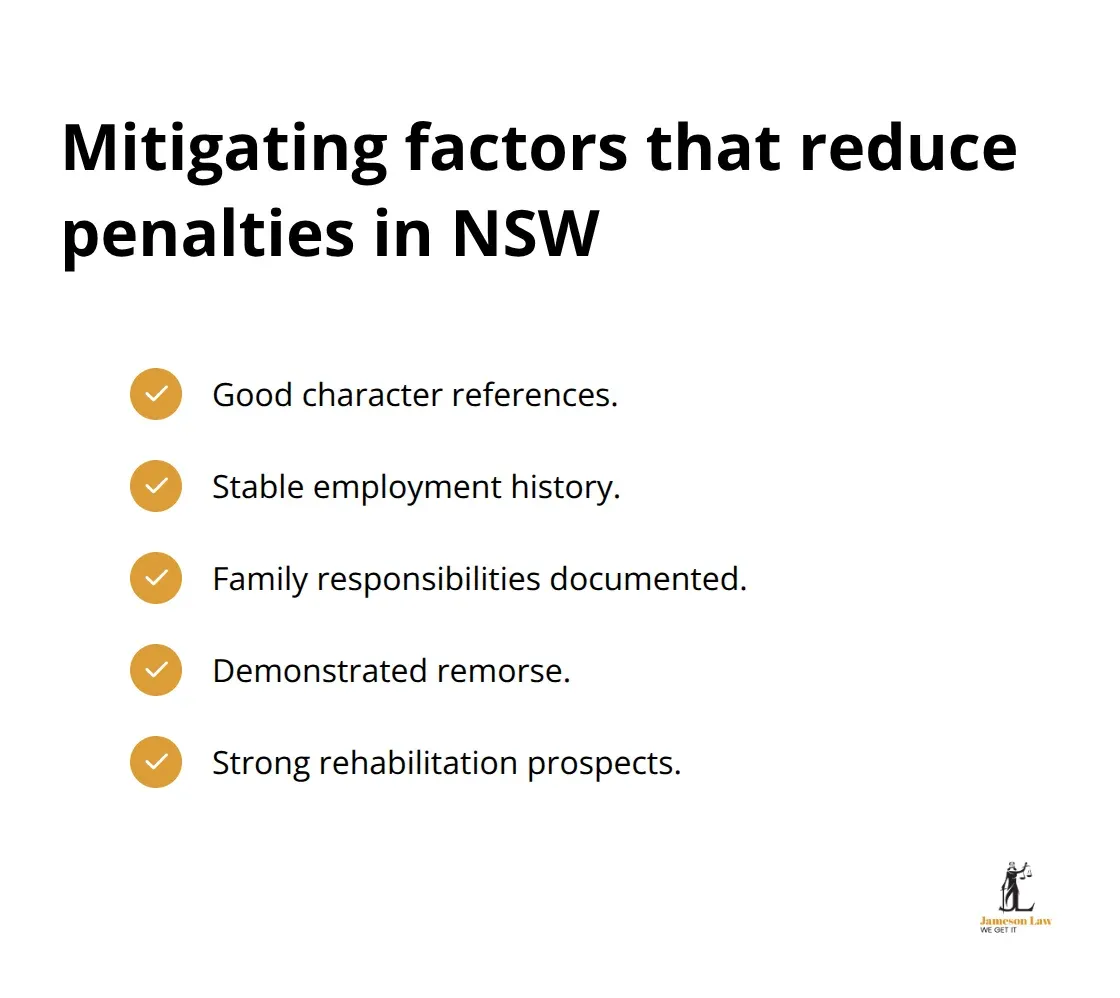
For low-value shoplifting, particularly for first-time offenders, Magistrates have access to a range of non-custodial sentencing options. These include fines, Conditional Release Orders (CROs), and Community Correction Orders (CCOs).
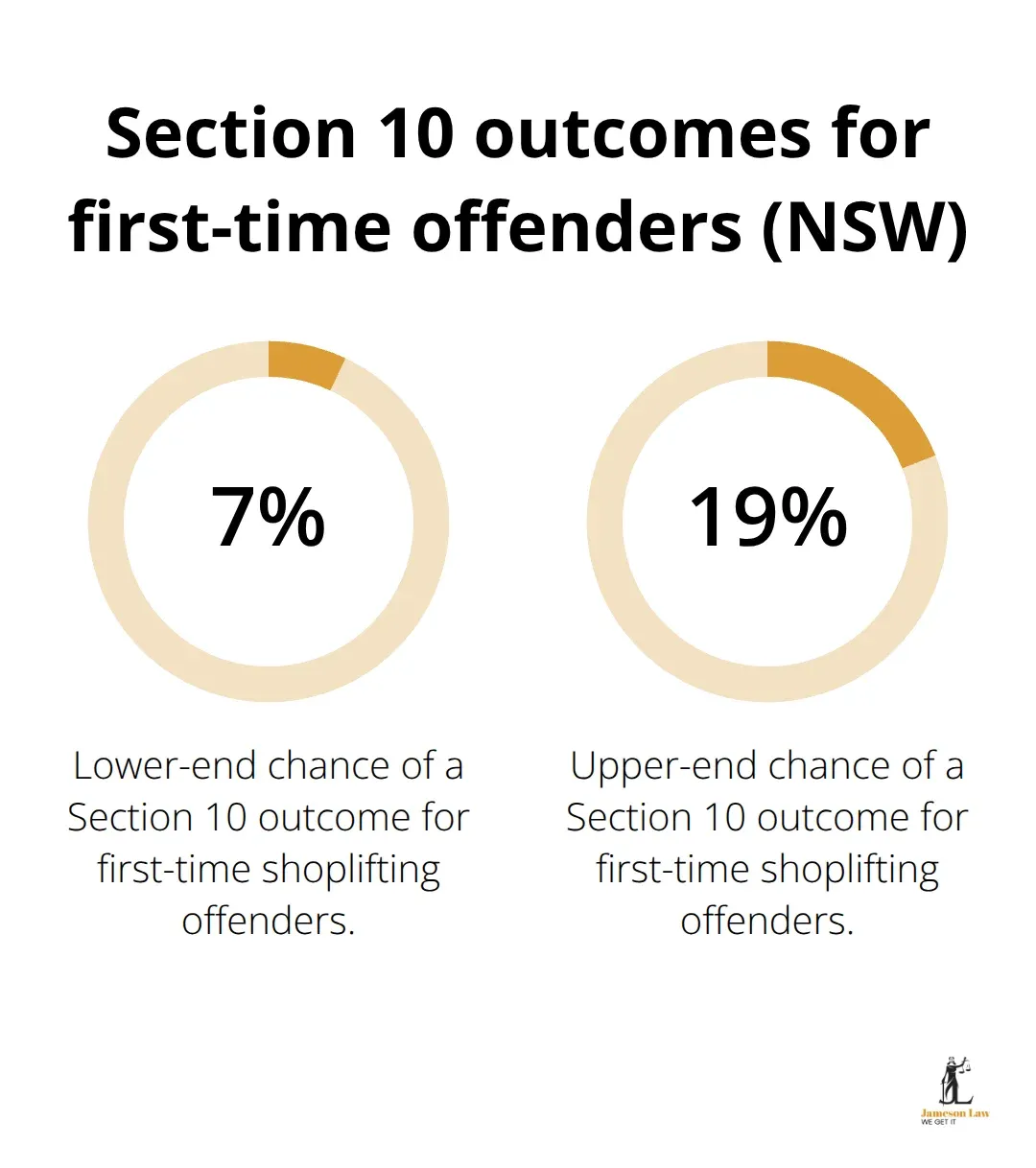
In highly mitigated circumstances—such as where the offender demonstrates profound remorse, has no prior criminal record, and the value of the goods is minimal—a Magistrate may exercise their discretion to deal with the matter under a Conditional Release Order without recording a conviction (often colloquially referred to as a Section 10 dismissal). However, avoiding a conviction is never guaranteed and requires meticulous preparation of character references, psychological reports (if relevant), and evidence of rehabilitation.
Frequently Asked Questions
What is the specific law for a shoplifting charge in NSW?
In NSW, there is no specific offence called ‘shoplifting’. Instead, it is prosecuted as larceny (stealing) under Section 117 of the Crimes Act 1900 (NSW).
What must the prosecution prove for a larceny conviction in NSW?
The prosecution must prove beyond reasonable doubt that you took and carried away property belonging to another, without their consent, and with the intention of permanently depriving the owner of it, acting dishonestly and without a genuine claim of right.
What is the maximum penalty for shoplifting under Section 117?
Section 117 of the Crimes Act 1900 (NSW) sets a maximum of five years’ imprisonment for larceny. That is a statutory ceiling, not a likely sentence. Lower limits can apply when a charge is dealt with summarily, and the actual outcome depends on the proved facts and sentencing law.
Final Thoughts
A shoplifting charge NSW is a serious allegation of dishonesty that requires a strategic and informed legal response. Because the offence of larceny demands proof of a specific mental state, the context surrounding the incident is just as important as the act of taking the item.
Whether your goal is to fiercely contest the charges at a hearing or to present a compelling plea in mitigation to protect your criminal record, early legal intervention is critical. Securing CCTV footage, advising on police interviews, and preparing character evidence must happen swiftly.
If you have been charged with stealing or larceny in New South Wales, contact the criminal defence team at Jameson Law to discuss your Local Court matter confidentially.