


Facing criminal charges in New South Wales can be a daunting experience. However, understanding the NSW criminal court process allows you to make informed, strategic decisions about your defence. The system follows a structured pathway from initial arrest to final resolution, with distinct jurisdictions governing different types of offences.
At Jameson Law, our criminal defence team regularly navigates the complexities of the Local, District, and Supreme Courts. This guide provides a practical overview of the procedural steps, evidentiary requirements, and sentencing frameworks as established under the Criminal Procedure Act 1986 (NSW).
The Structure of the NSW Criminal Courts
The jurisdiction in which your matter is heard profoundly affects the timeline, the procedure, and the maximum penalty available. NSW operates a tiered court system.
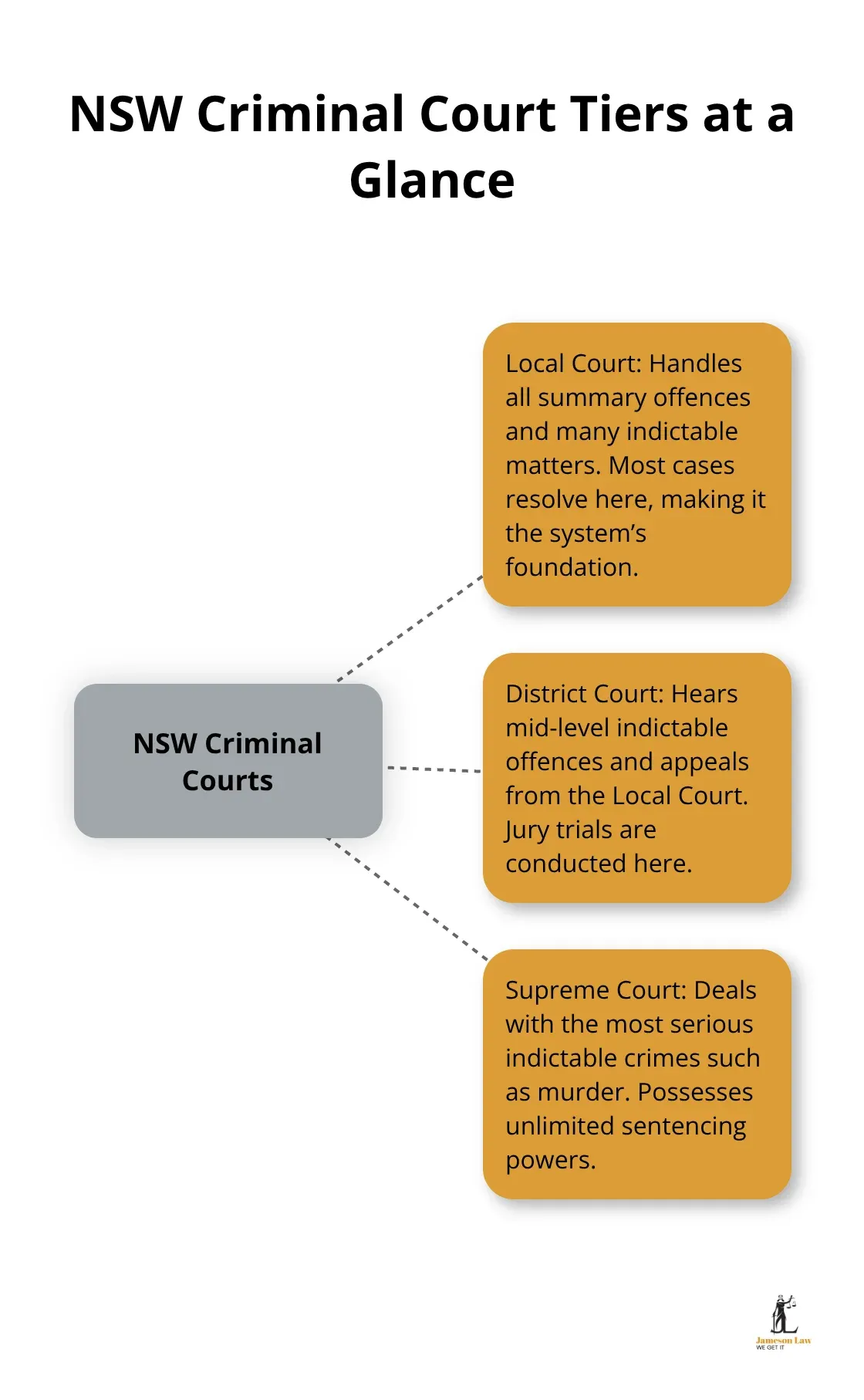
| Jurisdiction | Types of Offences Handled | Decision Maker |
|---|---|---|
| Local Court | All summary offences (e.g., minor traffic, offensive conduct). It also finalises many “Table” indictable offences handled summarily and processes bail and committal hearings for strictly indictable matters. | Magistrate |
| District Court | Serious indictable offences (e.g., serious assaults, commercial drug supply, sexual assaults). It also hears conviction and severity appeals from the Local Court. | Judge (Sentencing/Law) & Jury (Guilt) |
| Supreme Court | The most serious indictable crimes, including murder and major commercial drug importations. | Judge (Sentencing/Law) & Jury (Guilt) |
From Arrest to First Appearance
Bail and Initial Court Appearance
Following an arrest and the laying of charges, police will determine whether to grant “police bail.” If bail is refused, you must be brought before a Magistrate at the earliest opportunity. The Magistrate will decide bail based on the “unacceptable risk” test under the Bail Act 2013 (NSW). If released, you will be issued a Court Attendance Notice (CAN) detailing the date and location of your first “mention” in the Local Court.

At the first appearance, the court does not expect a trial to commence. Instead, the Magistrate will establish whether you have legal representation and may make orders for the police to serve the “brief of evidence.” For eligible individuals, Legal Aid NSW may provide a duty solicitor to assist with first appearances and bail applications.
The Brief of Evidence
The brief of evidence contains all the material the prosecution intends to rely upon, including police fact sheets, witness statements, CCTV footage, and forensic reports. Your defence lawyer will carefully scrutinize the brief to determine whether the prosecution can prove every element of the offence beyond reasonable doubt.
The Pathway to Resolution: Pleas and Hearings
Summary Offences and Defended Hearings
If your matter is staying in the Local Court and you plead “Not Guilty,” the Magistrate will allocate a date for a Defended Hearing. During this hearing, the prosecution will call witnesses, your defence lawyer will cross-examine them, and you may choose to give evidence. The Magistrate will then deliver a verdict. If you plead “Guilty,” the matter will proceed to a sentencing hearing.
Strictly Indictable Matters and the EAGP Scheme
For indictable matters that will be dealt with on indictment in the District or Supreme Court, the case first progresses through Local Court case-management and committal procedures. This involves a statutory Case Conference between the defence and the Office of the Director of Public Prosecutions (ODPP) to discuss charge certification and potential plea offers.
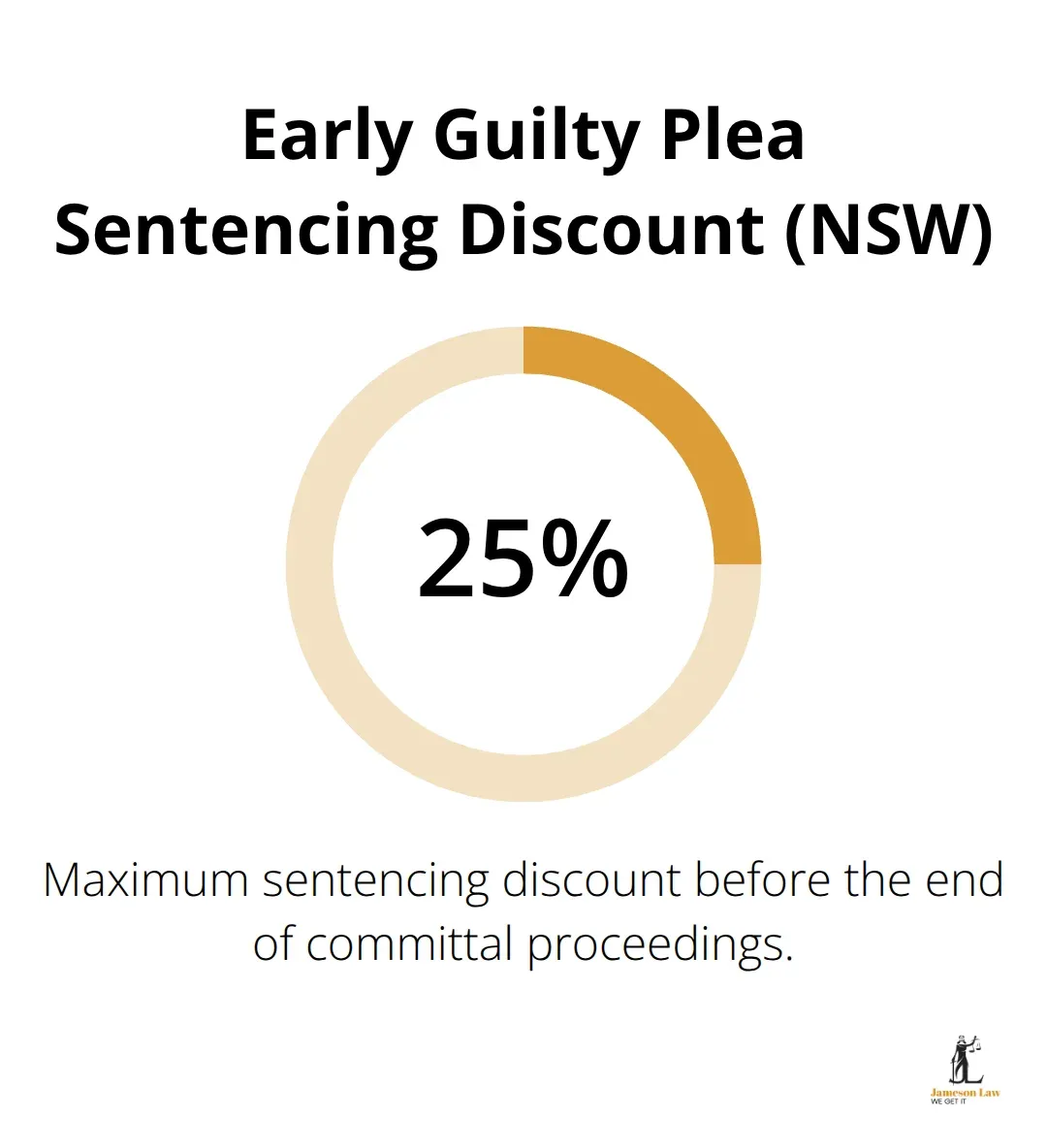
Under the Early Appropriate Guilty Plea (EAGP) scheme, a guilty plea entered before committal for sentence generally attracts the statutory 25% utilitarian discount, subject to the legislation and recorded judicial reasons. If the matter is not resolved, it may be committed for trial before a jury or, where the law permits, by a judge alone.
Sentencing and Penalties
If a finding of guilt is recorded, the court proceeds to sentencing. Sentencing in NSW is governed by the Crimes (Sentencing Procedure) Act 1999 (NSW). The Judicial Commission of NSW provides comprehensive guidance to judicial officers on applying sentencing principles.
Available penalties range from fines to full-time imprisonment. For many offences, courts may utilize community-based sentencing alternatives, such as:
- Conditional Release Orders (CROs): Often used for minor, first-time offences; may be issued without recording a conviction.
- Community Correction Orders (CCOs): A flexible bond that can include conditions such as community service or rehabilitation programs.
- Intensive Correction Orders (ICOs): A strict community-based alternative to a short prison sentence.
Frequently Asked Questions
What is the difference between a summary and an indictable offence in NSW?
Summary offences are generally finalised by a Magistrate in the Local Court. Many indictable offences listed in Tables 1 or 2 of Schedule 1 to the Criminal Procedure Act can also be dealt with summarily, subject to the applicable election rules. Strictly indictable and elected matters proceed on indictment in a higher court.
What happens at a first appearance in the NSW Local Court?
At a first mention, the Magistrate expects to know whether you have legal representation and how you intend to plead. The court will often make formal orders for the police to serve the brief of evidence upon the defence before a final plea must be entered.
How does the Early Appropriate Guilty Plea (EAGP) scheme work in NSW?
The EAGP process applies to indictable matters dealt with on indictment. A guilty plea entered before committal for sentence generally attracts the statutory 25% utilitarian discount, subject to the legislation and the court recording reasons for any different discount.
Final Thoughts
The NSW criminal court process is highly structured, and the decisions made early in your case—particularly regarding police interviews, bail, and plea negotiations—have profound impacts on the final outcome. Navigating the brief of evidence and assessing whether to utilize the EAGP scheme or proceed to a defended hearing requires objective, strategic legal analysis.
Because the prosecution bears the burden of proving guilt beyond a reasonable doubt, retaining an experienced defence lawyer ensures your rights are protected at every procedural juncture.
If you or a family member are facing charges or have an upcoming court date, contact Jameson Law for expert representation in the NSW criminal courts.