

Understanding your NSW police interview rights is the most critical step you can take to protect your legal position during a criminal investigation. Many Australians unknowingly compromise their defence by attempting to “talk their way out” of an arrest or by misunderstanding when they are legally required to provide information.
At Jameson Law, our criminal defence team frequently defends clients who made preventable errors during police questioning. This 2026 guide outlines the statutory framework governing police interviews, your right to silence, and the critical safeguards provided under New South Wales law.
Initial Police Contact: Are You Free to Leave?
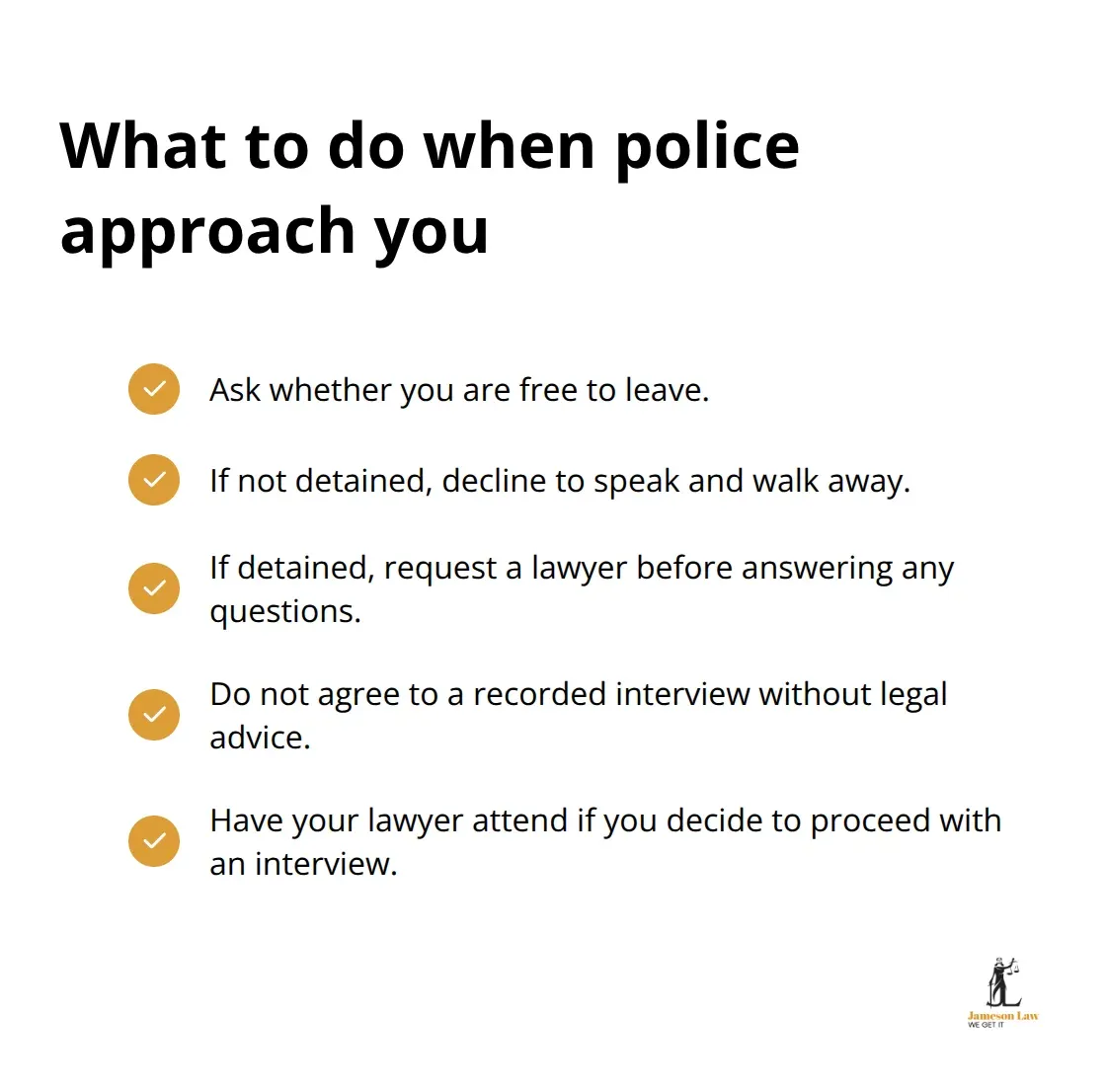
When police approach you for questioning, the legal context of the interaction is paramount. The very first question you should ask the officer is: “Am I under arrest, or am I free to leave?”
If the police confirm you are not under arrest, the interaction is considered voluntary. Generally, you can decline to participate in a voluntary interview and walk away. If police say you are not free to leave, ask whether you are under arrest and the legal basis for your detention. Part 9 safeguards apply to people under arrest and protected suspects as defined by LEPRA.
The Right to Silence and Providing Your Identity
Your General Right to Silence
Under Section 89 of the Evidence Act 1995 (NSW), you have a fundamental common law and statutory right to remain silent. You can refuse to answer substantive questions or participate in a formal interview. In the vast majority of summary and standard indictable matters, a court cannot draw an adverse inference against you simply because you exercised your right to silence.
Lawful Identity Requests
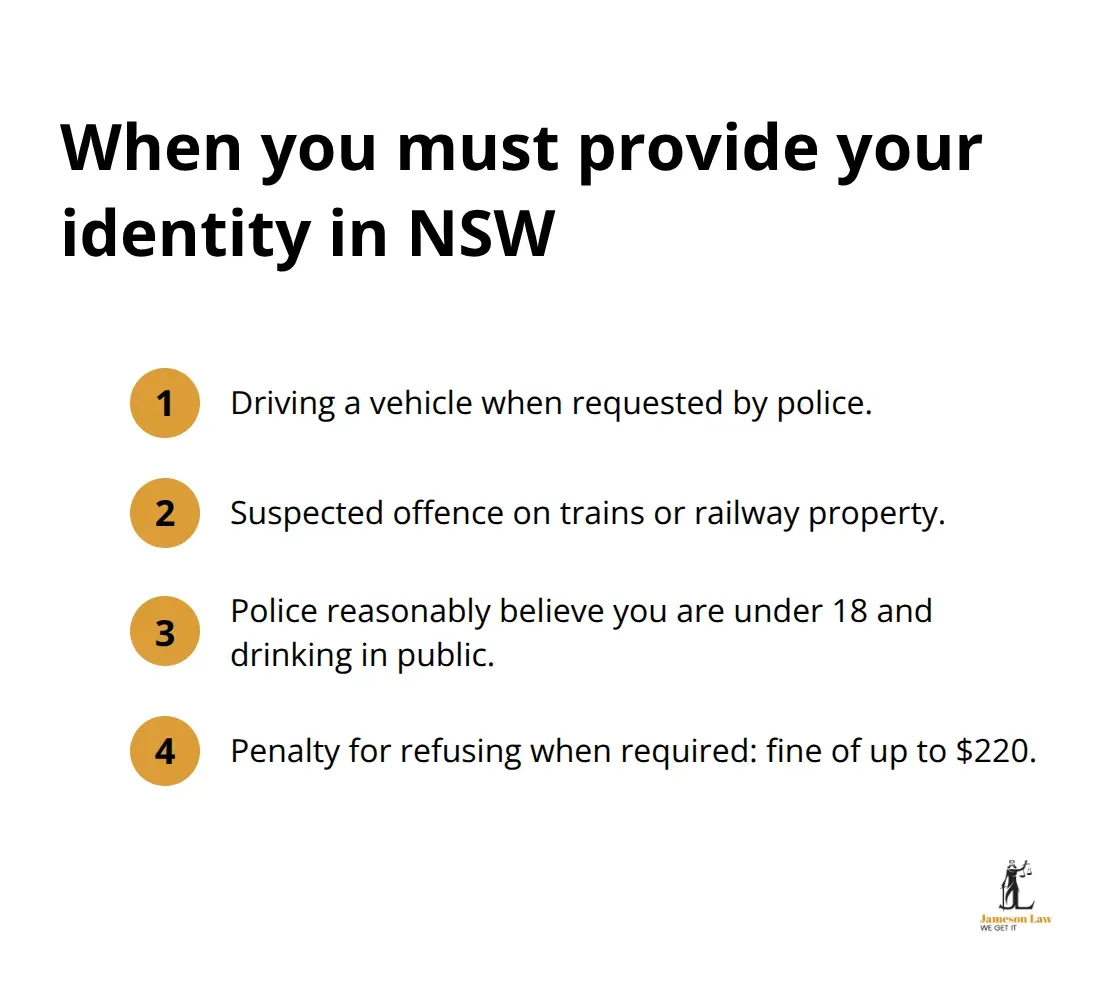
While you have the right to remain silent regarding the allegations, police have specific statutory powers that can require identifying information in defined circumstances. Examples include:
- When you are the driver of a motor vehicle involved in an offence or an accident.
- When police suspect on reasonable grounds that you can assist in the investigation of an indictable offence.
- When you are suspected of committing offences on railway property or involving public alcohol consumption by minors.
Refusing or failing to comply with a valid identity requirement may be an offence under the relevant provision, subject to its terms and any available reasonable-excuse provision. You should provide your identity details as required by law, but firmly decline to answer substantive questions regarding the alleged offence until you have received legal advice.
The Section 89A Exception: The Special Caution
A critical exception to the standard right to silence exists for serious indictable offences (offences carrying a maximum penalty of 5 years imprisonment or more). Under Section 89A of the Evidence Act 1995 (NSW), an unfavourable inference may be drawn against you at trial if you fail to mention a fact during questioning that you could reasonably have been expected to mention, and which you later rely on in your defence.
However, this unfavourable inference can only be drawn if the police provided you with a “special caution,” and this special caution must be given in the physical presence of an Australian legal practitioner. Because of this high threshold, it is imperative that you do not answer substantive questions before securing independent legal advice.
Part 9 LEPRA Safeguards in Custody
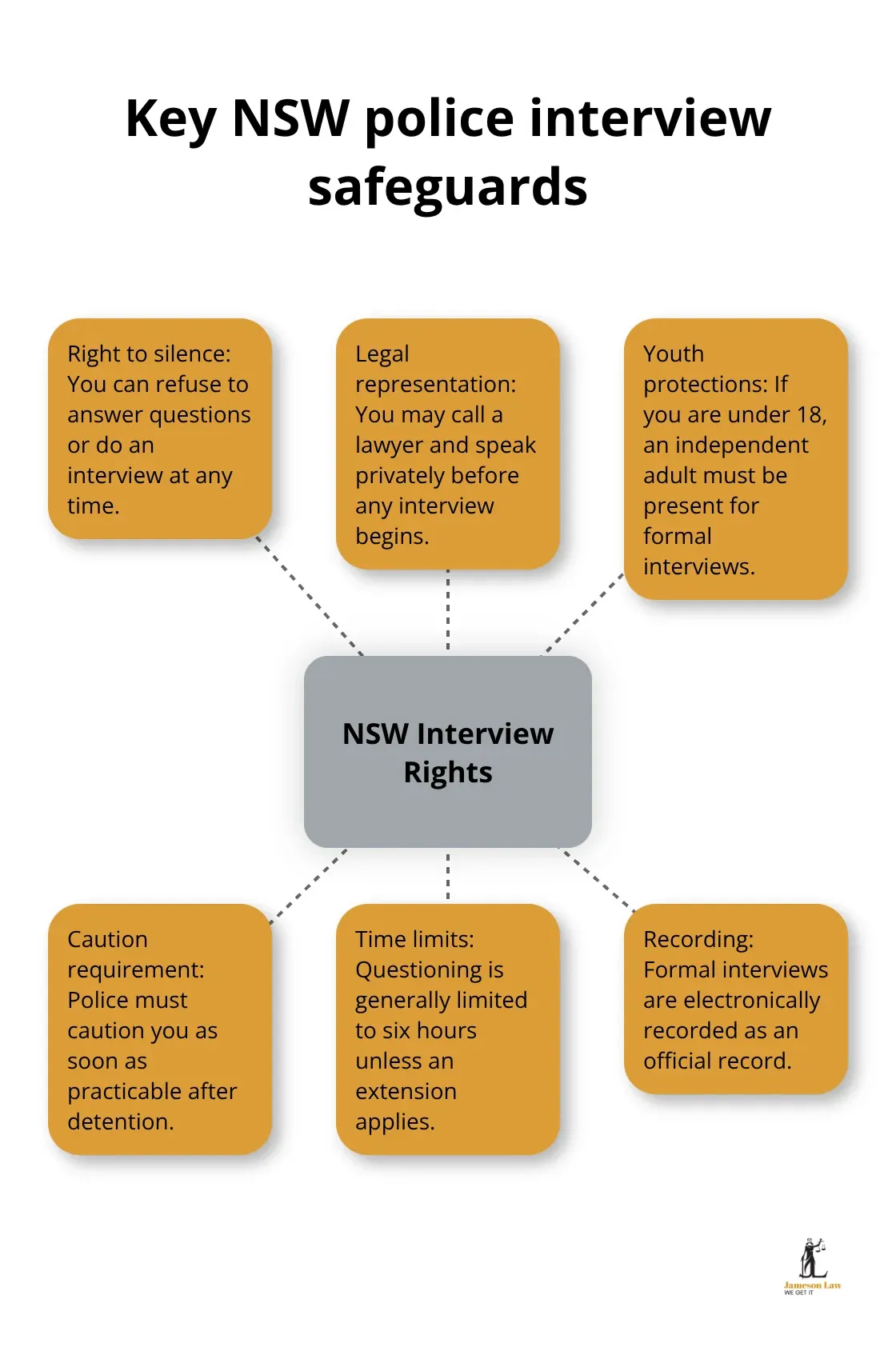
When you are arrested or detained as a protected suspect, Part 9 of the Law Enforcement (Powers and Responsibilities) Act 2002 (NSW) (LEPRA) imposes strict obligations on the police Custody Manager.
| Statutory Safeguard | Your Right in Custody |
|---|---|
| The Caution (s122) | Police must caution you that you do not have to say or do anything, but that anything you say or do may be used in evidence. |
| Right to Communicate (s123) | You must be given reasonable facilities to communicate with an Australian legal practitioner, as well as a friend, relative, or guardian. Police must defer questioning for a reasonable time to allow this consultation. |
| Interpreters & Support (s128/s130) | If you require an interpreter, or if you are under 18 (or have an impaired intellectual functioning), specific provisions require the presence of an interpreter or an independent support person before questioning can commence. |
If you cannot afford private representation, Legal Aid NSW may be available to provide initial telephone advice while you are at the police station. Always exercise your right under Section 123 to seek legal counsel before agreeing to an interview.
Electronic Recording of Police Interviews (ERISP)
Formal police interviews in NSW are generally conducted as an Electronically Recorded Interview of a Suspected Person (ERISP). This creates an objective audio and visual record of the questions asked and the answers given.
A common misconception is that if you make an admission to an officer informally (e.g., in the back of a police car) and it is not recorded, the evidence is automatically inadmissible. This is not strictly true. While the Criminal Procedure Act 1986 (NSW) strongly mandates that admissions regarding strictly indictable offences must generally be electronically recorded to be admissible, an unrecorded statement or “informal admission” is not automatically thrown out in all circumstances. The Judicial Commission of NSW notes that courts may still admit unrecorded evidence if there is a reasonable excuse for the lack of recording or if the interests of justice demand it. Therefore, maintaining your right to silence at all times—both informally and in the interview room—is paramount.
Frequently Asked Questions
What should I ask if the police want to question me in NSW?
The very first question you should ask is, ‘Am I under arrest, or am I free to leave?’ If you are not under arrest, you can generally decline a voluntary interview and leave. If you are under arrest or a protected suspect, Part 9 LEPRA safeguards may apply.
Do I have to answer police questions during an interview in NSW?
Generally, no. Section 89 of the Evidence Act 1995 (NSW) generally prevents an adverse inference from being drawn because a person failed or refused to answer questions during official questioning. However, there are exceptions where you must provide your identity (name and address) if police exercise a specific lawful power, such as during a traffic stop or if you are suspected of certain offences.
Can the police use my silence against me in court?
In most cases, a court cannot draw an adverse inference from your silence. However, under Section 89A of the Evidence Act 1995 (NSW), an unfavourable inference may be drawn in proceedings for a serious indictable offence if you fail to mention a fact you later rely on in your defence, but only if police gave you a ‘special caution’ in the physical presence of an Australian legal practitioner.
Final Thoughts
Your NSW police interview rights exist to ensure fairness in the criminal justice system and to protect you from self-incrimination. A police interview is an evidence-gathering exercise designed to assist the prosecution, not a forum for you to “clear your name” without professional guidance.
By politely providing your identity where legally required, clearly exercising your right to silence, and invoking your right to contact a lawyer under LEPRA Section 123, you secure your strongest possible legal position.
If you or a loved one have been contacted by NSW Police for an interview, or have been charged with an offence, contact the criminal defence lawyers at Jameson Law immediately for strategic advice before you speak to the authorities.