

A criminal allegation of physical violence can instantly jeopardize your freedom, career, and reputation. When facing serious assault charges NSW, understanding that “assault” is not a single, uniform offence is critical. The precise charge police lay depends heavily on the severity of the injury, the context of the incident, and your intent.
At Jameson Law, our criminal defence team meticulously analyzes police briefs of evidence to identify overcharging, secure bail, and mount robust legal defences in NSW courts. This 2026 legal guide breaks down the statutory spectrum of assault under the Crimes Act 1900 (NSW) and the critical elements of self-defence.
The Spectrum of Serious Assault Offences in NSW
Under the Crimes Act 1900 (NSW), police determine the specific charge based on a clinical assessment of the complainant’s injuries and whether aggravating factors (such as being “in company”) were present.
Assault Occasioning Actual Bodily Harm (ABH)
Governed by Section 59, ABH occurs when an assault causes injuries that are “more than merely transient or trifling.” While it does not require permanent damage, ABH encompasses deep scratches, severe bruising, or documented psychiatric injury. If the assault occurs in the company of another person, the maximum statutory penalty increases significantly.
Reckless or Intentional Grievous Bodily Harm (GBH)
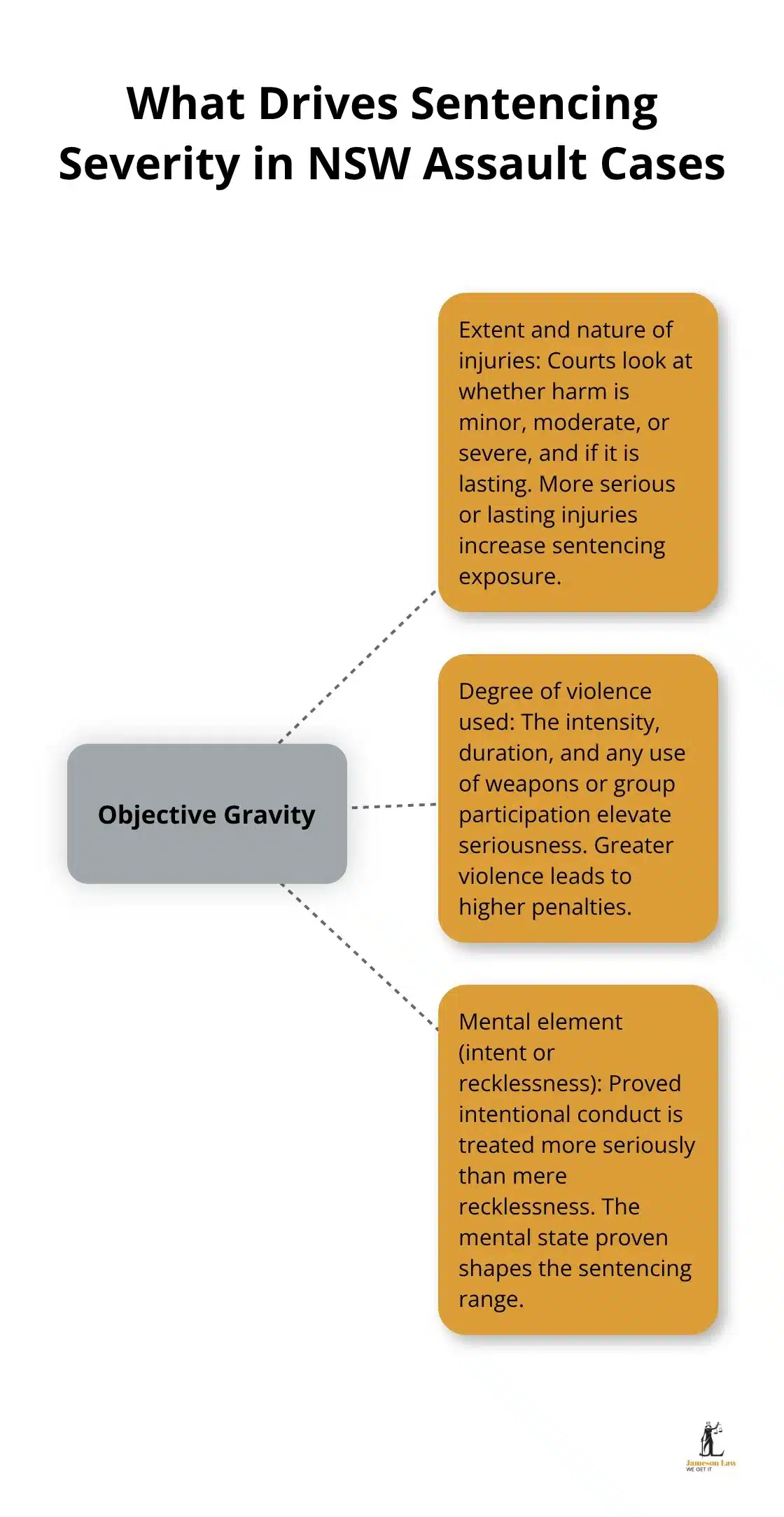
Sections 33 and 35 create different offences involving wounding or grievous bodily harm, with liability depending on the injury, intent or the relevant statutory recklessness, and any aggravating circumstance such as being in company. GBH includes really serious bodily injury, permanent or serious disfiguring injury, destruction of a foetus, and certain prescribed injuries to a pregnant woman.
Section 33 requires proof of a specified intent; section 35 is framed around recklessly causing the relevant injury. The prosecution must prove the elements of the particular count beyond reasonable doubt, so the indictment and Crown case—not a generic label—must be analysed.
Choking, Suffocation, and Strangulation
Section 37 contains several choking, suffocation and strangulation offences with different elements and maximum penalties. The prosecution must prove the subsection charged, including the required intention and any additional consequence or circumstance; the section should not be treated as one undifferentiated offence.
The Law of Self-Defence (Sections 418–423)
A legitimate claim of self-defence is a complete answer to an assault charge. However, self-defence is governed strictly by Sections 418 to 423 of the Crimes Act 1900 (NSW).
Self-defence involves a two-part statutory test. Evidence only needs to raise self-defence before the prosecution bears the burden of disproving it:
- The Subjective Element: Did you genuinely believe that your conduct was necessary to defend yourself, another person, or property?
- The Objective Element: Was your conduct a reasonable response in the circumstances as you perceived them?
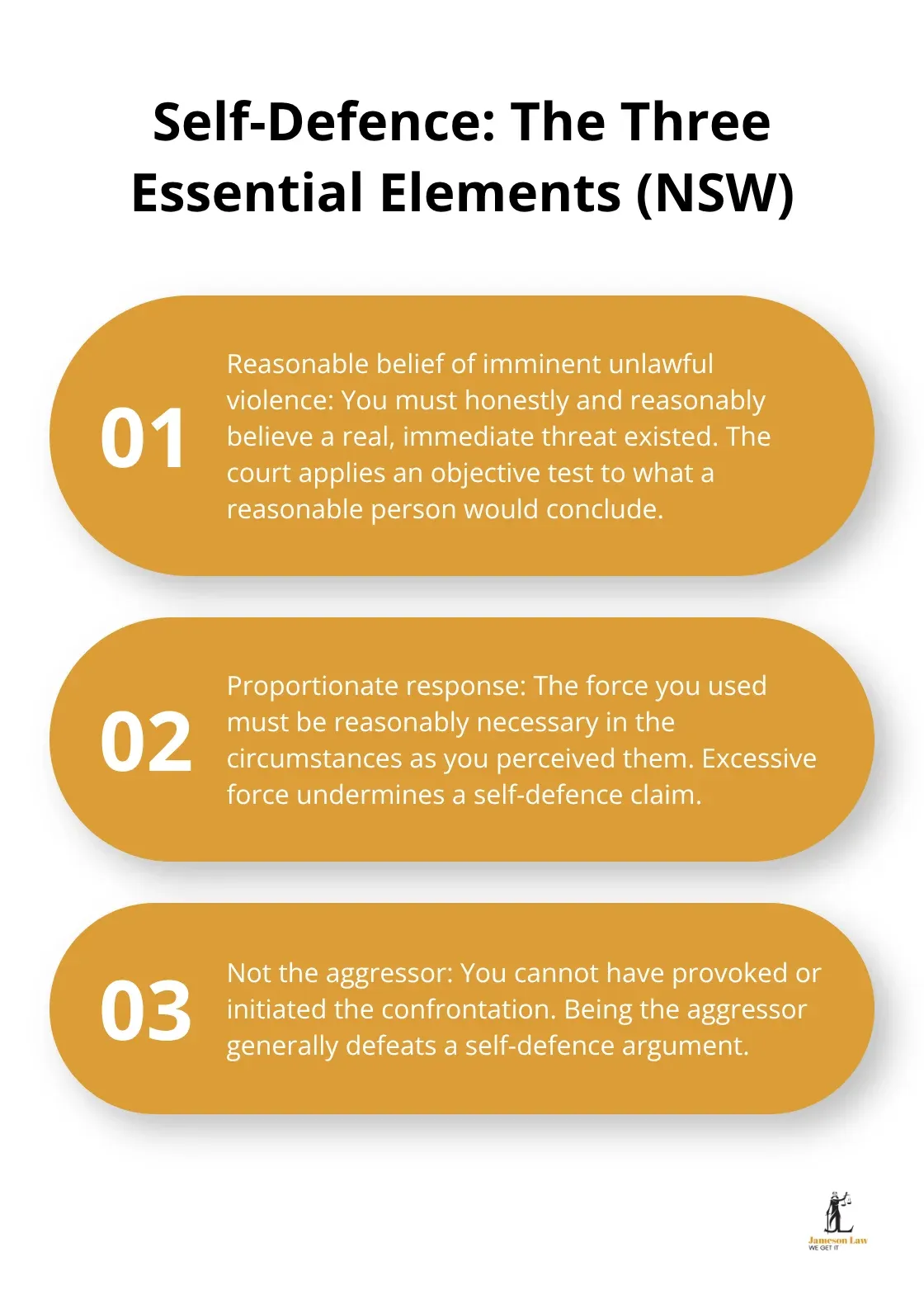
Crucially, once self-defence is properly raised by the defence on the evidence, the legal burden shifts entirely to the prosecution. The prosecution must disprove self-defence beyond reasonable doubt to secure a conviction.
Arrest, Bail, and Local Court Procedures
The Bail Hearing
If police arrest and charge you with a serious assault, they may refuse “police bail” and hold you in custody until you can be brought before a Magistrate in the NSW Local Court. The Magistrate determines bail under the Bail Act 2013 (NSW) by assessing whether you pose an “unacceptable risk” (e.g., of failing to appear, endangering victims, or interfering with evidence).
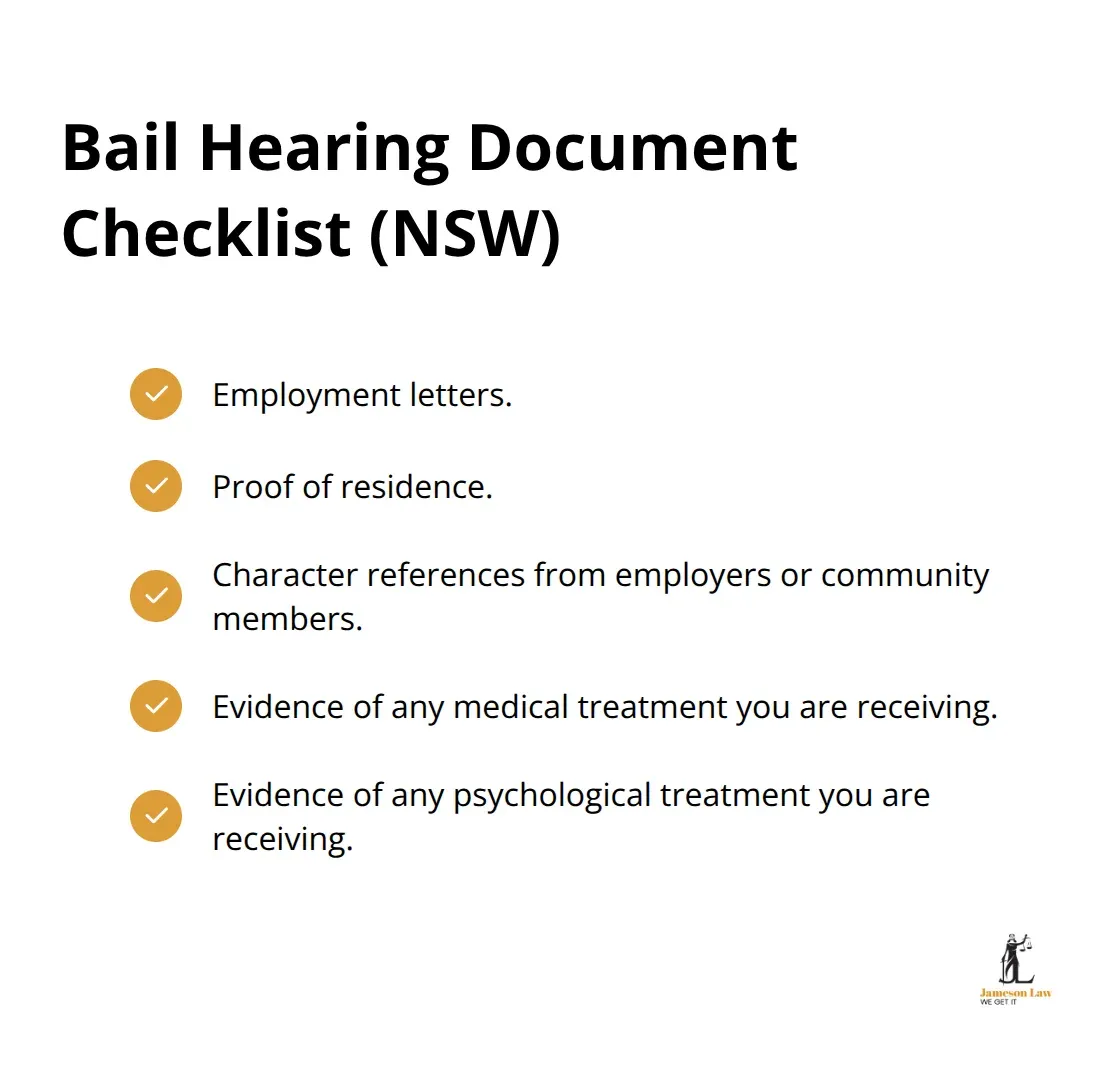
For certain highly aggravated offences, you may face a “Show Cause” requirement. This reverses the presumption of bail, requiring your defence lawyer to proactively establish why your continued detention is not justified before standard risk factors are considered.
Disclosure and Evidentiary Review
During the court process, the police must serve a complete “brief of evidence.” Thoroughly analyzing this brief is where cases are won, reduced, or lost. Your legal team will scrutinize:
- Medical Records: Do the clinical notes genuinely reflect the “Grievous Bodily Harm” the police are claiming, or is the charge legally excessive?
- CCTV and Digital Evidence: Does objective video footage contradict the complainant’s statement and support your claim of self-defence?
- Witness Credibility: Are there independent witnesses, or does the case rely solely on a complainant with potential motives to fabricate?
Frequently Asked Questions
What is the difference between Actual Bodily Harm (ABH) and Grievous Bodily Harm (GBH) in NSW?
Actual Bodily Harm (ABH) under Section 59 of the Crimes Act 1900 involves injuries that are more than merely transient or trifling, such as severe bruising or deep scratches. Grievous Bodily Harm (GBH) under Sections 33 or 35 involves really serious injury, such as permanent disfigurement, broken bones, or the destruction of a fetus.
How does self-defence work for a serious assault charge in NSW?
Under Sections 418 to 423 of the Crimes Act 1900, self-defence is a complete defence. You must genuinely believe your actions were necessary to defend yourself (subjective test), and your response must be reasonable in the circumstances as you perceived them (objective test). Once properly raised, the prosecution must disprove it beyond reasonable doubt.
Will I get bail for a serious assault charge in NSW?
Bail is determined under the Bail Act 2013 (NSW). The police or the Local Court Magistrate will assess whether you pose an ‘unacceptable risk’ to the community, victims, or the judicial process. For certain serious offences, you may face a ‘Show Cause’ requirement, reversing the presumption of bail.
Final Thoughts
Serious assault charges NSW exist on a complex statutory spectrum. Being charged with a severe offence does not mean you will inevitably be convicted of it. Police frequently lay the highest possible charge based on initial, untested reports. Careful legal analysis of medical evidence, witness statements, and the application of statutory self-defence can identify whether the prosecution can prove the charged offence or whether another lawful resolution should be considered.
Because the penalties for offences like ABH and GBH involve substantial terms of imprisonment, securing early, objective legal representation is vital to navigating police interviews, securing bail, and preparing a robust defence brief.
If you or a family member have been charged with a violent offence, contact the criminal defence team at Jameson Law to discuss your Local Court matter confidentially.